REVIEW · LUCERNE
Lucerne: Private Walking Tour with a Local Guide
Book on GetYourGuide →Operated by Away Travel · Bookable on GetYourGuide
Lucerne hits you fast. Lucerne is prettier up close than in photos. This private walking tour starts at Torbogen Luzern and pairs big-name sights with quieter corners, plus built-in stops for photos along the way.
I like two things most. First, you get a smooth 2-hour route that threads together the city center without feeling like you are sprinting for landmarks. Second, guide Livio brings the places to life with local stories you can use to understand what you are looking at, from Chapel Bridge to the Lion Monument.
One consideration: it runs in all weathers. If rain or wind is strong, you will still be walking—so pack layers and wear shoes you trust on wet pavement.
In This Review
- Key takeaways before you go
- Starting at Torbogen Luzern: your 2-hour orientation shortcut
- Chapel Bridge and Fritschibrunnen: planned photo angles and big-city icons
- Lucerne Jesuit Church and Spreuer Bridge: stories you can see on the route
- Altstadt and Lake Lucerne: from old lanes to open water views
- Hofkirche St. Leodegar and the Lion Monument: memorials with meaning
- Why Livio’s private guide style matters on a walking tour
- Price and value: $39 per person for a guide-led Lucerne loop
- Weather-ready walking: what to bring and how to stay comfortable
- After the walk: the restaurant and sight tips you can use immediately
- Should you book this Lucerne private walking tour?
- FAQ
- Where is the meeting point?
- How long is the private walking tour?
- Is this tour private?
- What languages does the live guide speak?
- Does the tour run in bad weather?
- Is the tour suitable for young children or older visitors?
Key takeaways before you go
- Torbogen Luzern start point makes it easy to orient before you wander
- Chapel Bridge → bridges → Altstadt → Lake Lucerne covers the core highlights in one loop
- Photo pauses are planned, not accidental
- Live guide in English or German means real Q and A instead of canned narration
- Livio’s follow-up tips can help you plan food and sights right after the walk
- Truly private feel when your group is small, sometimes even one-on-one
Starting at Torbogen Luzern: your 2-hour orientation shortcut
The tour begins at Torbogen Luzern, at the Lucerne Archway meeting point. That matters more than it sounds, because it is a good place to start from if you want your first walk in town to feel organized instead of random. You meet the guide, get any quick pointers you need, then you are off right away.
This is a walk designed to help you read the city. You will not just pass landmarks; you will learn what they are and why locals care about them. That approach is especially helpful in Lucerne, where so much of the charm is in the details: old bridges, historic religious buildings, and the lake stretching right into the city center.
You also have a clear time box. The tour lasts 2 hours, and that makes it easier to build into a busy day with a boat ride, a museum visit, or dinner reservations later. It is long enough to feel like you got something real, but short enough that you will not lose your whole afternoon.
You can also read our reviews of more walking tours in Lucerne

Chapel Bridge and Fritschibrunnen: planned photo angles and big-city icons

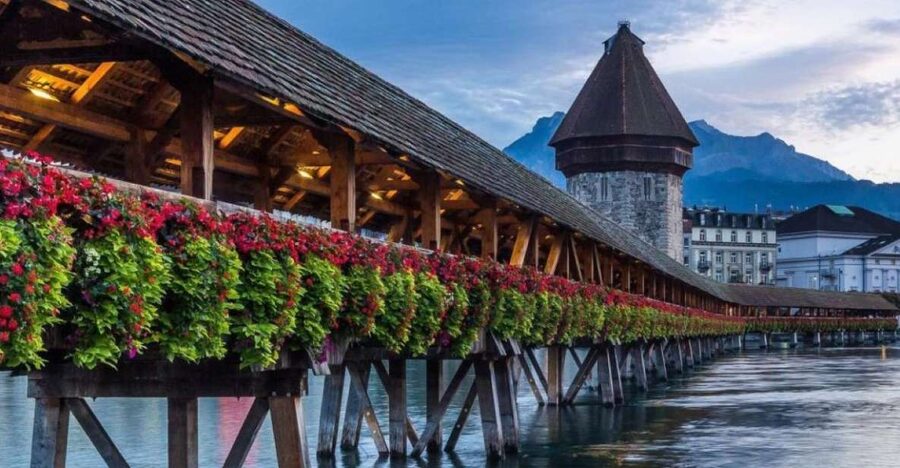
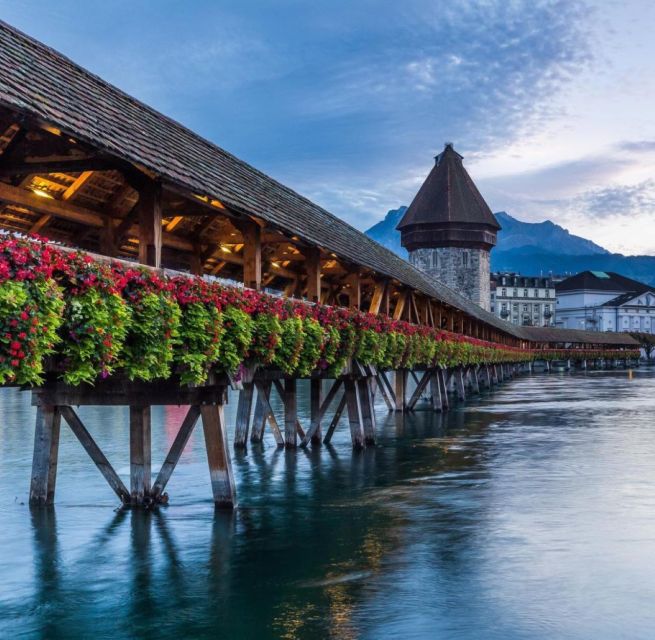
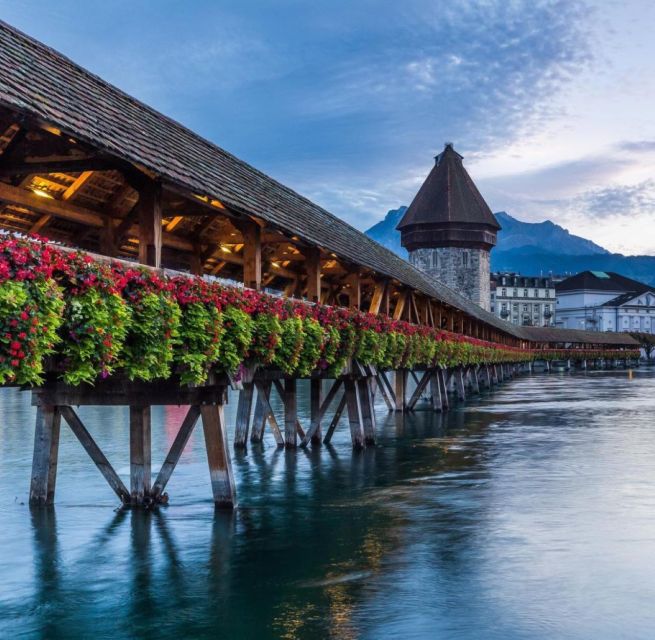
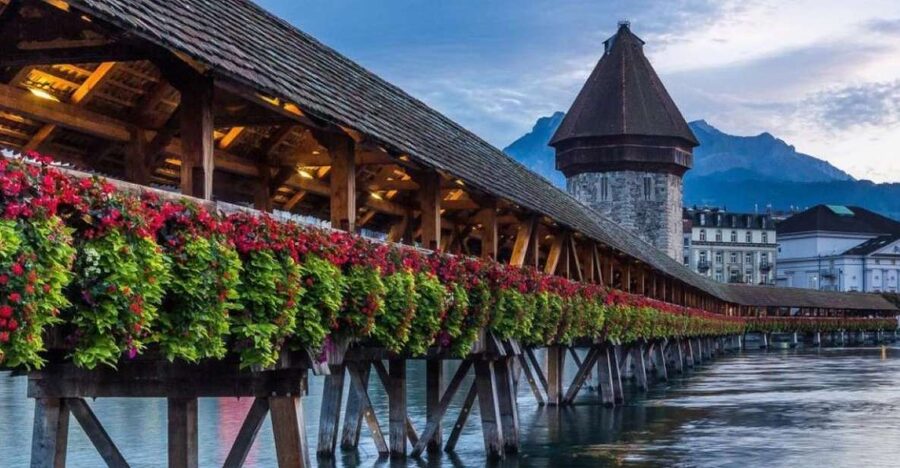
Chapel Bridge is the kind of stop that immediately makes Lucerne feel like Lucerne. Expect to pause for views and photos, not just a quick photo-at-the-sign moment. Your guide will point out what to look for so your pictures look better and your memories stick longer.
Right after, you will visit Fritschibrunnen. It is the sort of spot that works well on a walking route because it breaks up the big landmark scale with something more human-sized and close-up. It also gives you a chance to slow down, stand where the light and angles feel best, and ask questions before you move on.
This section of the walk is about rhythm: iconic views, quick context, then a few minutes to compose shots properly. If you care about photography, this is where you will feel the difference between a self-guided stroll and a route with photo stops built in.
A small drawback here: if you arrive when the waterfront and bridge areas are busy, you may feel a little squeeze around the most photographed angles. The good news is you have a guide who can help you choose where to stand and what to prioritize.
Lucerne Jesuit Church and Spreuer Bridge: stories you can see on the route
From Chapel Bridge, the walk turns toward the city’s religious and historic backbone. One key stop is the Lucerne Jesuit Church. You will get guided sightseeing there, which usually means you are not just looking at architecture—you are learning what makes the building important and what role it played in Lucerne’s development.
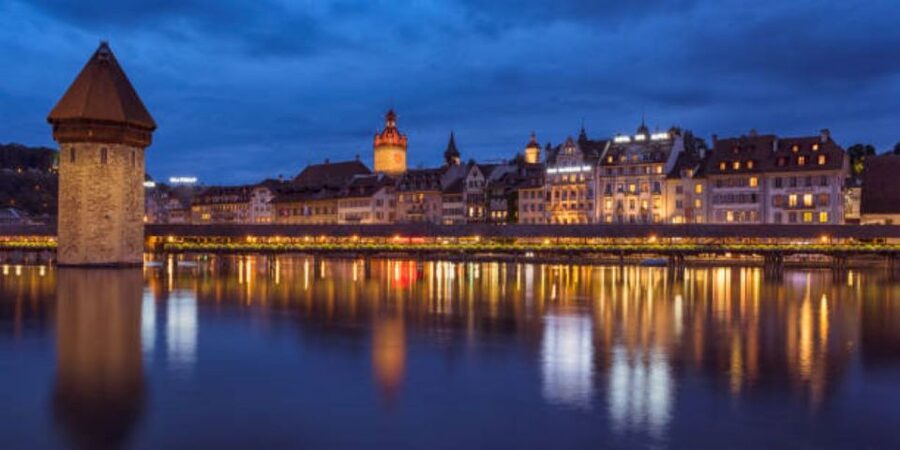
Next comes Spreuer Bridge. Bridges in Lucerne are never just bridges. They connect neighborhoods, define sightlines across the water, and often carry meaning through local tradition and history. Your guide will explain what you are seeing as you move across and around the area, so it feels less like a checklist and more like a story you can follow step by step.
If you like details, this portion tends to be a favorite because the city starts to feel layered. You will notice how Lucerne’s character comes from the mix: faith and civic life, old stone and water reflections, and the way the streets funnel you naturally from one view to the next.
One thing to keep in mind: this tour is focused on what you pass. That is great for first-time orientation, but it is not designed to replace time in a museum where you can go deeper at your own pace. You are getting the guided route overview, not an all-day education.
Altstadt and Lake Lucerne: from old lanes to open water views
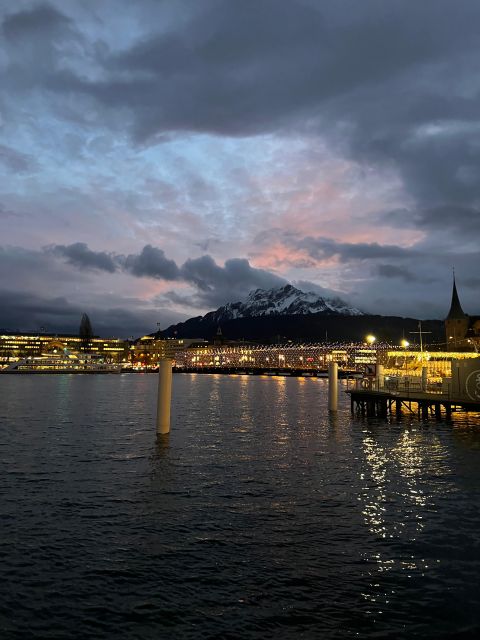
Then you move into Altstadt, Lucerne’s old quarter. Here the walk becomes slower in feel, because small streets and historic facades encourage you to look up and around. Your guide’s commentary helps you connect what you are seeing to how the city grew, so the old town stops becoming scenery and starts becoming context.
After the old quarter, the route reaches Lake Lucerne. This is where the city’s scale changes. Instead of tight streets, you get water views and space—plus another round of photo opportunities. If you want at least one shot that looks like you planned a lakeside outing, this is the moment.
A lot of people underestimate how useful a guided route is on this transition. You might know Lake Lucerne is nearby, but you might not know where to pause for the best angle or how to time your viewing while you are already walking the center. With a guide, you get those stop-and-look moments without guessing.
Practical tip: keep a little patience for the lake stretch. It can be windy, and your guide will keep moving, so if you want that perfect photo, stand where your guide suggests and let the group set the pace.
Hofkirche St. Leodegar and the Lion Monument: memorials with meaning
The route then heads to Hofkirche St. Leodegar, another guided sightseeing stop. This is one of those places where guided context really pays off. Without it, you can end up glancing and moving on. With it, you understand what the church represents in the wider story of Lucerne and why it’s part of the core walk.
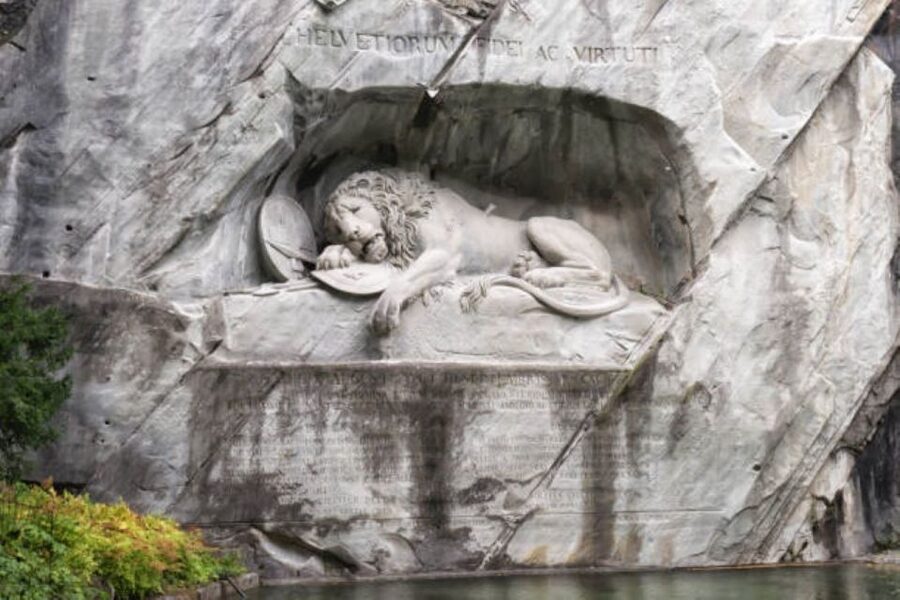
Finally, you reach the Lion Monument, one of Lucerne’s most recognizable memorials. This stop is often the emotional landing point of the tour. A guided explanation helps you read the monument instead of just taking a wide-angle photo and moving on. You will get time to look, absorb, and ask questions if anything stands out.
What I like about ending at Lion Monument is that it gives your walk a natural conclusion. You started at an archway gateway, moved through the city’s classic bridges and religious anchors, and then you arrive at a monument that makes the city feel deeper than postcards.
If you are sensitive to memorials, it is still worth doing. This tour does not hype it. You get guided context and the space to take it in at a human pace.
Why Livio’s private guide style matters on a walking tour
This tour is private, meaning it is just you and your group. That sounds like marketing copy, but it shows up in how the walk feels. You can ask questions without worrying about holding up strangers. If you want to pause longer for photos or you want an extra explanation about a building you just passed, the guide can adjust.
Livio is the name you will see repeatedly, and people consistently highlight his friendly, engaging delivery and the way he answers questions as you go. One of the best parts of this format is that the information comes right when you need it. You are looking at the thing, so the context lands faster.
There is also a practical side. Some guides will just walk you from A to B. Livio tends to add actionable ideas—where to go next, what to eat, and what to look for after the tour ends. That is useful in a city like Lucerne where the choices can feel endless once you step back on your own.
A minor caution: if your group has accessibility needs, note that this is a walking tour with a fixed 2-hour rhythm. The route is manageable for most visitors, but it is still feet-on-streets time.
Price and value: $39 per person for a guide-led Lucerne loop

At $39 per person for a 2-hour private walking tour, the value comes from what you actually buy: guided orientation plus photo pauses, not just movement. You also get a live guide (English or German) for the full time, which is the core cost driver. In practical terms, this kind of guided loop can save you time you would otherwise spend figuring out where to stand, what matters, and what connects to what.
You also have pricing clarity: no mention of add-ons inside the tour. You do need to show up at the meeting point yourself, since hotel pickup and drop-off are not included. That can be a plus, because it keeps the tour simple. But it does mean you should plan how you will get to the Lucerne Archway.
Another value signal: the tour averages 4.6 stars from 450 reviews. That is not a guarantee, but it usually means the core experience is working for a lot of different types of visitors—families, solo travelers, couples, and people who want both facts and practical tips.
If you only have a short window in Lucerne, this tour is a smart use of time. If you have a full day and plan to do museums, boats, and long meals, treat this as your foundation walk—the thing that helps the rest of your day make sense.
Weather-ready walking: what to bring and how to stay comfortable
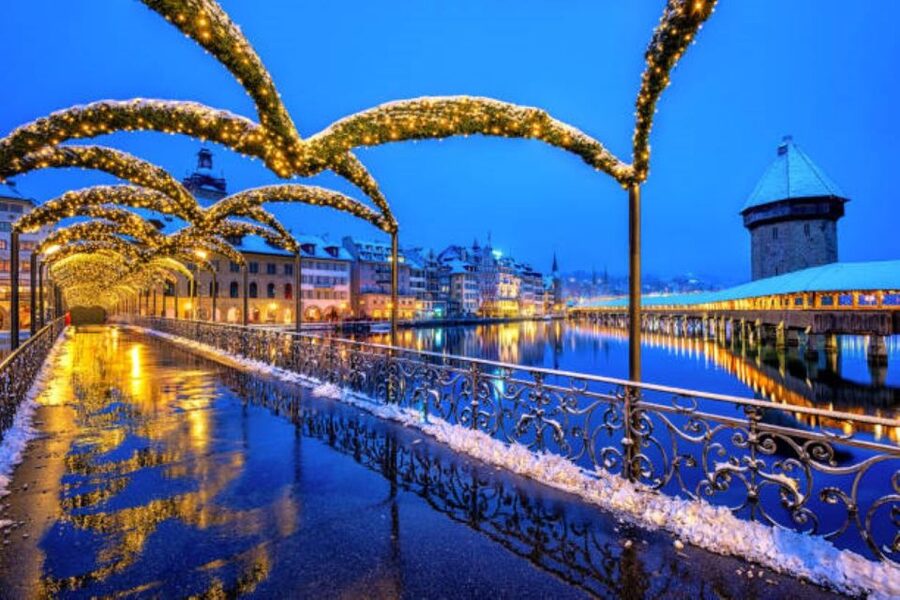
This tour runs in all weathers. That line matters because Lucerne can bring sudden rain or wind, and you will still be outdoors walking between stops.
Bring comfortable shoes first. This is the kind of tour where you want grip and support, especially if pavement is wet. Then dress in weather-appropriate layers so you can adjust as conditions change.
If you are traveling in colder months, plan for hands-on-photo moments. You will be stopping for photos, so you might want sleeves that are warm enough to keep you comfortable while standing still. If it is hot, your best move is breathable layers you can walk in without overheating during the 2-hour loop.
The pacing is typically described as well paced, with time for questions. That is important on a weather-heavy day: you get moments to regroup rather than feeling like you are being rushed through the city.
After the walk: the restaurant and sight tips you can use immediately
One of the most practical perks is what happens after the tour. Many people note that Livio follows up with links and recommendations, so you can find the places again without trying to remember street names later.
This matters because Lucerne rewards follow-through. If you get one good coffee stop or one good lunch recommendation, it can turn a standard sightseeing day into a memorable one. The guide’s local suggestions also help you avoid the common trap of spending your remaining time searching for a place that ends up being disappointing.
Livio’s style also tends to include Q and A during the walk. That means the tips are not random. If you ask what you should do next based on your interests—views, photos, food, or local culture—the guide can tailor suggestions in real time.
If you prefer to keep your day flexible, this tour helps you do that. You get the core sights now, and then you decide what to add later with a list in hand.
Should you book this Lucerne private walking tour?
Book it if you want an easy first framework for Lucerne. The route hits the city center essentials—Chapel Bridge, Spreuer Bridge, Altstadt, Lake Lucerne, the Hofkirche St. Leodegar, and the Lion Monument—and the guided context makes those stops click instead of just passing by.
Book it if you care about photos. The tour includes pauses at the most picturesque spots, and a guide can help you find better angles than you would on your own.
Skip it (or consider something longer) if you already know Lucerne well and you want more time in museums or a deeper dive into one area. This is built for orientation and understanding in 2 hours, not an all-day program.
I also like that it is private. Even if your group is small, you are not competing with unrelated strangers for the guide’s attention.
If you want one reliable way to turn Lucerne from pretty into meaningful, this is a solid choice.
FAQ
Where is the meeting point?
Meet at the Lucerne Archway, also listed as Torbogen Luzern.
How long is the private walking tour?
The tour lasts 2 hours.
Is this tour private?
Yes. It is a private walking tour for you and your group.
What languages does the live guide speak?
The guide is available in English and German.
Does the tour run in bad weather?
Yes. The tour takes place in all weathers.
Is the tour suitable for young children or older visitors?
It is not suitable for children under 2 years old, and it is not suitable for people over 95 years old.