REVIEW · BORDEAUX
2-Hour Walking Tour of the City’s Iconic Sights and History
Book on Viator →Operated by OT Bordeaux · Bookable on Viator
Bordeaux in two hours, with real local clues. This guided walk is a fast way to grasp the city’s story through iconic city-center landmarks. I like how the guide connects what you see to why it matters, and I also appreciate the practical “you’re here now” orientation that helps you roam after the tour. One thing to consider: because commentary is bilingual and group mix can vary, you might get more French than you expected at times.
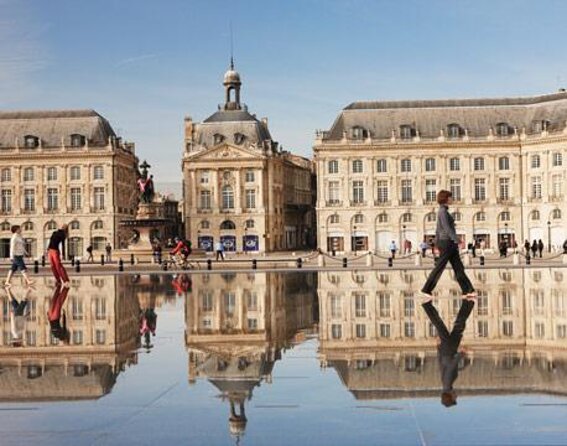
You’ll cover the dramatic monuments and the pretty polished parts of Bordeaux in a steady route. Expect views along the Garonne river, a stop at Place de la Bourse with its reflective water feature (the Miroir d’eau), and time to take photos at the Grand-Théâtre.
This tour is built for people who can walk for about 2 hours, and you’ll want comfy shoes. Logistics are straightforward: you start at the Office de Tourisme and you’ll use a mobile ticket, and you must bring your own mask.
In This Review
- Key Things You’ll Notice on This Bordeaux Highlights Walk
- A Two-Hour Orientation Walk Through Bordeaux’s Signature Places
- Meeting at Office de Tourisme: What to Do Before 10:30
- Monument aux Girondins and Allées de Tourny: Bordeaux’s Power Stories
- From Notre-Dame de Bordeaux to Place de la Comédie
- Rue Sainte-Catherine and the Grand-Théâtre Façade (Completed in 1780)
- Place du Parlement to Place de la Bourse: Your Riverfront Finale
- Language, Headsets, and Group Size: How to Hear the Guide
- Price and Value of $17.37 for a Guided City Center Loop
- Best Time to Go and What to Wear for a Wet or Windy Walk
- Who Should Book This Bordeaux Highlights Tour?
- Should You Book This Bordeaux Highlights Walking Tour?
- FAQ
- How long is the walking tour?
- What time does the tour start, and where do I meet?
- Where does the tour end?
- Is the tour offered in English?
- Which main sights are included?
- Do I need to bring a mask?
- Can I join if I can walk for 2 hours?
- How much is it, and is it refundable if plans change?
Key Things You’ll Notice on This Bordeaux Highlights Walk
- Monument aux Girondins first, then straight into the city’s political story (including the winged Statue of Liberty on top)
- A smooth run of classic sights: Allées de Tourny, Notre-Dame, Place de la Comédie, and the Grand-Théâtre area
- Rue Sainte-Catherine as your pedestrian spine through shops and cafés
- Place de la Bourse with the Miroir d’eau as the photo payoff (and an easy place to linger after)
- A small-group ceiling (25) that can help you stay close to the guide’s explanations
A Two-Hour Orientation Walk Through Bordeaux’s Signature Places
If Bordeaux feels like a beautiful blur when you first arrive, this is the antidote. In about two hours, you get a guided tour of major “anchor points” so the city stops being random streets and starts being a readable map in your head.
I especially like how the guide turns landmarks into clues. The Monument aux Girondins isn’t just a tall sculpted column. It’s also a shortcut to understanding Bordeaux’s role during the French Revolution—complete with the dramatic backstory of the Girondists, who were executed in 1793. That context helps you notice details on your own later, instead of just snapping photos and moving on.
Another reason this works well early in a trip: you finish near some of the most “linger-able” areas. Place de la Bourse is a great place to pause, reset, and decide what you want to do next—because it’s central and photogenic, and it sits in that postcard-perfect relationship with the Garonne.
You can also read our reviews of more walking tours in Bordeaux



Meeting at Office de Tourisme: What to Do Before 10:30
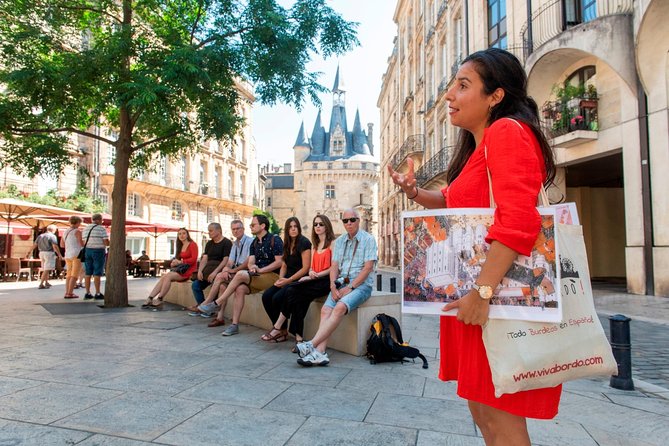
The tour starts at 10:30 am at Office de Tourisme et des Congrès de Bordeaux Métropole, 12 Cr du 30 Juillet (33000 Bordeaux). It’s near public transportation, so you’re not stuck planning a long transit puzzle before you even start walking.
Here’s the practical bit: make your life easy by arriving a little early and checking in at the tourist office reception. Some people miss where to wait if they’re expecting a single obvious outdoor spot. Once you’re inside, you’re less likely to end up standing around while the group moves.
Also, plan on a mask. The tour requires you to bring your own mask, and you’ll be outdoors most of the time, which makes it one less thing to worry about once you’re moving.
Monument aux Girondins and Allées de Tourny: Bordeaux’s Power Stories
You begin at the Monument aux Girondins in Place des Quinconces. This is one of those monuments where your neck will get a workout—in a good way. The column and dramatic sculptural elements celebrate the Girondists, and at the top you can spot the winged Statue of Liberty that crowns the monument.
The key value here is that the guide gives you the “why” behind the monument before you move on. You learn this isn’t neutral decoration; it’s political memory made stone and bronze.
From there, you head toward Allées de Tourny, a classy promenade lined with 18th-century elegance. This stop is a nice rhythm change after the heavy Revolutionary story. It’s also a quick way to see how Bordeaux blends grand civic statements with refined streets and cafés.
From Notre-Dame de Bordeaux to Place de la Comédie
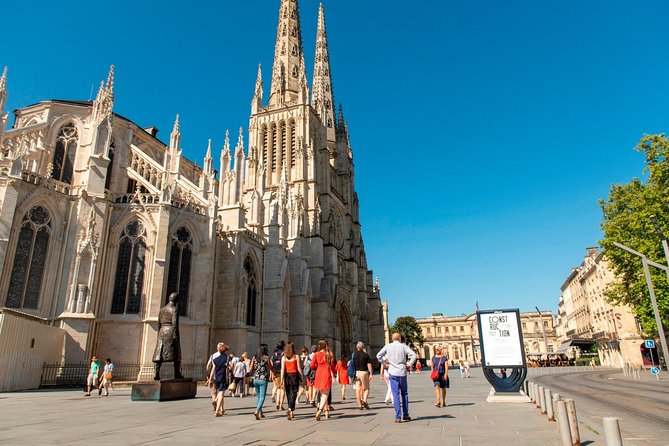
Next up is the Église Notre-Dame de Bordeaux. This is Baroque, and you’ll notice it right away in the sculpted façade and the vaulted interior. Even if you don’t go inside for long (it depends on timing and the group), the exterior details are worth it—Baroque churches are made to be looked at in layers.
Then you reach Place de la Comédie, which is where Bordeaux feels like the city center’s living room. The main draw here is the Grand Théâtre, and the square’s surrounding architecture frames it in a way that makes the theater feel like the focal point of the whole area.
This stop also works well for photos. You’ll be standing in the right place to get the theater façade without it being buried behind random street clutter. The vibe is lively, and it’s one of the easiest places to understand where people gather and why.
Rue Sainte-Catherine and the Grand-Théâtre Façade (Completed in 1780)
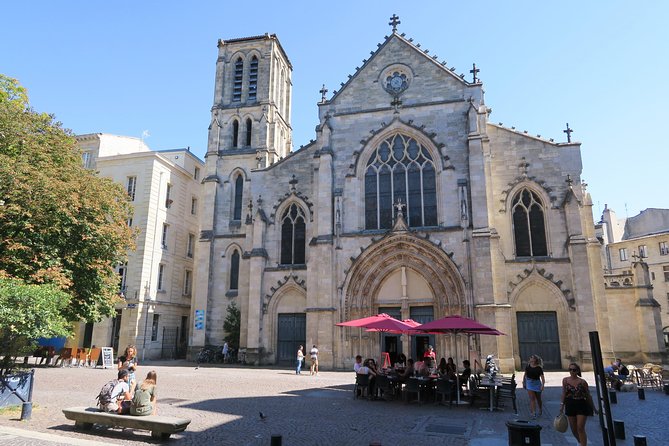
Rue Sainte-Catherine is the pedestrian axis you’ll want in your mental map. The route takes you along this traffic-free avenue, often cited as one of Europe’s longest pedestrianized thoroughfares. It’s lined with shops and restaurants, which means it’s both practical and fun: it gives you an immediate “walk this later” list.
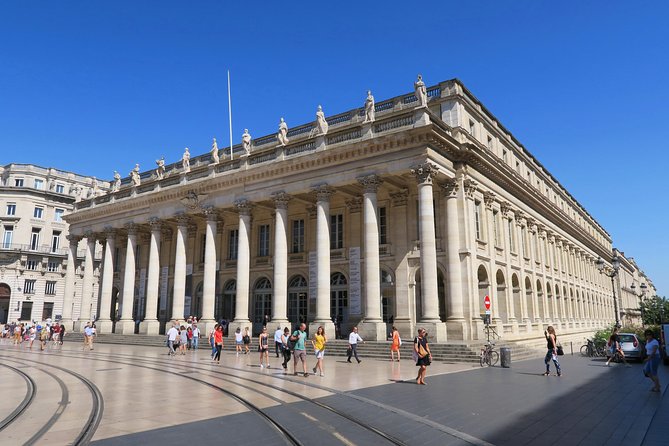
Then the Grand Théâtre de Bordeaux takes over. You’ll have a chance to pose for photos in front of the impressive neoclassical façade. The guide also shares two details that stick:
- The theater was completed in 1780
- It stands on a site that was once home to a Roman temple
That Roman connection matters because it nudges you to think beyond the “pretty building.” Bordeaux has kept reinventing itself on top of older foundations, and this theater is a visible example.
If you’re the kind of traveler who likes to understand what you’re seeing, this is a high-reward stop. You’re not just staring at columns. You’re getting a short lesson on how Bordeaux’s emerging bourgeois wealth shaped culture and architecture.
You can also read our reviews of more city tours in Bordeaux
Place du Parlement to Place de la Bourse: Your Riverfront Finale
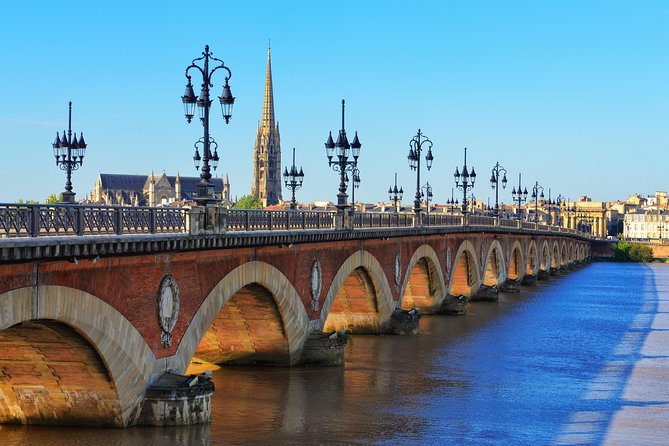
After Place de la Comédie, you move through Place du Parlement, a charming square with historic architecture and cafés. This stop is more about atmosphere and composition than a single “wow” statue. It’s a useful breather, especially if the day is hot, windy, or a bit wet.
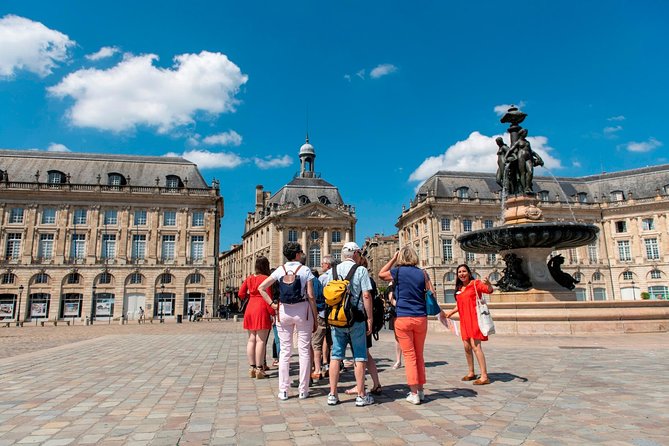
Then you reach Place de la Bourse, one of Bordeaux’s most recognizable scenes—especially if you’ve seen photos of the Miroir d’eau (the reflective water feature). It’s also an 18th-century composition created by Ange-Jacques Gabriel. The square includes the Stock Exchange (Bourse) and the fountain of the three graces.
This is where the walking tour pays off in a very practical way. Place de la Bourse is a perfect finish point because it’s easy to continue exploring on your own from here. If you want a simple next step, you can linger for photos, then decide whether you want more river views, a café break, or to wander deeper through the center.
Also note: where the tour ends can change with the guide and the weather. The general plan is to finish near the Bourse area, but you should ask the guide how to head back to the tourist office.
Language, Headsets, and Group Size: How to Hear the Guide
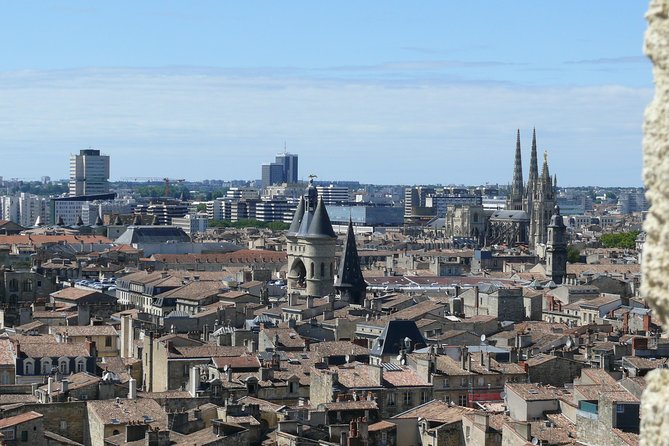
The tour is offered in English, and commentary is bilingual (English and French). In a mixed-language group, the pacing can shift. Some people can end up hearing less English detail than they hoped for, especially if the guide is working through both languages in a careful way.
On top of that, there are times when audio devices are part of the experience. When they work, they can be a big help in an outdoor setting where you’re competing with street noise. If you’re handed anything extra—like a headset—test it right at the start so you don’t lose the first key minutes.
Group size is capped at 25 travelers. That’s a healthy size for a walking tour: big enough to feel social, small enough that you can generally keep track of the guide and the route.
Finally, if you’re expecting a smooth start, arrive a few minutes early. The meeting point is at the tourist office, and the guide is unlikely to hunt you down one-by-one if you’re not where the group is collecting.
Price and Value of $17.37 for a Guided City Center Loop
At $17.37 per person for around two hours, you’re paying for speed, context, and an expert who can connect architecture and history in plain language. This price often feels fair because you’re not just visiting one site—you’re getting a run of major stops in a tightly organized route.
It also helps that key stops are marked as free admission on the itinerary. Monument aux Girondins is free, and the major listed sights are also presented with free entry. So you’re not juggling extra ticket fees while you’re trying to enjoy your walk.
What you should weigh is your personal style:
- If you love walking between landmarks and want explanations as you go, this is good value.
- If you only want to “see sights” and don’t care about context, you might feel like you could do a self-guided route.
- If you’re very language-specific (like you want mostly English with no French segments), pick your departure carefully and expect that bilingual commentary may affect the rhythm.
Best Time to Go and What to Wear for a Wet or Windy Walk
This tour is outdoors for the full length. That means weather matters. Bordeaux can be windy or wet, and you should dress for real street conditions, not postcard ones. Bring a rain layer if the forecast looks questionable. A compact umbrella is useful, too.
The walk itself is manageable, but you do need to be able to walk for about two hours. Wear shoes that handle cobblestones and uneven sidewalks, and plan for short pauses at each stop rather than long sits.
One more small tip: photos are part of the deal here. From the Monument aux Girondins to the Grand Théâtre façade and Place de la Bourse with the Miroir d’eau, you’ll be in several prime viewpoints where a quick stop makes a difference.
Who Should Book This Bordeaux Highlights Tour?
Book this walk if you want a first-day Bordeaux orientation that hits the big-name landmarks without wasting time. It’s also a smart choice if you want a guided framework you can build on after—especially around the theater district and the riverfront.
It’s a good fit for:
- First-time visitors who need a map made of stories
- Travelers who like architecture, civic monuments, and the meaning behind what they see
- People who enjoy short stops and photo moments more than museum-style pacing
You might want to choose something else if:
- You want a long, stop-by-stop tour that includes every major church or museum (this one focuses on a set of iconic sights)
- You’re sensitive to language mix and want strictly English for the full two hours
Should You Book This Bordeaux Highlights Walking Tour?
Yes, if your goal is to get oriented quickly and see Bordeaux’s signature landmarks in one guided circuit. For the price, the value comes from the way you learn what you’re looking at—especially at the Monument aux Girondins and the Grand Théâtre.
Just go in with two expectations:
- It’s a walk-focused city-center tour, not a museum marathon.
- With bilingual commentary, you may need to adapt if your group mix pushes the French rhythm more than you want.
If that sounds like your style, this is an easy “do first” tour—then let the rest of your day unfold from Place de la Bourse onward.
FAQ
How long is the walking tour?
The tour lasts about 2 hours.
What time does the tour start, and where do I meet?
It starts at 10:30 am. You meet at Office de Tourisme et des Congrès de Bordeaux Métropole, 12 Cr du 30 Juillet, 33000 Bordeaux.
Where does the tour end?
It ends at Place de la Bourse (Pl. de la Bourse, 33000 Bordeaux). The end point can vary with the guide and weather, so ask how to get back to the tourist office.
Is the tour offered in English?
Yes. It’s offered in English, and the commentary is bilingual in English and French.
Which main sights are included?
You’ll visit several iconic stops including Monument aux Girondins, Allées de Tourny, the Church of Notre-Dame de Bordeaux, Place de la Comédie with the Grand Théâtre area, Place du Parlement, and Place de la Bourse.
Do I need to bring a mask?
Yes. You must bring your own mask.
Can I join if I can walk for 2 hours?
Most travelers can participate, as long as you’re able to walk during the full 2 hours.
How much is it, and is it refundable if plans change?
The price is $17.37 per person, and you can cancel for a full refund up to 24 hours in advance of the experience’s start time.