REVIEW · BORDEAUX
Bordeaux: City Highlights Guided Walking Tour
Book on GetYourGuide →Operated by HandMedinaCo Tours · Bookable on GetYourGuide
Bordeaux clicks into place on foot. In just 2 hours, you walk from Place Pey-Berland toward Place de la Comédie with an English guide, taking in Saint-André Cathedral, Place de la Bourse, and the medieval Porte Cailhau. I like the way the English guide connects buildings to stories you can actually picture, and I like the mix of big landmarks with street-level stops like Rue Saint Catherine and Place Camille Jullian. The one drawback: it’s a steady walking route, so plan for comfortable shoes and don’t assume it’ll work for every mobility need.
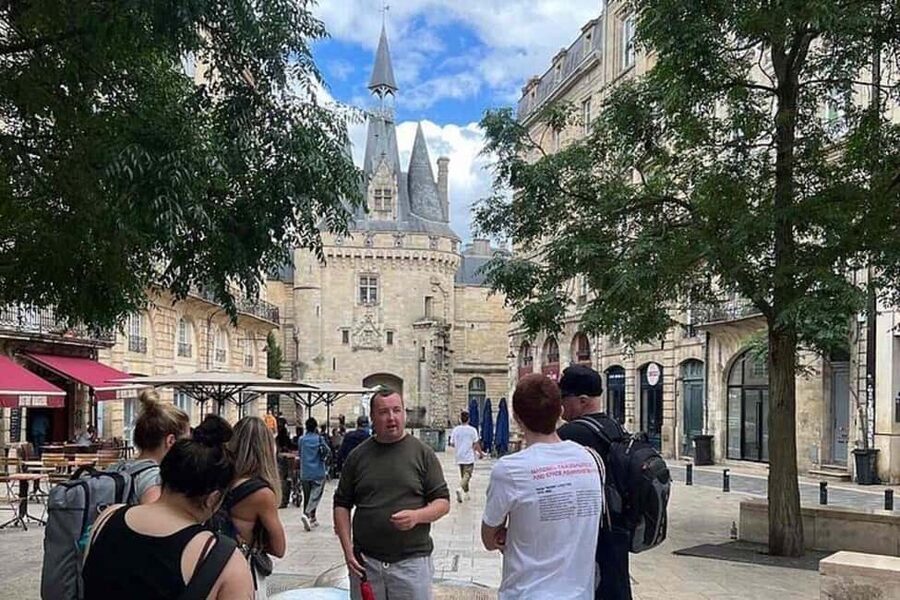
The meeting point is simple: stand next to the Statue of Jacques Chaban Delmas in Place Pey Berland, and look for your guide holding a RED umbrella. Expect a guided pace that keeps you moving but gives you time to look up, notice details, and ask questions—especially around the cathedral area and the waterfront setpieces.
A good guide can make a city feel personal fast, and this tour often does that. Guides you may encounter—like Tammy, Caz, Camila, Mark, Marc, Raphael, and Emma—tend to bring energy, practical pointers, and clear context. Some guides even take on tougher parts of French history (including World War II topics), so you’ll get more than postcard facts, but still grounded in what you see outside.
In This Review
- Key highlights that make this tour worth your time
- Getting your bearings fast in Bordeaux (without cramming)
- Meeting at Place Pey Berland and finding your guide
- Hôtel de Ville to the cathedral zone: where Bordeaux shows its power
- Grand Théâtre and the streets between monuments
- Porte Cailhau: medieval Bordeaux you can almost hear
- Place de la Bourse and Miroir d’eau: the postcard moment with context
- Tour Pey-Berland and the political memory in stone
- Pacing, group feel, and what $4.12 actually gets you
- What to bring (and the small things that improve your day)
- Who this walking tour is best for
- Who should consider skipping or asking questions first
- Should you book Bordeaux City Highlights?
- FAQ
- What is the meeting point for the Bordeaux highlights walking tour?
- Is the tour offered in English?
- How long does the tour last?
- What major sights will I see during the walk?
- Is the tour wheelchair accessible?
- Is the tour suitable for people with mobility impairments?
- What should I bring?
- What is the cancellation policy?
- How much does it cost?
Key highlights that make this tour worth your time
- A tight 2-hour loop focused on the sights that help you orient around Bordeaux fast
- English-only guiding with story-driven explanations at each landmark
- Cathedral-to-waterfront variety, from Saint-André to Place de la Bourse and Miroir d’eau
- Medieval flavor at stops like Porte Cailhau and Saint-Pierre Church
- Real local context, including places to eat or where to spend the rest of your visit
- Manageable group pacing, designed for sightseeing without feeling rushed
Getting your bearings fast in Bordeaux (without cramming)
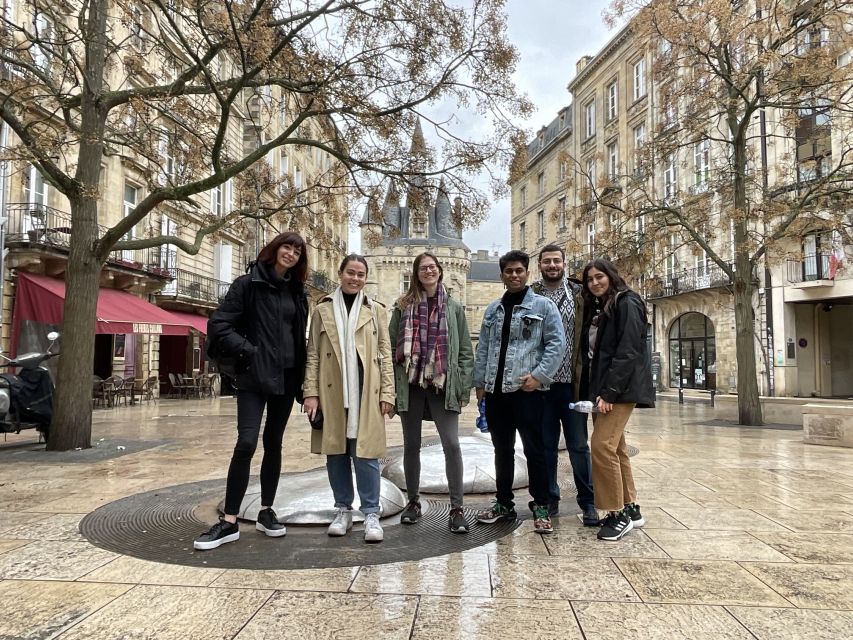
If you only have a short window in Bordeaux, this walk is a strong way to spend it. You’re not trying to cover every street in town. Instead, you’re hitting the points that most help you understand the city’s layout and personality.
The walk is about two hours, and that matters. In that time, you can learn why certain areas became important, what power looked like in stone, and how modern Bordeaux keeps showing up right next to old walls. It’s the kind of start that makes later self-guided wandering feel smarter, because you know what you’re looking at.
The route also has a nice flow. You begin in the civic center zone near the Hôtel de Ville, then move through major religious and cultural buildings, and end in the Place de la Comédie area. That means you finish in a lively central spot where you’re already set up to keep exploring.
You can also read our reviews of more walking tours in Bordeaux

Meeting at Place Pey Berland and finding your guide
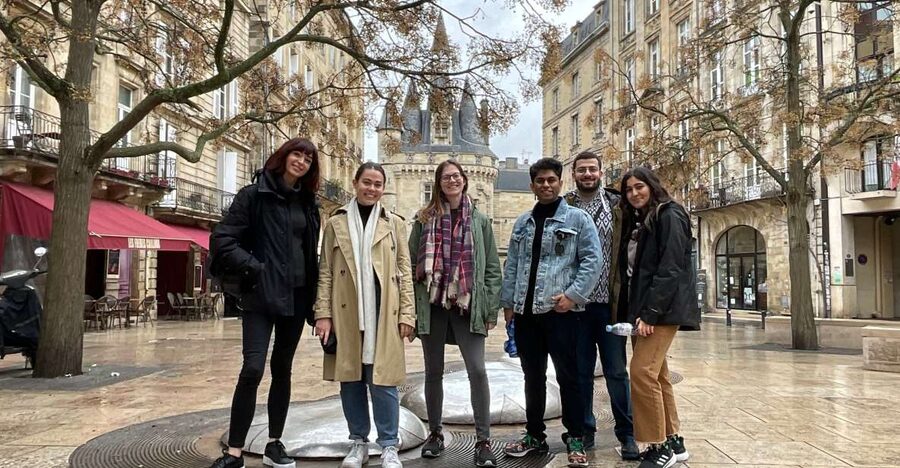
Your tour start is right by the Statue of Jacques Chaban Delmas in Place Pey Berland. The guide will be holding a RED umbrella, so you shouldn’t need guesswork once you’re there.
This start location is convenient for two reasons. First, it’s central—so you can usually get there without a long commute. Second, it places you near the heart of Bordeaux’s monumental core, which is where a lot of the tour’s story lines begin.
If the weather is bad (rain or heat), dress for comfort. Bring comfortable shoes and clothes that match the day. One guide even worked to keep the group in shade when it was very hot, which tells me the tour leaders pay attention to basic comfort when conditions get rough.
Hôtel de Ville to the cathedral zone: where Bordeaux shows its power
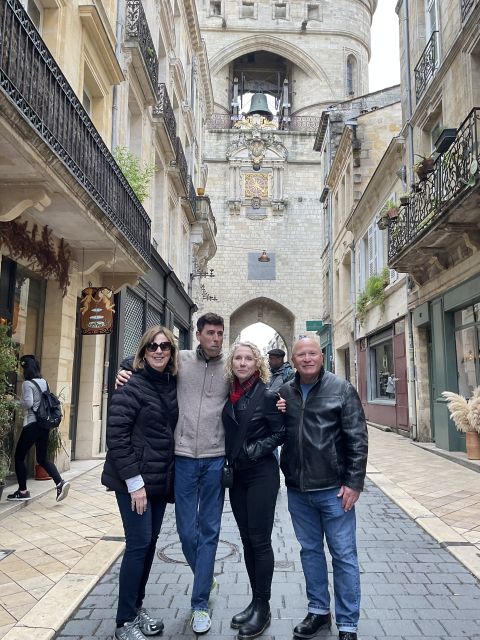
The tour kicks off at Place Pey Berland, then heads to the Hôtel de Ville de Bordeaux for a guided stop of about 10 minutes. This is a quick introduction to the city’s civic identity. You’ll get context for why this area matters and what kind of architecture you’re about to see more of.
Then you move into the cathedral area, where Bordeaux Cathedral (Cathedral Saint-André) is the next big anchor. This is where you slow down visually. Even if you’ve seen famous cathedrals elsewhere, Bordeaux’s details feel specific. You’ll get help reading what you’re looking at—why the building was important, and how the cathedral area fits into the city’s story.
If you’re someone who likes architecture but gets bored by long explanations, this stop is still likely to work. The guide’s job here is to connect forms and features to human decisions—belief, politics, and money—so the cathedral becomes more than a photo backdrop.
Grand Théâtre and the streets between monuments
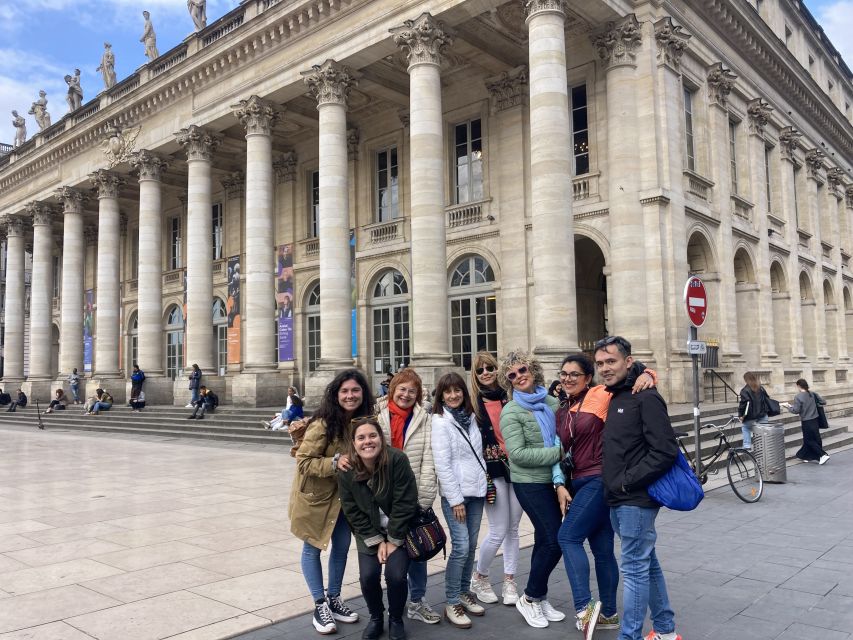
After the cathedral, the route continues to the Grand Théâtre de Bordeaux. This is one of those buildings where you can stand in the right spot and instantly sense the grandeur. A theater isn’t just a structure; it’s a statement about culture and prestige. Expect the guide to tie it to Bordeaux’s broader identity.
Next comes the street side of the city: time around Rue Saint Catherine and stops near Place Camille Jullian. This is a relief after monumental stone. You start seeing daily life energy—streets that feel made for walking, lingering, and window-shopping. One guide also used the technique of showing photos of how areas looked before changes, which can help you understand what’s been preserved and what’s been reshaped.
These street stops are also where you’ll likely get practical advice. Several guides are known for offering recommendations at the end—coffee stops, wine bars, and places to eat—so you don’t spend the rest of your trip guessing.
Porte Cailhau: medieval Bordeaux you can almost hear
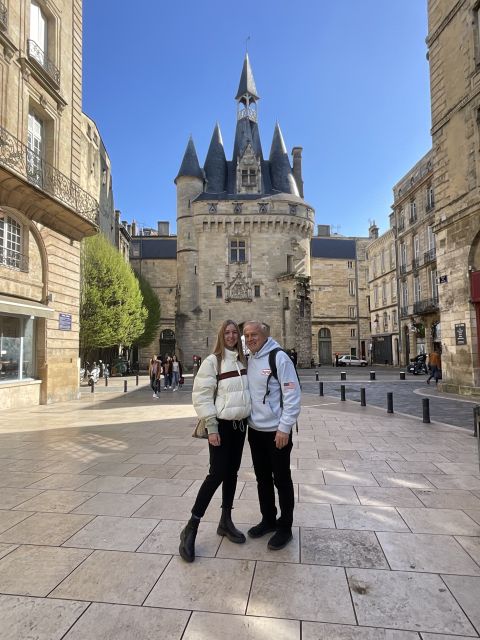
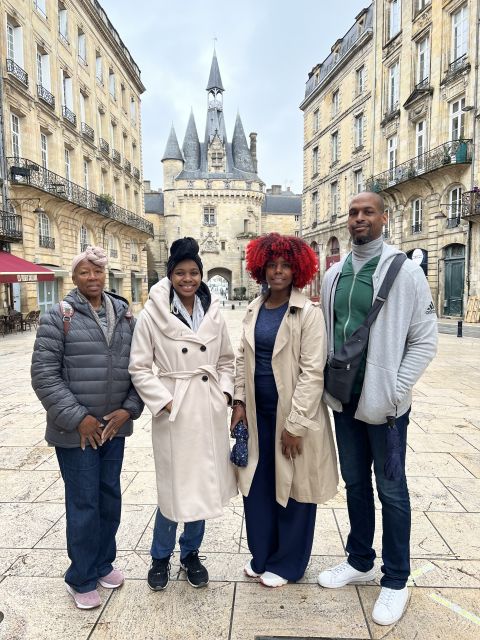
Then the tour pivots into medieval territory at Porte Cailhau. If you like fortifications, gates, and the physical “why” behind a city’s defenses, this stop is a highlight.
Porte Cailhau works because it’s not an abstract concept. It’s a gateway you can stand beside and use as a reference point. From there, you can connect what you learn about protection and power with the city’s later growth. The guide’s commentary helps you understand that medieval Bordeaux wasn’t just old—it was strategic.
A bit later, you also reach Saint-Pierre Church, dating back to the 12th century. This is one of those places where age shows, even if you’re not an expert. You’ll learn how this church fits into Bordeaux’s longer timeline. If the church interior is accessible on your day, it’s a good spot to pause and take in details rather than rushing past.
Place de la Bourse and Miroir d’eau: the postcard moment with context
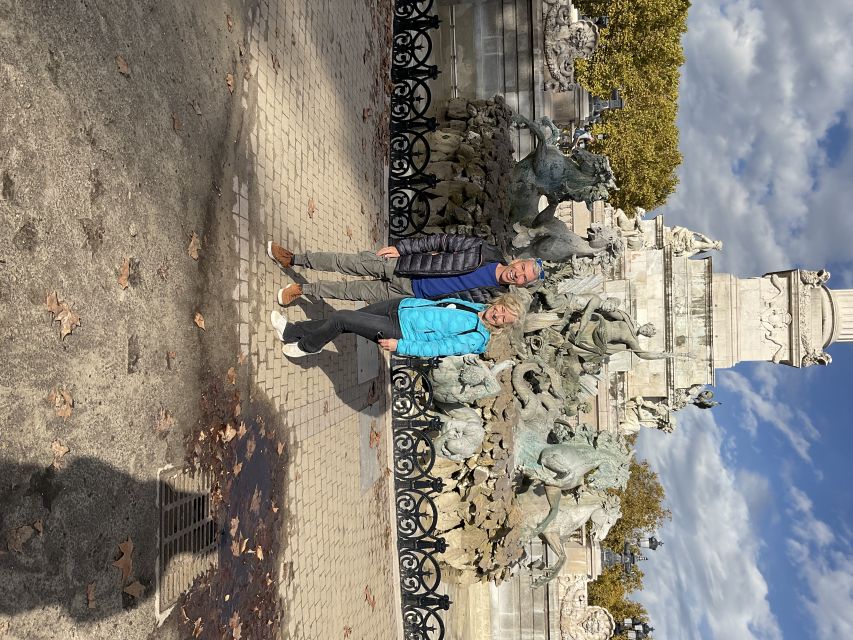
Now you hit the part many people come for: Place de la Bourse and the Miroir d’eau area. Even if you’re not obsessed with architecture, this zone is dramatic. The reflections and open space make it feel like Bordeaux is showing you its best angle.
But the value here isn’t only the visuals. The guide’s job is to explain what made this kind of public space important, how Bordeaux’s commercial identity shaped the city, and why certain landmarks sit where they do. That’s the difference between taking a quick picture and actually understanding the place.
Miroir d’eau is especially good for first-time visitors because it gives you an easy landmark to keep in your mental map. After you see it on the tour, it’s easier to orient later as you branch out on your own.
Tour Pey-Berland and the political memory in stone
As you keep walking through the main sights, you’ll come to Tour Pey-Berland. This tower ties the area together, and the guide’s storytelling usually makes it easier to understand why this region became a focal point—religion, civic identity, and the symbolism of height and visibility all in one.
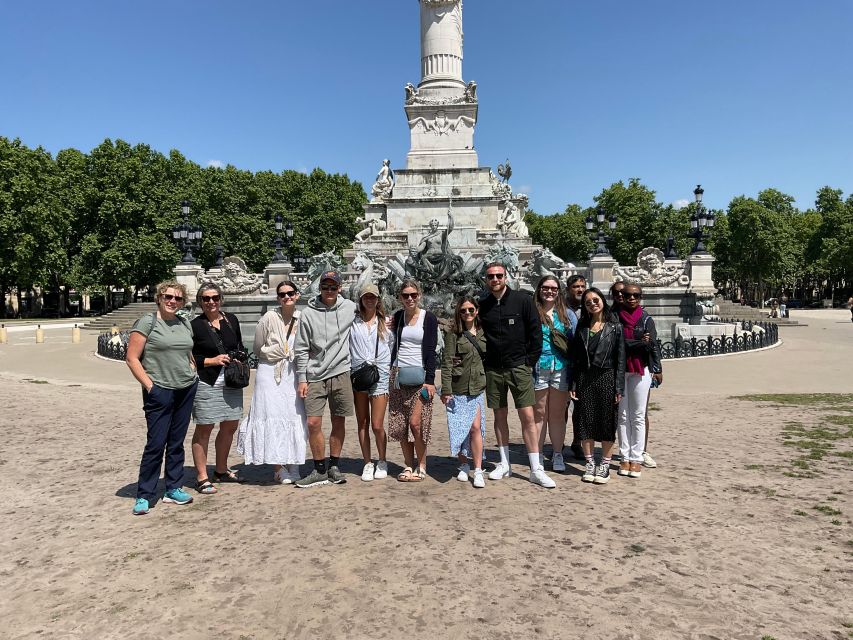
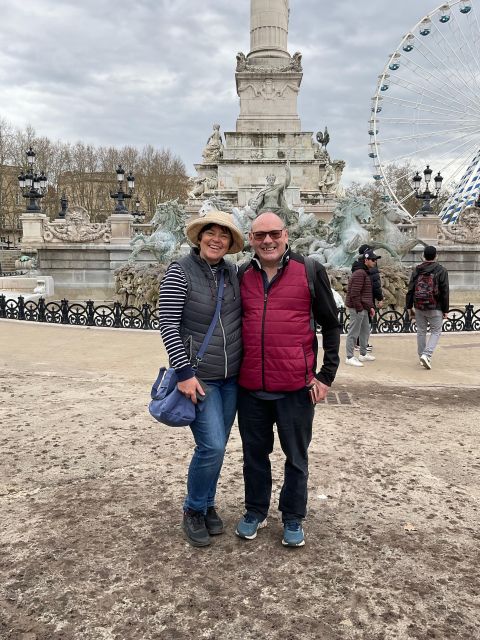
You’ll also hear about Bordeaux’s political history, including the Monument aux Girondins. This is a good moment for history-minded visitors, and it’s also where the tour can feel more serious. One guide is noted for addressing sensitive World War II history and even French collaboration, which tells me the commentary isn’t afraid to handle real historical complexity, not just architectural trivia.
If your preference is strictly light and funny, you might want to be ready for topics that aren’t all sunshine. For me, that honesty is part of why a city walk like this feels worthwhile.
Pacing, group feel, and what $4.12 actually gets you
Let’s talk value, because the price for this tour is surprisingly low: $4.12 per person for 2 hours.
At that cost, you’re not paying for luxury or private attention. You’re paying for a guide to do the heavy lifting—point you to the highest-value sights, explain what to look for, and help you make your own plan for the rest of the trip. In practical terms, it’s like buying a guided orientation, then getting the city’s best ROI for the remainder of your stay.
The duration also makes sense. Two hours is enough time to cover major stops without turning the day into a forced march. The walkthrough pace seems built to be manageable. Many visitors highlight that the timing felt right for an intro, and guides often keep the group comfortable when weather is hot.
What to bring (and the small things that improve your day)
You don’t need special gear, but a few basics matter for a smooth experience:
- Comfortable shoes (you’ll be walking between multiple major stops)
- Weather-appropriate clothing so you’re not distracted by heat or rain
- A willingness to look up and slow down at the key landmarks
If you’re visiting in warm months, consider carrying water and taking the guide’s lead on when to pause. In at least one hot-day instance, the guide worked to keep the group in shade, which suggests they’re watching conditions—not just reading a script.
Who this walking tour is best for
This is a great fit if you want a first-day Bordeaux overview. It’s also ideal if you love architecture, you like understanding how cities became what they are, and you want an English-speaking guide to translate the story behind the stone.
It’s also a good choice for wine-region travelers who want context before hopping to vineyards. The tour doesn’t replace a wine tour, but it can make the whole region feel more connected by giving you the city background that goes with the wine culture.
Who should consider skipping or asking questions first
This tour involves walking and a set route. It’s marked wheelchair accessible, but it’s also listed as not suitable for people with mobility impairments. That combination is a flag worth taking seriously. If mobility is a concern for you, ask the operator directly what the route and surfaces are like on your day before you book.
Also remember: this is focused sightseeing. If you want a long, slow, unstructured day where you can linger for an hour at one spot, a two-hour highlights walk may feel too tight.
Should you book Bordeaux City Highlights?
I’d book this if you want a fast, readable introduction to Bordeaux’s best-known buildings, plus enough story to make later wandering feel guided even after the tour ends. The English-only format and the consistent guide energy—seen with guides like Tammy, Caz, Camila, Mark, Marc, Raphael, and Emma—are big reasons this tour works for first-timers.
Skip it or ask questions first if you need a more flexible route or if mobility concerns affect how much walking you can do. Otherwise, at $4.12 for a two-hour, landmark-filled orientation, it’s one of the easier “yes” decisions you can make for a first trip to Bordeaux.
FAQ
What is the meeting point for the Bordeaux highlights walking tour?
Meet next to the Statue of Jacques Chaban Delmas in Place Pey Berland. Your guide will be holding a RED umbrella.
Is the tour offered in English?
Yes. The tour guide speaks English and the tour is English only.
How long does the tour last?
The tour lasts 2 hours.
What major sights will I see during the walk?
You’ll see landmarks including Bordeaux Cathedral, Grand Théâtre de Bordeaux, Porte Cailhau, Place de la Bourse, Tour Pey-Berland, Miroir d’eau, Place Camille Jullian, and Saint-Pierre Church. The walk also covers areas like Rue Saint Catherine and other key points along the way.
Is the tour wheelchair accessible?
Wheelchair accessible is listed for this tour.
Is the tour suitable for people with mobility impairments?
It is listed as not suitable for people with mobility impairments, even though wheelchair accessibility is mentioned. If you have mobility needs, it’s best to confirm what will work for you before booking.
What should I bring?
Bring comfortable shoes, comfortable clothes, and weather-appropriate clothing.
What is the cancellation policy?
Free cancellation is available up to 24 hours in advance for a full refund.
How much does it cost?
The price is $4.12 per person.