REVIEW · MEXICO CITY
Walking Tour – Impressive murals in Historical Center of Mexico City
Book on Viator →Operated by Walking Tours Mexico Aztlan · Bookable on Viator
Murals tell Mexico’s big story. This walking tour lets you get up close to Mexico City’s mural legends and see how the art connects to real politics, religion, and daily life. I especially like that you get guided context at the places that matter most, not just quick photo stops.
For art lovers, two wins are huge: museum entries are included for the first two sites, and you can choose morning or afternoon start times to fit your day.
One thing to watch: the Ministry of Public Education murals are closed on Tuesdays, so your stop plan changes.
If you’re lucky, your guide may be someone like Balaam or Miguel, who come through with clear English and a talent for explaining the symbolism you’d miss on your own. This runs as a small group experience, with a max of 25 people.
In This Review
- Key highlights you should care about
- Walking the Historic Center’s Mural Route (and what makes it worth it)
- Stop 1: San Ildefonso and La Creación’s Frida-linked moment
- Stop 2: Mexico’s civic mural powerhouse at the Secretary of Public Education
- Stop 3: Palacio de Bellas Artes and murals as national theater
- How long the tour really takes (and why pacing matters)
- Price and value: what $51 buys you (and what it doesn’t)
- Morning or afternoon start: how to pick your best time slot
- Who this tour fits best (and who might want a different option)
- Practical tips before you go (simple things that help a lot)
- Should you book this Historic Center mural walk?
- FAQ
- How long is the walking tour?
- What is included in the $51 price?
- Is Palacio de Bellas Artes admission included?
- Is the Ministry of Public Education open every day?
- How big is the group?
- What is the cancellation window for a full refund?
Key highlights you should care about
- San Ildefonso’s La Creación: the first Diego Rivera mural, tied to the amphitheater where he met a teenage Frida Kahlo
- Secretary of Public Education murals: big wall space (over 3,000 square meters) plus a structure that feels part museum, part cultural hub
- Bellas Artes as a mural stage: the commission that helped shape Mexico’s public art identity after the 1934 opening
- English-guided, small-group pacing: built for people who want explanations, not just walking
- Tuesday plan adjustment: the Ministry stop shuts down, so you’ll see replacements depending on the day
Walking the Historic Center’s Mural Route (and what makes it worth it)
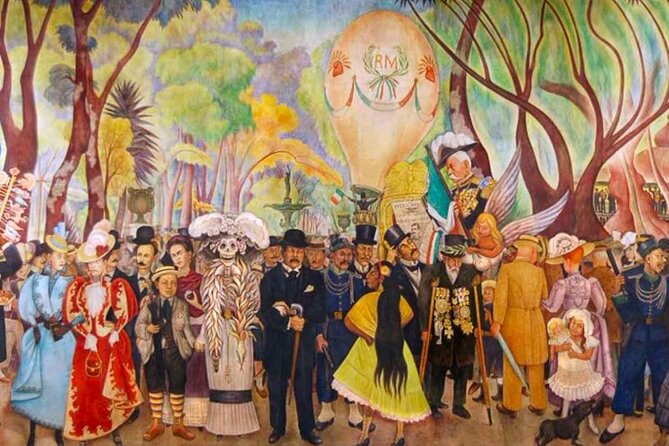
Mexico City is a city of layers, but mural art is one of its best shortcuts. These aren’t just painted walls. They’re public statements—about class, power, indigenous identity, and the reshaping of Mexico in the 20th century. That’s why this tour works so well: you visit the exact places where that conversation was made visible.
I like the format because it’s not a lecture-only day. You’re walking between landmark buildings, then stepping inside where the murals are physically part of the architecture—amphitheaters, courtyards, and civic institutions. It’s the kind of experience where you start spotting symbols on your own as the tour goes on.
Price matters, too. At $51 per person for a guided route that lasts about 1 to 3 hours, the value comes from the included entries at the first two stops and the time your guide spends turning images into meaning. If you tried to do these sites solo, you’d spend time figuring out what to look for, and you’d still miss a lot of the storyline.
The only real trade-off is the day’s walking pace. Most of the time, you’ll be on your feet between buildings. Bring comfortable shoes and expect a steady stroll, not a sit-down museum day.
You can also read our reviews of more walking tours in Mexico City

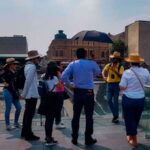
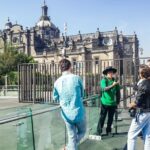
Stop 1: San Ildefonso and La Creación’s Frida-linked moment
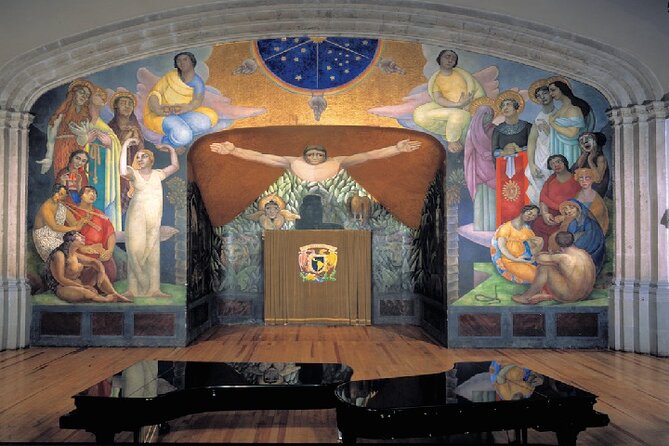
Your tour starts at the former Colegio de San Ildefonso in the Historic Center, at Justo Sierra 16. This is a serious launchpad for Mexico City muralism because it connects art to education and youth culture.
The star detail here is La Creación, described as Diego Rivera’s first mural. You’re not just shown the painting—you get the backstory of why this location mattered. The amphitheater of the old college is where Rivera reportedly would meet a teenage Frida Kahlo for the first time. That alone is a great reason to care: it ties together two huge names in Mexican art history in one setting.
What to expect in practice: the visit here feels like a scene-setting chapter. You’re learning how mural art became a public language, and you’re seeing that language begin. The stop lasts about 30 minutes, and the admission ticket is included.
A note on pacing: this is typically the fastest-moving stop of the day, so if you want questions answered, this is the moment to ask. Your guide’s context early on makes the next walls hit harder.
Stop 2: Mexico’s civic mural powerhouse at the Secretary of Public Education
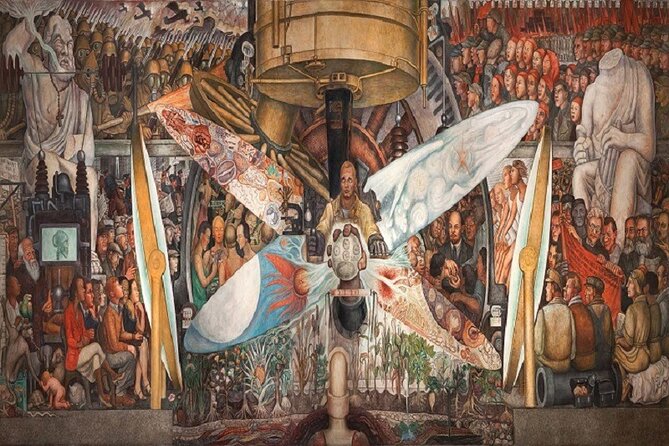
Next you head to the Secretaría de Educación Pública, where the scale is the first shock. The murals cover over three thousand square meters, spread across the Fiestas and Trabajo courtyards. That’s not a small gallery room. It’s an entire public space meant to be lived with.
This is also where you see multiple mural artists in one location, including Diego Rivera, Jean Charlot, Amado de la Cueva, and Roberto Montenegro. You’ll also run into curated layers inside the site: there are two rooms dedicated to muralism, plus a multisensory hall with artistic and historical pieces. Add a library, a children’s reading room, an FCE bookstore, and a café, and you get a sense of why this building isn’t treated like a shrine. It’s treated like an active cultural institution.
How to get the most from it: don’t only scan for famous names. Focus on the way people, objects, and symbols appear across panels. Muralists often built meaning through repetition and contrast—what’s being celebrated, what’s being criticized, and whose point of view dominates.
Time-wise, this stop is about 40 minutes, and again the admission ticket is included. You’re here long enough to connect details to the bigger narrative your guide is building.
One big consideration for planning: the Ministry of Public Education is closed on Tuesdays. On those days, you’ll visit the mural-related alternative(s) your guide provides. In the info you’re given ahead of time, you’ll still end up with a strong mural-focused day—just with a different museum footprint than the usual plan.
Stop 3: Palacio de Bellas Artes and murals as national theater
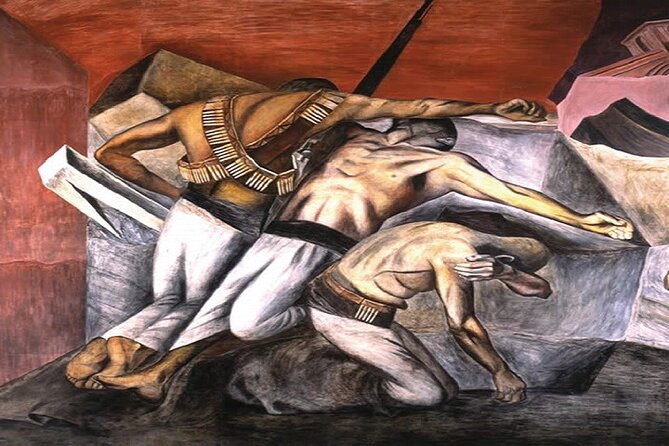
Finish at Palacio de Bellas Artes, on Av. Juárez, S/N. If you want to understand why murals became part of Mexico City’s identity, this building helps. The Palacio de Bellas Artes is tied to a major moment in 20th-century cultural life: shortly before the building’s inauguration in 1934, Mexican muralists received official commissions to paint the enclosure’s walls.
The result is a mix of art and public spectacle. Even though the building hosts exhibitions, dance shows, and plays, the murals are a core reason to go. This is also described as the first museum opened in Mexico, at the same time as the building. And the murals themselves are said to be by different Mexican artists, so you get a broader view beyond Rivera.
What to expect here: your time at Bellas Artes is about 40 minutes, but this stop doesn’t include admission tickets. That means you should plan on paying separate entry if you want to fully take in the museum/mural viewing area tied to the building.
If you’re budget-minded, this is the one part where you should think ahead. Your $51 fare isn’t covering this final ticket, even though the murals are the headline.
How long the tour really takes (and why pacing matters)
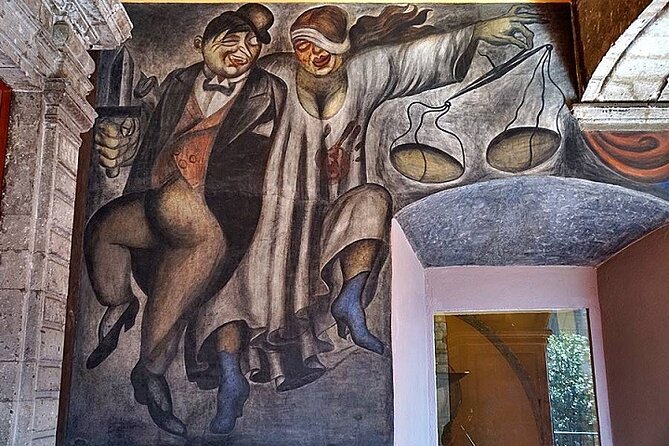
The stated duration is 1 to 3 hours, depending on the day and the group. Most people can expect a short walking day with two indoor mural stops and one major cultural stop at Bellas Artes.
In real life, pacing depends on:
- how long you spend inside each building
- whether a closure or access issue happens that day
- how many questions people ask as the story builds
One practical tip: if your group is slower or if you’re heading out with kids or anyone who needs more bathroom breaks, expect the day to stretch. The same can happen if something outside the tour’s control affects access at a particular site. It’s not a reason not to book; it just means you shouldn’t stack your schedule too tightly afterward.
You can also read our reviews of more city tours in Mexico City

Price and value: what $51 buys you (and what it doesn’t)
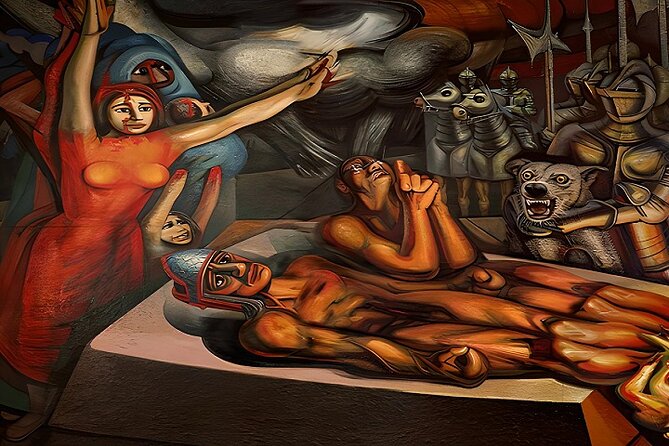
At $51 per person, the real value is the combo of:
- a guided walkthrough with interpretive context
- included museum entrance tickets for the first two stops
- a route designed around major mural locations in the Historic Center
The cost calculus shifts at Bellas Artes. Since admission isn’t included, you may pay extra on the back end. Still, the tour is priced in a way that makes sense if you’re aiming to understand the mural art and not just stand in front of it.
Also consider what you gain by going in a group with an instructor. Mural art is crowded with symbols and references, and the difference between a quick look and a meaningful look can be one hour of expert interpretation.
Morning or afternoon start: how to pick your best time slot
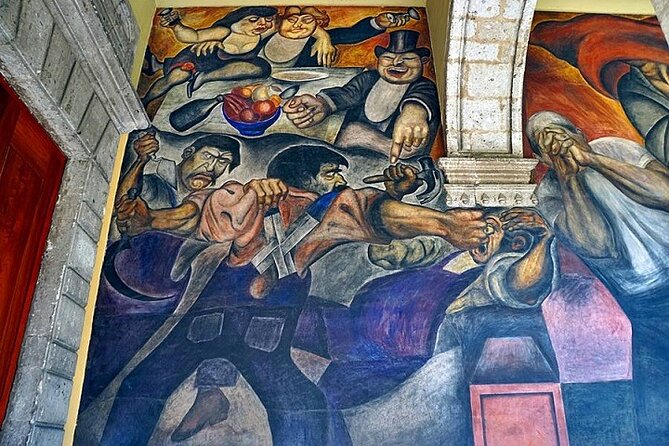
You can choose either a morning or afternoon start time. I’d pick based on two things: heat and your museum stamina.
If you’re visiting in warmer months, mornings often feel easier for walking and lining up. If you’re doing a full day in the Historic Center, an afternoon start can help you avoid burning your best energy too early.
There’s one more planning angle: because the Ministry of Public Education closes on Tuesdays, you’ll get a different stop mix on that day regardless of morning or afternoon. If murals are your top priority, aim for a non-Tuesday slot so the plan includes the big Ministry mural complex.
Who this tour fits best (and who might want a different option)
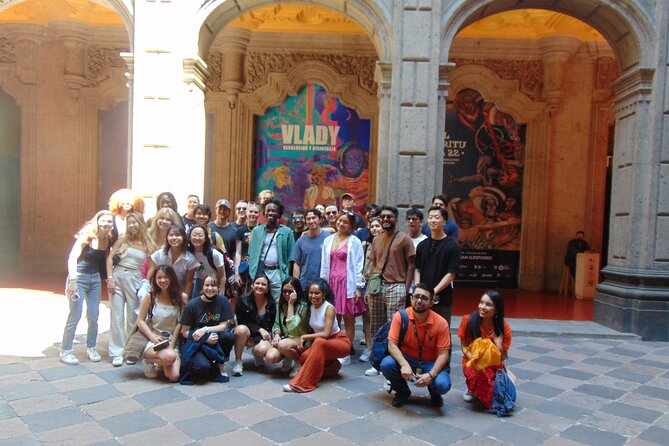
This tour is built for people who want art with context. If you enjoy:
- Diego Rivera and his political and social framing
- understanding symbols and historical references
- walking between landmarks without stress
…then you’ll likely find this a strong match.
It’s less ideal if you want a totally relaxed, mostly outdoor experience. This is still a walking tour, and indoor time at museums means you’ll be standing and moving through exhibit areas.
It also helps if you like explanations. The guide style is central to the success of this tour, and the best experiences are the ones where you ask questions and let the story connect panel to panel.
Practical tips before you go (simple things that help a lot)
Here are the basics that make the difference:
- Wear comfortable shoes. You’ll be on your feet for most of the time.
- Bring a water bottle and plan a restroom break when you can. One of the benefits of a guided route is that your guide can point out the best moments to pause.
- If you’re a fan of street food culture, your guide may suggest snack stops at appropriate times. The mural route is in a neighborhood where quick local bites fit naturally between sites.
If you’re traveling with someone who moves slowly, consider booking a tour time that gives you buffer afterward. Some days can run longer, especially if access needs to be adjusted.
Should you book this Historic Center mural walk?
I’d book it if you want to see the best mural sites in Mexico City’s Historic Center with an actual story behind the paintings. The included entries at San Ildefonso and the Secretaría de Educación Pública make it feel like a curated art day, not an expensive wandering loop. And if you’re specifically drawn to Rivera, the route is built around his key presence.
I’d hesitate only if you’re going on a Tuesday and you’re hoping for the exact Ministry mural stop. The plan adjusts on that day, so you won’t get the same exact lineup.
If you like art but also like understanding why it was painted, this is one of the more efficient ways to do it in Mexico City.
FAQ
How long is the walking tour?
It runs for about 1 to 3 hours, depending on the day and how the route moves through each stop.
What is included in the $51 price?
The tour includes guide service plus museum entrance tickets for the first two stops (San Ildefonso and the murals at the Secretary of Public Education).
Is Palacio de Bellas Artes admission included?
No. The Bellas Artes museum entry is not included, so you should expect to pay separately if you want to access the museum areas there.
Is the Ministry of Public Education open every day?
No. The Ministry of Public Education is closed on Tuesdays, so the tour visits a different set of mural-related stops on that day.
How big is the group?
The tour has a maximum of 25 travelers.
What is the cancellation window for a full refund?
You can cancel for a full refund up to 24 hours before the experience start time. Canceling within 24 hours doesn’t receive a refund.