REVIEW · LUCCA
visita guidata a Lucca: Tour SOLO in ITALIANO
Book on Viator →Operated by Grand Tour · Bookable on Viator
Lucca is small, but history is loud. This Italian guided walking tour strings together the city’s key landmarks in a tight, 2-hour loop—plus you get complimentary entry to the iconic 11th-century Duomo di San Martino. It’s an easy way to get oriented without spending your limited time hunting for the right streets.
I love that the route is built around how Lucca actually feels day to day: you’re guided from landmark piazzas into the shopping street and out to the defensive walls, with stops that make sense. I also like that the tour doesn’t just point at buildings—it gives you context you can use later when you return on your own, like understanding why Torre Guinigi and the church facades matter.
One consideration: it moves at a walking-tour pace, and there are no headphones mentioned for the experience. If you’re toward the back (especially in rain or in a larger group), you may miss some quieter details, so staying close to the guide helps.
In This Review
- Key highlights you’ll care about
- Lucca in 2 hours: the best kind of first day
- Starting at Piazza Cittadella, with Puccini in sight
- Duomo di San Martino: included entry and what to look for
- Torre Guinigi: medieval power, raised above street level
- Via Fillungo: shopping street with architecture worth noticing
- Piazza Anfiteatro: the ancient amphitheater that became a piazza
- Walking the Mura di Lucca walls: seeing the city from its edge
- Basilica di San Frediano and church facades that carry stories
- San Michele in Foro: ending on a satisfying note
- Who the guides are (and why it matters)
- Price and value: why $18.15 can still be a good deal
- Group size, pacing, and the hearing issue in real life
- Practical fit: who this tour suits best
- Should you book this Lucca solo walking tour in Italian?
- FAQ
- How long is the Lucca guided walking tour?
- Where does the tour start and end?
- What time does the tour begin?
- Is this tour offered in Italian only?
- Are admission tickets included?
- What’s included in the price?
- Is food or drinks included?
- How big is the group?
- Can I cancel for a full refund?
- Is it easy to participate if I’m not very mobile?
Key highlights you’ll care about
- Duomo di San Martino admission included, so you actually see the interior and not just the outside
- Puccini statue meeting point at Piazza Cittadella makes the start easy to find
- A logical old-town route: cathedral → tower → shops → Amphitheater → walls → churches
- Time-efficient, about 2 hours, ideal if Lucca is a day trip
- Group size capped at 26, which keeps it manageable most of the time
- Free stops built in, like Piazza Anfiteatro and part of the Mura (walls) walk
Lucca in 2 hours: the best kind of first day
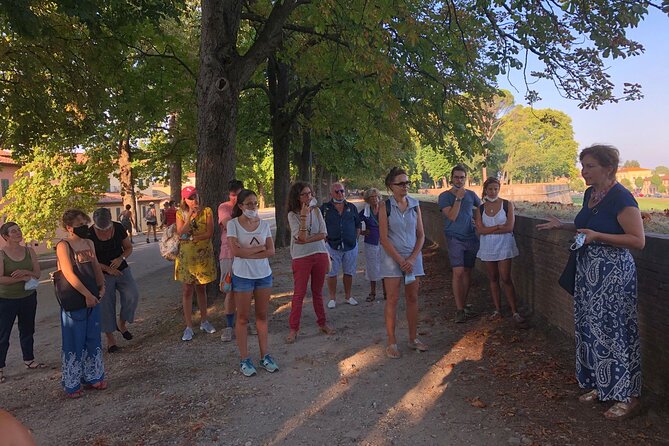
Lucca’s old town is compact, but it can still feel confusing at first—especially with alleyways, churches around every corner, and a wall system that changes where you think you can go. This tour is designed to solve that problem quickly. You get a guided path that stitches together the city’s “why,” not just its “what.”
And for the price point (about $18.15), the value is mostly about what you’re buying: a local guide who gives you a framework. In two hours, you should walk away knowing what to revisit—whether that’s a tower climb you skipped, a church you want to spend longer in, or the streets you’ll use for dinner later.
You can also read our reviews of more tours and experiences in Lucca.
Starting at Piazza Cittadella, with Puccini in sight
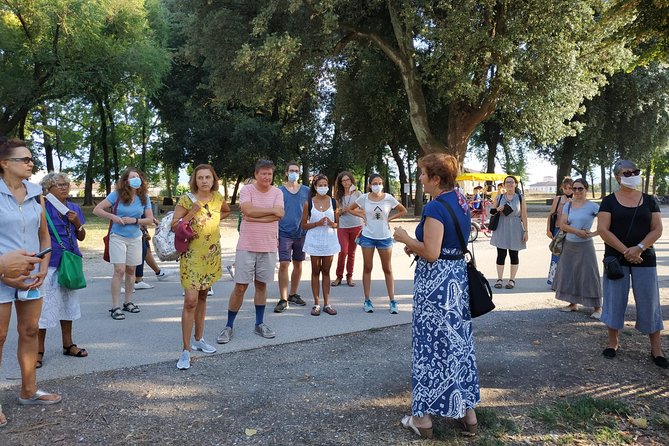
The tour starts at Piazza Cittadella at the statue of Giacomo Puccini, with the meeting time set for 11:00 am. This is a smart start location because the square is recognizable and easy to orient from, even if you arrive a bit flustered.
At this first stop, the guide sets the tone. You’ll hear how Lucca’s identity connects culture, power, and architecture—then you’ll move on before your energy drops. You get about 15 minutes here, and that’s enough to understand the bigger picture without turning the beginning into a lecture marathon.
If you’re the kind of person who likes to take a quick photo and then keep walking, you’ll do fine. If you’re the kind who wants long pauses at every corner, consider saving your slow “photo mode” for your second pass through town.
Duomo di San Martino: included entry and what to look for
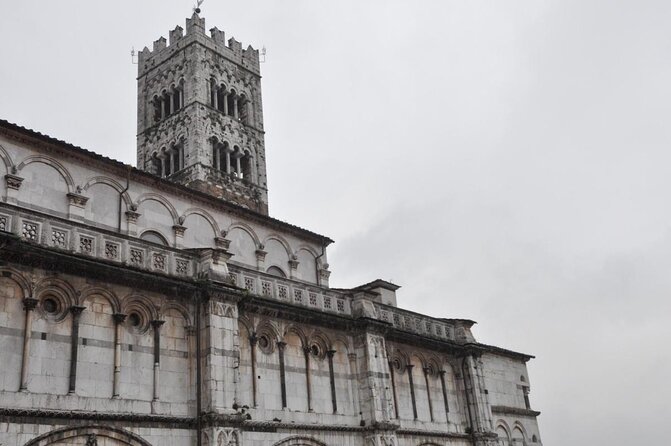
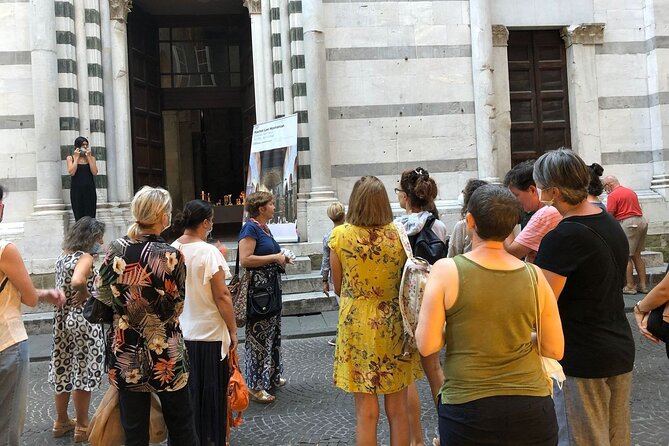
The second stop is Duomo di San Martino (the main church of Lucca). This is one of the best parts of the experience because your ticket for the cathedral visit is complimentary. So instead of standing outside while everyone else gets the real show, you get inside—where the details are.
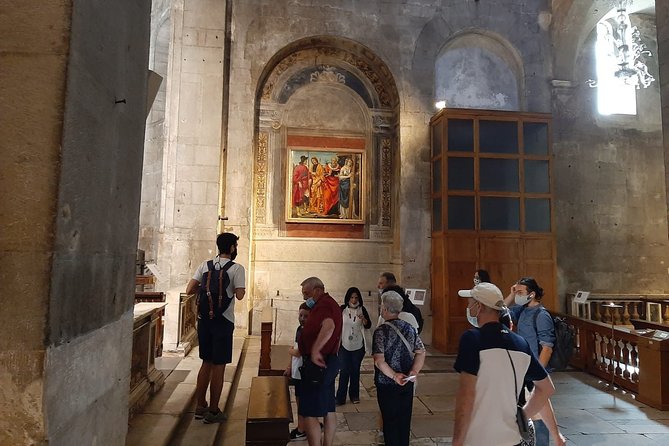
Expect the guide to point out decorative elements and explain why this church is central to Lucca’s medieval identity. More than one guide style seems to be the same here: they keep the pace active, but they slow down when it counts—so you have a reason to look, not just time to look.
One practical note: cathedral visits often have rules (quiet voices, respectful dress, and movement control). The tour’s schedule is tight, so you’ll want to be ready to move when the group does.
Torre Guinigi: medieval power, raised above street level
Next comes Torre Guinigi, a famous medieval tower associated with a wealthy family. From ground level, it’s already distinctive—but the real point of the stop is understanding how towers worked in Lucca’s social and urban life.
You’ll get roughly 15 minutes at this stop. The tower’s admission isn’t stated as included, so if you want to go up and you’re budgeting for that, plan for an extra ticket. Even without climbing, the guide’s storytelling makes the tower feel less random and more intentional—like a piece of the city’s hierarchy, not just a “cool photo spot.”
Via Fillungo: shopping street with architecture worth noticing
Then you head to Via Fillungo, the city’s main shopping street. This part is a treat if you like to browse—but it’s also helpful even if you’re not shopping. The guide uses the street to talk about how Lucca grew and how buildings and urban design reflect daily life.
You’ll have about 15 minutes here, and the stop is free in terms of entry (it’s a street walk). I like this kind of segment because it gives you a break from the “church and tower” rhythm while still staying on topic.
If you want souvenirs, this is a decent window to slip in. Just don’t lose time wandering down side alleys without checking where your group will be next.
Piazza Anfiteatro: the ancient amphitheater that became a piazza
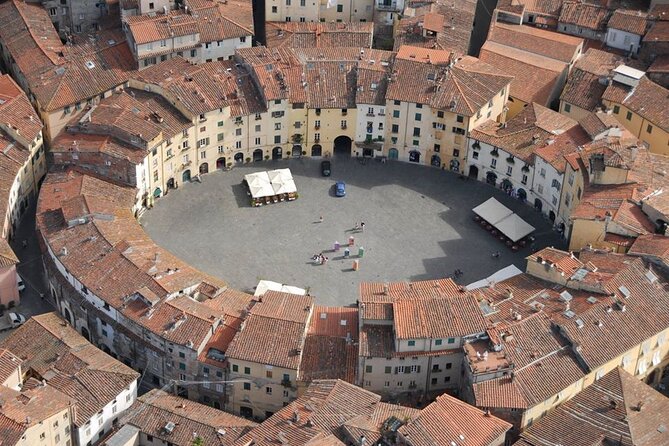
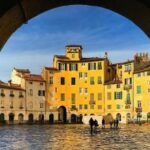
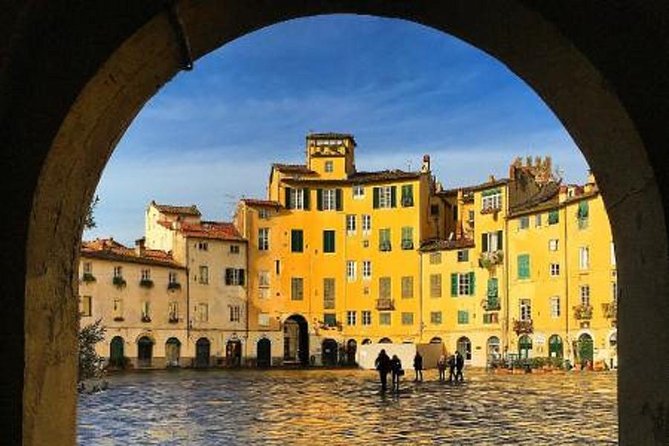
One of the tour’s fun turns is ending up in Piazza Anfiteatro—Lucca’s lively square shaped from an old amphitheater. It’s not just pretty. The guide uses it to explain how Roman-era structures influenced the layout and how Lucca kept adapting history instead of wiping it away.
You’ll get about 15 minutes here, and the stop is free. This is also where you’ll feel the difference between a “pass-through sight” and a place that’s meant for hanging out. Even if you only spend a short time, you’ll understand why locals keep returning to this spot.
Quick tip: after the tour ends, you can use this area as a reference point for wandering. The square gives you an anchor.
Walking the Mura di Lucca walls: seeing the city from its edge
Next is the Le Mura di Lucca segment—a walk along the massive city walls. This part is free and usually one of the most memorable. Walls do more than protect; they shape where people build, how neighborhoods connect, and how you experience the city’s “ring.”
You’ll get a short walk—about 15 minutes—so it’s not the kind of long wall hike that turns into an all-afternoon commitment. It’s a taste. But it’s a taste that changes how you understand the rest of Lucca once you come down and re-enter the streets.
If you’re traveling in warm weather, you may want a water bottle. If it’s raining, wear shoes with grip, because the tour involves frequent walking on uneven historic surfaces.
Basilica di San Frediano and church facades that carry stories
The tour also visits Basilica di San Frediano. This stop is iconic, but admission isn’t listed as included, so entry into the interior may not be covered. The value here is the guide’s framing: the guide ties the basilica into Lucca’s religious and civic identity.
Even if you don’t go in, you’ll learn what to notice on the outside—because in Lucca, the exterior often tells you what the interior can’t in a quick stop.
If you’re a “church person,” you’ll likely want to return later for a longer look. That’s the best sign a tour like this is working: it points you toward your next move.
San Michele in Foro: ending on a satisfying note
The tour ends at Piazza San Michele, with the stop at San Michele in Foro. This is another free segment, focused on the church’s recognizable facade details. The ending matters because it gives you a final visual you can remember and later find again on your own.
You’ll get about 15 minutes here, and the experience finishes with the group tied off at this piazza. That makes it easy to pivot to food, shopping, or a self-guided wander without needing to trace your steps back to the start.
Who the guides are (and why it matters)
The biggest reason people rave about this tour is the people leading it. Names that show up across the experience include Ilaria, Davide, Nadia, Diletta, Lucy, and Maria—and the common thread is clear: they’re good at storytelling and they’re comfortable answering questions.
One guide-led style that really comes through is humor mixed with structure—so Lucca’s past doesn’t feel like a textbook. Another detail worth noting: one guide is described as having worked in local schools, which tracks with a teaching approach—explain, point, and check that you’re following.
Price and value: why $18.15 can still be a good deal
At $18.15 per person for about 2 hours, you’re not paying for private access to everything. You’re paying for guided interpretation plus one key included attraction: the Duomo entry. That single included stop is what tips this into good-value territory.
Here’s how to think about it:
- If you’d normally skip cathedral interiors because you’re tired or unsure what matters, the included access saves you time.
- If you like understanding what you’re looking at, the paid guide portion is doing real work.
- Stops like Via Fillungo, Piazza Anfiteatro, Le Mura, and San Michele in Foro are free in the sense that you’re not paying admission to enjoy the city around them.
The possible extra costs, if you choose to climb or enter certain paid sites, depend on the attraction. But the tour still gives you plenty even if you treat the paid places as optional.
Group size, pacing, and the hearing issue in real life
This tour is capped at 26 people, which is still big enough that you should think about where you stand. Several comments point to a simple reality: without headphones, you rely on the guide’s voice and on everyone staying aligned.
I recommend this:
- Stay toward the middle-front if you can.
- Ask questions when there’s a pause, since that’s where the guide can give you a direct answer.
- If it’s raining, expect your group to spread less. Wet weather can change pacing fast.
Also keep in mind the tour is built for coverage, not for lingering. If you want extra time for photos or deeper interior details, you might find the 2-hour frame a bit tight. The upside is that it sets you up well for follow-up visits.
Practical fit: who this tour suits best
This is a strong pick if:
- Lucca is your first stop in Italy and you want a clean introduction fast
- You like walking routes that help you plan your next day
- You want a local guide who can translate buildings into meaning
- You’re on a day trip and can’t afford to get lost
It may be less ideal if you:
- Want a slow, sit-down style tour with lots of time in each monument
- Prefer a quiet experience with minimal group noise
- Need audio support beyond what the guide’s voice provides (no headphones are included)
Should you book this Lucca solo walking tour in Italian?
If you want a quick, structured way to understand Lucca’s main sights—and you care about actually getting into the cathedral—yes, I think you should book it. The included Duomo entry plus a route that connects Puccini’s square to the amphitheater and the walls is a smart use of time.
Book it especially if you’re pairing Lucca with another plan on the same day. You’ll finish at Piazza San Michele, already set up to keep exploring.
If you’re sensitive to hearing details in a group setting, choose to stand nearer the front, and bring patience for a tight schedule. It’s still one of the best ways to get your bearings fast.
FAQ
How long is the Lucca guided walking tour?
The tour lasts about 2 hours (approximately).
Where does the tour start and end?
It starts at Piazza Cittadella, 55100 Lucca (LU), Italy and ends at Piazza San Michele, 55100 Lucca (LU), Italy.
What time does the tour begin?
The start time listed is 11:00 am.
Is this tour offered in Italian only?
This specific experience is offered in Italian, and tours are also available in English and at multiple times of day.
Are admission tickets included?
Admission to Duomo di San Martino (the 11th-century cathedral) is included as complimentary access. Other stops may not include admission tickets.
What’s included in the price?
A local professional guide is included, along with a mobile ticket for the experience.
Is food or drinks included?
No. Food and drinks are not included unless specified.
How big is the group?
The tour has a maximum of 26 travelers.
Can I cancel for a full refund?
Yes. You can cancel up to 24 hours in advance of the experience for a full refund.
Is it easy to participate if I’m not very mobile?
It’s a walking tour, but it says most travelers can participate. Service animals are allowed. Children must be accompanied by an adult.