REVIEW · MELBOURNE
Melbourne Historical Walking Tour: Crime, Gangsters & Lolly Shops
Book on Viator →Operated by Melbourne Historical Crime Tours · Bookable on Viator
Gangsters in Melbourne’s CBD still cast a shadow. This 2-hour historical walking tour tracks crime and confidence tricks from the 1870s to the 1930s, with stops tied to brothels, speakeasies, and Little Lon legends. You also get the candy-store twist, where lolly shops are linked to bigger criminal operations.
I especially love the way the guide uses original police files to frame the stories, not just repeat myths. I also like the included tour booklet with photos, which helps you place characters and buildings as you move along the route.
One drawback: this is a walking tour with no food stops provided, so plan to bring water and something to nibble.
In This Review
- Key things to know before you go
- Why Melbourne’s gangster past works best on foot
- The Little Lon Distilling Co stop: a former house of ill repute
- Lonsdale Street’s brothel and speakeasy era (1870s to 1930s)
- Squizzy Taylor and the myths that locals repeated
- Little Lon and the idea of a slum that ran on information
- The lolly shop connection: candy as a front for serious crime
- Walking pace, timing, and how to make it enjoyable
- The tour booklet with photos: a useful souvenir, not just paper
- Price and value: what $35.86 buys you
- Who should book this Melbourne Historical Crime Walking Tour
- Should you book it?
- FAQ
- How long is the Melbourne historical walking tour?
- How much does it cost per person?
- Where does the tour start and where does it end?
- What is included in the tour?
- Do I need to bring food or drinks?
- How large is the group?
- Can kids join the tour?
- Is free cancellation available?
Key things to know before you go
- A tight 2-hour loop in the Melbourne CBD focused on one theme: crime, gangsters, and the places they used
- Stories built on police records, with a guide who clearly did real research
- Little Lon and Squizzy Taylor context so the legends land in something like a timeline
- Buildings tied to brothels and speakeasies, still standing in the cityscape
- Lolly shops as fronts for crime, including the candy-shop connection to underworld activity
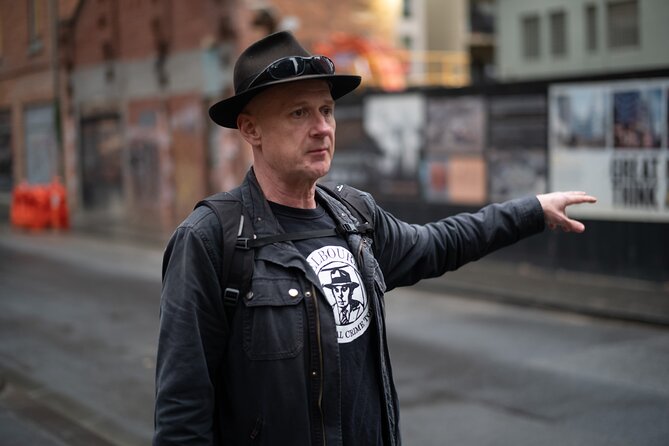
- Small group size (max 20) makes it easier to ask questions and keep the pace friendly
Why Melbourne’s gangster past works best on foot
Some history tours are all museum walls and distant facts. This one works because the setting is still here: Melbourne’s CBD streets, lanes, and older single-story cottages sit beside modern shops and offices. That contrast is the point. You can look at the same street angle and then hear what the area used to be used for.
The tour also has a clear “through-line.” It starts with places tied to the underworld, then builds into the better-known names and local slang—like the notorious Little Lon area—and the kind of businesses that could hide serious criminal activity in plain sight. By the time you reach the lolly-shop angle, the theme stops feeling gimmicky and starts feeling plausible.
You’ll get a lot of story per minute. It’s not a slow stroll with long pauses. If you like narrative-led history and you’re curious about how cities ran their social life under the table, this is a strong fit.
You can also read our reviews of more walking tours in Melbourne

The Little Lon Distilling Co stop: a former house of ill repute
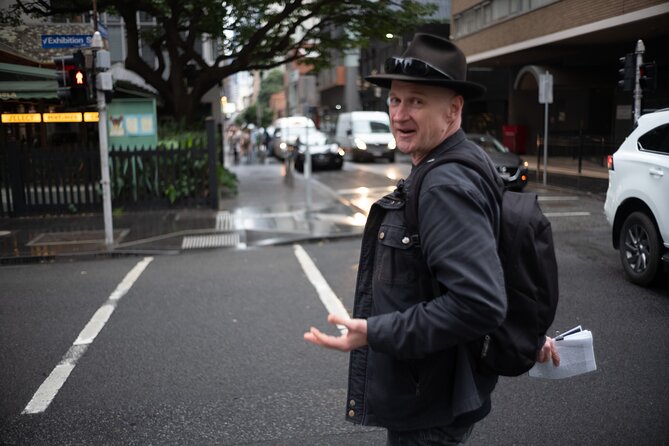
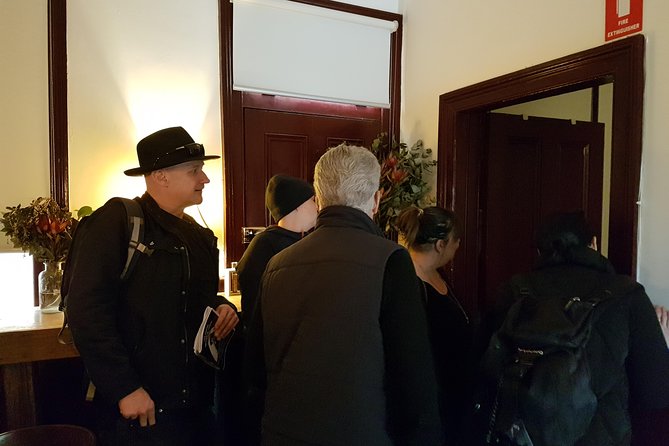
The tour’s first stop is at 282 Exhibition St: Little Lon Distilling Co. You’re stepping into a former single-story cottage tied to a less-than-proud slice of Melbourne’s past. The standout detail here is that the story isn’t vague. You’ll hear accounts of the cottage’s former inhabitants, sourced from original police files.
Even if you’re not a crime-history fanatic, this stop sets the tone in a useful way. It gives you a human scale. Instead of treating “gangs” like faceless headlines, you get a sense of daily life around the people police were tracking at the time. And because it’s a cottage that survived into the modern CBD, you can compare what it is today with what it used to be.
At this stop, admission ticket is free. That matters for value because your money isn’t just going to “listen from the sidewalk.” You’re getting a real site moment early on.
Lonsdale Street’s brothel and speakeasy era (1870s to 1930s)
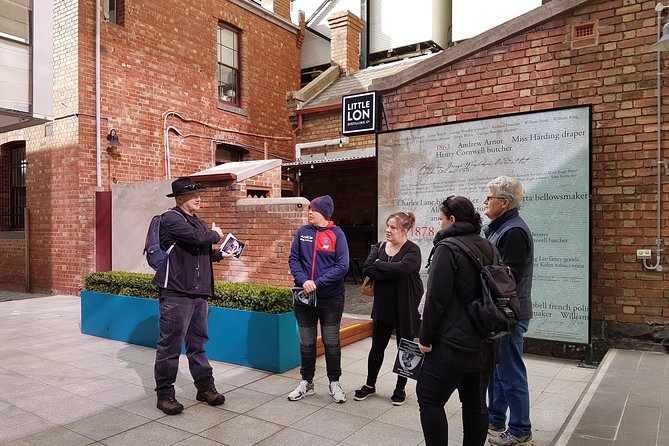
After that first stop, the route keeps you focused on Lonsdale Street and the adjacent areas tied to the city’s crime networks. The tour’s focus is specific: buildings that were once brothels and hubs for criminal activity, including speakeasy-type spaces in the period from the 1870s through the 1930s.
This part of the walk is about seeing how ordinary street frontage can carry complicated stories. The underworld didn’t operate only in back alleys. It used the city’s routines—going in, coming out, people minding their own business. As you move along, you’ll hear how these spaces fit into the larger picture of the era.
The other reason this works: timing. The guide keeps the chronology organized enough that you’re not drowning in dates. You’ll get a sense of how crime “matured” over decades—how networks formed, how reputations solidified, and why certain local areas became shorthand for trouble.
If you prefer tidy, top-10 facts, you might find the story style a bit gritty. But if you want street-level context, it’s one of the tour’s strongest aspects.
Squizzy Taylor and the myths that locals repeated
No gangster walk is complete without legends, and this one leans into the myths surrounding Squizzy Taylor. You’ll hear stories about famous figures of the era and how their reputations grew—plus how those legends connect to the neighborhoods they were tied to.
Here’s what I’d watch for, in a good way: the tour doesn’t treat myth as the whole truth. It gives you enough framing—who they were, what people said, why the stories stuck—that you can see the difference between a nickname becoming a brand and a person being part of a real criminal ecosystem.
The Little Lon angle helps too. The tour doesn’t just say Little Lon was rough. It explains how the area’s identity became part of the underworld’s operating language. Once you understand that, the stories about characters start sounding less like random trivia and more like the way cities talk about their own problems.
If you like historical storytelling that feels like it has receipts, this section is where the police-file approach really shows.
Little Lon and the idea of a slum that ran on information
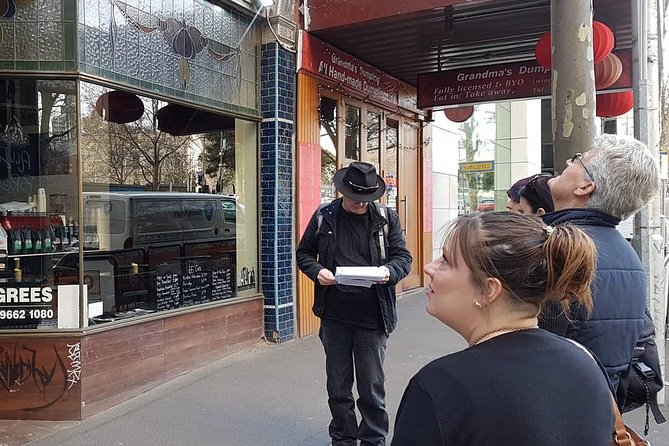
Little Lon isn’t treated as a vague label. You’ll hear about it as a recognizable slum area—one that people used in conversation, one that carried stigma, and one that helped shape how crime moved through the city.
This matters because it explains something practical: criminal groups rely on more than violence. They rely on information, on access, and on people who look away. In that sense, the tour’s focus on places (buildings with past uses) and stories (how legends spread) becomes a lesson in how an urban underworld can function.
You’ll also get the social atmosphere behind the crime. The tour’s tone is colorful, sometimes funny, and often sharp. It doesn’t shy away from the darker side, but it keeps the pacing lively enough that the walk doesn’t feel like a lecture.
For me, the biggest takeaway is clarity. You leave with a clearer mental map of how this district developed a reputation, why it drew attention, and how people organized themselves around it.
You can also read our reviews of more historical tours in Melbourne
The lolly shop connection: candy as a front for serious crime
Now for the angle that makes this tour stand out in a crowd: the idea that lolly shops—candy stores—were used as fronts. The tour frames it as more than a clever headline. It’s tied into how gangs and crime mobs from the era could operate using everyday storefront activity as cover.
This is the kind of story that can sound unbelievable at first. That’s why the guide’s style matters. The presentation is built around research and documented material, so the candy-shop detail becomes the start of a bigger explanation: how “respectable” businesses can mask illicit operations.
You’ll also see why this theme keeps showing up in gangster lore. Lolly shops are open in daylight. They trade in routine. They bring people through a door in normal ways. In a city where anonymity and hustle often go together, that kind of front can be useful.
If you’re thinking of this as a quirky theme tour, you’re partly right. But it also lands as social history: how commerce, reputation, and crime can blur.
Walking pace, timing, and how to make it enjoyable
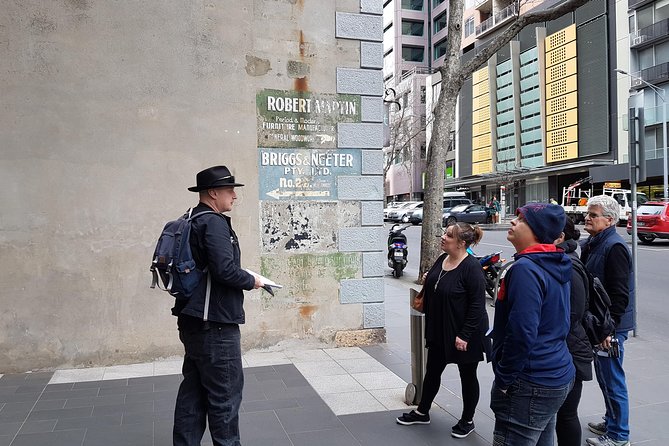
This tour runs about 2 hours, through the Melbourne CBD, ending at the corner of Lonsdale Street and Madame Brussels Lane (near 36 Lonsdale St). That “short and focused” timing works well. It’s long enough to tell a real story, but not so long you’ll start zoning out.
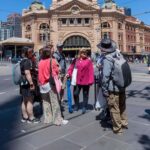
The group stays under 20 people, which is a quiet win. Smaller groups help the guide control the pace and keep the conversation interactive. It also makes question time easier, which matters for a topic where you’ll naturally want clarity: who did what, when, and why.
Bring comfortable walking shoes. It’s a city walk, and you’ll be on your feet for most of the tour. Also bring your own water and plan for a snack if you need one, since no food or drinks are included.
One more practical note: you’ll receive a mobile ticket. That’s helpful if you like keeping everything on your phone and moving on without paper fuss.
The tour booklet with photos: a useful souvenir, not just paper
The tour includes a booklet featuring photos of the characters discussed. I love this kind of add-on because it solves a real problem with story-heavy walking tours: names and faces can blur once you’re back on the tram.
Here, the photos help you reconnect with what you heard. They also make it easier to look up related details later—especially if a name like Squizzy Taylor pulls you in. And because the booklet is aligned with the tour’s cast, you’re not left with a general history pamphlet that doesn’t quite match what you saw.
For history buffs, it’s also a “memory extender.” You’ll remember the buildings and street turns because those are visual. Then the booklet fills in the human layer.
Price and value: what $35.86 buys you
At $35.86 per person for about two hours, this isn’t a bargain discount tour. It’s priced like a research-led walking experience with a real guide and a tangible take-home booklet.
Here’s the value logic I’d use to decide:
- You’re paying for storytelling depth, not just scenery. The guide’s approach leans on documented material.
- You get a site stop where admission is free at the first location, which strengthens the sense that you’re not only listening outside.
- You get a booklet with photos, which adds more “time after the tour” than a standard souvenir.
If you’re the type who likes “just give me the highlights” city walks, you might feel it’s not cheap for a two-hour walk. But if you love when local history is tied to names, places, and a timeline you can actually follow, the price starts to make sense fast.
Who should book this Melbourne Historical Crime Walking Tour
Book it if you:
- enjoy gangster stories but want them grounded in real research
- like historical walking tours where buildings still stand and you can picture the past
- want a Melbourne-focused theme tour that’s less generic than the usual laneway photo stops
- like guides who can explain context and keep it moving
You might think twice if you:
- want a gentler, all-kid-friendly history outing with no dark themes at all
- dislike walking-based tours or you need frequent seating stops
- expect a food crawl
The sweet spot is a curious mix of history and street storytelling. The tour is also a nice option for locals who want a fresh angle on familiar streets—because the city doesn’t always tell its own backstory on the surface.
Should you book it?
Yes, if you want a two-hour Melbourne CBD walk that takes gangster history seriously and tells it in a way that stays readable and entertaining. This isn’t about cheap shock value. The best parts are the research-driven stories, the way the guide brings place and person together, and the payoff of seeing how a neighborhood identity like Little Lon could grow around crime.
If that sounds like your kind of afternoon, I’d book it. And if you’re on the fence, do it with one expectation set: wear good shoes, bring a snack, and be ready for gritty but well-told history.
FAQ
How long is the Melbourne historical walking tour?
It runs for about 2 hours.
How much does it cost per person?
The price is $35.86 per person.
Where does the tour start and where does it end?
It starts at 282 Exhibition St, Melbourne VIC 3000, and ends at the corner of Lonsdale St and Madame Brussels Lane (36 Lonsdale St).
What is included in the tour?
You get a tour booklet featuring photos of the characters discussed.
Do I need to bring food or drinks?
Yes. Please bring your own food and drinks.
How large is the group?
The tour has a maximum of 20 travelers.
Can kids join the tour?
Children must be accompanied by an adult.
Is free cancellation available?
Yes. You can cancel up to 24 hours in advance for a full refund. Canceling less than 24 hours before the start time is not refunded.