REVIEW · VILNIUS
Vilnius: Regular Walking Tour of Soviet Vilnius
Book on GetYourGuide →Operated by Vilnius with Locals Tours · Bookable on GetYourGuide
Soviet Vilnius hits harder than expected. This 2.5-hour walk connects Palace of Concerts & Sports with the darker stop near Lukiskiu Square, where daily life under communist rule is explained in plain language.
I also like that the guide’s stories have names and faces, not just dates. Guides including Ieva (and often Tadas) use personal family memories and sometimes show old photos on an iPad, so you get the human scale quickly.
The trade-off: it’s a long-footed tour. You’ll cover streets beyond the Old Town, so plan for lots of walking, and skip it if you have limited mobility.
In This Review
- Key things I’d remember from this Soviet Vilnius walk
- Getting your bearings at Cathedral Square and the Gediminas start
- Palace of Concerts & Sports: brutalism with concerts and basketball in mind
- Following the river toward the Green Bridge and removed propaganda statues
- Lukiskiu Square and the KGB Museum zone: where the fear becomes real
- Former Lenin’s Square to independence: how street names tell political power
- Finishing by Seimas: the 1991 independence story in walking distance
- Guide style: why names like Tadas and Šarūnas show up often
- Price and value: is $24 worth 2.5 hours of Soviet Vilnius?
- How much walking is involved, and what to wear
- Who should book this Soviet Vilnius tour
- Should you book Vilnius: Regular Walking Tour of Soviet Vilnius?
- FAQ
- Where does the tour start?
- How do I find the guide?
- How long is the walking tour?
- What language is the tour guide speaking?
- What should I bring?
- Is the tour wheelchair accessible?
- What will I see on the route?
- How much does it cost?
- What if I need to change my plans?
Key things I’d remember from this Soviet Vilnius walk
- Palace of Concerts & Sports views: brutalist architecture that was built for real crowds, not just aesthetics
- Lukiskiu Square stories near the KGB Museum: heavy, specific history brought down to everyday life
- Green Bridge perspectives: how propaganda fixtures were removed, and what replaced them in daily city views
- Lenin’s Square location and today’s changes: you’ll see how independence rewrote the map
- Seimas finish point: the 1991 independence story lands at the building where it mattered
Getting your bearings at Cathedral Square and the Gediminas start
Most people tour Old Town Vilnius and call it a day. This one starts where you can actually frame the city’s 20th-century story: Cathedral Square, right by the Gediminas monument.
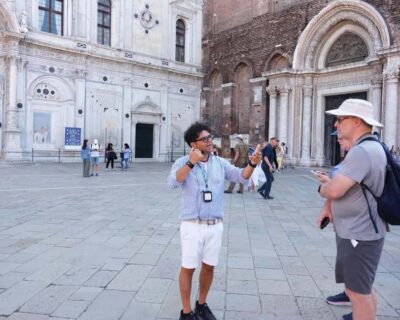
Look for the guide with a yellow bag and a yellow Vilnius with Locals Tours sign. If you arrive a few minutes early, I’d use that time to orient yourself to Old Town streets before the walk swings outward.
This opening matters because it sets expectations. You’re not just looking at buildings; you’re learning why certain blocks, squares, and facades were shaped by Soviet power and Soviet priorities.
You can also read our reviews of more walking tours in Vilnius
Palace of Concerts & Sports: brutalism with concerts and basketball in mind
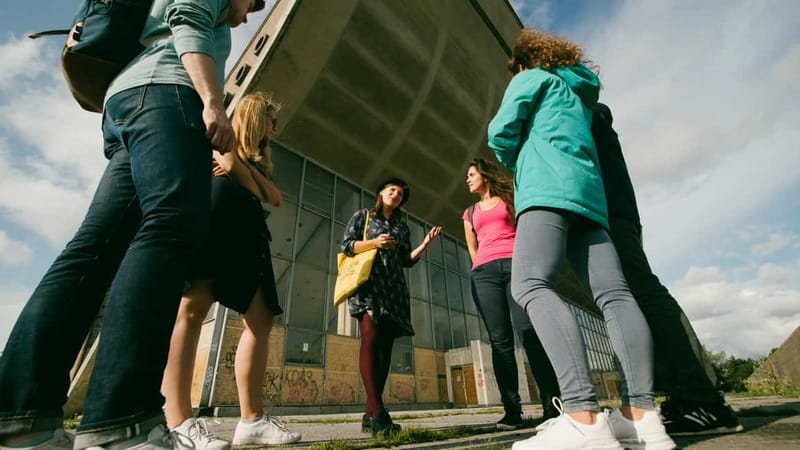
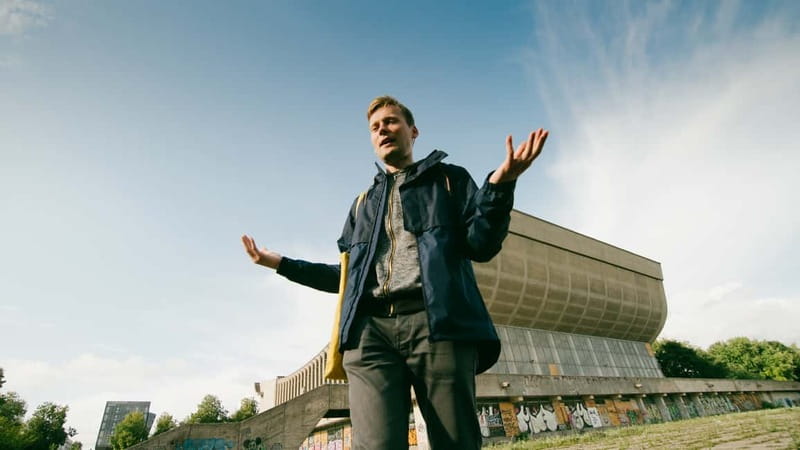
Soon after you start, the tour pulls your eyes to the Palace of Concerts & Sports, a major brutalist Soviet-era landmark. It’s the kind of building you can’t ignore—big geometry, heavy lines, and a feel of the state behind every angle.
What I like here is that it’s not treated like a museum piece. The guide explains what the building was used for back then—concerts and big sports events—so you connect architecture to daily experiences and public life.
Practical tip: this stop is good for photos, but the best angles depend on where the group moves next. I found it helps to keep your camera ready rather than stopping to hunt for the perfect frame.
Following the river toward the Green Bridge and removed propaganda statues
As the tour continues along the river, you get views that most classic Old Town routes don’t really deliver. The walk opens up the city and gives you a sense of how Vilnius is shaped by water, bridges, and who got to use the skyline for messaging.
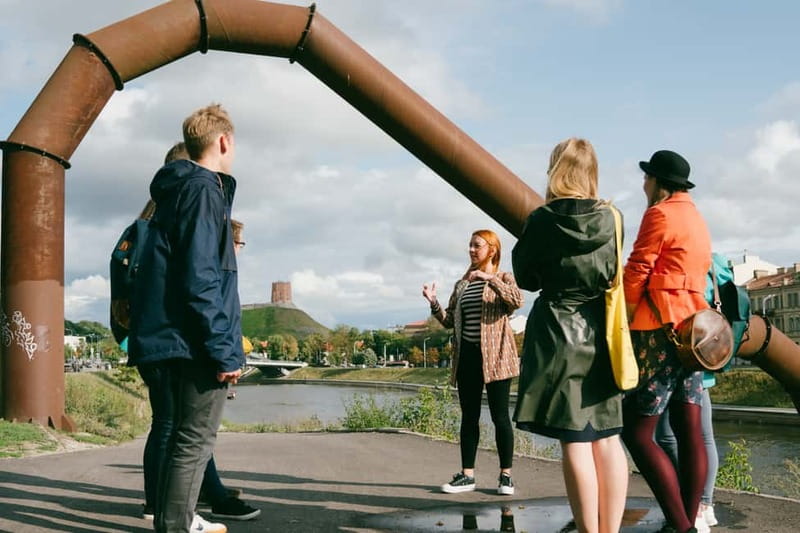
A standout moment is the Green Bridge area, tied to Soviet-era propaganda statues that were taken down recently. Seeing the bridge in its current form, right after hearing why those statues existed, changes how you read what’s still visible.
This is also where the tour turns from architecture into interpretation. You start asking: what was meant to be seen from far away, and what was meant to feel permanent?
Lukiskiu Square and the KGB Museum zone: where the fear becomes real
Lukiskiu Square is one of those places where history feels too close to be abstract. The tour heads here with the KGB Museum nearby, and the stories get darker—often described as horrific—because this wasn’t distant politics.
I found the guide’s approach important. Instead of turning the topic into shock value, the explanation focuses on how Soviet rule affected ordinary people in Vilnius: what control looked like, and what people had to think about day to day.
Yes, this section can be emotionally heavy. If you’re sensitive to oppression narratives, it helps to mentally prepare for a serious tone here. At the same time, this is exactly why the tour has such a strong reputation: you come away understanding the human cost behind the buildings.
Former Lenin’s Square to independence: how street names tell political power
One of the most useful parts of the walk is learning the location of former Lenin’s Square and then seeing what replaced it after Lithuania’s declaration of independence. It’s a simple idea—change the square, change the message—but walking it makes the concept feel real.
The guide points out how the area has changed, so you can read the city like a document. What used to be a symbol of Soviet authority becomes a sign of a new national identity.
If you’re into architecture or city planning, you’ll likely appreciate how this tour connects street layout, public space, and ideological goals. Even when buildings look plain from a distance, the guide helps you spot how power was built into where people had to walk, gather, and wait.
Finishing by Seimas: the 1991 independence story in walking distance
The tour ends next to the Seimas (parliament building). That matters because you’re not only learning about independence—you’re walking to a key place linked to the defense of Lithuania in 1991.
Ending at Seimas gives you a clean arc: Soviet rule shaped public spaces and everyday life, and then Lithuanians pushed back until independence became a lived reality. For me, this finale is what makes the walk feel complete rather than just gloomy sightseeing.
This final stretch is also good for questions. Since the group is near a major landmark, you can ask about what you saw earlier—especially how architecture, signage, and public messaging evolved after 1991.
Guide style: why names like Tadas and Šarūnas show up often
A guided walk can be good or it can be unforgettable. Here, the difference seems to be the guide’s storytelling style and personal connection to the subject.
You may hear from guides like Tadas, Šarūnas, or Ieva. What comes through in their delivery is a balance of serious historical context and something human—sometimes even humor—so the tour stays listenable even when the topics are tough.
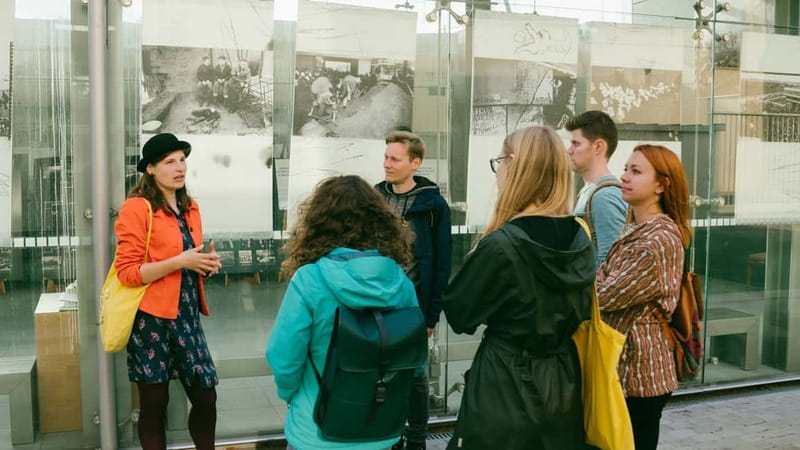
Another practical point: several guides use visual support, with old photos shown on an iPad. When you’re standing in front of a concrete building, those images help you picture what life and public events looked like back then.
Price and value: is $24 worth 2.5 hours of Soviet Vilnius?
At $24 per person for about 2.5 hours, this tour is priced for value rather than luxury. The real question is whether you’ll leave with more than what you could read in a book.
I think it’s worth it if your goal is context. The tour pairs recognizable landmarks—like the Palace of Concerts & Sports—with story-driven stops such as the area around Lukiskiu Square and the KGB Museum. That combination turns “I saw a building” into “I understand why it was built and what it did to people’s lives.”
Also, the time is efficient. You’re not stuck all day in transit or forced to hop between far-off sites. For a short Vilnius visit, this is a fast way to get a structured Soviet-era perspective without losing your whole afternoon.
One caution on expectations: there isn’t a way to rewind the city back to full Soviet-era appearance. Some remnants are changed, removed, or repurposed, so parts of the story are about what used to be there and what you can still interpret today.
How much walking is involved, and what to wear
This is a walking tour with lots of walking, and comfortable shoes are a must. The pace is generally manageable, and some stretches can feel easier because parts are flatter, but the route still covers ground beyond the Old Town.
If you have mobility constraints, treat this as a “probably not” choice. Even though wheelchair access is listed, the guidance also says it’s not recommended for people with limited mobility because of the overall walking load.
If you’re visiting in cold or rainy weather, dress for it. One thing I appreciated is that the guides typically keep things moving and are prepared for weather shifts, but you’re still outside for most of the experience.
Who should book this Soviet Vilnius tour
This tour fits best if you want more than postcard views. Book it if you care about how political power shows up in architecture, street life, and public space.
It’s also a strong match for:
- History-minded visitors who want stories tied to specific places
- People who like architecture and built-environment details
- Adults and teens who can handle difficult topics responsibly
- Travelers with limited time who want a focused Soviet-to-independence arc
If you prefer only light, casual sightseeing, or you need minimal walking, this may feel heavy or physically demanding.
Should you book Vilnius: Regular Walking Tour of Soviet Vilnius?
I’d book it if you want a clear, place-based understanding of Soviet Vilnius and how independence reshaped the city you’re standing in. The guide-led storytelling around brutalist landmarks and Lukiskiu Square is the kind of context that turns Vilnius from “pretty” into “meaningful.”
I’d think twice if you’re not up for heavy history or if you know your legs don’t handle long walking days well. In that case, you might enjoy Vilnius more with shorter Old Town-focused options.
If you do book, wear comfortable shoes, arrive ready to listen, and don’t rush past the quiet details—the captions, the squares, the bridge views. That’s where the real learning sticks.
FAQ
Where does the tour start?
The tour starts next to the Gediminas monument at Cathedral Square.
How do I find the guide?
Look for the guide with a yellow bag and a yellow Vilnius with Locals Tours sign in front of the Gediminas monument at Cathedral Square.
How long is the walking tour?
The tour lasts 2.5 hours.
What language is the tour guide speaking?
The tour is offered with a live guide in English.
What should I bring?
Bring comfortable shoes, since there is lots of walking involved.
Is the tour wheelchair accessible?
Wheelchair accessibility is listed, but the tour is also described as not recommended for people with limited mobility due to the amount of walking.
What will I see on the route?
You’ll see major Soviet-era architecture including the Palace of Concerts & Sports, views toward the Green Bridge, the Lukiskiu Square area near the KGB Museum, and end near the Seimas building.
How much does it cost?
The price is $24 per person.
What if I need to change my plans?
Free cancellation is available up to 24 hours in advance for a full refund, and there’s also a reserve now & pay later option.