REVIEW · LYON
Lyon: City Highlights Walking Tour
Book on GetYourGuide →Operated by Spyns Tours · Bookable on GetYourGuide
Lyon has a way of surprising you fast. This walking tour stacks the big sights with the sort of local details you only get from a guide like Aidan (or Ryan) and a route designed for quick learning. I like the fact that you get a relaxed, interactive pace, not a lecture sprint, and that the tour explains what you’re seeing from Roman roots through Renaissance silk trade and on to modern Lyon.
One trade-off: you do need comfortable shoes. Even though the terrain is mostly flat, you’ll walk about 5 km on the longer option, and a shorter option still includes enough footwork to feel like a proper morning (or early afternoon) out.
In This Review
- Key Things I Think You’ll Really Notice
- Choosing the Right Route: 2 Hours Up to Fourvière vs 1.5 Hours in Old Lyon
- Starting Off Smart: Place Saint-Jean or Place Bellecour
- The Lift to Fourvière: Metro Time, Then Funicular Tickets (Long Tour Only)
- Notre-Dame de Fourvière: The Basilica Stops Everyone Talks About
- Roman Layers at Fourvière: Ancient Theatre Views You Can Still Feel
- Saint-Jean-Baptiste Cathedral: A Change of Mood in the Middle of the Story
- Traboules: La Longue Traboule and the Secret-Passage Moment
- Vieux Lyon: Where the City Feels Like It Has a Pulse
- Place Bellecour: Lyon’s Main Square and a Good Reset Point
- The Saône River Stroll: Where the City Breathes
- Place des Terreaux and the Bartholdi Fountain: A Photo Stop That Feels Worth It
- City Hall and the Opera House: Big-City Drama in Lyon’s Center
- Hôtel-Dieu on the Short Tour: Old Hospital, New Use
- What Makes the Price Feel Reasonable at $25
- Pace, Group Size, and Who This Tour Fits Best
- Bring
- Should You Book This Lyon Highlights Walk?
- FAQ
- What sites does the tour cover?
- How long are the two tour options?
- How much walking is involved?
- Are food and drinks included?
- Is the guide available in English and French?
- Is the Fourvière funicular included?
- What if my plans change?
Key Things I Think You’ll Really Notice
- Two route lengths let you match your stamina: about 5 km or about 2 km.
- Bilingual guides (English and French) keep the stories clear and the questions flowing.
- Traboules on purpose, including La Longue Traboule, so you see Lyon’s secret passageways for real.
- Fourvière is built into the plan on the 2-hour tour with funicular tickets included.
- Photo stops at major landmarks so you don’t rush past the best angles.
- Restaurant pointers for bouchons help you turn the tour into your first smart meal.
Choosing the Right Route: 2 Hours Up to Fourvière vs 1.5 Hours in Old Lyon
You basically get two ways to do this, and that matters more than it sounds.
The longer 2-hour, small-group option caps at 10 people and covers roughly 5 km. It’s the better pick if you want the widest sweep: Fourvière Basilica and Roman theatre sites plus major squares like Place Bellecour and Place des Terreaux, with plenty of time for questions and photos.
The shorter 1.5-hour option caps at 18 people and covers about 2 km. It’s ideal when you’re trying to see Lyon quickly without committing to the bigger walk. You still hit the heart of the old-city vibe: Vieux Lyon, traboules, and the Saône riverside stretch, plus the Hôtel Dieux stop.
If you’re debating, I’d choose based on one thing: do you want the hilltop views and Roman layers of Fourvière? If yes, go long. If no, go short and save your energy for the evening.
You can also read our reviews of more walking tours in Lyon

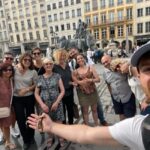
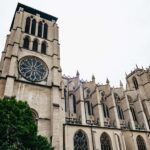
Starting Off Smart: Place Saint-Jean or Place Bellecour
Your day starts at one of two hubs, depending on the option you book: Place Saint-Jean or Place Bellecour.
Place Saint-Jean is a natural entry point for people who like medieval streets and cathedral energy right away. Place Bellecour is the classic central gathering spot: open, easy to orient yourself, and perfect for kicking off a highlights route.
Either way, the opening moments are about getting your bearings. You’ll get the quick orientation that helps the rest of the walk click. That’s a small thing, but it makes a huge difference when you’re bouncing between Roman-era traces, Renaissance city planning, and that very Lyon mix of grand buildings and everyday life.
The Lift to Fourvière: Metro Time, Then Funicular Tickets (Long Tour Only)
On the longer route, there’s a short subway/metro segment. Think of it as time-saving, not a detour. It gets you from the center up toward the Fourvière hill area without turning the tour into a climb grind.
Then comes the Fourvière funicular moment, and here’s why it’s valuable: the funicular tickets are included for the 2-hour option. That means you’re not doing logistics mid-visit. You’re just moving toward one of Lyon’s most memorable views.
What I like about this setup is that it keeps the tone relaxed. You’re walking, yes, but the big elevation hurdle is handled. Your legs stay for the sight stops, like the basilica and the Roman theatre complex.
Notre-Dame de Fourvière: The Basilica Stops Everyone Talks About
Fourvière Basilica is a stop you’ll feel in your photos. It’s also more than a pretty facade in this tour, because the guide ties it to what came before it.
On the longer route, you’ll get a guided look at Basilica of Notre-Dame de Fourvière for about 15 minutes. The guide focuses on what you’re seeing, not just where to stand for a selfie. Expect a mix of architectural cues and city-story context, and the language support is real since the guides are fluent in both English and French.
One practical note: plan on time to look around. Even if your group moves as a unit, you’ll want a few extra seconds to take in the angles—especially if the sky is clear. This is one of those places where your “I’ve seen the landmark” turns into “I finally get why it matters.”
Roman Layers at Fourvière: Ancient Theatre Views You Can Still Feel
Right after the basilica, you’ll step into the Ancient Theatre of Fourvière area. In the plan, it’s a guided stop of about 10 minutes.
What makes this section special is the contrast. You get a clear before-and-after feeling: Roman entertainment space versus later religious and civic ambition on the same hill. The guide connects the dots through Lyon’s long timeline—Roman origins through later eras.
Also, this is where the tour’s “interactive and fun” style helps. You’re not just watching stone; you’re learning how people used spaces back then. The theatre setting helps your brain picture scale and performance. If you like history that shows up in real street-level ruins, this portion delivers.
Saint-Jean-Baptiste Cathedral: A Change of Mood in the Middle of the Story
On the longer tour, you also stop at Cathédrale Saint-Jean-Baptiste with about 15 minutes guided time.
This isn’t just a pass-through. It gives your eyes a break from the dramatic Fourvière hill energy and shifts you back into the older Lyon rhythm. Expect architectural notes and historical context that make the city’s religious sites feel less random and more connected.
If you’re the type who wonders how a city’s center actually formed over time, this cathedral stop helps you understand the logic of location—why certain areas grew into power centers.
Traboules: La Longue Traboule and the Secret-Passage Moment
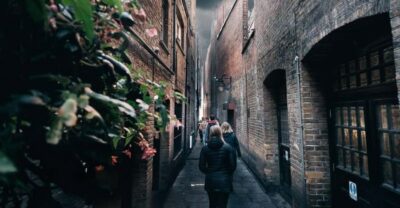
Now for the Lyon move that feels like you found a cheat code: the traboules, secret passageways used historically by locals.
You’ll see La Longue Traboule on the longer route, with a guided walk-through of about 10 minutes. On both routes, there’s focused time in Vieux Lyon and traboules territory, including guided time for the Old Town area.
Here’s why I consider this one of the best parts of the tour: it turns your walking into discovery. Streets in Lyon can look normal until someone points out that doors and corridors lead to other worlds.
Aidan and Ryan both bring that kind of storytelling. In the reviews, people consistently highlight the secret passages as a standout, and I get why. It’s physical. You’re not imagining history—you’re walking through it.
Vieux Lyon: Where the City Feels Like It Has a Pulse
Vieux Lyon is the core old-city area, and you’ll get a solid guided segment (about 20 minutes on the longer option, plus time on the shorter).
What you’ll notice here is how the tour balances beauty and meaning. The guide connects the stonework and street layout to how people lived. You’ll also get practical orientation cues, which help you navigate after the tour ends without getting lost in a maze of alleys.
This stop is especially worth it if you want Lyon to feel more than a list of monuments. You start to sense the patterns: where you’d shop, where you’d move, where light and viewpoints naturally land.
Place Bellecour: Lyon’s Main Square and a Good Reset Point
Place Bellecour shows up as a key stop on both routes, with about 10 minutes of guided time early on the longer plan.
It’s one of those squares that helps you reset your eyes after old streets and interior passages. It also works as a “you’re in the right place” checkpoint. If you’re thinking about the tour as a way to build confidence, this is where it happens.
I like that the guide doesn’t treat the square like a landmark only. They tie it into the city’s flow, so when you later walk around on your own, you understand why everything clusters where it does.
The Saône River Stroll: Where the City Breathes
On both options, you’ll walk by and along the river Saône corridor. In the outline, it’s one of the middle-to-late stops.
This isn’t just scenic. It’s a way to understand Lyon’s layout. Rivers here are travel routes, trade routes, and natural lines for the city to expand around. A story about Lyon that ignores the river would feel incomplete.
You’ll get guided context, plus a chance to slow down. That stretch helps the whole tour feel less like ticking boxes and more like learning the city’s structure.
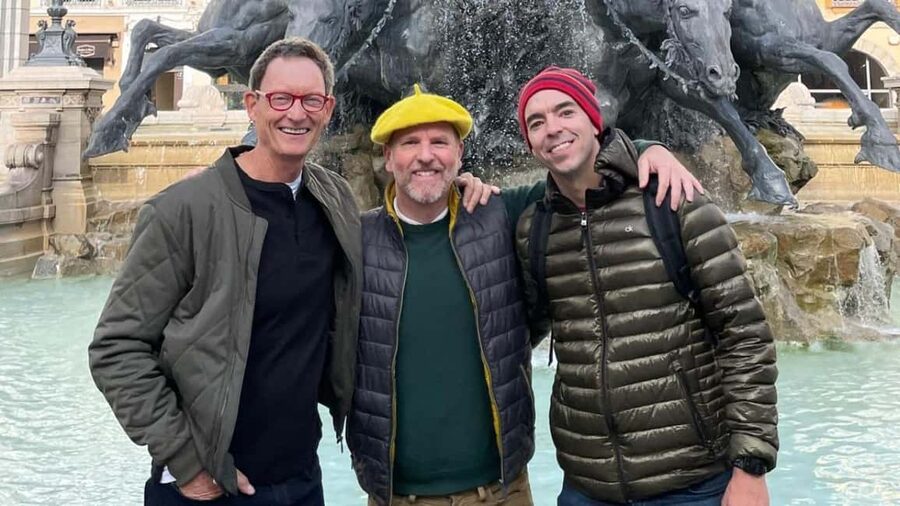
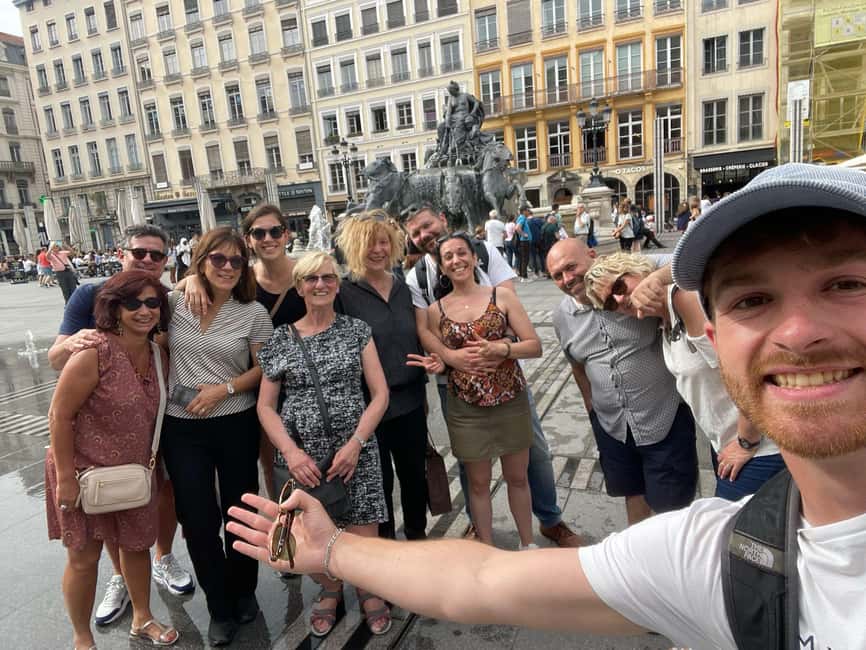
Place des Terreaux and the Bartholdi Fountain: A Photo Stop That Feels Worth It
On the longer route, Place des Terreaux is guided for about 10 minutes, followed by Bartholdi Fountain with another guided 10-minute segment and photo time.
This is a good place to be a little patient. Squares and fountains can look the same in passing, but when the guide points out what to look for, you start seeing details you would’ve missed.
The fountain is the sort of landmark that benefits from context. Once you understand what you’re looking at, the photos stop feeling like souvenirs and start looking like memories of a story.
City Hall and the Opera House: Big-City Drama in Lyon’s Center
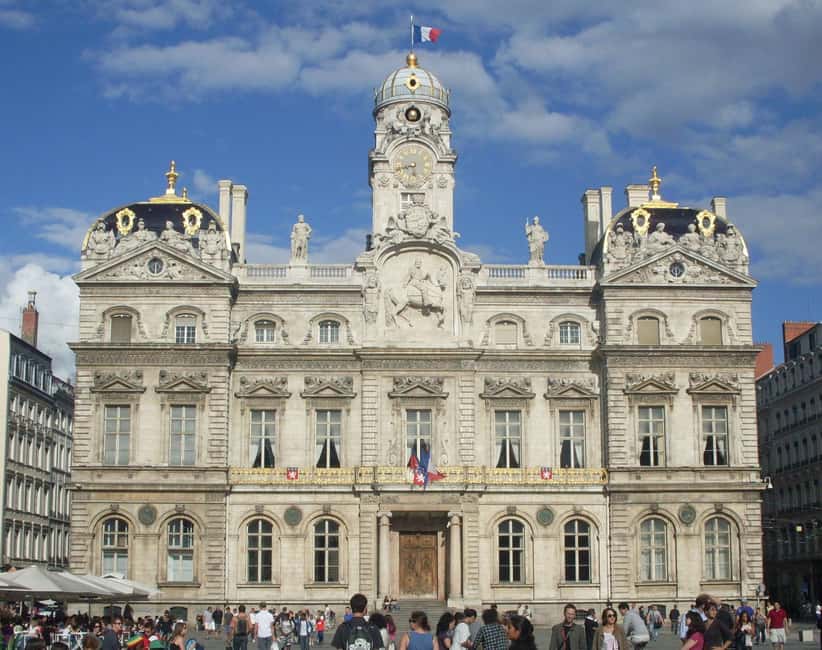
The longer itinerary includes stops tied to Lyon’s civic and cultural landmarks, including city hall and the opera house, plus additional photo moments.
In this section, the tour shifts toward Lyon as a modern cultural capital—still shaped by earlier eras, but showing off its grand public face. If you’re wondering how Lyon balances everyday life with impressive architecture, this part makes the answer obvious.
One small drawback worth noting: if you’re in a hurry to get out and keep exploring on your own, you may want to use the photo stops efficiently. The guide usually gives you time, but the sites here are close together, so your attention needs to stay switched on.
Hôtel-Dieu on the Short Tour: Old Hospital, New Use
On the shorter 1.5-hour option, one of the key stops is Hôtel Dieux. (It’s listed as Hôtel Dieux in the route description, and it’s described as an imposing Renaissance hospital now used as a hotel and shopping center.)
This stop is smart for a short tour because it shows Lyon doing something practical with old buildings. It’s not just preserved stone in a museum box; it has a present-day function.
If you’re thinking about value, this is a win. You’re seeing one of Lyon’s most recognizable Renaissance structures, and you’re also getting a sense of how the city keeps moving.
What Makes the Price Feel Reasonable at $25
At $25 per person, you might wonder if it’s steep—especially if you’ve seen other walking tours priced lower. One review even flagged that pricing question.
Here’s the way I’d judge it: you’re paying for (1) a bilingual guide, (2) a route that includes major stops rather than vague wandering, and (3) the included Fourvière funicular tickets on the 2-hour option.
Plus, the tour doesn’t stop at landmarks. Guides like Aidan and Ryan bring the city stories together—Roman origins, Renaissance silk trade, and Lyon’s role in World War II—then translate it into what you can actually see in the streets. That’s what turns the tour from a photo walk into a city-knowledge upgrade.
And you also get something intangible but useful: restaurant guidance for bouchon-style dining along the way. Food isn’t included, but the recommendations help you plan your next step without guessing.
Pace, Group Size, and Who This Tour Fits Best
If you like talking and asking questions, the smaller group on the long tour (max 10) is a strong choice. Reviews repeatedly mention how engaging the guides are, and how the pacing leaves room for sight time rather than constant marching.
If you’re limited on time, the short tour is more than a skim. With a bigger cap of 18, you still cover the essential neighborhoods and get the traboules experience plus key center squares.
This tour is described as suitable for all ages and physical abilities, and the terrain is listed as mostly flat. Still, it’s also listed as not suitable for people over 95, so take that seriously.
Bring
- Comfortable shoes. You’ll walk enough to feel it by the end.
Should You Book This Lyon Highlights Walk?
I think it’s a solid booking for most first-time Lyon visits—especially if you want a fast handle on the city. The big reason is simple: you get the highlights plus the local-only passageways, and the guide connects the visuals to Lyon’s timeline instead of dropping facts without meaning.
I’d book the 2-hour option if Fourvière and Roman layers are on your must-see list and you’re okay with about 5 km of walking. I’d book the 1.5-hour option if you want the vibe of Vieux Lyon, traboules, the Saône, and Hôtel-Dieu without committing to the longer circuit.
If your priority is maximum monuments per minute, either option works. If your priority is getting your questions answered and leaving with a better sense of where to go next, the small-group long tour is the better fit.
FAQ
What sites does the tour cover?
The longer option includes Fourvière Basilica, the ancient Roman theatres, Vieux Lyon, traboules (including La Longue Traboule), Place Bellecour, the river Saône, Place des Terreaux, the Bartholdi fountain, Lyon city hall, and the opera house. The shorter option focuses on Vieux Lyon, traboules, Place Bellecour, the river Saône, and Hôtel Dieux.
How long are the two tour options?
There’s a 2-hour option and a 1.5-hour option. The full tour time range is listed as 90 minutes to 2 hours depending on the option booked.
How much walking is involved?
The 2-hour tour includes about 5 km of walking (about 3 miles). The 1.5-hour tour includes about 2 km of walking (about 1.3 miles). The terrain is mostly flat.
Are food and drinks included?
No. Food and drinks are not included. The tour does provide typical bouchon restaurant recommendations along the way.
Is the guide available in English and French?
Yes. The tour has live guides in English and French.
Is the Fourvière funicular included?
Funiculaire tickets are included for the 2-hour tour option only.
What if my plans change?
Free cancellation is offered up to 24 hours in advance for a full refund, and there is a reserve now & pay later option where you pay nothing today.