REVIEW · TRIER
Trier: Guided Old Town Highlights and History Walking Tour
Book on GetYourGuide →Operated by k3 stadtführungen · Bookable on GetYourGuide
Roman stone still talks in Trier. This old town highlights walking tour stitches together eras fast, starting at the Porta Nigra and moving through the big sights you’ll actually want to see: Trier Cathedral, the Main Market, and the home of Karl Marx. It’s an easy way to turn a few photos into a real timeline you can remember.
I like that the route doesn’t treat Trier like a pile of monuments. You get the story behind the turns, from Roman rule (including daily life around the gate) through the Middle Ages and on to the modern city. I also like the people part: the guide is live and you’re encouraged to ask for practical tips after the walk, like where to eat and which bars fit your vibe.
One thing to consider: the tour is German-language only, so if you’re not comfortable listening in German, plan on using a translation app and be ready to rely on key landmarks more than fine details. Also, 1.5 hours is short, so it’s best as an overview that helps you choose where to go next.
In This Review
- Key Highlights That Make This Tour Worth It
- Starting at the Porta Nigra: Trier’s Roman front door
- How the Route Tells Trier’s Story in 90 Minutes
- Trier Cathedral and the Main Market: the civic and spiritual center
- Karl Marx’s Residential House: history with a modern hook
- What the Guide Adds (and why questions are a big deal)
- Practicalities: meeting point, timing, and comfortable touring habits
- Should You Book This Trier Old Town Highlights Tour?
- FAQ
- Where do I meet the guide?
- How long is the walking tour?
- What is included in the price?
- What language is the tour in?
- How much does the tour cost?
- Can I cancel and still get a refund?
- Are children allowed?
Key Highlights That Make This Tour Worth It
- Porta Nigra from 170 AD: a Roman landmark you’ll understand, not just photograph
- Clear era-to-era storytelling: Roman rule to Middle Ages to modern Trier in 90 minutes
- Trier Cathedral and the Main Market: the civic and spiritual center, explained as you walk
- Karl Marx’s residential house: why Trier still matters to modern ideas
- Live guide with humor and Q&A: guides like Patrick and Herbert are praised for making answers easy and the walk fun
- Good end-of-tour payoff: ask your guide for restaurant and bar suggestions while you’re already in the old town
Starting at the Porta Nigra: Trier’s Roman front door
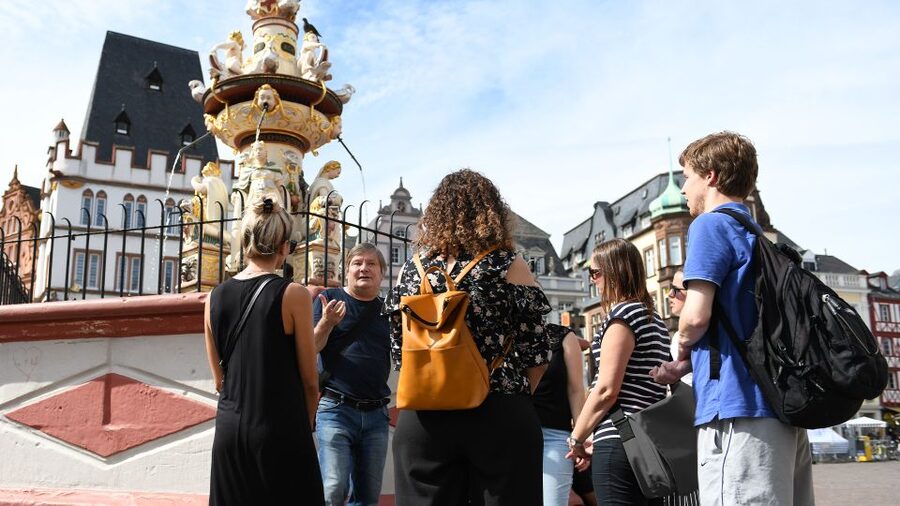
Your tour meets near the Porta Nigra, in front of the Mercure Hotel opposite the Porta Nigra. That’s a smart start. You don’t waste time figuring out where everything is. You’re placed at the exact landmark that explains why Trier became important in the first place.
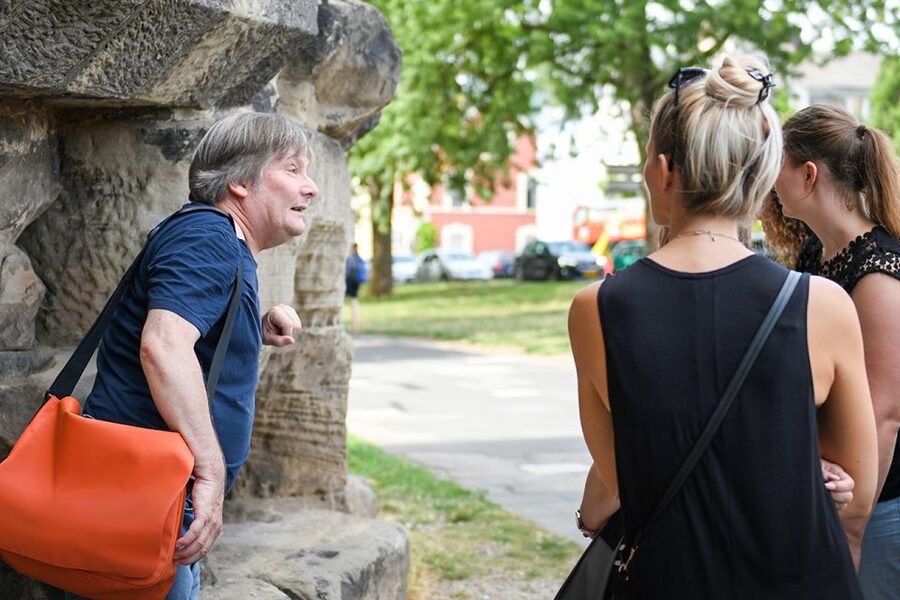
The Porta Nigra is massive, and the guide gives you the context that makes it feel real. Built by the Romans as early as 170 AD, it’s one of those sites where the stone looks ancient even before you hear the story. You’ll also get what life could feel like under Roman rule, including what a daily city experience might have been like around a structure like this.
If you’ve ever toured a Roman site and felt you only learned dates, this is the opposite. The point here is to help you look at the gate and imagine the city functioning around it, then move forward through time without losing your bearings.
How the Route Tells Trier’s Story in 90 Minutes
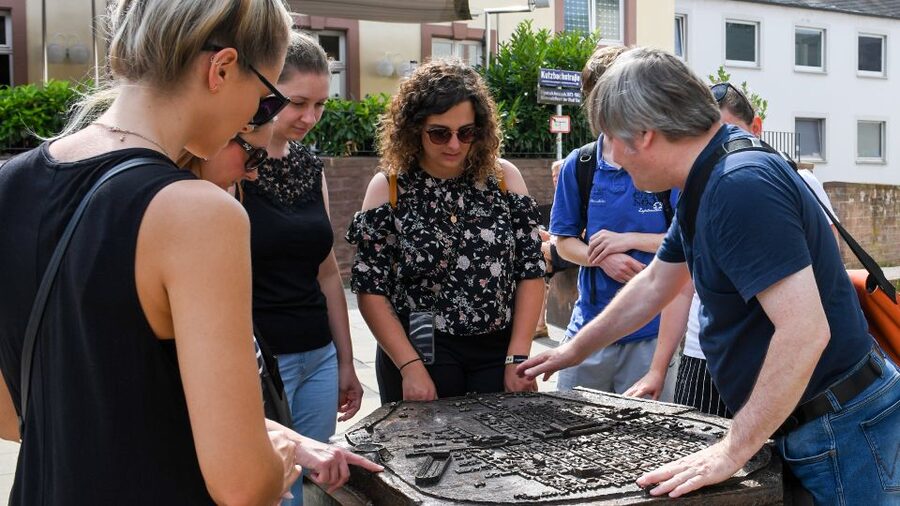
This is a highlights walk, not a slow museum day. The pacing works because it’s built around a sequence of eras you can actually track while your feet move. Expect the guide to connect each landmark to what came before and what replaced it.
Here’s the way the timeline tends to land for you:
- Roman Trier starts at the Porta Nigra, with a focus on everyday life under Roman rule.
- Middle Ages Trier shows up through the architecture you see next, along with how the city’s look and role evolved.
- Modern Trier arrives through a living idea from the past: the philosopher Karl Marx, tied to the house you’ll visit.
That last piece matters more than you might think. A lot of old-town tours stop at architecture and stop breathing when they run out of buildings. This one gives you a thread into modern identity through Marx’s connection to Trier, so the city doesn’t feel like a dead set of ruins.
You’re also paying for a live guide, which is the biggest value lever on any walking tour. At $16 per person for 1.5 hours, you’re essentially buying interpretation time. Instead of reading a plaque for every stop, you get guided explanation that helps you decide what to study later on your own.
Trier Cathedral and the Main Market: the civic and spiritual center
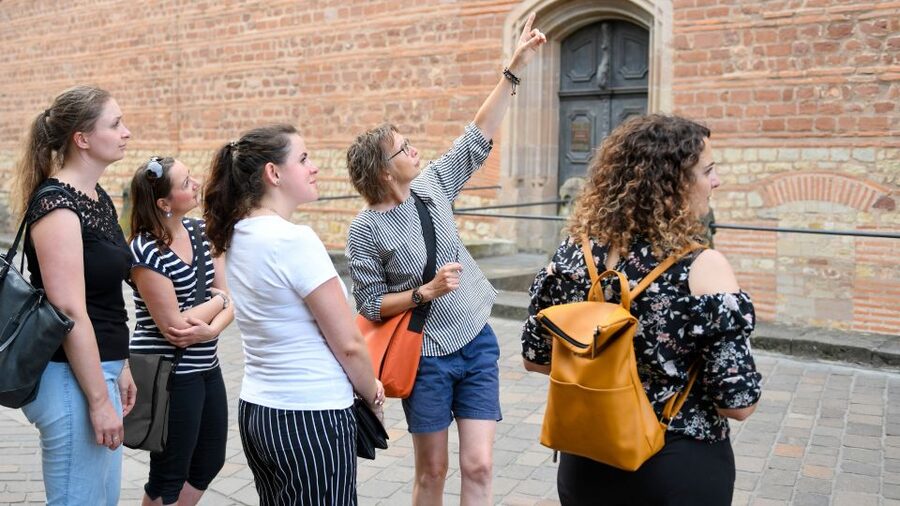
After the Roman anchor, the tour shifts toward the heart of the city. You’ll admire key landmarks including Trier Cathedral and the Main Market.
Why these stops matter: they show what a city builds when it’s not centered on walls and gates anymore. The cathedral represents the long arc of religious and community life. The Main Market represents public space, commerce, and the everyday rhythm that keeps a historic city alive.
Even if you don’t consider yourself a big-architecture person, this part helps you read Trier. You start to see how the city’s priorities changed over centuries. The guide’s job is to point out what to notice and why that detail connects to the era you’ve just learned about.
One practical benefit: since you’re moving as a group, you’re less likely to wander off-task. You’ll get a coherent walk through the old town core, and then you can break away with confidence at the end to explore the places that grabbed you.
Karl Marx’s Residential House: history with a modern hook
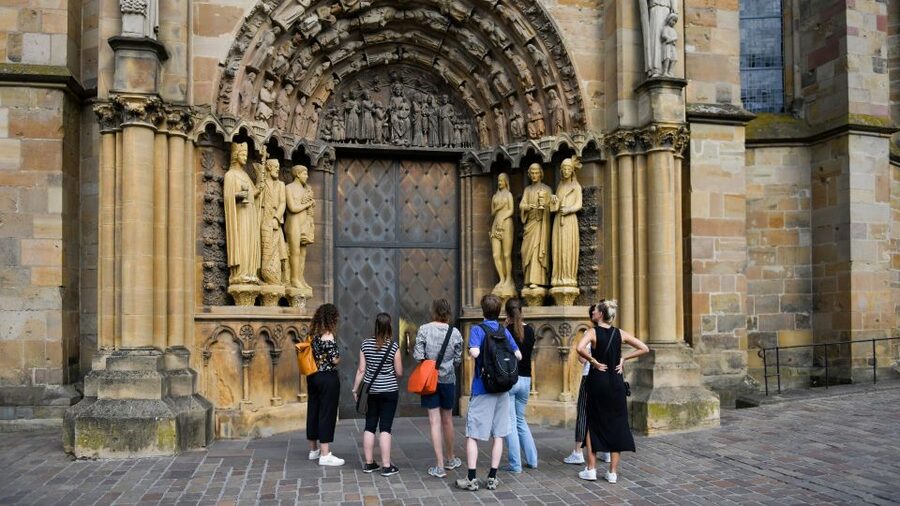
One of the tour’s most distinctive parts is the visit to Marx’s residential house. The guide ties the stop to Karl Marx, described here as one of the most influential philosophers, and it’s treated as more than a footnote.
This is the kind of stop that turns a city highlights tour into a story you can retell. You look at Trier and realize it’s not just about Roman stones and medieval facades. It also connects to big intellectual currents that traveled far beyond Germany.
I also like how this piece changes your mood. Roman gates and cathedral architecture can blur together if you’re seeing multiple cities back-to-back. Marx’s home gives a different tone: ideas, people, and a sense that history includes thoughts that still shape the present.
If you’re the type of traveler who likes your tours to connect the past to today, this stop is a major reason to book.
What the Guide Adds (and why questions are a big deal)
This tour is led by a live guide in German. That’s important, and it affects how you should plan.
The good news is that the format encourages interaction. You’re explicitly able to ask your guide for tips on restaurants and bars afterward. In practical terms, that can save you time. Instead of guessing once you’re hungry and tired, you can get local suggestions tailored to your interests.
The other thing I’d highlight is how the guiding style shows up in the experience. Guides such as Patrick and Herbert are praised for combining solid explanations with humor and a personal touch. The result is a walk that feels like a conversation, not a lecture.
If you’re relying on German, I’d set a simple goal: ask at least one question during the walk, even if it’s basic. The more you engage, the more you’ll get out of the stops.
Practicalities: meeting point, timing, and comfortable touring habits
Let’s make this easy to do right.
You meet at the Mercure Hotel opposite the Porta Nigra. The tour lasts 1.5 hours, which is a sweet spot for a compact old town plan. Long enough to cover major sights with real context, short enough that you can still continue your day afterward.
Because this is a walking tour, I’d treat it like any other city walk: wear comfortable shoes and bring a layer. Trier weather can shift, and you’ll be outside while learning.
Who this fits best:
- You want an overview of Roman Trier plus medieval Trier without doing separate tours.
- You like your sightseeing tied to story, not just captions.
- You’re curious about connections like Karl Marx but still want the classics: Porta Nigra, cathedral, and the Main Market.
Who might not love it:
- If you only do tours in English, the German-only format could be a problem.
- If you prefer long, slow exploration of one site, this may feel a bit fast as a full day plan.
Should You Book This Trier Old Town Highlights Tour?
Yes, you should book it if you want the fastest path to understanding Trier’s big landmarks and why they matter. With a live German guide for $16 per person and a tight 1.5-hour timeline, you get interpretation across multiple eras: Roman origins at Porta Nigra, key civic and spiritual stops like Trier Cathedral and the Main Market, and the modern intellectual thread through Karl Marx’s residential house.
I’d say go for it especially if you’re planning your next moves right after. The guide’s tips for restaurants and bars can turn the day from sightseeing into a smooth local experience.
If you don’t speak German well, consider whether you’re comfortable using translation support and learning “enough” from the landmarks while still catching the overall story. The walk is built around the sights, so you won’t be lost if your language skills are limited, but you’ll get more if you can follow the guide.
FAQ
Where do I meet the guide?
Meet your guide in front of the Mercure Hotel opposite to the Porta Nigra.
How long is the walking tour?
The tour lasts 1.5 hours.
What is included in the price?
You get a walking tour and a live guide.
What language is the tour in?
The live tour guide speaks German.
How much does the tour cost?
The price is $16 per person.
Can I cancel and still get a refund?
Yes. You can cancel up to 24 hours in advance for a full refund.
Are children allowed?
Children aged 0-5 years can join for free.