REVIEW · SYDNEY
Sydney Convicts, History & The Rocks 2.5-Hour Walking Tour
Book on GetYourGuide →Operated by Journey Walks · Bookable on GetYourGuide
A crooked convict story is built into every corner here. This 2.5-hour walk through Sydney’s The Rocks focuses on how convicts, sailors, soldiers, and governors shaped the city’s early days. I like the way it connects real places—cobblestone lanes, heritage buildings, cellars—with the human stories behind them, and I also love the building access, including Customs House and Argyle Stores. The one thing to weigh is that stairs are unavoidable at points, so it’s not a good fit for mobility impairments.
Guide-led storytelling does the heavy lifting, and it’s written for both first-timers and locals. You’ll hear about convict transportation and its impact on the Indigenous population, see Georgian and Victorian architecture up close, and get specific details such as convict-cut sandstone, hidden corridors, abandoned slums, and large cellars used for spirits and stores. Expect adult themes, and bring good walking shoes, since this is a real walk through historic terrain that includes some uphill-and-downhill moments.
In This Review
- The Rocks begins at Customs House Library, not at a museum door
- Circular Quay and Macquarie Place Park: framing the colony you’re about to meet
- Inside The Rocks: cobblestone lanes, sandstone cuttings, and hidden corridors
- Convicts, governors, and street gangs: the human stories behind the buildings
- Stopping inside Customs House and Argyle Stores: what access adds
- Pace, comfort, and weather: how to make 150 minutes feel easy
- Who should book this Sydney Convicts walk, and who should skip it
- Value check: is $36 worth 2.5 hours with building access?
- Should you book this Sydney Convicts, History & The Rocks walking tour?
- FAQ
- How long is the Sydney Convicts, History & The Rocks walking tour?
- How much does the tour cost?
- Where do I meet the guide?
- What’s included in the tour?
- Can I bring luggage or a stroller?
- Are pets allowed?
- Is the tour suitable for people with mobility impairments?
- What happens in bad weather?
- What language is the tour conducted in?
The Rocks begins at Customs House Library, not at a museum door
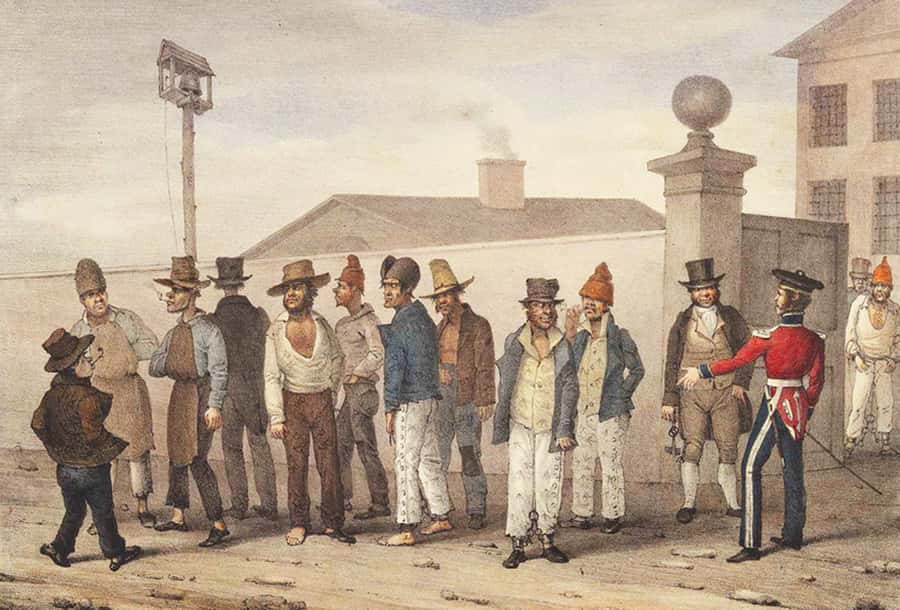
The tour starts at Customs House Library, which is smart. You begin with the setting that ties Sydney Harbour to trade, arrival, and control—then you move outward into the older streets where that control was felt day to day.
From there, the first stop in the Customs House area gives you more than a quick look. You’re guided through the site and then move on toward Circular Quay, which makes the whole route feel like a timeline. The time you spend near the waterfront matters, because it’s the most direct way to understand why early Sydney looked the way it did: people arrived by sea, supplies moved through the harbour, and law and survival were always close by.
If you like history that has friction—hard choices, tense power, and uneven outcomes—you’ll probably enjoy the tone. The Rocks is often sold as charming, but this tour treats the area as a working quarter that grew from hardship. That mix is exactly what keeps it from being a list of dates.
Circular Quay and Macquarie Place Park: framing the colony you’re about to meet
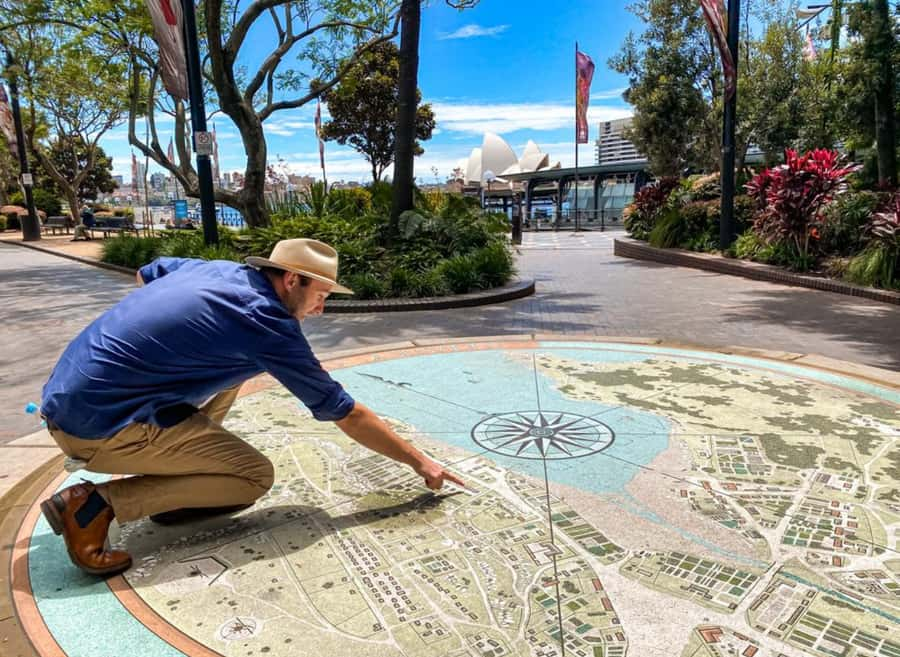
Circular Quay is where you can’t help but picture movement—ships, passengers, sailors, and supplies. On this walk, that matters because the stories link people arriving, people being punished, and people trying to get a foothold in a new place.
Next comes Macquarie Place Park, a pause in the route that still fits the theme. It helps you reset your bearings before the walk bends into the tight streets and the older built forms. This stretch also gives the guide room to build connections: convict transportation, the way the prison settlement was organized, and the broader social pressure that came from having a forced labour population living so close to the harbour economy.
You’ll notice a pattern as you go. Each location isn’t just scenic—it’s used as evidence. The guide points at what remains, explains what those structures were for, and ties it back to people you can’t fully see anymore. That approach is one reason the tour rating is so strong (it holds a 4.9 score across 181 reviews).
You can also read our reviews of more walking tours in Sydney



Inside The Rocks: cobblestone lanes, sandstone cuttings, and hidden corridors
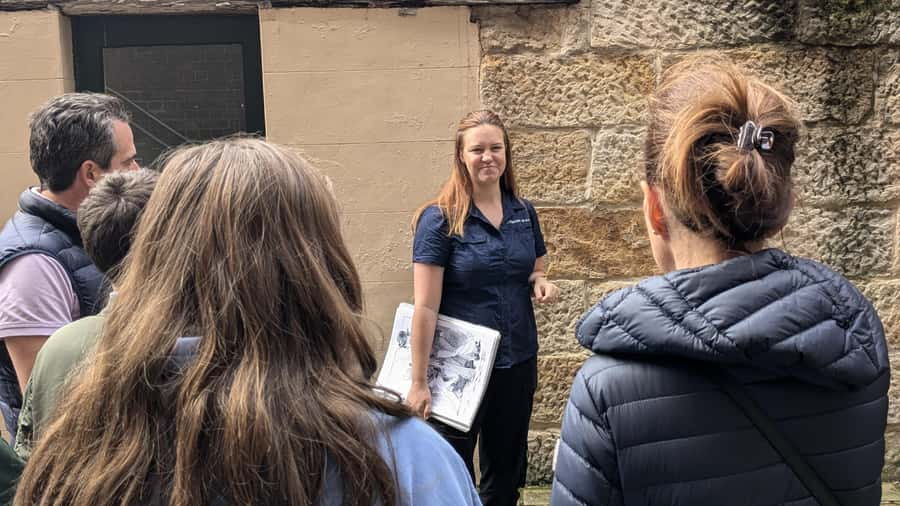
When the tour finally pushes into The Rocks, it’s the kind of area where you instinctively slow down. Cobblestone lanes make you watch your feet, and that helps you feel how compact the old quarter is. The guide uses that closeness well, turning what could be a quick stroll into a sequence of discoveries.
Here’s what you can expect to be talking about while you walk:
- convict cut sandstone (a physical trace of labour and design choices)
- hidden corridors and lesser-known passages
- unique sandstone structures and remnants you might pass without a second look
- abandoned slums and the human side of overcrowding and poverty
- enormous cellars for spirits and stores, which help explain how the economy actually worked underground and behind thick walls
This is also where the route gets more sensory. The textures—stonework, building materials, and the way streets funnel sightlines—make it easier to picture everyday life. And because the guide is guiding, you’re not stuck reading plaques. You’re hearing the narrative behind the stones.
One practical consideration: if it’s wet weather, the tour continues, so expect slippery patches on older surfaces. A raincoat or umbrella is a good idea so you can keep walking comfortably and stay focused on the stories.
Convicts, governors, and street gangs: the human stories behind the buildings
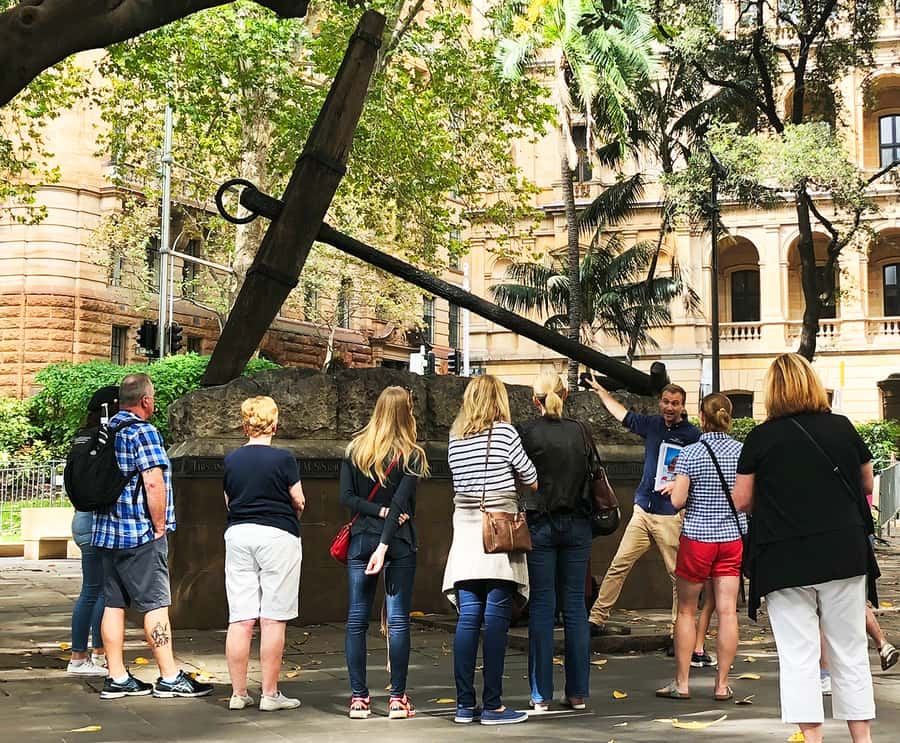
This tour doesn’t treat early Sydney like a clean academic story. It frames it as a mess of incentives and outcomes—who had power, who got punished, and who managed to turn hardship into leverage.
You’ll learn about criminal transportation to Australia and how it changed the colony right around the turn of the 19th century. Importantly, the tour also addresses the immediate effect this process had on Indigenous people. The tour may include names and images of people who are now deceased, and that’s something to consider if you’d rather avoid that kind of content.
The guide also tells a set of stories that connect surprisingly different threads:
- the curious case of a convict architect and the ambition of a Governor who wanted to decorate the prison settlement
- the teenage girl story—rising from chains to riches by conquering Sydney’s economy
- the street-level world, including notorious rum dealers and street gangs
Even if you only care about one part—convict life, governance, or crime and commerce—you’ll get cross-links. Rum isn’t just a theme; it’s a lens on trade routes, vice, and power. Street gangs aren’t just sensational; they show what happened when law and opportunity collided in a growing port city.
Stopping inside Customs House and Argyle Stores: what access adds
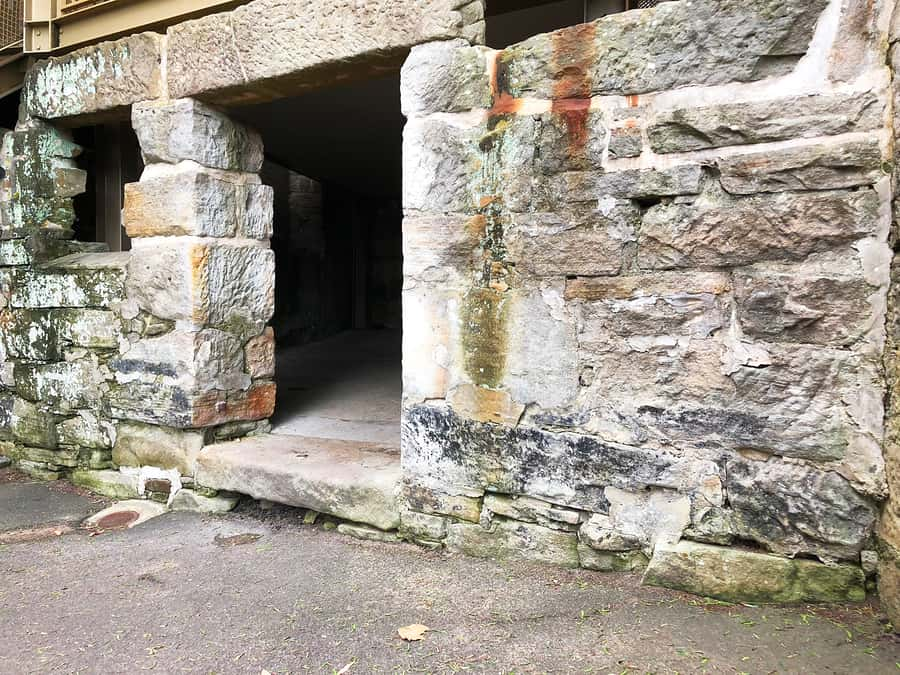
A lot of city history walks stay outside. This one includes entry into historic buildings, which changes what you’ll remember afterward. When you can step into heritage spaces, you start to notice scale—cellars feel different when you understand they weren’t just storage, but part of the working supply chain.
Two stops matter most here:
- Customs House: ties the harbour economy to the machinery of control, trade, and records
- Argyle Stores: helps you connect commerce to the older quarter’s built form, including the idea of spirits and goods stored in enormous cellars
These interiors also support the bigger narrative: early Sydney was built quickly, then rebuilt in layers. You can see that layering in Georgian and Victorian architecture, and in the way sandstone cuttings and structural leftovers point to work that happened under pressure.
You’ll also hear about heritage pubs, discovery museums, and how locals think about the Rocks today. That’s practical too. It gives you leads for a follow-up walk on your own after the tour ends at Argyle Cut.
Pace, comfort, and weather: how to make 150 minutes feel easy
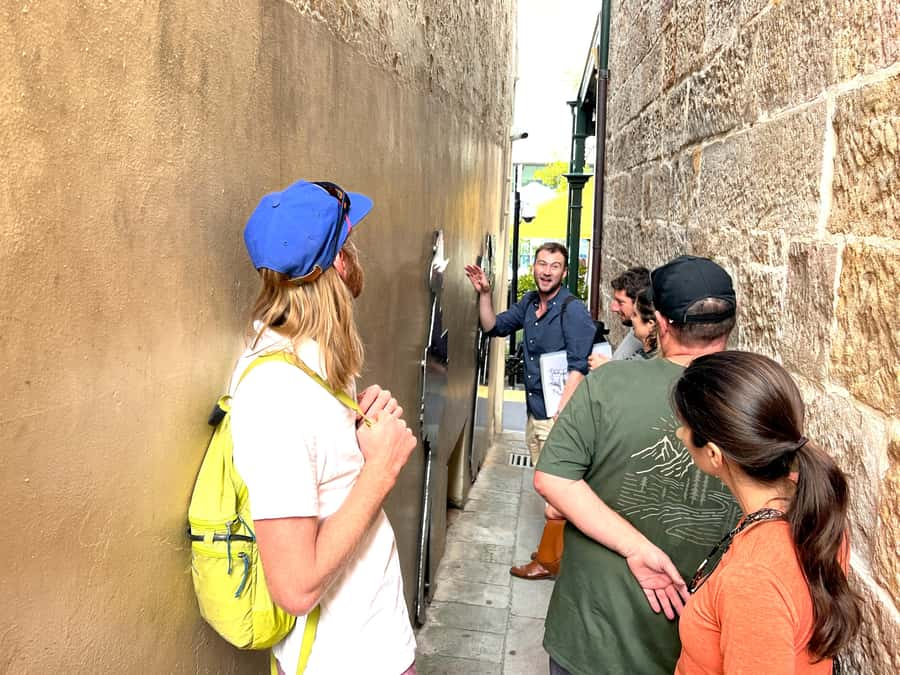
This is scheduled for 150 minutes, so it’s long enough for real detail but not so long you lose the thread. The pace is built around movement plus stops, and you’ll likely spend the most time in The Rocks itself (a 75-minute stretch). That means most of your energy should be saved for the older streets rather than the shorter waterfront segments.
Comfort tips you’ll be glad you followed:
- wear comfortable walking shoes (cobblestones and stairs do not reward fragile soles)
- bring a bottle of water
- plan for some stairs, since the layout means they’re unavoidable at certain points
Weather is handled in a straightforward way: the tour continues in wet or wild weather. That’s honest, and it’s also why your gear matters. If you show up dry and warm, the stories land better because you’re not distracted by cold hands or soaked clothes.
If you tend to get tired fast in the legs, the main question is simple: can you handle a historic walking route with stairs? If the answer is no, you’ll be happier skipping this one.
You can also read our reviews of more historical tours in Sydney

Who should book this Sydney Convicts walk, and who should skip it
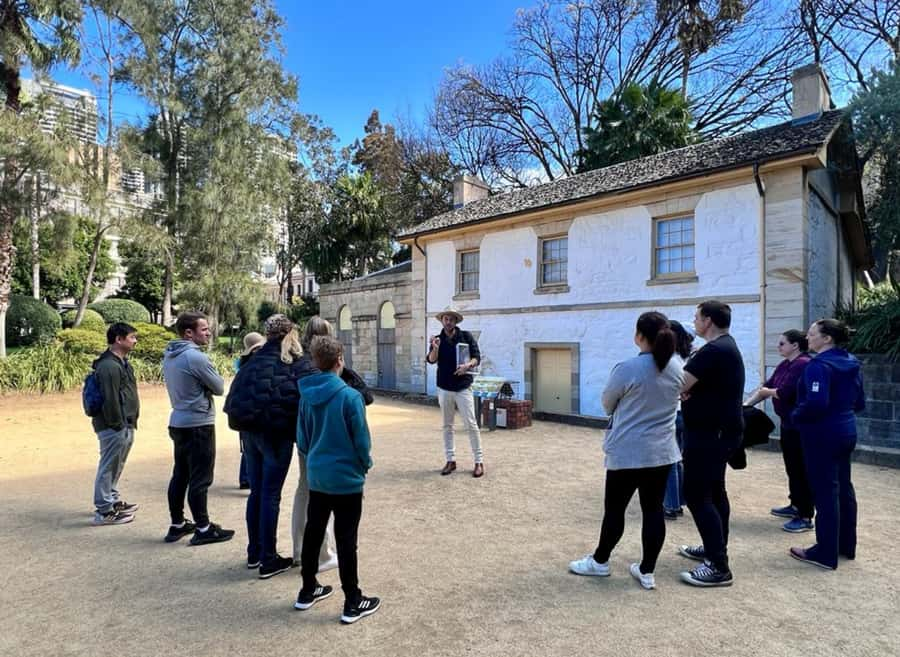
This tour is best for people older than 14, because the themes are adult and include crime, punishment, and slavery-era adjacent realities of colonial life. It also isn’t ideal for anyone with mobility impairments, since stairs are part of the route.
Who it suits well:
- you want early Sydney explained through the places where it happened, not just through a lecture
- you like history with direct connections to architecture (Georgian/Victorian styles, sandstone work, interior access)
- you want a guide who can answer questions and keep the group together
It also fits a mixed crowd: locals who think they know the Rocks often like hearing how small corners connect to the convict economy, while visitors like that it’s more than harbour views. The best moments are the ones where the guide uses a structure as a story prompt—like explaining why cellars existed and what they held, or tying rum dealing to street-level power.
Value check: is $36 worth 2.5 hours with building access?
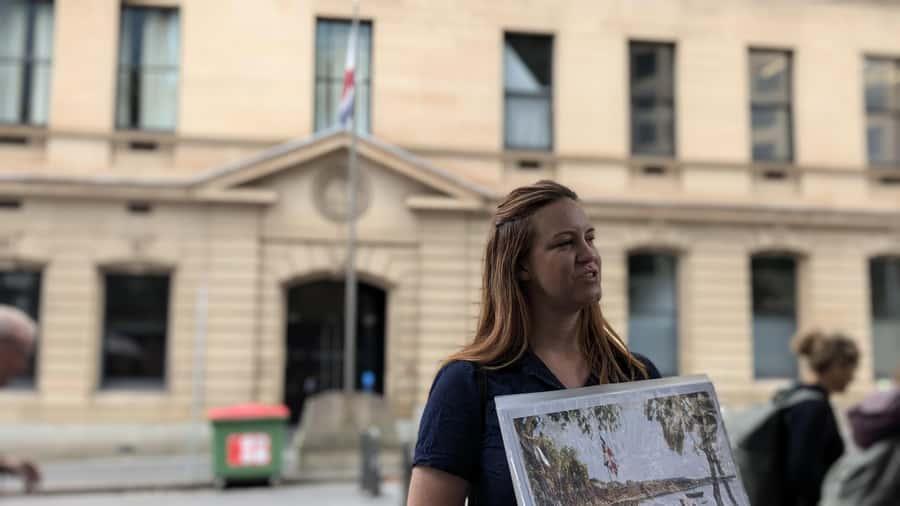
At $36 per person for 150 minutes, the math works out to a fair rate for a guided, city-centre walking experience. What makes it feel like good value is that you’re not only walking through streets—you’re also getting entry into historic buildings such as Argyle Stores and Customs House.
You’re also paying for interpretation. The route is packed with small, easy-to-miss details: convict-cut sandstone, unknown stories behind heritage structures, and the kinds of hidden ruins that only make sense when someone explains what you’re looking at. For most people, that’s the difference between seeing The Rocks and understanding what made it.
Add in that the tour is live-guided in English and that you get local context on historic pubs, heritage architecture, and discovery museums, and the cost starts to look sensible for a first pass at early Sydney.
Should you book this Sydney Convicts, History & The Rocks walking tour?
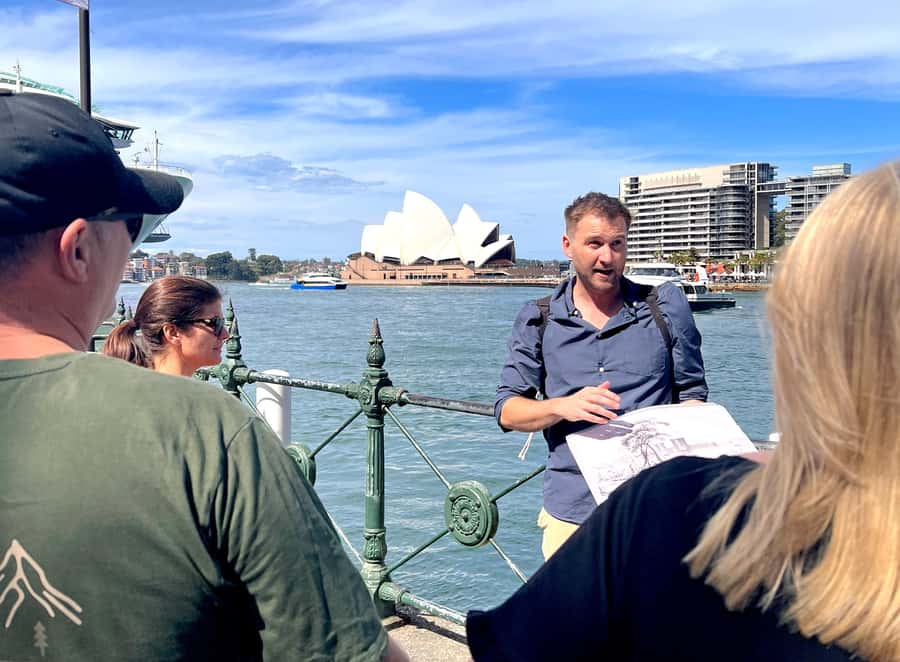
Yes, if you want a clear, place-based explanation of how Sydney formed—starting with criminals and governance, then widening into street gangs, rum commerce, architecture, and the impact on Indigenous communities. It’s especially worth it if you’re the kind of person who enjoys noticing details and then getting the story behind them.
Skip it if stairs and uneven historic surfaces are a problem for you, or if you prefer your history without references to deceased people’s names/images. And if you’re doing Sydney on a tight schedule, consider whether you can give this one focused time; it’s at its best when you can slow down in The Rocks rather than rushing through.
FAQ
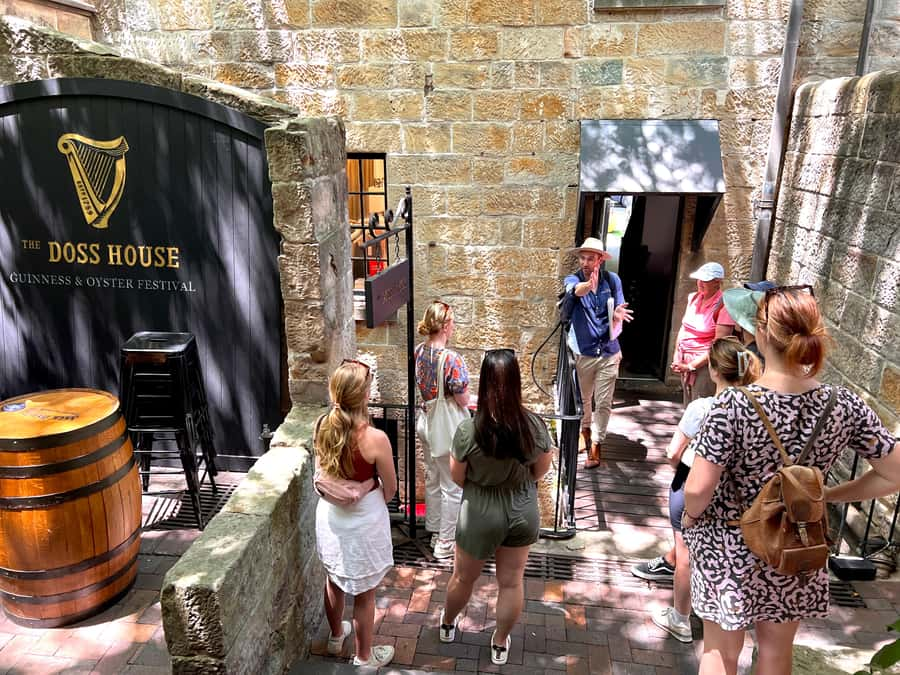
How long is the Sydney Convicts, History & The Rocks walking tour?
It runs for about 150 minutes (2.5 hours).
How much does the tour cost?
The price is $36 per person.
Where do I meet the guide?
Meet your guide in front of the Customs House building, on the right-hand side if you’re facing the building, outside.
What’s included in the tour?
You’ll get 2.5-hours of time with a local historian, entry into historic buildings such as Argyle Stores and Customs House, and an insider guide to local historic pubs, heritage architecture, and discovery museums.
Can I bring luggage or a stroller?
No. Luggage or large bags and baby strollers are not allowed.
Are pets allowed?
Pets are not allowed, though assistance dogs are permitted.
Is the tour suitable for people with mobility impairments?
No. It is not suitable for people with mobility impairments, and some stairs are unavoidable.
What happens in bad weather?
The tour continues in wet or wild weather. Bring an umbrella or raincoat so you can handle all conditions comfortably.
What language is the tour conducted in?
The tour is in English with a live guide.