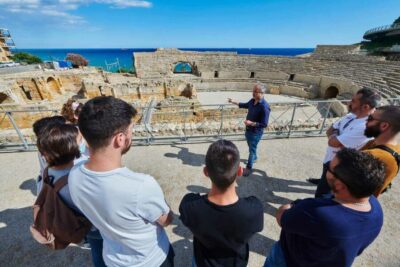
REVIEW · SORRENTO
Sorrento: Guided Walking Tour & Limoncello Tasting
Book on GetYourGuide →Operated by M.a.UrbanTrekking&More · Bookable on GetYourGuide
Sorrento hits best when you stop and look. This 2-hour guided walk threads through the town’s oldest corners with standout photo viewpoints, plus a proper limoncello tasting led by Mario—born and raised in Sorrento. I loved how the route feels like an open-air storybook: you’re shown why places exist, not just where to stand.
Two things I especially like are the Vallone dei Mulini viewpoints (panoramas plus the backstory of the old mills) and the way the guide explains Sorrento’s signature inlay craft before the lemon-focused tasting. The main thing to consider: the walk includes hills and steps, so it’s not a great fit for mobility limits, and it’s best to arrive on time since the group moves on quickly.
In This Review
- Quick hits before you go
- Entering Sorrento’s historic center (without a map in your hand)
- Piccadilly Pub start: meeting point, timing, and what to expect
- Vallone dei Mulini: the mills valley viewpoint that makes Sorrento click
- Via San Cesareo and Sant’Antonino Square: old lanes, local craft, and patron-saint stories
- Chiostro di San Francesco: a 13th-century pause that feels bigger than you expect
- Sedil Dominova: the city’s ancient parliament (and why that matters)
- Villa Comunale: Gulf of Naples views you’ll actually use later
- Sorrento inlay: learning the craft behind the famous decoration
- The lemon garden stop: from fruit history to limoncello technique
- Limoncello tasting: what you get and how to read the flavors
- Price and value: why $41 makes sense for this mix
- Who should book this tour, and who should skip it
- Practical tips so you enjoy every stop
- Should you book this Sorrento walk and limoncello tasting?
- FAQ
- How long is the tour in Sorrento?
- What does the tour cost?
- Where do I meet the guide?
- Is limoncello tasting included, and what else can I try?
- What sights are included on the walking route?
- How much walking is involved?
- Who should not take this tour?
- What should I bring, and how does rain affect the tour?
Quick hits before you go

- Vallone dei Mulini: mills valley views with practical history, not vague facts
- Old streets + artisan stops: Via San Cesareo and narrow lanes you’ll want to revisit
- Big-photo breaks: Villa Comunale overlooks the Gulf of Naples
- Sorrento inlay explained: the craft behind the famous decorative work
- Organic lemon tasting lesson: a lemon garden stop leads into limoncello sampling
Entering Sorrento’s historic center (without a map in your hand)
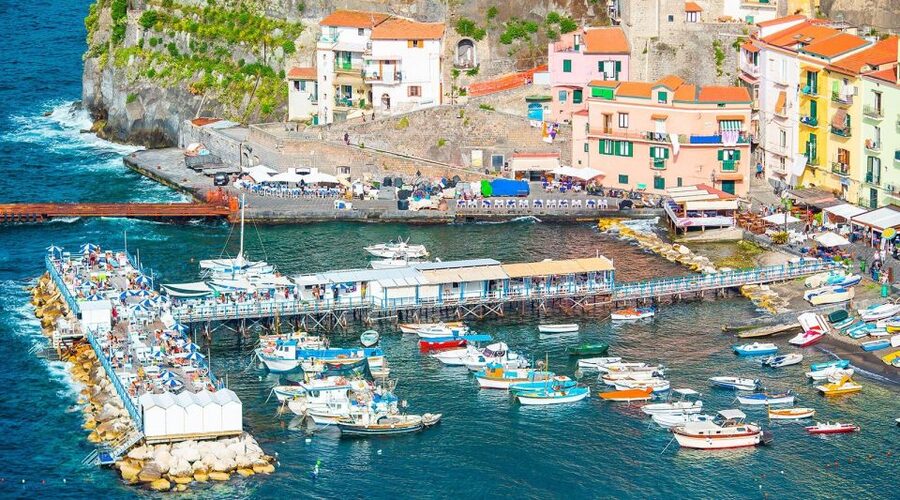
This tour is built for that first day feeling in Sorrento—when you want to get oriented fast, but you also want the town to make sense. You’ll walk through the historic center like it’s an open-air museum, with pauses for explanations and photos so you don’t feel rushed.
And yes, you’ll get limoncello. But the tasting is the punctuation mark, not the whole sentence. The real value is how you learn the places first—streets, squares, convent spaces, and overlooks—then connect it to the region’s lemons and liqueur culture.
The walk is roughly 3 km and described as easy and rather slow. Still, it’s not “flat and effortless,” so comfortable shoes matter. Bring an umbrella too. Sorrento weather can shift fast, and the route can change depending on conditions and local events.
You can also read our reviews of more walking tours in Sorrento

Piccadilly Pub start: meeting point, timing, and what to expect

You meet at Piccadilly Pub, in front of the entrance on Via Fuorimura n°1. The guide stands in front of the pub in a red sports cap for easy recognition.
One small but important detail: the guide is there exactly at the start time and the group moves on. If you show up late—especially more than about 10 minutes—it can mean you can’t join the tour. So I suggest arriving a few minutes early, even if that means you’re standing on the sidewalk with a coffee for a moment.
The guide is an English-speaking local (Mario, in many cases), and the whole vibe is calm but organized. You’ll get a historical introduction first, then the walking starts.
Vallone dei Mulini: the mills valley viewpoint that makes Sorrento click
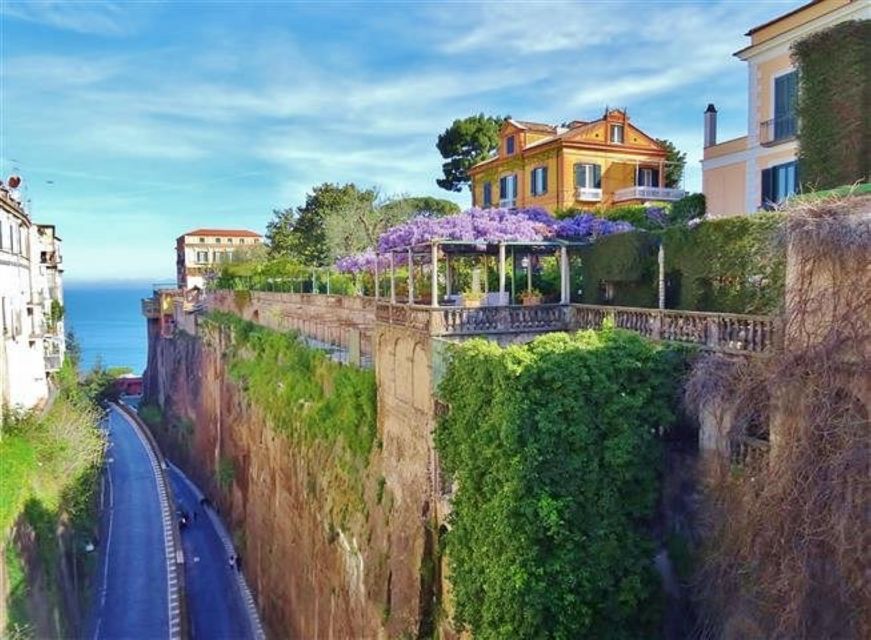
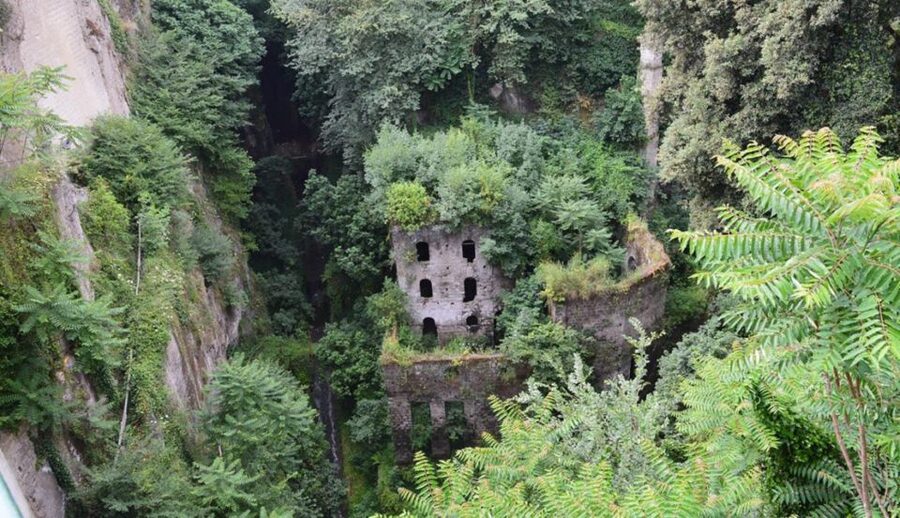
Your first major stop is the Vallone dei Mulini—one of the most panoramic points on the route. This is where you get a sense of how Sorrento sits in its terrain, not just what’s been built on top of it.
You’ll look out at the valley and talk about the geomorphological formation of the area and the ancient mills that once worked here. What I like about this stop is that it helps you read Sorrento visually. After this, when you see stonework and old structures later, you understand they weren’t random—they grew out of the land and water patterns.
It’s also a natural “photo break” moment. Even if you’ve seen postcard views before, this one comes with context, so it feels more meaningful.
Via San Cesareo and Sant’Antonino Square: old lanes, local craft, and patron-saint stories
From the valley, you’ll move into the town’s older fabric—especially Via San Cesareo. This is Sorrento’s oldest street, with narrow alleys and local artisan shops that make you slow down without forcing it.
Then comes Sant’Antonino Square, named for the city’s patron saint. The tour explains the history of his life and his miracles. It’s the kind of stop that’s easy to skip on your own because it looks like any other square—until someone gives you the story behind it.
In my experience, these two stops are what turn a sightseeing walk into a real orientation. You start noticing where daily life lives, where the city “centers,” and which corners you’ll want to explore later at your own pace.
Chiostro di San Francesco: a 13th-century pause that feels bigger than you expect
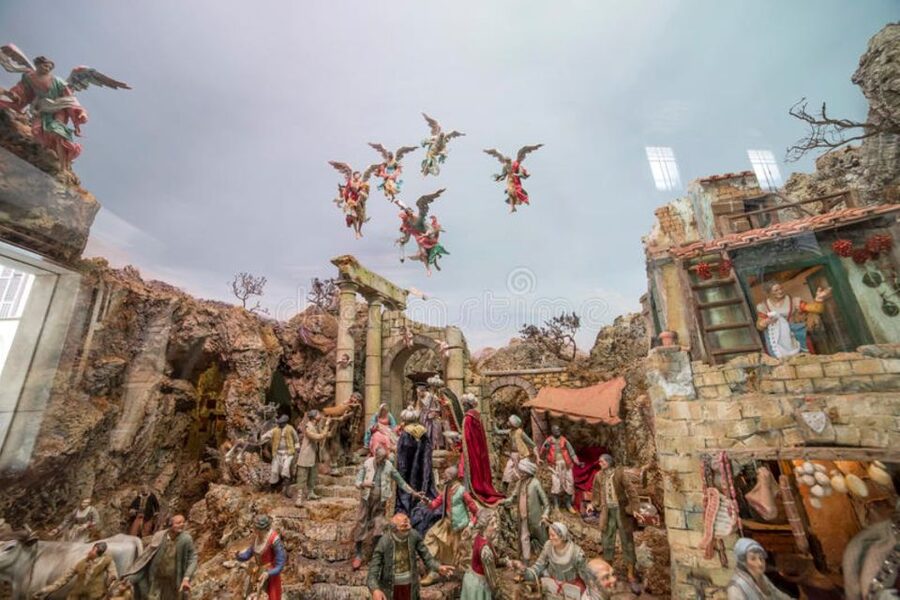
Next up is the Chiostro di San Francesco, the ancient 13th-century convent of the Franciscan Friars. If you’re the type who thinks of churches as just photo backdrops, give this one a minute longer.
What I’d watch for here is the tone change. The tour slows and becomes more reflective, because the space itself does that. You’re not just moving through; you’re seeing how old monastic architecture helped shape the city’s identity.
A 13th-century stop in a compact town like Sorrento also helps explain why so much of what you see feels layered. You’re surrounded by modern tourism—but you’re standing on centuries of routines.
Sedil Dominova: the city’s ancient parliament (and why that matters)

Then you’ll visit Sedil Dominova, an iconic historic building tied to civic power—the city’s ancient parliament. This isn’t just a pretty structure. The tour frames it as a place that shows how Sorrento organized itself long before tourism became the main language.
You’ll get enough context to understand what the building represents, and where it sits in the social rhythm of the town. It’s a good reminder that Sorrento wasn’t only a coastline—it was a working community with systems.
And since you’ll be walking, it’s also a helpful “marker.” Later, when you’re wandering around on your own, you’ll use these landmarks to keep your bearings.
Villa Comunale: Gulf of Naples views you’ll actually use later

One of the best photo moments is Villa Comunale, the public park overlooking the sea. This is the spot for the type of view you remember: bright sky, layered water, and a coastline that stretches in your mind long after you leave.
The key detail here is that you’re not just told to take photos. The guide points out how the overlook fits into the town’s layout, so the view becomes part of your mental map.
If you plan to return to Sorrento later for a sunset walk, you’ll feel like you already know where you want to be.
Sorrento inlay: learning the craft behind the famous decoration

Here’s a stop that changes how you shop and look at souvenirs. The tour includes the secrets behind Sorrento inlay, the typical art connected to the town.
You’ll learn about the tradition and the method behind it—enough to understand why the pieces look the way they do and why the craft is so closely tied to local identity. I like this because it makes souvenir browsing less random. Instead of buying something just because it’s pretty, you’ll recognize what makes it Sorrento-specific.
If you’re the kind of traveler who hates being sold stuff, you’ll probably enjoy this segment. It’s educational first, shopping second.
The lemon garden stop: from fruit history to limoncello technique
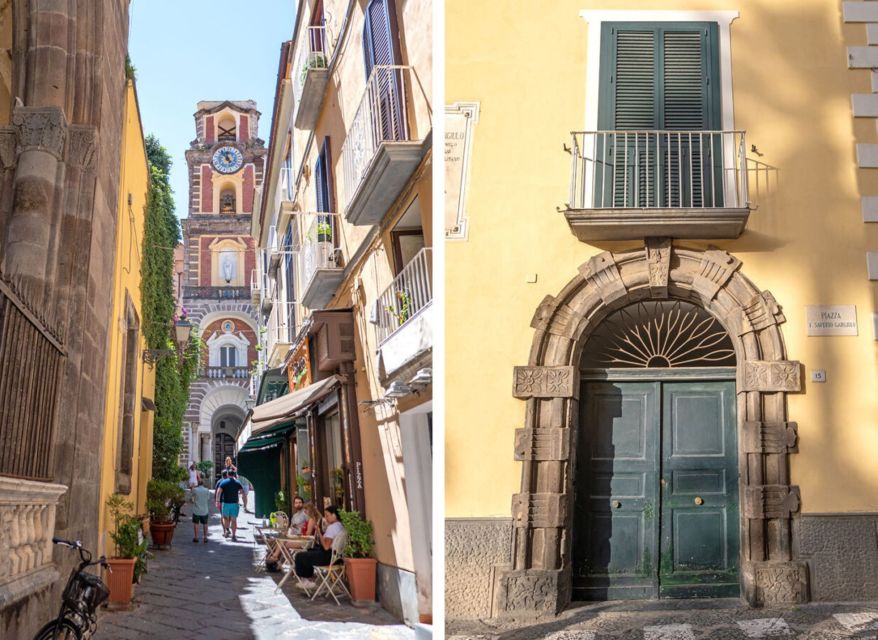
Next comes the lemon-focused part: a visit to a small lemon garden, where you’ll hear the history of Sorrento lemons and the production technique of limoncello. This is where the tour stops being only cultural and becomes culinary science-in-story form.
Even if you think you already know limoncello, this is the part that helps you taste better later. You’ll connect the lemon source and production approach to what you’ll experience in the tasting room.
And it makes sense geographically. Sorrento is a seaside town, but the tour keeps reminding you it’s also an agricultural story—lemons are a big reason the region’s flavors travel so well.
Limoncello tasting: what you get and how to read the flavors
The tour ends at a partner shop with a limoncello tasting. The offering is described as authentic and traditional, using real certified organic lemons from the Amalfi Coast.
During the tasting, you’ll also try options beyond straight limoncello, including limoncello cream, pistachio cream, and cantaloupe melon cream. The tour also notes you’ll receive about half the amount you’d get in a bar, due to the high alcohol content and the variety of liqueurs.
What I like is the “quality first” approach. The tasting is designed to help you understand organoleptic quality, meaning you learn how it tastes and why that matters—rather than just taking a single sweet sip and moving on. And since you have the chance to purchase local products if you want, you’ll make better decisions with your taste buds, not pressure.
Also, one quiet win: the tasting feels like a break, not the whole reason for the walk. You finish the tour with the right kind of satisfied—not overly full, not rushed.
Price and value: why $41 makes sense for this mix
At $41 per person for about 2 hours, you’re paying for three things at once:
1) A guided walking tour that covers multiple historic and photo-worthy stops in a tight area
2) A guided food-and-craft lesson tied to the region (inlay + lemons)
3) A structured tasting of several liqueur styles
This isn’t a long day with transportation costs. It’s a compact experience that gives you context you’d otherwise spend time searching for on your own—plus the tasting component is included.
Is the tasting a huge booze-fest? No. It’s intentionally portioned and varied. The value is that you leave understanding what you’re drinking and where it fits in Sorrento’s culture.
If you want a strict limoncello-only drinking tour, this might feel too balanced. But if you want the town to make sense first, it’s strong value.
Who should book this tour, and who should skip it
This tour is ideal if you want:
- A first-day orientation to Sorrento’s historic center
- Meaningful stops like Chiostro di San Francesco and Sedil Dominova, not just street photos
- A guide who can explain local craft and food in plain language
- A calm paced walk with photo breaks and story stops
It’s not a great match if:
- You have mobility limitations, since the walk includes steps and hills
- You have hearing problems (it’s noted as not suitable)
- You have heart problems (also noted as not suitable)
If you’re traveling with kids or want a stroller-friendly plan, this route likely won’t work well based on the walking and step content.
Practical tips so you enjoy every stop
- Wear comfortable shoes. The tour is “easy” but not flat.
- Bring an umbrella and some rain gear. Rain can change the route.
- Bring water. Even a slow walk adds up in warm weather.
- Plan to arrive at the Piccadilly Pub entrance on Via Fuorimura n°1, not across the street.
- Keep your pace steady. The group relies on timing to fit everything in.
And if you’re deciding when to go: early in your stay is a smart move. Once you know the landmarks, you’ll roam more confidently afterward.
Should you book this Sorrento walk and limoncello tasting?
If you want to experience Sorrento as more than a view—streets, squares, craft, and lemons—then yes, book it. The best part is that the tasting feels earned because you understand what you’re tasting and why Sorrento makes it the way it does.
Skip it only if you strongly prefer minimal walking or you know you won’t enjoy history-and-craft stops. For everyone else, it’s one of the cleaner, more coherent ways to get grounded in town without getting lost.
FAQ
How long is the tour in Sorrento?
The tour lasts about 2 hours.
What does the tour cost?
It costs $41 per person.
Where do I meet the guide?
Meet at Piccadilly Pub on Via Fuorimura n°1, in front of the entrance. The guide is recognizable by a red sports cap.
Is limoncello tasting included, and what else can I try?
Yes. The tour includes a limoncello tasting, and you may also try limoncello cream, pistachio cream, and cantaloupe melon cream.
What sights are included on the walking route?
You’ll visit stops such as Vallone dei Mulini, Via San Cesareo, Sant’Antonino Square, Chiostro di San Francesco, Sedil Dominova, and Villa Comunale, plus a lemon garden visit and the limoncello tasting.
How much walking is involved?
The route is about 3 km and is described as easy and rather slow, with pauses for explanations. There are hills and steps.
Who should not take this tour?
It’s noted as not suitable for people with mobility impairments, people with heart problems, and hearing-impaired people.
What should I bring, and how does rain affect the tour?
Bring comfortable shoes, water, an umbrella, and rain gear. If conditions are adverse, the route may vary, and the tour may be impossible in heavy rain, thunderstorms, or hail (with a complete refund noted).