REVIEW · ADELAIDE
Cultural Caper Adelaide Walking Tour
Book on Viator →Operated by Down to Earth Tours · Bookable on Viator
Adelaide’s North Terrace is history in plain sight. This easy-paced walking tour strings together major landmarks and civic buildings, with a guide who turns architecture and symbols into stories you can actually remember.
I especially like the short, two-hour format that fits cleanly into a day of sightseeing, and the free-entry stop sequence that lets you see more without stacking up extra costs. You’ll also get a small-group feel where questions actually happen.
One thing to consider: you cover a lot in a limited time, so if you want to linger for long inside every building, you’ll probably want to add a little self-guided time afterward.
In This Review
- Quick hits before you lace up your shoes
- North Terrace in two hours: what this Adelaide walk is really for
- Price and what you actually get for $36.93
- Meeting at Parliament House and keeping the walk easy
- Stop 1: Migration Museum and the stories behind the Destitute Asylum
- Stop 2: Parliament House and women’s voting story in South Australia
- Stop 3: State Library of South Australia and the 1884 interior you can actually enter
- Stop 4: National War Memorial and the honour list inside
- Stop 5: University of Adelaide and civic architecture that aged well
- Stop 6: Old Government House and why it still matters
- Stop 7: Art Gallery of South Australia finish and where to go after
- The guide factor: Graeme’s style and why it works on a short tour
- What you might want to do on your own next
- Who should book this tour, and who should skip it
- Should you book the Cultural Caper Adelaide Walking Tour?
- FAQ
- What is the duration of the Cultural Caper Adelaide Walking Tour?
- Where does the tour start and end?
- Do I need to pay admission fees at the stops?
- Is the walking distance easy for most people?
- Is this tour suitable for children?
- How big are the groups?
- Does it run in bad weather?
- Can I get a refund if I change my plans?
Quick hits before you lace up your shoes
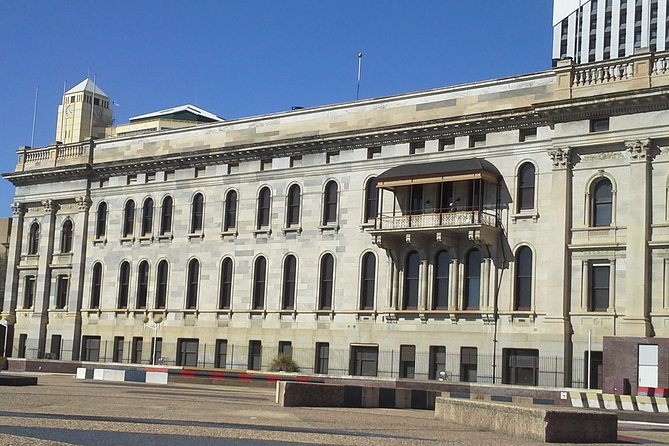
- North Terrace focus: a mile-long corridor of parliaments, libraries, memorials, and universities
- Free entry stops: multiple major sites are included without admission fees
- Easy pace, moderate walking: built for first-timers and mixed ages, with comfy-shoe advice for a reason
- Local guide energy (Graeme): friendly, story-driven, and willing to answer questions
- Great “photos + facts” style: historical photos help you picture Adelaide before you’ve even finished the walk
- All-weather operation: plan for sun or rain and you’ll be fine
North Terrace in two hours: what this Adelaide walk is really for
If you’re new to Adelaide, you can waste a whole afternoon wandering without a sense of how the city grew. This tour solves that fast.
You’ll start at Parliament House on North Terrace, then spend about two hours moving along one of Adelaide’s most meaningful civic strips. The goal is orientation: not just seeing buildings, but understanding why they matter. You’ll connect dates, decisions, and people to real stone-and-brick places you can point to later.
I like the “walking lecture” vibe here, because it stays practical. You don’t need special museum knowledge. You just follow the route, look at what’s in front of you, and let the guide translate the symbols and architecture into human stories.
You can also read our reviews of more walking tours in Adelaide


Price and what you actually get for $36.93
At $36.93 per person, this is one of the easier ways to buy local context. You’re paying mainly for a guide’s time and storytelling, not for museum tickets.
And that’s the value angle: several stops are listed with free admission. That matters in Australia, where entry fees can add up quickly once you start mixing libraries, memorials, and heritage sites into a single day.
What’s not included is also clear. You won’t get food, and there’s no hotel pickup or drop-off. If you’re planning to eat near the Art Gallery finish point, you’ll be on your own in the best way: you can pick what suits your budget and dietary needs.
For many visitors, this works out to “one ticket, multiple major city highlights.” For locals, it can still feel worthwhile because Adelaide has details you can miss when you’re moving through the city on autopilot.
Meeting at Parliament House and keeping the walk easy
The tour meets at Parliament House, North Terrace at 10:00 am, and it ends outside the Art Gallery of South Australia on North Terrace.
The walking is described as moderate, and the route is essentially a long city avenue rather than steep climbs or hidden back streets. Still, bring comfortable shoes. North Terrace is a wide, important corridor, and you’ll be on your feet enough that bad footwear turns a good idea into an annoying chore.
Group size stays small. One piece of info says a maximum of 15 per booking, and another notes up to 20 travelers. Either way, it’s not a giant crowd. That matters for the tone of the tour: you can ask questions without shouting over dozens of people.
It runs in all weather conditions, so pack for reality. If the forecast looks grim, you’ll still be out there, just dressed like someone who plans ahead.
Stop 1: Migration Museum and the stories behind the Destitute Asylum

Your first stop is the Migration Museum, a historic site that previously functioned as a Destitute Asylum.
This is a good opener because it sets Adelaide’s story beyond the sunny postcard version. Migration and settlement shaped South Australia from the beginning, and this place adds context on what happened to people who arrived with little support and nowhere to go.
You’ll spend about 15 minutes here, and the value is in the guide’s framing. Instead of treating it like a quick photo stop, you get context for why the building matters and how its former use connects to broader themes of migration, hardship, and government responsibility.
If you prefer light and cheerful at the start of the day, be aware this stop has a heavier edge. It’s also one of the most memorable because it links national-level movement to real, local infrastructure.
Stop 2: Parliament House and women’s voting story in South Australia
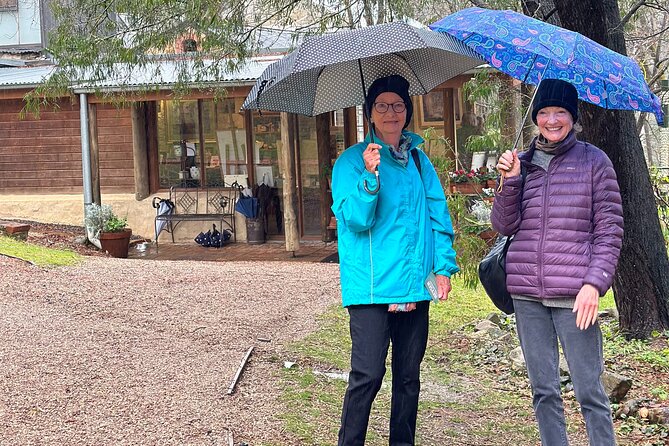
Next up is Parliament House of South Australia.
This stop is short, around 10 minutes, but it’s designed for impact. The focus is the role of the building in women gaining the vote in South Australia—and not as a vague headline. You’ll connect political milestones to the physical space of government.
This works especially well for first-time visitors. Many people see Parliament Buildings in photos, then move on. Here, you get a reason to look closer: the architecture and setting reinforce the power dynamics and the pace of change.
Practical tip: even if you’re not a politics person, you’ll likely leave this stop with a clearer mental map of how South Australia governed itself and what mattered enough to be written into law and symbol.
Stop 3: State Library of South Australia and the 1884 interior you can actually enter
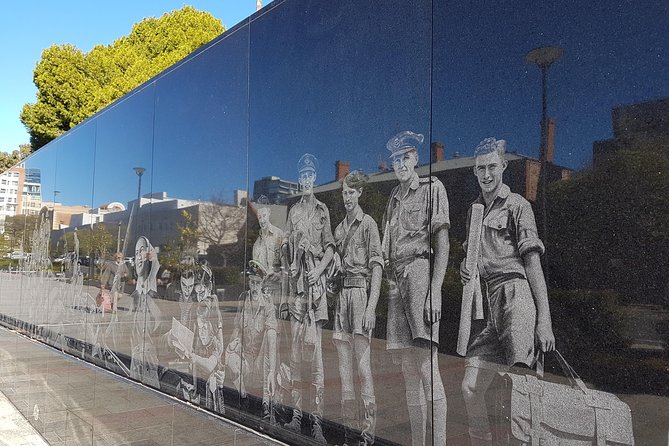
The State Library of South Australia is where this tour gets quietly impressive.
You’ll spend about 15 minutes, including time entering the building to explore one of the world’s top 20 beautiful libraries, dating from 1884. Even if books aren’t your main interest, libraries are built like cultural machines: they show how a society values learning, memory, and public access.
The guide also helps you connect the library’s role to the city around it—why institutions like this are more than reading rooms. They’re part of how Adelaide defines itself.
In a short walking tour, this is a high-payoff stop because you get to do something inside rather than just look from the curb.
If you like architecture, take a breath here and slow down. You can rush the exterior easily, but the building is where the time pays back.
Stop 4: National War Memorial and the honour list inside
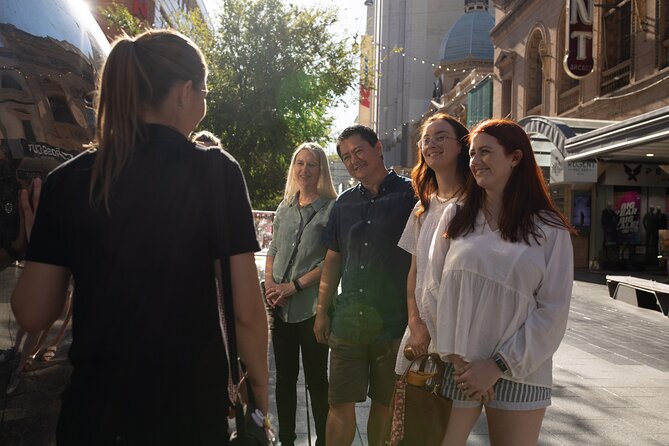
Then you head to the National War Memorial, Adelaide.
This part is around 10 minutes, and you’ll both marvel at the monument and go inside to view the honour list of South Australian soldiers who died during the Great War.
This stop is built for two kinds of travelers. If you’re into military history, you’ll appreciate the direct linkage to names and remembrance. If you’re not, you’ll still get something out of the symbols and the emotional weight of seeing how public grief gets designed into public space.
It’s not a long visit, but it is a meaningful one. The guide’s job here is tone management: respectful, clear, and focused on the meaning behind reliefs and lists.
If memorials ever feel awkward to you, this is actually a good introductory experience because the context helps you know what to notice.
Stop 5: University of Adelaide and civic architecture that aged well

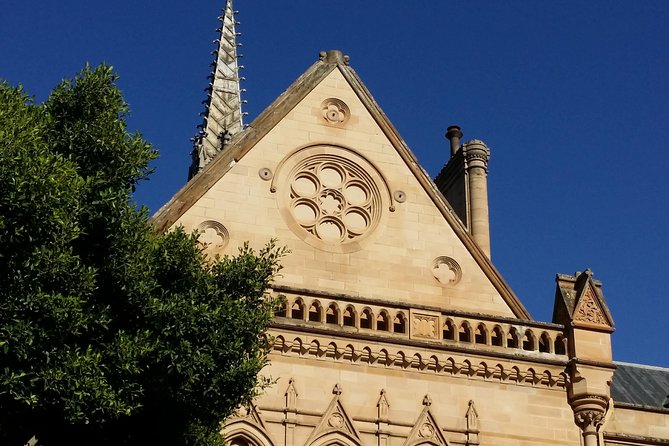
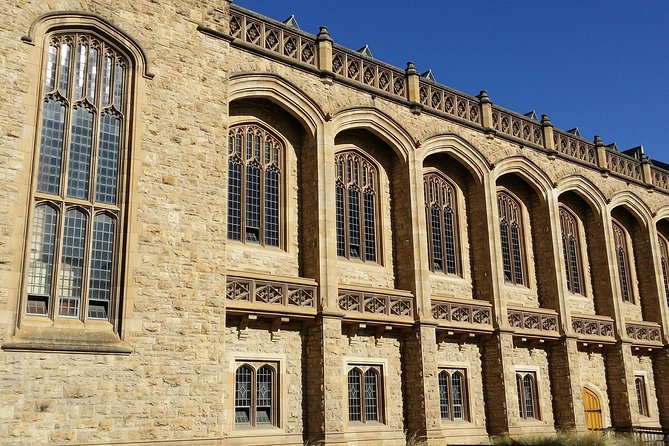
The University of Adelaide stop is brief, about five minutes, but it’s a smart inclusion.
You’ll admire striking university buildings and wander through the grounds a bit. The guide frames the university as one of the oldest in Australia, which helps you see it as a long-running civic presence rather than a campus you just pass by.
For me, university architecture is underrated in walking tours. It often reflects the priorities of the era that built it: education as a public value, not a private luxury.
Because the stop is short, don’t expect a full campus tour. Expect to get oriented and then choose later whether you want to return on your own for deeper exploring.
Stop 6: Old Government House and why it still matters
Next is Old Government House and Garden.
You won’t go deep inside. Instead, you view it from the outside gate and hear about the role of governors and why this is the oldest continuously used Government House in Australia.
That detail changes how you look at the place. It’s not just heritage for heritage’s sake. Continuous use means the site stayed relevant as the political system evolved, and it remained tied to how the state presents authority.
This stop is quick—about five minutes—but it adds another layer to the North Terrace theme: Adelaide’s identity is tied to governance, institutions, and continuity.
Stop 7: Art Gallery of South Australia finish and where to go after
You end at the Art Gallery of South Australia on North Terrace.
This stop is about five minutes for the tour focus, where you talk about the importance of the arts in South Australia and the role of benefactors and philanthropists in getting the institution started.
Ending at an art gallery is practical. Once your guided time ends, you’re placed next to a great option for your next hour: you can sit, browse, grab a bite nearby, or simply keep walking North Terrace with fresh eyes.
In fact, one of the most useful outcomes of tours like this is that you start noticing details you’d otherwise miss. The guide’s framing nudges you to see art institutions and civic buildings as part of the same cultural ecosystem.
If you want a low-effort plan, finish here and let the gallery become your decompression time after the walking and the heavier stops like the memorial and migration stories.
The guide factor: Graeme’s style and why it works on a short tour
A lot of this tour’s success comes down to the guide.
Many groups get Graeme, and his style shows up in the way the information lands: well-researched, friendly, and full of small factual moments that make the city feel personal. He also uses historical photos to help you visualize the spaces when they looked different.
Another thing I appreciate in a guide is willingness to keep it conversational. This tour isn’t just a one-way lecture. You get room for questions, and the stories connect to what you’re curious about that day.
That matters because Adelaide is not a “one landmark” city. It’s a system of places—government, education, culture, remembrance—all aligned along North Terrace. A guide who can connect the dots makes the whole route feel smarter.
What you might want to do on your own next
This tour is designed as an introduction, not a substitute for deeper visits.
After you finish near the Art Gallery, here are smart ways to build on what you saw:
- If one stop hit you hardest (migration, voting, the memorial), plan a return visit and spend longer on your next free window.
- If architecture caught your attention, consider spending extra time on North Terrace when you’re not on a schedule.
- If you found the university or library interesting, look for public programs or special exhibits on your day back.
Because you start at 10:00 am and end about two hours later, you’ll still have plenty of daylight. That’s a big reason I recommend this for first-time trips.
Who should book this tour, and who should skip it
I think this works best for:
- First-time visitors who want a reliable city orientation
- Travelers who like history but don’t want long museum sessions
- Anyone who appreciates architecture, civic symbols, and how public buildings reflect social change
- People who prefer a small group and conversation-friendly guidance
I’d consider skipping or at least adding follow-up time if:
- You want to spend a long time inside each building and you dislike time limits
- You’re looking for a strictly light, funny tour with minimal serious moments (migration and war memorial stops carry weight)
- You’re expecting a deep dive into any single institution rather than a fast, connected overview
Should you book the Cultural Caper Adelaide Walking Tour?
Book it if you want a smart start to Adelaide and you like the idea of seeing the city through its institutions—parliament, libraries, memorials, education, and the arts—without spending a whole day in transit or paying extra admissions.
Skip it if you already know Adelaide history well and you want a longer, more specialized experience. For most people, though, this hits the sweet spot: easy walking, free-entry highlights, and stories that make North Terrace feel like a living timeline.
FAQ
What is the duration of the Cultural Caper Adelaide Walking Tour?
The tour runs for about 2 hours.
Where does the tour start and end?
It starts at Parliament House, North Terrace (10:00 am) and ends outside the Art Gallery of South Australia on North Terrace.
Do I need to pay admission fees at the stops?
The provided stop details list free admission tickets for the sites visited during the tour.
Is the walking distance easy for most people?
It involves a moderate amount of walking along North Terrace. Comfortable shoes are recommended, and a moderate physical fitness level is noted as appropriate.
Is this tour suitable for children?
Children must be accompanied by an adult.
How big are the groups?
The tour is capped at a maximum of 15 people per booking, and it notes a maximum of 20 travelers for the activity.
Does it run in bad weather?
Yes, it operates in all weather conditions, so dressing appropriately matters.
Can I get a refund if I change my plans?
Free cancellation is offered if you cancel at least 24 hours before the experience start time for a full refund.