REVIEW · ROTTERDAM
Rotterdam: Highlights & Gems Walking Tour with Dutch Local
Book on GetYourGuide →Operated by Rottourdam · Bookable on GetYourGuide
Rotterdam’s future looks better from street level. On this walking tour, guide Yoreh connects WWII history, architecture, and city planning with real-life stories as you move neighborhood to neighborhood.
I love the visuals Yoreh brings along—photos and materials that make the past and the planned future click in your head. I also like the ending in the Markthal, because you get the best kind of souvenir: practical food ideas plus a snack halfway through.
One watch-out: this is a brisk 3-hour walk (about 6 km and ~15,000 steps), with some standing and stairs, so it may be tough if you have back/hip/foot issues or you’re heavily pregnant.
In This Review
- Key highlights to look for
- How Yoreh Turns Rotterdam Into a Story You Can Walk
- Starting Point at Oude Binnenweg 137 (Find the Yellow Umbrella)
- Stop-by-Stop: From the Rotte River Roots to the Harbor District
- The Santa Claus statue and early orientation
- Depot Boijmans Van Beuningen (as a passing moment with meaning)
- Veerhaven and the harbor atmosphere
- Erasmusbrug: the bridge that symbolizes resilience
- Maritiem District and Oude Haven: Where the Past Feels Nearby
- Maritiem District: shipping history with street-level context
- Oude Haven: old port vibes in a rebuilt city
- Cube Houses and Skyline Views: Architecture That Makes You Pause
- Cube Houses: design you can actually understand on foot
- Hidden-feeling corners and photo tips
- Markthal Finale: A Modern Food Hall Finish After All That Walking
- Why ending in Markthal works
- The guide’s visual storytelling comes together here
- Pacing, Steps, and Who This Tour Fits Best
- Small Group Energy and the Value of a Local (Not Just a Script)
- Price and Logistics: Getting In the Right Headspace
- Should You Book This Rotterdam Highlights & Gems Walking Tour?
- FAQ
- How long is the Rotterdam Highlights & Gems walking tour?
- How much does the tour cost?
- Where is the meeting point?
- What language is the tour given in?
- Is this tour a small group?
- How much walking will I do?
- Are restroom breaks included?
- Is there seating and a snack?
- Is the tour wheelchair accessible?
- Can I pay for public transport with a contactless card?
- Is alcohol allowed on the tour?
Key highlights to look for
- Yoreh’s photo-and-story method: past, present, and what Rotterdam is trying next
- Architectural sweep: Old, current, and future building styles in one route
- WWII-to-rebuild storytelling that explains why Rotterdam looks the way it does
- Big-name stops plus quieter corners where you also catch skyline views
- Markthal finale with local eating suggestions and an easy place to keep exploring after
- Energy support: stroopwafels midway, plus toilet breaks and some seating at select points
How Yoreh Turns Rotterdam Into a Story You Can Walk
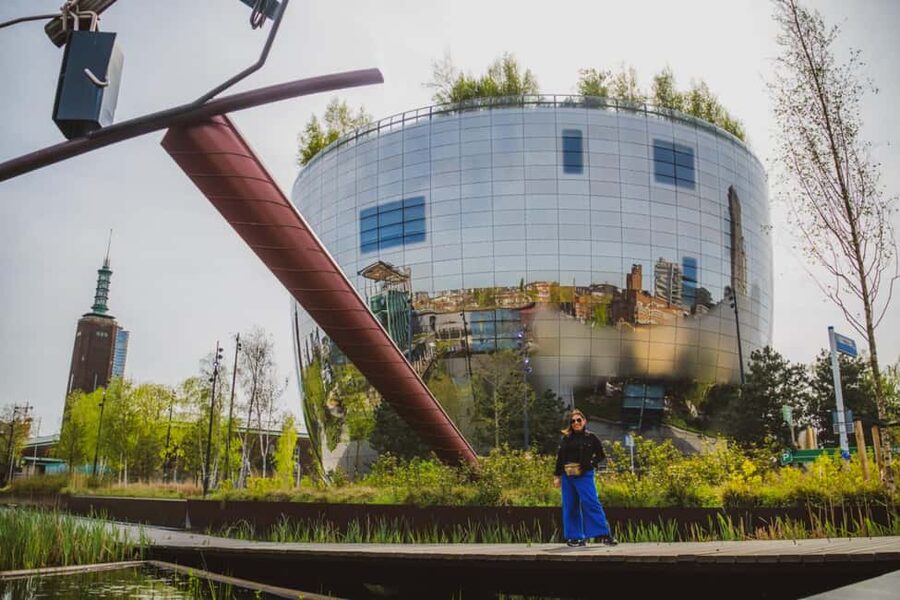
Rotterdam can feel like a city of contrasts, and that’s exactly the point. You’ll spend three hours moving between eras, and Yoreh’s approach makes the changes feel logical instead of random. You start with origins on the Rotte River area and work forward through the harbor’s growth—then you hit the WWII shock that forced a rebuild on a massive scale.
What I like is that this tour doesn’t treat architecture as scenery. Instead, it treats buildings like decisions. Why the waterfront matters. Why new designs show up where they do. Why some places were rebuilt to different ideas than what existed before.
And yes, you do get Rotterdam’s headline sights. But you also get the context that helps you understand what you’re seeing—especially around the architecture and the city’s ongoing urban planning.
You can also read our reviews of more walking tours in Rotterdam
Starting Point at Oude Binnenweg 137 (Find the Yellow Umbrella)
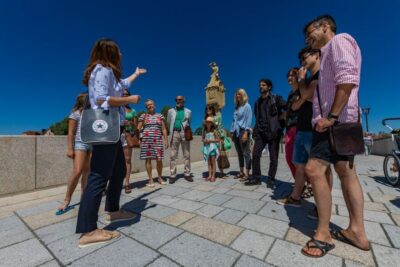
You meet at Oude Binnenweg 137, in front of the Swan gift shop, right next to the big black Santa Claus statue. Look for the guide carrying a yellow Rottourdam umbrella—that’s your signal you’re in the right place.
Show up early. The guide can wait for up to 5 minutes after the official start time, so don’t arrive five minutes late and hope for the best.
This meeting spot is also a nice first clue about Rotterdam’s tone: playful public art mixed into a city that’s serious about reinvention. You pass the Santa Claus statue early, then move quickly into sights tied to culture and industry.
Stop-by-Stop: From the Rotte River Roots to the Harbor District
From the start, the route builds momentum. You’re not just taking photos—you’re getting a moving timeline.
The Santa Claus statue and early orientation
The Santa Claus stop is brief, but it works as a warm-up. You’ll quickly get bearings on the walk, and Yoreh sets the stage for what the city used to be and what it chose to become.
Depot Boijmans Van Beuningen (as a passing moment with meaning)
You pass Depot Boijmans Van Beuningen, and this is one of those moments where the value is what Yoreh connects it to. Even when you’re not going inside, you’re learning how Rotterdam thinks about art, culture, and the role of institutions in city life.
Veerhaven and the harbor atmosphere
Veerhaven is one of those waterfront-feeling areas where Rotterdam’s working identity shows up in the streets. The harbor-to-WWII thread comes through clearly here. You’ll hear how Rotterdam’s rise as a major port shaped daily life, and how the wartime devastation forced a new way of thinking.
Erasmusbrug: the bridge that symbolizes resilience
You pass the Erasmusbrug, and you’ll get the bridge explained not just as a landmark, but as Rotterdam’s attitude in steel and motion. It’s a great spot for photos too, especially because the bridge frames the city’s scale—you can see how the built environment stretches beyond the street you’re standing on.
Practical note: you’re passing many landmarks rather than spending long times inside. That’s why good pacing matters. You cover a lot, but you do it in a way that keeps the story moving.
Maritiem District and Oude Haven: Where the Past Feels Nearby
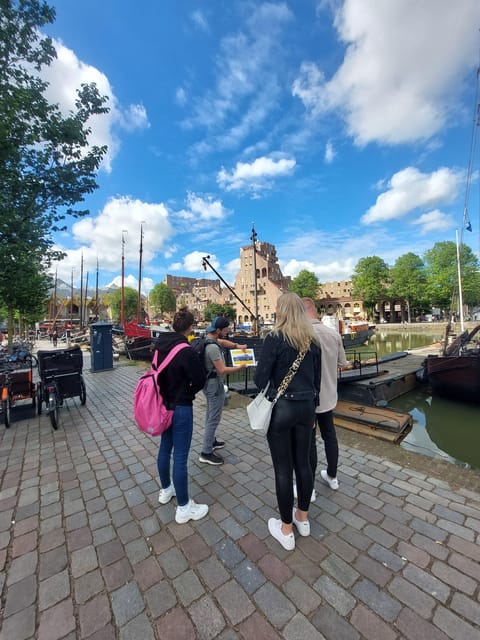
Two parts of the walk are especially good if you want Rotterdam to feel human, not just futuristic.
Maritiem District: shipping history with street-level context
In the Maritiem District, the emphasis is on maritime identity—the kind that shows up in a city’s rhythm, not only in museums. You’ll connect what Rotterdam built and why it built it to the people and industry that shaped the harbor’s role in Europe.
This is also where the tour starts to feel like more than highlights. Yoreh shares personal anecdotes and insider knowledge, and that’s the difference between reading about a city and understanding how it works.
Oude Haven: old port vibes in a rebuilt city
Oude Haven gives you an older atmosphere, and it sets up the next architectural contrast perfectly. Rotterdam’s rebuild didn’t erase the past—it rearranged the map around it. When you look around after hearing the WWII story, you’ll notice how survival and reinvention can sit next to each other.
It’s an excellent moment to slow down your photo pace. Look for viewpoints that show both the older harbor feel and newer directions in the background.
Cube Houses and Skyline Views: Architecture That Makes You Pause
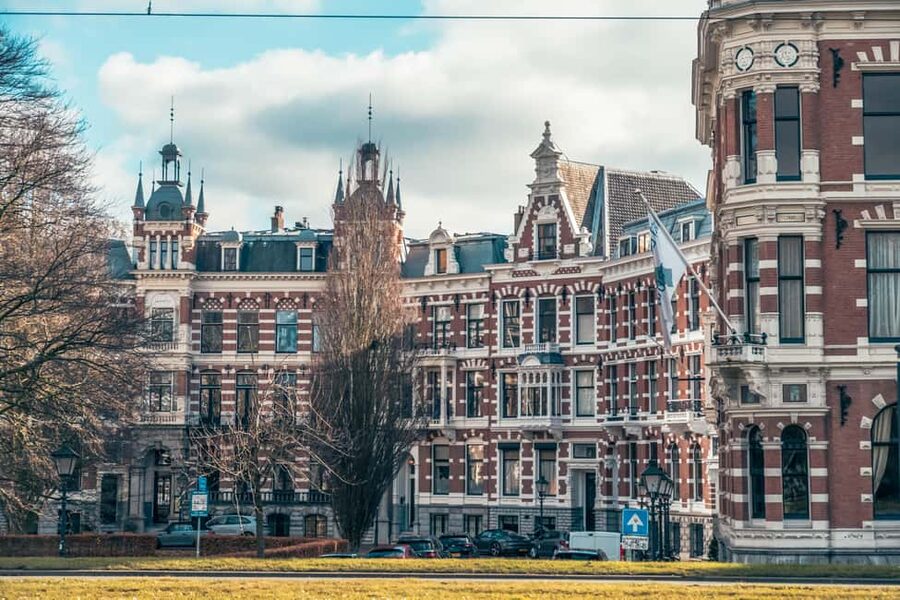
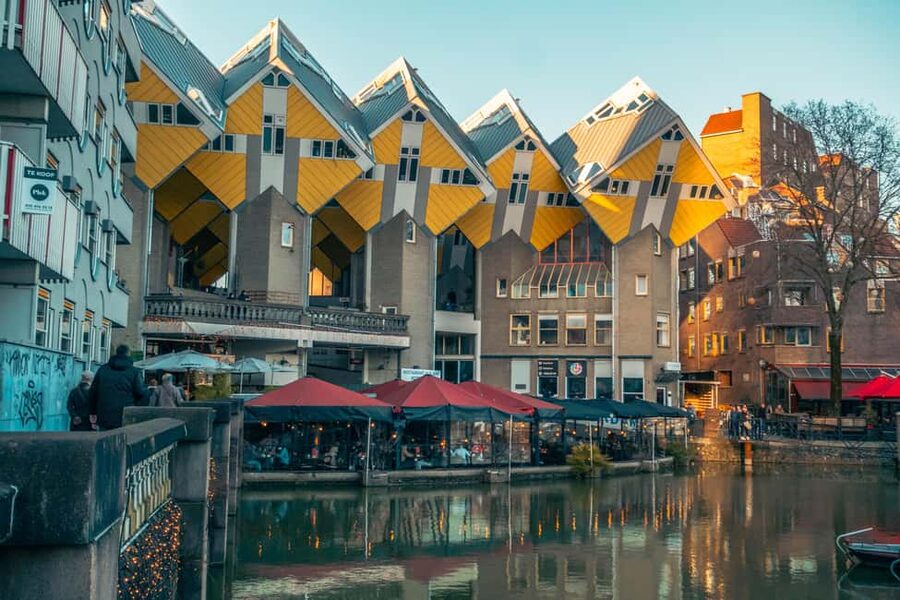
Then comes one of Rotterdam’s most famous visual surprises: the Cube Houses.
Cube Houses: design you can actually understand on foot
You’ll see the Cube Houses from the outside as part of the walk-by-and-explain rhythm. The value here is the explanation you get around why these designs exist and what they represent in Rotterdam’s larger experiment with urban form.
These aren’t just quirky buildings. In Rotterdam terms, they’re part of a history of trying new answers—answers that look strange at first, then start to make sense as you learn the city’s planning mentality.
Hidden-feeling corners and photo tips
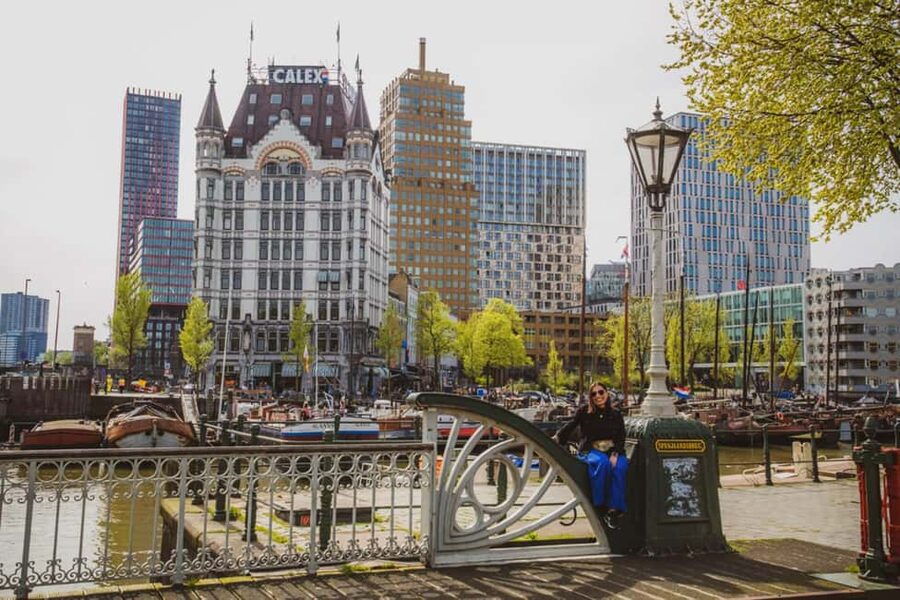
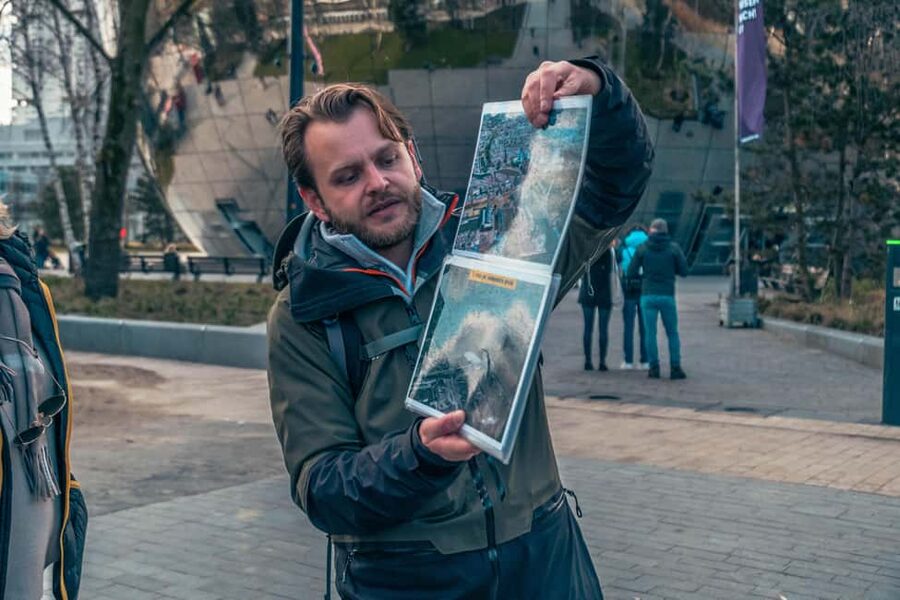
The tour also includes lesser-known spots with skyline views. This is where Yoreh’s “bring visuals and point to angles” style shines. He’ll offer tips for good photo spots, and you’ll likely feel how much easier it becomes to take pictures when someone tells you where to stand and what lines to frame.
If you care about photography, this tour has real payoff: you’re moving with context, not just stopping randomly.
Markthal Finale: A Modern Food Hall Finish After All That Walking
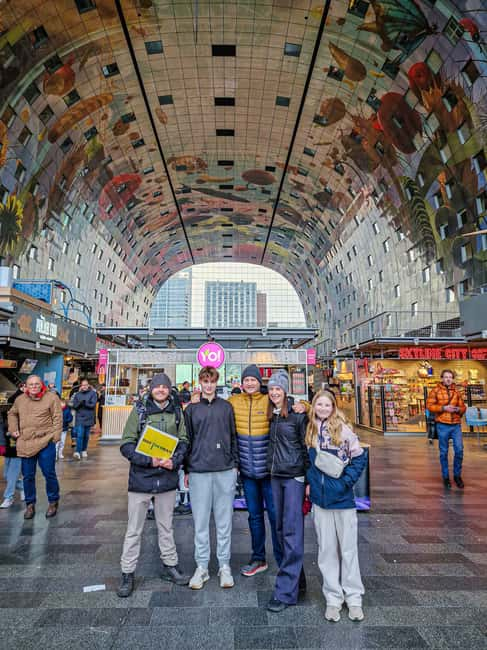
The big finish is the Markthal, and it’s placed at the end for a reason. After hours of architecture and history, your senses need a break—and the food hall does that instantly.
Why ending in Markthal works
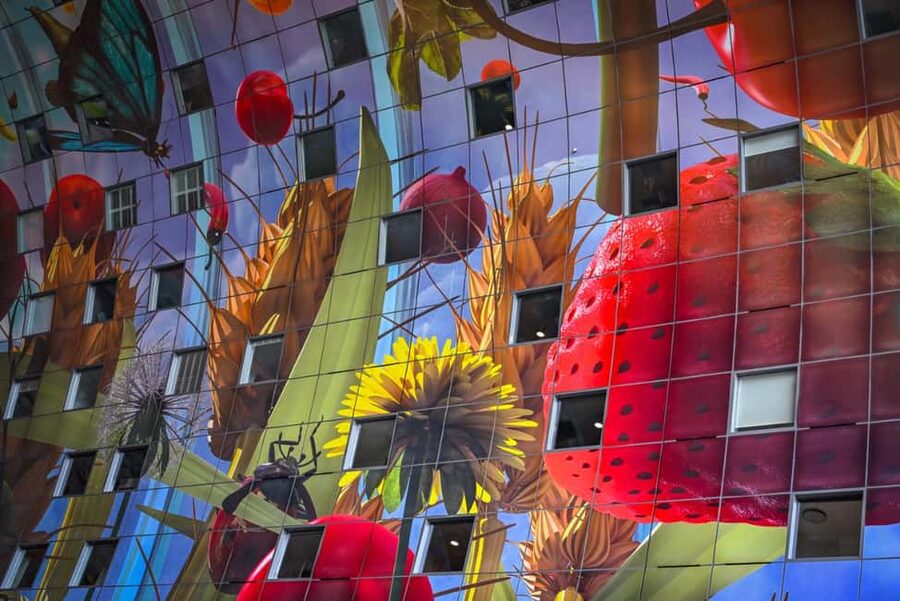
You’ll visit the Markthal, and you’ll also get suggestions of where to eat inside. That matters because Markthal can be busy and visually intense. When you leave a tour with a short list of where to go, you spend less time wandering and more time actually eating.
Also, you’ve already received a classic Dutch energy boost halfway through the walk: stroopwafels. It’s a small detail, but it turns a long walk into a manageable one.
The guide’s visual storytelling comes together here
The Markthal fits the tour theme perfectly. It’s modern architecture with a public-life function, and by the time you reach it, you understand why Rotterdam keeps building for both form and daily use. If you’ve ever walked into a striking building and thought, cool, but why… this tour gives you your answer.
And when you’re done? You’re in a logical place to keep exploring nearby on your own.
Pacing, Steps, and Who This Tour Fits Best
Let’s talk feet, because Rotterdam can be deceptive. The city isn’t steep, but you’re still walking a lot.
You should expect around 6 kilometers and roughly 15,000 steps in about 3 hours. There are toilet breaks and sitting at selected locations, but you should still plan for standing time while Yoreh explains things. There may be stairs, and while the route can avoid some steps for wheelchair access, it’s still not a sit-and-watch tour.
This tour is a great fit if:
- you want a fast first-orientation to Rotterdam’s major architectural themes
- you like history that’s tied to what you see outside your window
- you enjoy photo guidance and practical tips for the rest of your day
It may be a rough fit if:
- you have back, hip, or feet problems
- you’re highly pregnant
- you need lots of fully flat, fully seated time
One smart tip from the experience: wear good shoes and dress for a steady pace.
Small Group Energy and the Value of a Local (Not Just a Script)
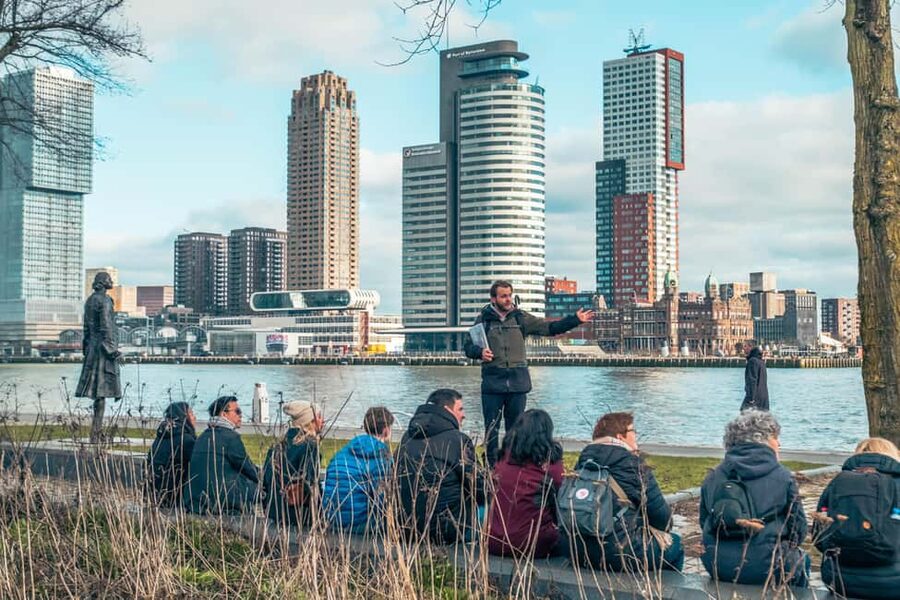
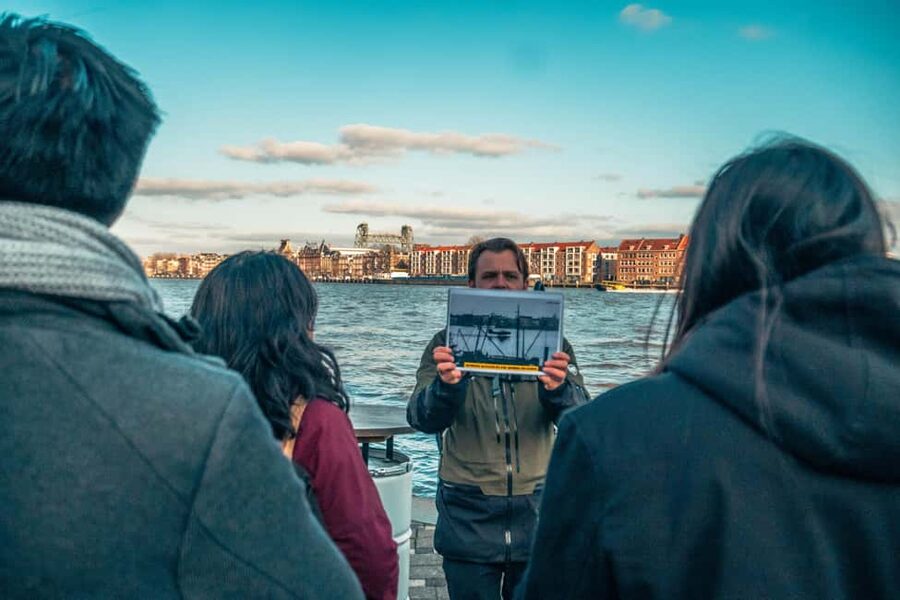
This is a small-group tour, with a private group option available. That matters because Yoreh’s style isn’t just facts on a schedule. He answers questions, uses personal anecdotes, and shares visuals that help you follow along even when you’re moving briskly.
There are also practical extras built in:
- supportive photo material
- tips for good photo spots
- suggestions on where to eat in De Markthal
- toilet breaks
- stroopwafels halfway
- seating opportunities at selected locations
For $46 for about 3 hours, you’re paying for a trained local guide plus a structured route that hits Rotterdam’s big themes without wasting your time. It’s not just a list of stops—it’s a route with interpretation.
And the reviews point to one standout pattern: Yoreh is enthusiastic and funny, with enough preparation (photos, charts, and visuals) that the history doesn’t feel like homework.
Price and Logistics: Getting In the Right Headspace
At $46 per person for roughly 3 hours, think of this as a “best-use-of-your-first-day” style tour. It compresses a lot into one walk: origins, WWII impact, rebuilding choices, and architecture from old to future.
You’ll want to arrive on time, meet at the Oude Binnenweg 137 spot by the Santa Claus statue, and keep a steady pace so the tour stays on track.
If there are city events or extreme weather, the route can shift slightly. That’s normal in a city with changing schedules, and the tour is designed to keep the story intact even when the street plan changes.
Should You Book This Rotterdam Highlights & Gems Walking Tour?
Book it if you want Rotterdam to make sense—especially if you’re drawn to architecture and you want WWII and rebuilding explained in a way that matches what you’re actually seeing outside.
Skip it (or consider something gentler) if you can’t handle about 6 km of walking, standing explanations, and some stairs. This is best when you’re ready for movement.
If you only have one half-day in Rotterdam and you want your bearings fast, this is a strong choice—because you finish in the Markthal area with both photo value and food ideas ready to use.
FAQ
How long is the Rotterdam Highlights & Gems walking tour?
The tour lasts about 3 hours.
How much does the tour cost?
The price is $46 per person.
Where is the meeting point?
You meet at Oude Binnenweg 137, in front of the Swan gift shop next to the big black Santa Claus statue. The guide is recognizable by a yellow Rottourdam umbrella.
What language is the tour given in?
The tour is in Dutch and English.
Is this tour a small group?
Yes, it’s a small-group tour, and a private group option is available.
How much walking will I do?
Expect around 15,000 steps and about 6 kilometers.
Are restroom breaks included?
Yes. There are toilet breaks during the tour, including a restroom break halfway.
Is there seating and a snack?
Seating is available at selected locations, and stroopwafels are provided halfway through the tour.
Is the tour wheelchair accessible?
It is wheelchair accessible, and stairs/steps can be avoided on the route. That said, there will still be walking and standing time.
Can I pay for public transport with a contactless card?
Yes. You can use a debit/credit card with contactless payment for trains, bus, tram, and metro.
Is alcohol allowed on the tour?
No, alcohol and drugs are not allowed.