REVIEW · ROTTERDAM
Rotterdam: Architectural Highlights Guided Walking Tour
Book on GetYourGuide →Operated by Walk Rotterdam · Bookable on GetYourGuide
Rotterdam’s architecture hits like a knockout. This architect-led walking tour turns Rotterdam Centraal into a story about how the city keeps rebuilding and re-inventing itself. You’ll move through the core and end at the riverside with the kind of skyline views Rotterdam is famous for.
What I love most is the way the route stitches together everyday city life and major design moments, from the retail street energy of the Lijnbaan area to civic landmarks like the City Hall and the Timmerhuis. Second, the architect guide doesn’t treat buildings like decorations; they explain the industrial past and the rebuild after the bombardment of 1940 in plain language, so the stops at the Markthal and beyond actually make sense.
One thing to keep in mind: it’s only 2 hours, covering about 3–4 km, so you’ll see a lot but you won’t have long, slow time at every single façade.
In This Review
- Key highlights you’ll feel on this walk
- Starting at Rotterdam Centraal: orientation on day one
- Lijnbaan and the city core: shopping streets meet civic ambition
- The Timmerhuis stop: design choices explained in human terms
- Markthal: a market hall that changes how you picture Rotterdam
- Cube Houses: iconic, debated, and still worth seeing up close
- To the riverside: South Bank development and the Erasmus Bridge finish
- What you’ll actually do in 2 hours (and why it feels efficient)
- How the guide changes the tour (and which personalities fit your style)
- Price and value: what $53 buys you in Rotterdam
- Practical tips before you go
- Should you book this Rotterdam architectural highlights tour?
- FAQ
- Where is the meeting point for the tour?
- How long is the walking tour?
- How much does the tour cost?
- What language is the tour guide?
- Does the tour run if it’s raining?
- How far will we walk?
- What’s included in the price?
- Are food or drinks included?
- Is the tour wheelchair accessible?
- Can kids join for free?
Key highlights you’ll feel on this walk
- Architect guide framing: you get the why behind the what, not just a photo-op checklist.
- Route from Centraal to the Maas: the walk naturally shifts from city center to riverside planning.
- Big-name Rotterdam stops in one go: Lijnbaan, City Hall, Timmerhuis, Markthal, Cube Houses.
- WWII rebuild context: the architecture is explained through how Rotterdam got rebuilt after 1940.
- Erasmus Bridge viewpoint: the tour finishes with the city’s bold, modern-symbol energy.
Starting at Rotterdam Centraal: orientation on day one
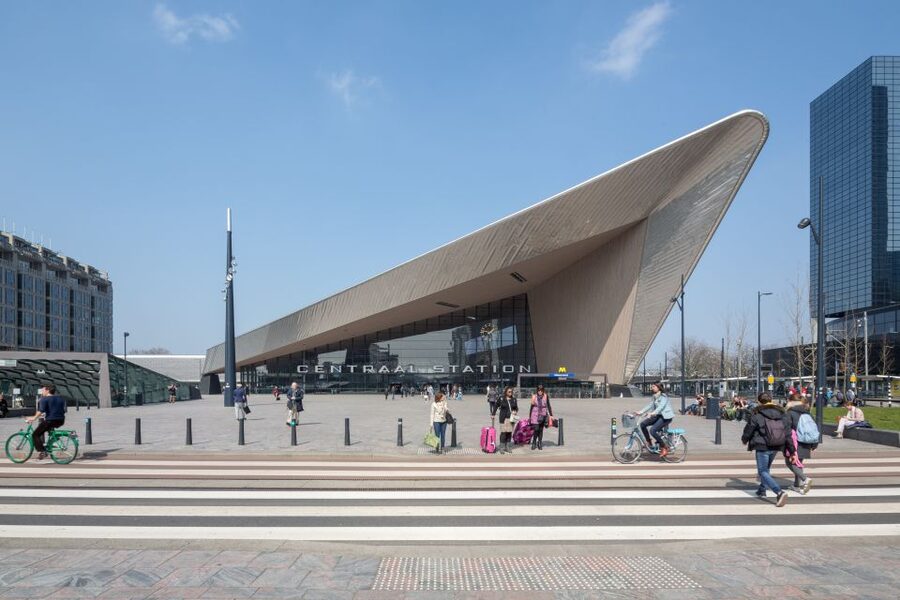
The tour meets at Rotterdam Centraal Station, underneath the clock. This matters because it gives you a clean starting point right where Rotterdam funnels most arrivals. You can arrive early, take a quick look around, and get your bearings before the guide starts connecting streets to design ideas.
Rotterdam Central is already part of the lesson: the city’s “new build” mindset shows up in the way the station anchors movement. From there, you’ll begin walking into the core, learning how the city’s layout supports daily life—shopping streets, public buildings, and the kinds of routes people actually use.
If you like tours that help you understand a city fast, this is a good one. Instead of guessing what matters, you’ll follow a line of choices that planners and architects have been making for decades.
You can also read our reviews of more walking tours in Rotterdam
Lijnbaan and the city core: shopping streets meet civic ambition
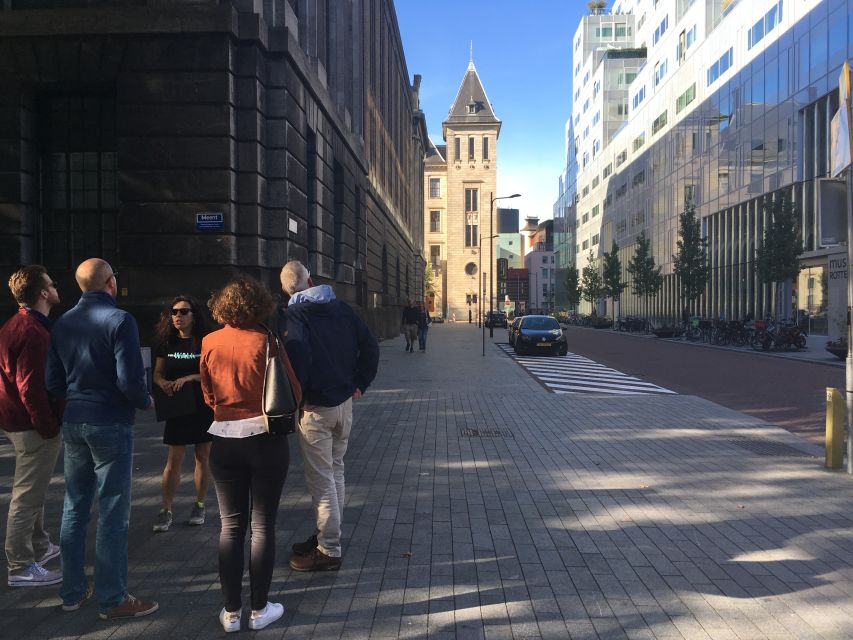
Once you leave the station area, you’ll work through the Lijnbaan zone, which is one of Rotterdam’s signature “city center as design” stretches. This is where the guide’s explanations really kick in: you’ll see how modern planning shaped pedestrian movement and storefront life, not just the buildings themselves.
Then the tour moves into the civic and institutional core, including the City Hall area and the Timmerhuis. These stops help you understand a big Rotterdam theme: form follows function, but it also communicates confidence. Even in a compact walk, you start noticing how different eras tried to solve the same problem—how a port city should look and work.
You’ll also pass major religious and historical markers like the Sint Laurents church. That’s important because Rotterdam’s story isn’t only modern glass and steel. The guide uses these contrasts to show how the city holds older landmarks while reshaping the rest around them.
The Timmerhuis stop: design choices explained in human terms
The Timmerhuis is one of those buildings you can’t help noticing, even if architecture isn’t your hobby. On this tour, it becomes more than a landmark. You’ll learn how architects and the city approach density, public access, and the idea that workplaces and civic spaces should fit the way people live.
What I like about this part of the walk is that it slows down enough for you to look closely. You start paying attention to the “logic” behind the massing and the way the building relates to the street. It turns sightseeing into interpretation.
And this is where guide quality shows. In the feedback, guides like Tanya, Tanja, and Tina get praised for putting architectural details into historical and societal context, so you understand not just what you’re seeing, but why Rotterdam decided to shape it this way.
Markthal: a market hall that changes how you picture Rotterdam
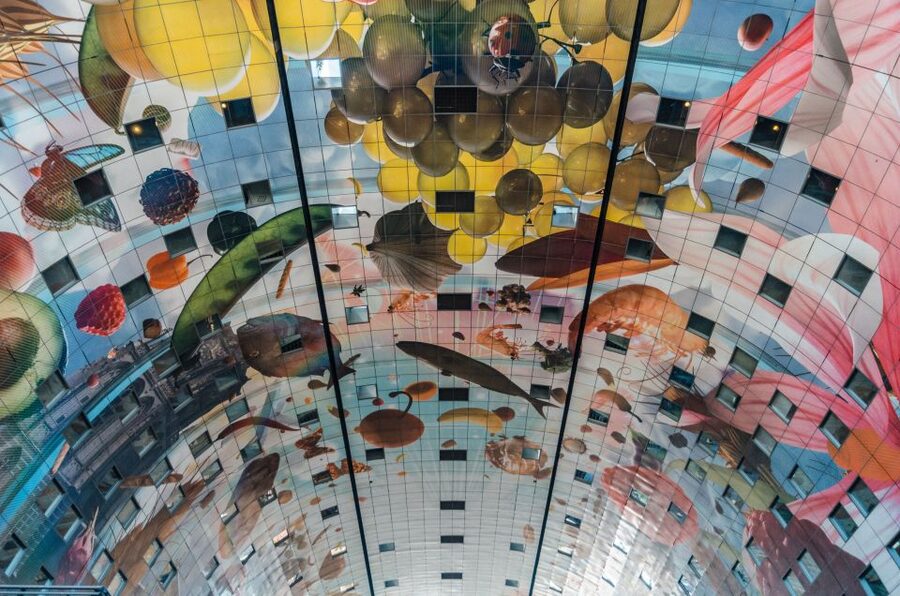
Next comes the Markthal, one of the city’s most iconic indoor public spaces. Even if you’ve never studied Dutch architecture, a place like this gives you an instant clue: Rotterdam doesn’t only rebuild roads and towers. It builds social “rooms” where everyday life happens.
Strolling through the Markthal area on foot helps you grasp how architecture can manage crowds and movement. You get to experience a key contrast to the open streets earlier in the tour: instead of walking through an exterior city grid, you’re learning how designers use structure and interior space to create a destination.
This is also a good moment to reset your brain. After the civic and institutional buildings, the Markthal feels like a different answer to the same big question: how do you make a rebuilt city feel like home for regular people?
Cube Houses: iconic, debated, and still worth seeing up close
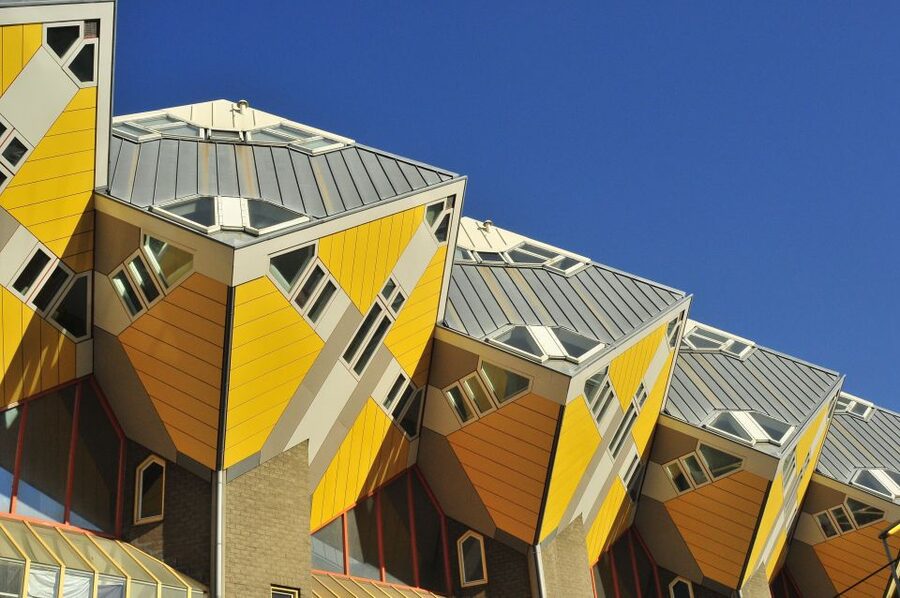
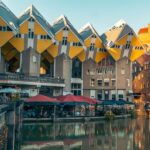
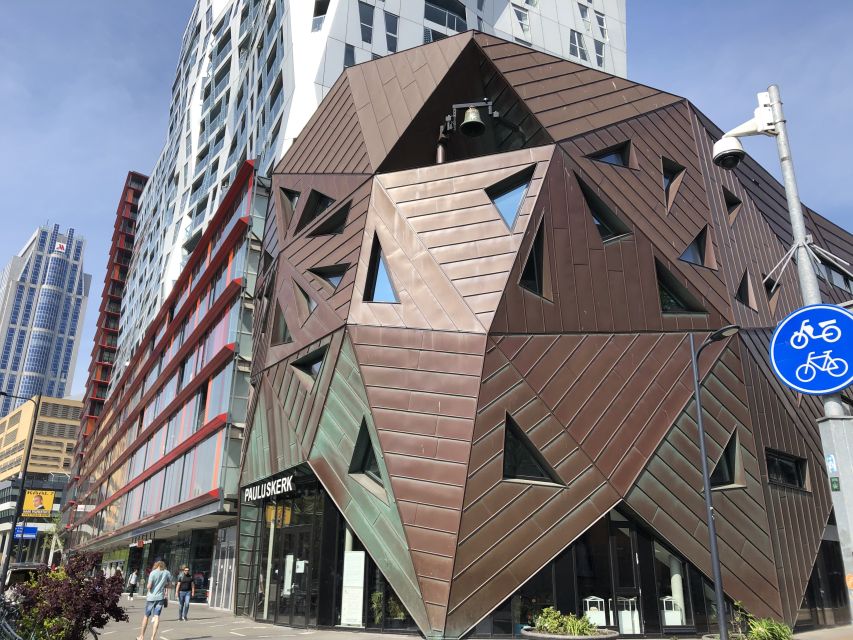
After Markthal, the tour continues past the row of the Cube Houses. They’re one of Rotterdam’s most photographed architectural experiments, and the walk-by format is exactly right here. You get to see them in context—how they sit next to the broader city fabric—without turning the experience into a long, single-sight obsession.
The guide’s explanations help you read the Cube Houses as part of Rotterdam’s bigger identity: a city that’s willing to try bold ideas and then keep evolving. Even when you don’t love a style, you’ll understand why it belongs in Rotterdam’s timeline and what it signals about the city’s attitude toward rebuilding.
You’ll finish this zone feeling like you’ve covered multiple “Rotterdam moods” in a short distance—traditional streets, modern civic design, a major indoor destination, then a row of houses that look like they’re bending the rules on purpose.
To the riverside: South Bank development and the Erasmus Bridge finish

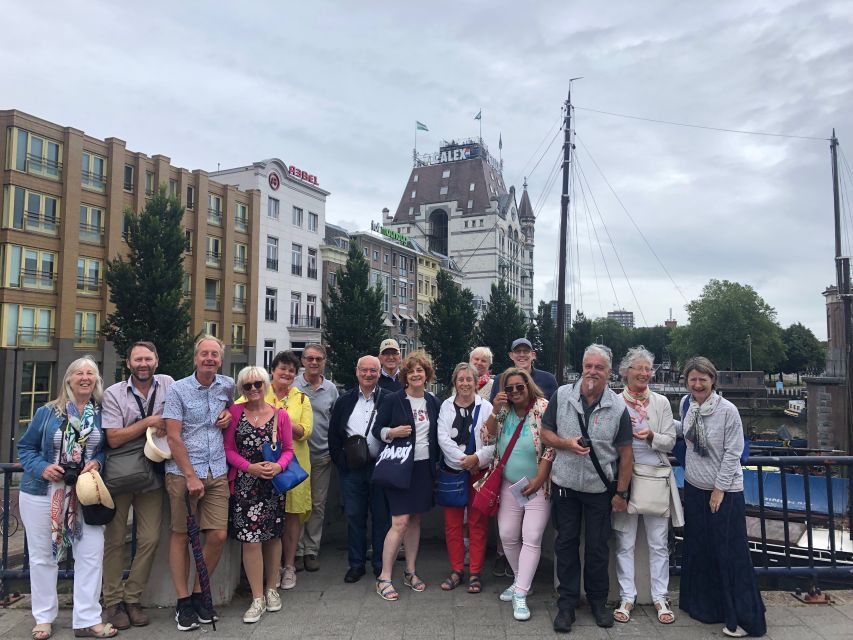
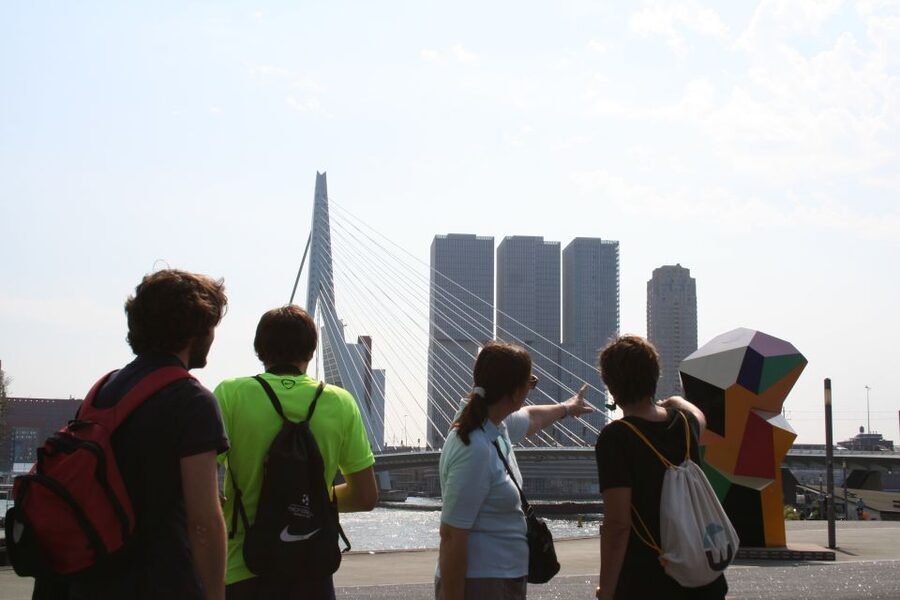
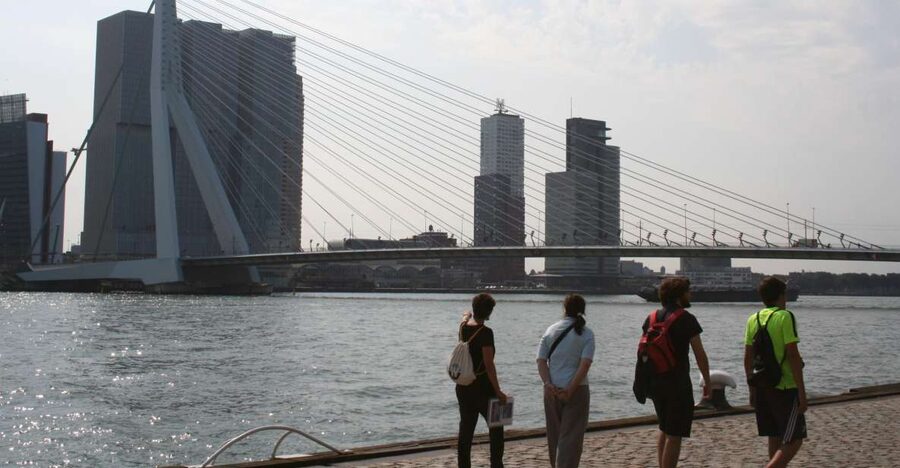
The last stretch takes you to the riverside. This is where the walk becomes more than architecture; it turns into urban planning in real time. You’ll admire the new riverside development on the South Bank and take in the high-rise skyline, capped by Rotterdam’s iconic Erasmus Bridge.
This ending works because it shows the city’s long view. In earlier stops, you’re learning why Rotterdam rebuilt and how that shaped the core. At the water, you see the next chapter: large-scale redevelopment, vertical growth, and major infrastructure that connects districts.
Also, the riverside is visually forgiving. Even in grey weather, the skyline reads clearly, and the bridge is easy to spot. You’ll come away with a stronger mental map of Rotterdam—where the city turns its “center” toward the Maas.
What you’ll actually do in 2 hours (and why it feels efficient)
The full walk covers about 3–4 km, paced for a guided group. It’s built around a logical flow: start at Centraal, move into the heart of the city for civic and retail landmarks, then shift toward the waterfront. You’ll spend enough time at each stop to absorb the story, but not so long that you feel stuck in one spot.
The tour runs rain or shine, so you’ll want weather-ready layers and comfortable shoes. Rotterdam weather can shift fast, and this walk includes enough outdoor time that you’ll feel it if your footwear isn’t up to the job.
Since it’s a live, English-language guide experience, you’ll also want to position yourself where you can hear clearly. The distance is short enough that nobody gets lost, but the stops are close to busy public areas, so good listening conditions help.
How the guide changes the tour (and which personalities fit your style)
This kind of tour lives or dies on the person leading it. A big theme in the feedback is that guides like Silvia, Sylvie, Tania, Tanya, and Tina connect architectural features to history and how people actually use the city. When the guide does that well, you end the walk with a sense of Rotterdam as a plan you can read.
You’ll also notice pacing differences. Some guides are praised for pausing and adjusting pace so everyone can catch up, which is great if your group has mixed walking speeds. In a 2-hour schedule, those small pacing choices make a real difference to your comfort level.
If you’re the type who asks questions, you’re likely to enjoy this. The format naturally invites conversation at each stop because each building gives you a new topic—style, function, rebuild history, or how the city chose to grow.
Price and value: what $53 buys you in Rotterdam
At $53 per person for a 2-hour walking tour, the value is about one thing: an architect-led interpretation of multiple major landmarks. You’re not paying for a single sight; you’re paying for a guided thread that ties Lijnbaan, City Hall, Timmerhuis, Markthal, Cube Houses, and the Erasmus Bridge into one coherent Rotterdam story.
Also, the included pieces are practical: the walking tour and the architect guide. That’s ideal if you want your first pass through Rotterdam to feel smarter, not just busier. Food and drinks are not included, so you can plan a real meal afterward without needing to balance lunch schedules mid-walk.
Transportation costs are also not included. This matters only because Rotterdam is easy to navigate, but you’ll want to plan how you’ll get to Centraal Station in time to meet under the clock.
Practical tips before you go
Wear comfortable shoes. The route is only a few kilometers, but it’s still city walking with stop-and-look moments. Bring weather-appropriate clothing since the tour runs rain or shine.
If you’re visiting Rotterdam with kids, note that children aged 0–12 can join for free. Just be realistic about the length and the fact that the content is architecture-focused, not playground-focused.
If your group is small or you want a more private feel, ask about the private group option. It’s a good move if you want more question time, or if your group likes to move at the pace of conversation rather than the pace of the schedule.
Should you book this Rotterdam architectural highlights tour?
I think you should book it if you want a fast, structured introduction to Rotterdam architecture that actually explains context. It’s especially worth it if you’re the kind of person who looks at buildings and wonders what shaped them—war damage and rebuild decisions, industrial city needs, and long-term urban planning.
Skip it only if you already know Rotterdam architecture deeply and you want more time at fewer sites. With a 2-hour, 3–4 km format, you’ll see the big markers, but it’s designed for breadth, not for sitting in one place for long.
If you want a walking plan that helps you read Rotterdam instead of just passing through it, this one is a strong pick.
FAQ
Where is the meeting point for the tour?
Meet your guide at Rotterdam Centraal Station underneath the clock.
How long is the walking tour?
The tour lasts 2 hours.
How much does the tour cost?
It’s priced at $53 per person.
What language is the tour guide?
The tour is guided in English.
Does the tour run if it’s raining?
Yes, the tour operates rain or shine.
How far will we walk?
The walk covers about 3–4 km.
What’s included in the price?
The price includes the walking tour and an architect guide.
Are food or drinks included?
No, food or drinks are not included.
Is the tour wheelchair accessible?
Yes, the tour is wheelchair accessible.
Can kids join for free?
Yes. Children ages 0–12 can join for free.