REVIEW · BARCELONA
Picasso Small Group Walking Tour with Museum Skip the Line Ticket
Book on Viator →Operated by Turisme de Barcelona · Bookable on Viator
Picasso’s footsteps cut through real Barcelona. This Picasso Museum walking tour strings together the artist’s key hangouts and training spots from 1895 to 1905, then adds skip-the-line museum entry so you spend your time looking instead of waiting. I love how the guide turns street-level sights into real art clues, and I love that the museum visit is framed around the works from Picasso’s formative years.
One practical heads-up: the Picasso Museum can feel hot inside, so pack patience for a warm indoor hour and dress accordingly.
In This Review
- Key highlights worth your attention
- Why Picasso in Barcelona (1895–1905) is a smart theme
- From Plaça de Catalunya to the old-city mood: the walk setup
- El Quatre Gats and Llotja Mar: the artist’s social and school life
- El Quatre Gats: the café that made sense
- Llotja Mar: training on the ground
- The Frisos del Col-legi d’Arquitectes: Picasso’s only open-air works
- La Ribera and the approach to the Picasso Museum
- Skip-the-line at the Picasso Museum: using your time well
- Duration and pace: what 2 hours feels like on your feet
- Price and value: what $48.06 really buys you
- Who this tour fits best (and who might want another plan)
- Should you book this Picasso small-group walking tour?
- FAQ
- What’s the duration of the Picasso Small Group Walking Tour with Museum ticket?
- Where does the tour start and end?
- What’s included in the price?
- Do I get skip-the-line entry to the Picasso Museum?
- What language is the tour offered in?
- How big is the group?
- Is public transportation nearby?
- What’s the cancellation policy?
Key highlights worth your attention
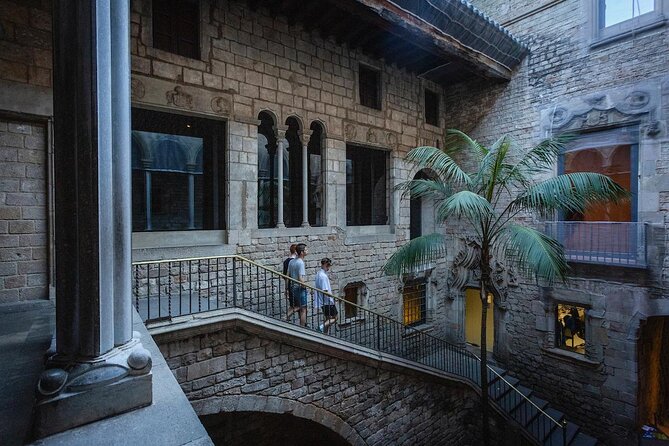
- A tight small group (max 10) keeps the walk moving and the Q-and-A actually doable.
- El Quatre Gats gives you the bohemian café stop that connects Picasso to Barcelona’s creative crowd.
- Llotja Mar and the Frisos show how he learned—especially the open-air Frisos del Col-legi d’Arquitectes, his only outdoor works.
- La Ribera strolling adds an easygoing city-walk feel before you reach the museum area.
- Skip-the-line entry means you can get into the Picasso Museum’s over 4,000 works with less queue time.
- Guide quality shows up in the details in names like Alex, Iris, Pilar, Marco, Sylvia, Danielle, and Alli, with consistent praise for clear explanations and good pacing.
Why Picasso in Barcelona (1895–1905) is a smart theme
If you only think of Picasso as the legend of later revolutions, Barcelona may surprise you. This tour’s focus is his earlier period, when he lived in the city between 1895 and 1905 and absorbed the artistic energy around him. That time window matters because the guide doesn’t treat Picasso as a finished product. They frame him as a student, a local, and a growing artist with influences you can actually point to on the map.
What I like about this theme is that you’re not doing random “Picasso facts.” You’re connecting the dots between where he spent time—cafés, schools, and streets—and what he later learned to make on canvas. When you reach the museum, that background helps you see more than just pretty images.
You can also read our reviews of more tours and experiences in Barcelona.


From Plaça de Catalunya to the old-city mood: the walk setup
The tour starts at Oficina d’atenció turística, Pl. de Catalunya 17 and ends at Carrer de Montcada 23 near the museum. This placement is handy because Plaça de Catalunya is a central hub, so getting there with public transport is usually straightforward.
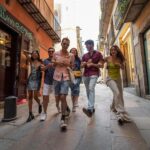
You’ll be walking in central Barcelona territory, with stops that gradually pull you toward the older quarters. Expect a paced route designed for conversation: the group stays together, and the guide uses each street corner as a cue for story. With a maximum of 10 travelers, it doesn’t feel like herding cats through narrow lanes, which can be a real issue on larger tours.
If you’re the type who likes to look up at details—doorways, stone bands, rooflines—this tour rewards that habit. Many of the stops aren’t “look-and-go.” They’re “look, notice, then learn what it means.”
El Quatre Gats and Llotja Mar: the artist’s social and school life
The first part of the tour is all about early influences, and two stops do a lot of heavy lifting.
El Quatre Gats: the café that made sense
You’ll stop at El Quatre Gats, a café where Picasso socialized with other avant-garde artists. This is the kind of place that helps you understand artists as people who traded ideas—not just creators locked in a studio. The guide’s job here is to connect the café culture with Picasso’s development, not turn it into a souvenir selfie stop.
Practical tip: treat this as a “pause and picture it” moment. Even if you don’t love cafés, it’s one of the most meaningful bridges between Barcelona’s creative scene and Picasso’s growth.
Llotja Mar: training on the ground
Next up is Llotja Mar, an art school tied to Picasso’s craft. When you see art schools in person, you start to grasp the boring-but-important part of artistic growth: learning technique and building discipline. The guide helps you connect what he was learning with the kind of work you’ll later see in the museum.
This is also where the tour’s logic becomes clear: the walk is building your museum “viewing lens,” so the paintings aren’t random. You’re primed to notice technique and progression.
You can also read our reviews of more walking tours in Barcelona

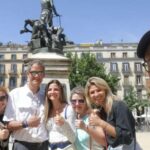


The Frisos del Col-legi d’Arquitectes: Picasso’s only open-air works
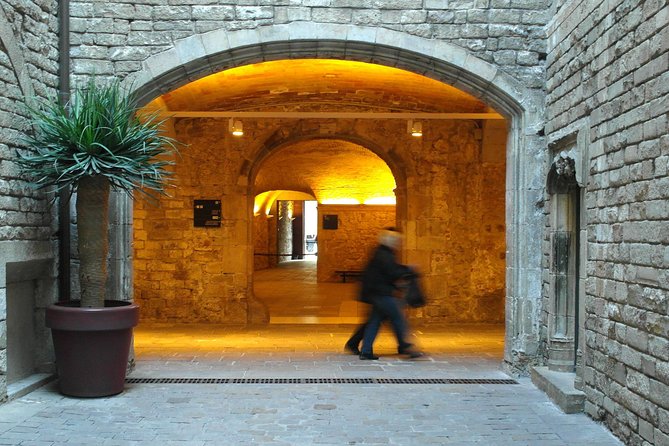
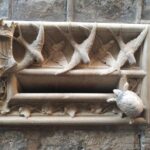
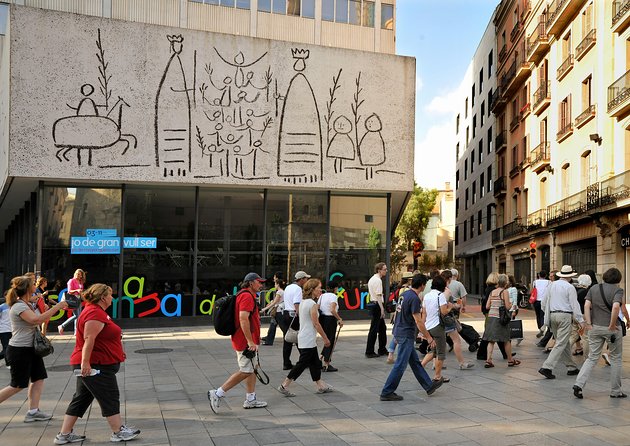
One stop that’s genuinely unique is the Frisos del Col-legi d’Arquitectes. The tour points out the three friezes, and the key claim you’ll hear is that these are Picasso’s only open-air works.
That matters because outdoor art has different rules than gallery art. It’s exposed to the weather, shaped by architecture and viewing angles, and designed for people moving through a shared space. Seeing them in place makes the “how” feel more real than a photo ever will.
If you’re curious about how Picasso treated form and line early on, this stop gives you a rare chance to experience his work outside the museum frame. You’re training your eyes before you sit down indoors.
La Ribera and the approach to the Picasso Museum
As you make your way toward the museum, you’ll spend time in the La Ribera quarter. This section of the tour changes pace slightly—less about monuments, more about walking a historic neighborhood where you can feel the old-city structure around you.
You’ll also pass by other spots tied to Picasso, including places where he painted. That detail is important. It’s easy to tour a museum and forget that the city itself was part of the studio process. The walk keeps that connection alive.
By the time you arrive, you’re not just entering a building. You’re stepping into the next chapter your guide has been building toward.
Skip-the-line at the Picasso Museum: using your time well
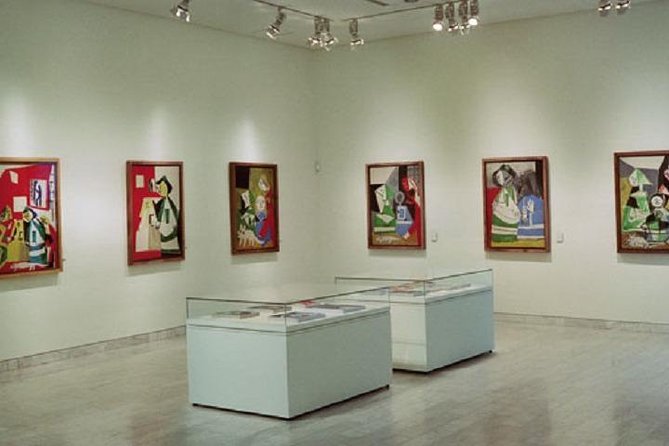
The biggest practical win is the museum time. The Picasso Museum holds over 4,000 works, and the museum can have long lines during peak periods. Having skip-the-line entrance means you’re more likely to start viewing soon after arrival, rather than losing your best attention span to queueing.
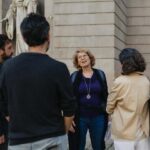
Once inside, the guide navigates you through the main highlights—many of which connect to Picasso’s early period. This is where a good guide changes everything. Instead of wandering until you feel museum-fatigued, you get a guided route through the most meaningful pieces first, and you understand why they matter.
I also like the way the museum visit is described as commentary-focused. It’s not just facts read at you. It’s explanations that help you see his techniques and how his style changed over time. In the guide-praise notes from real customers, the names that pop up most are Alex, Iris, Pilar, Marco, Sylvia, Danielle, and Alli, with frequent praise for clear, engaging explanations and a pace that keeps the group together.
One caution: the museum can feel warm, which showed up in feedback. If you’re sensitive to temperature, dress in layers and plan for slower pacing inside.
Duration and pace: what 2 hours feels like on your feet
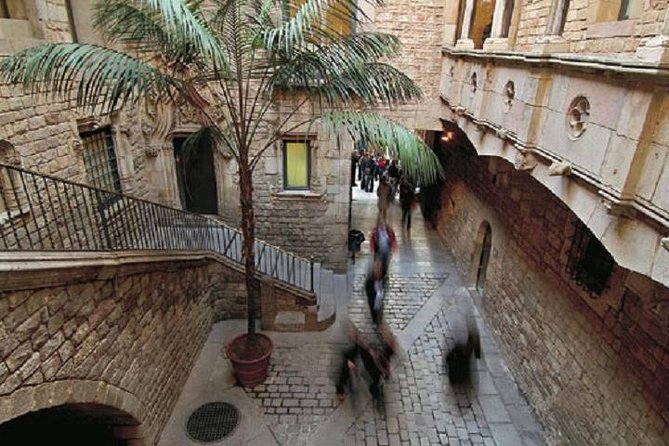
This tour runs about 2 hours. In that time, you’ll do both walking and museum viewing, which means the experience is structured and time-aware. You’re not expected to see everything the museum offers in one shot. Instead, you’re getting a curated path that makes the visit more productive.
With a max group size of 10, it’s easier to keep up. You should still wear comfortable shoes. Barcelona stone and cobblestones have opinions, and they don’t care about your fashion choices.
If you’re traveling with kids or you want a moderate activity level, this is one of the more manageable ways to combine art and city history without turning it into a half-day ordeal.
Price and value: what $48.06 really buys you
At $48.06 per person, the value comes from three combined elements:
- You get a professional guide for both the street walk and the museum portion.
- Your Picasso Museum admission ticket is included.
- You get skip-the-line entry, which saves time you can’t easily replace later.
In other words, you’re paying for interpretation plus access. If you arrive at the museum on your own, you can still see the works, but you won’t get the same “why this painting, why now” thread. For many people, that narrative is the difference between seeing a lot of art and actually understanding Picasso’s early development.
This is especially worth it if it’s your first time in the museum area. You’ll get your bearings fast, and you’ll know which rooms and highlights to focus on.
Who this tour fits best (and who might want another plan)
This tour is a great fit if you:
- want a guided Barcelona history walk tied to a specific artist
- like structured art viewing rather than aimless museum wandering
- want the Picasso Museum visit to make more sense, especially around his early years
- prefer smaller groups (max 10) and a guide you can ask questions to
You might reconsider if you:
- hate warm indoor spaces, since the museum experience can feel hot
- want to spend long hours inside the Picasso Museum seeing everything at your own pace (this is short, guided, and selective)
Should you book this Picasso small-group walking tour?
Book it if you want to see Barcelona through the lens of Picasso’s early life, not just drop into the museum cold. The mix of city streets (El Quatre Gats, Llotja Mar, and the Frisos outdoor works) plus museum access with skip-the-line is the right kind of time-saving.
Skip-booking is harder, because the walking-and-museum pairing is the point. If you like art with a story and you’re short on time, this is a strong way to get both the city context and the museum highlights in one go.
If you’re sensitive to heat, wear breathable clothes and plan for a slower museum pace. And since you’re paying for the English experience, double-check the language on the day of your tour so everything matches what you expect.
FAQ
What’s the duration of the Picasso Small Group Walking Tour with Museum ticket?
It lasts about 2 hours.
Where does the tour start and end?
It starts at Oficina d’atenció turística, Pl. de Catalunya 17, L’Eixample, 08002 Barcelona, Spain, and ends at Carrer de Montcada 23, Ciutat Vella, 08003 Barcelona, Spain.
What’s included in the price?
The price includes a professional guide and Picasso Museum admission.
Do I get skip-the-line entry to the Picasso Museum?
Yes, the tour includes skip-the-line museum entrance.
What language is the tour offered in?
The tour is offered in English.
How big is the group?
The tour has a maximum group size of 10 travelers.
Is public transportation nearby?
Yes, it’s near public transportation.
What’s the cancellation policy?
You can cancel for a full refund up to 24 hours before the experience’s start time.