REVIEW · WROCLAW
Old Town Wrocław Walking Tour
Book on Viator →Operated by Walkative! TOUR · Bookable on Viator
Wrocław’s past is written in stones. This Old Town Wrocław Walking Tour gives you a clear route through the center, with a story built around shifting borders and big landmarks like the Wrocław Town Hall and Ostrów Tumski. Along the way, you’ll even get the fun details, like the dwarfs near St. Elizabeth’s Church, tied back to how Wrocław’s identity kept changing.
I love how the guide turns architecture into context: you’re not just looking at buildings, you’re learning why Wrocław ended up where it is today. Another big plus is the easy pacing for a first visit—multiple stops feel short and focused, and guides such as Łukasz and Susanna are often singled out for clear English and lively, question-friendly explanations.
One thing to consider: some departures can run larger (up to 35), and a microphone isn’t guaranteed, so the experience can feel harder to follow if you end up far back in the group.
In This Review
- Key highlights you’ll actually use
- Why this Wrocław old-town walk is great for first-timers
- Start at the Monument of Alexander Fredro (and get your bearings quickly)
- Wrocław Town Hall: gothic drama and the beer-cellar story
- Rynek Market Square: pillory, Cloth Hall passages, and mixed styles
- Church of St. Elizabeth of Hungary: the 91-meter tower plus Wrocław dwarfs
- Wrocław University: baroque elegance and Nobel Prize connections
- Ostrów Tumski (Cathedral Island): bridges, 10th-century roots, and Oder views
- How long it really takes (and how the pace feels)
- Price and value: $26.60 for a city-scale story
- Small group energy, guide styles, and what makes it better than a basic walk
- Who should book this Old Town Wrocław walking tour
- Should you book it?
- FAQ
- How long is the Old Town Wrocław walking tour?
- What does the tour cost, and what’s included?
- Is the tour in English?
- Where does the tour start and end?
- Are there any ticket costs at the stops?
- What if I need to cancel?
Key highlights you’ll actually use
- Town Hall to beer-cellar stories: you’ll hear the legendary backstory tied to Wrocław’s oldest cellar tradition.
- Rynek Market Square walk: see how the pillory, Cloth Hall passages, and mixed styles sit in one compact area.
- St. Elizabeth of Hungary plus modern touches: the 91-meter tower is the anchor, with Wrocław dwarfs as a quick pop of local character.
- University of Wrocław focus: baroque setting, Nobel Prize connections, and why the city’s learning mattered.
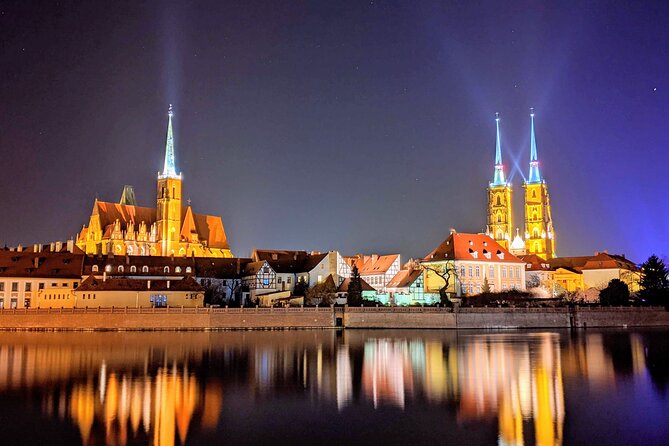
- Ostrów Tumski payoff: multiple bridges lead to the 10th-century heart, plus strong views over the Oder River.
Why this Wrocław old-town walk is great for first-timers
If it’s your first time in Wrocław, you want two things fast: orientation and context. This tour gives you both without dragging you through long, slow sightseeing blocks.
The key is the route. You move from major civic power (Town Hall), to the commercial center (Rynek), to faith and culture (St. Elizabeth and the University), and then into the oldest layer of the city at Ostrów Tumski. It’s the kind of sequence that helps you remember what you saw later.
And the guide format matters. You’re hearing a connected narrative about how multiple nations shaped Wrocław over centuries, not just a list of facts. That makes the city feel understandable instead of overwhelming.
You can also read our reviews of more walking tours in Wroclaw

Start at the Monument of Alexander Fredro (and get your bearings quickly)
You meet at the Monument of Alexander Fredro on Rynek (Rynek, 50-438 Wrocław). That’s a smart choice because it places you right in the gravity center of the Old Town, where the Market Square energy starts.
From there, you’ll walk through key sights in an order that builds meaning. You’ll also get a feel for distances and where to go next, which helps a lot if you plan to revisit on your own the following day.
One practical note: the tour ends at Ostrów Tumski, and that means you’ll have about a 15-minute walk back to the start area. Plan your next activity with that in mind so you’re not rushing.
Wrocław Town Hall: gothic drama and the beer-cellar story
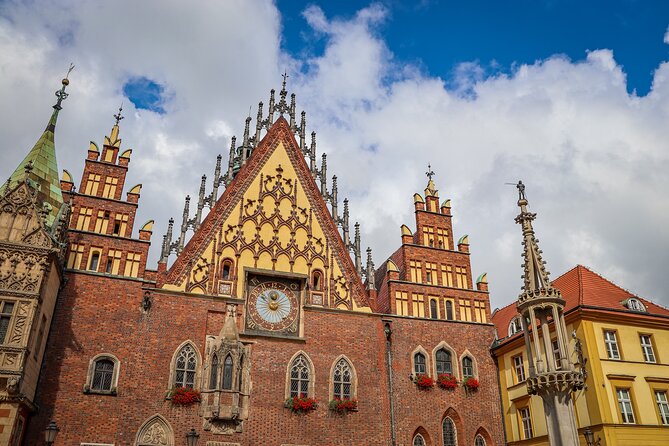
The tour kicks off at Wrocław Town Hall, where the gothic architecture does a lot of the talking. Expect the guide to connect the building to the city’s older civic identity and the way Wrocław functioned as a hub long before modern borders were drawn.
The standout detail here is the story about the oldest beer cellar in Europe. Even if you treat it like a legendary claim rather than a lab-tested fact, it’s still a memorable hook because it explains why beer culture mattered in local life.
You’ll also get a broader historical thread that ties into the idea that Wrocław was influenced by five different countries over time. The guide’s job is to make those changes feel real, not abstract, and the Town Hall is a good place to start that kind of explanation.
What to watch for: take a second to look up as you approach. Gothic details are easier to spot when you’re not moving fast.
Rynek Market Square: pillory, Cloth Hall passages, and mixed styles
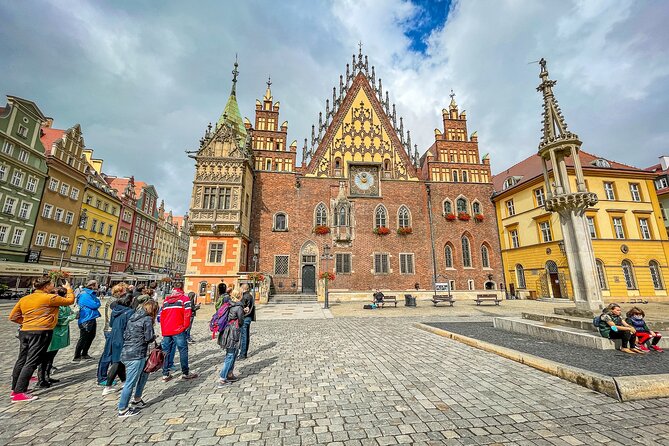
Next you head into the Rynek, Wrocław’s Market Square. This is where the walking tour earns its keep for “I’ve only got a little time” visitors.
The guide points out significant structures around the square, including baroque and modernist houses. That mix isn’t random—it reflects how the city kept rebuilding and reinterpreting itself, especially after major disruptions.
You’ll also hear about practical markers of older city justice, like the pillory, and get oriented to the Cloth Hall. One cool detail is the mention of numerous passages, which you can miss if you’re just walking through looking for a photo spot.
Possible drawback: Market Squares can feel busy and echo-y. If you’re sensitive to noise, pick a spot earlier in the group so you hear better during explanations.
Church of St. Elizabeth of Hungary: the 91-meter tower plus Wrocław dwarfs
At Church of St. Elizabeth of Hungary, the big visual is the 91-meter tower, which acts like a landmark you can orient to even after the tour. This is also one of the easiest stops to enjoy with minimal effort—stand near the church, listen, and let your eyes catch up.
The tour brings in two angles here. First is the church’s importance in the Old Town story. Then it shifts to modern art elements connected to the area, including the famous Wrocław dwarfs beside the church.
This is one of the best examples of what makes Wrocław feel different from other Polish cities: you get sacred history plus local whimsy, and the guide explains how both sit in the same space.
What I’d do on your own later: after the tour, circle back near the dwarfs for a slower look. You’ll already know which details matter by then.
Wrocław University: baroque elegance and Nobel Prize connections
You’ll also stop at the University of Wrocław, a baroque centerpiece that signals the city’s role as a place of learning and influence. The tone changes slightly here, from public life (Market Square and Town Hall) into the culture of education.
The tour highlights that the University has connections to as many as 10 Nobel Prize winners. That’s a big number, and even if you don’t memorize all names (the tour doesn’t ask you to), it gives you a sense of why this building belongs in a history-focused walk.
Because this stop is shorter, it’s best used as a mental bookmark. You’ll likely use it later when you notice students, libraries, or academic energy around the city.
Tip: if the weather turns, this stop is a good one to enjoy from a sheltered angle. Short stops are easier when you’re comfortable.
Ostrów Tumski (Cathedral Island): bridges, 10th-century roots, and Oder views
The tour ends on Ostrów Tumski, also called Cathedral Island. This is the point where the walk shifts from “historic center” into “the oldest layer of Wrocław,” dating back to the 10th century.
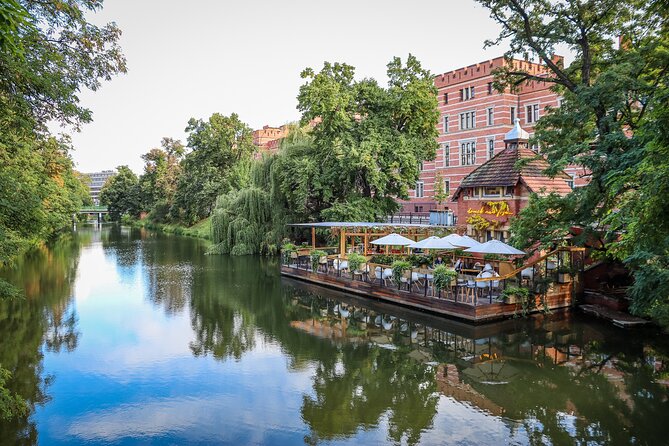
You’ll cross multiple bridges to reach the island. That matters more than you might think, because the bridges gently reset your perspective. You go from urban square density to a more open, river-oriented viewpoint over the Oder River.
On Cathedral Island, the focus becomes spiritual and architectural scale. You’ll see gothic churches and palaces, and the guide ties these sights back to the city’s complex Polish-German relations. The aim isn’t to make you memorize dates. It’s to help you understand why Wrocław’s identity can feel layered, sometimes even contradictory.
End-of-tour reality check: you finish here, and then you have about a 15-minute walk back to the start area. If you want a smooth finish, consider staying in this area after the walk, rather than immediately catching a train the moment you’re done.
How long it really takes (and how the pace feels)
The tour runs about 2 hours 30 minutes. The on-site talk time is broken into smaller chunks at each stop, and the rest of the time goes to walking, regrouping, and questions.
I like this structure because it prevents “lecture fatigue.” You’ll get a quick, useful slice of history at each location, then you move on before it gets stale.
It operates in all weather, so you should dress for rain and cold if needed. Even if you’re tough, you’ll be happier with a compact umbrella or a waterproof jacket.
Group size note: it’s capped at 15 people in the tour description, but the activity can scale higher (max 35). If you really care about hearing every word, aim for departures that advertise the smaller group size, and try to position yourself toward the front.
Price and value: $26.60 for a city-scale story
At $26.60 per person, this is the kind of walking tour that feels like a bargain if you’re new to Wrocław. The main reason: you’re paying for an expert guide and a narrative that connects multiple centuries and several national influences.
Also, the stops are marked as admission ticket free, so you’re not adding surprise costs at each location. That makes the price easier to justify than tours that tack on entry fees for major sights.
You’re not getting food included, though. That’s normal for walking tours, but it means you’ll want a plan for a coffee or snack afterward.
One extra bonus you might get at some points: a short break around a local market for something like coffee, depending on how the guide keeps timing. Another small perk reported by past groups is a QR code map with recommendations for places to eat and hang out.
Small group energy, guide styles, and what makes it better than a basic walk
The most praised departures share a pattern: the guide makes the history sound like something you can picture. Names that come up in past groups include Lukas, Susanna, Simon, Matt, Peter, Łukasz, Michael (Michal), and Adam. The common thread isn’t the individual name—it’s the delivery: clear English, lots of questions welcomed, and jokes that usually land without swallowing the facts.
You’ll also likely get practical suggestions beyond the stops. Several groups mention recommendations for what to do next, plus museum or eating ideas. That’s valuable because it helps you turn a single guided walk into a better trip plan.
If you’re hoping for “point at statue, move on,” you might feel underwhelmed. This tour is built around the idea that buildings and city layout are the story.
Who should book this Old Town Wrocław walking tour
This tour is a great fit if you:
- want first-time orientation without jumping between disconnected attractions
- like history that explains why the city looks the way it does
- prefer a walking route over a bus tour
- enjoy local details like the Wrocław dwarfs when they’re tied to the broader story
It’s also a solid choice if you’re traveling solo or as a couple because the group size keeps things conversational, especially when you’re toward the front.
If you’re traveling with kids, the dwarfs and short, varied stops can help keep attention. Still, you’ll want to judge your kids’ tolerance for standing outside in weather.
Should you book it?
Yes, if you want an organized Old Town route with strong context for Wrocław’s shifting past. The price is reasonable for the amount of history you cover, and the itinerary hits the landmarks that most strongly shape how the city feels.
Hold off only if you know you’ll struggle with larger groups or you need constant mic support for hearing details. In that case, choose a departure that keeps the group smaller and plan to stay near the front.
FAQ
How long is the Old Town Wrocław walking tour?
It runs about 2 hours 30 minutes, though that can vary slightly with walking time between stops and time for questions.
What does the tour cost, and what’s included?
The price is $26.60 per person. You get an expert guide and a specially created narrative that covers the city’s history across nations.
Is the tour in English?
Yes. The tour is offered in English.
Where does the tour start and end?
It starts at the Monument of Alexander Fredro on Rynek (50-438 Wrocław) and ends on Ostrów Tumski (Cathedral Island). From there, it’s about a 15-minute walk back to the starting area.
Are there any ticket costs at the stops?
The listed admissions for the stops are marked as free, so you should not expect extra ticket fees during the walk.
What if I need to cancel?
You can cancel for a full refund up to 24 hours before the experience starts. If you cancel later than that, the amount paid may not be refunded.