
REVIEW · NEW DELHI
New Delhi Slum Walking Tour
Book on Viator →Operated by Street Tours India · Bookable on Viator
Delhi’s lanes feel like a different world. This small-group walk into Zakhira, guided by local Santan, shows you daily life in one of Asia’s biggest informal settlements without turning it into a spectacle. I love how you travel like a local using public transport, then move on foot with a calm, respectful pace.
I also like the simple, human details: complimentary chai/coffee plus time to talk and observe how people run their own streets, shops, and routines. You even get a chance to see community life up close, including small food stops like tea and bakery activity, all while your guide sets clear boundaries.
One possible drawback: if you’re chasing classic monuments and easy photo moments, this can feel emotionally heavy and very different from typical sightseeing. It’s short, but the subject matter is real.
In This Review
- Key things I’d circle before you go
- Why Zakhira gives you the real picture
- Getting there: meeting point and local-style travel
- Your guide’s job isn’t just talking—it’s setting boundaries
- The walk through Zakhira: what you’re likely to see
- The tea, the chat, and why those small stops matter
- Time and pace: about two hours, small group dynamics
- What the $28.50 price actually buys you
- Where this tour shines (and where it might not)
- Practical tips to help you get the most out of it
- Should you book this New Delhi Slum Walking Tour?
- FAQ
- How long is the New Delhi Slum Walking Tour?
- How much does the tour cost?
- Where does the tour take place?
- What’s included in the tour?
- How big is the group?
- Is the ticket digital?
- Is the guide English-speaking?
- Is Zakhira admission free?
- What is the cancellation policy?
Key things I’d circle before you go

- Tiny group size (up to 8, sometimes even fewer) helps keep the experience personal, not crowded
- English-speaking local guide who knows the community relationships, not just the facts
- Public transport + walking gives you a practical sense of how people move day to day
- Respect-first rules (including photo boundaries once inside) make it feel ethical, not exploitative
- Chai/coffee included helps break the ice and keeps the tour warm and grounded
- Zakhira as the focus means you’re seeing one specific large area, not a quick drive-by
Why Zakhira gives you the real picture
Zakhira isn’t presented as a storyline of misery. It’s presented as a place where life continues—shops open, food gets made, people support one another, kids play, and routines run on. That’s what makes this tour land differently.
You’re there to understand the socioeconomic context, not to hunt for shock value. The guide frames what you’re seeing: what “informal settlement” means in practice, how families build stability, and how community projects and day-to-day survival work together.
And since the tour is designed to be inclusive and not intrusive, you get space to ask questions, sit for a moment, and absorb what you’re actually seeing. That matters, because slum tours can go wrong fast when they become a checklist.
You can also read our reviews of more walking tours in New Delhi


Getting there: meeting point and local-style travel

You start at 3/21, Block A, New Moti Nagar, Moti Nagar, New Delhi, 110015. The area is marked as near public transportation, which is a big deal in Delhi. You’re not forced into a long, expensive transfer before you even begin.
From the meeting point, the flow is simple: your guide gets you oriented, and you head toward the slum area using public transport, with some departures adding a short rickshaw ride to shorten the leg. Once you arrive, you switch to walking through the lanes—because that’s the only way to understand what space feels like at street level.
The tour ends back at the meeting point, so you don’t have to rebuild your day from scratch afterward.
Your guide’s job isn’t just talking—it’s setting boundaries
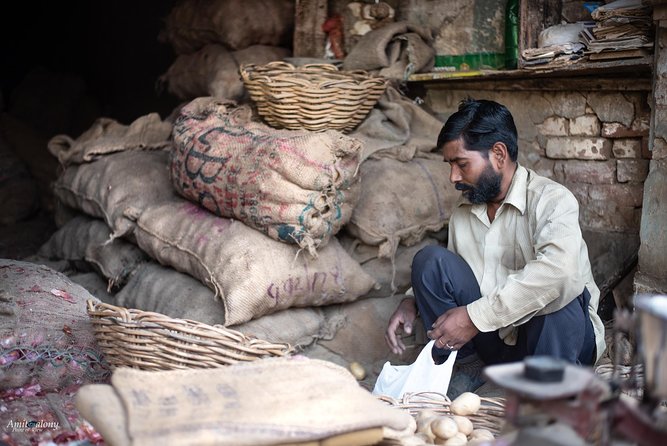
Most of what people love about this tour isn’t the route. It’s the guide’s approach.
In the most commonly shared experiences, Santan leads the walk and keeps the tone respectful. People describe feeling comfortable and safe, not pushed, and not treated like spectators. The guide builds rapport with residents the way you’d hope a good host would—by greeting people, asking permission where needed, and keeping conversations human.
A key detail: you may be asked not to take photos once you enter the community area. That’s not a random rule for control. It’s a basic ethical boundary—especially in a place where most people never opted into being filmed for someone else’s entertainment.
It also helps you focus. Instead of trying to “capture” everything, you actually watch: how people speak to each other, how stalls and small businesses work, how kids react when you say hello, and how the street itself functions as a shared space.
The walk through Zakhira: what you’re likely to see
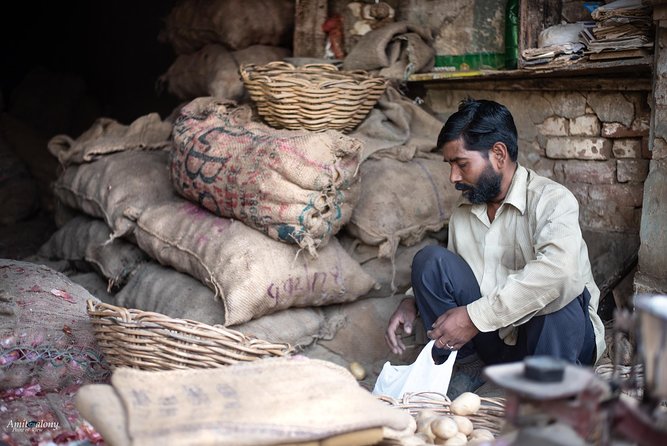
The itinerary centers on Zakhira, with about one hour at the core stop, plus walking time built around the community. In practice, that hour is less like a museum stop and more like a guided walk that turns into short pauses.
Here’s what you can reasonably expect to notice:
- Everyday storefront life: small shops and stalls where people buy, sell, and chat as if you’re just passing through their neighborhood.
- Food and tea breaks: chai stops come up repeatedly, and it’s often where you’ll get the most relaxed conversation.
- Work happening inside the community: multiple accounts mention seeing a bakery setting and watching production in motion.
- Kids and community energy: kids often show curiosity and excitement, and you’ll probably see smiles quickly.
Some experiences also mention extras like henna or a chance to watch craft and bakery work in action. Those elements may vary depending on the timing and what’s happening that day, but the theme stays consistent: you see real routines, not staged scenes.
If you’re worried about feeling awkward, this tour’s design helps. The guide’s role is to introduce you, keep you moving at a pace that makes sense, and help conversations stay respectful and short enough that you don’t crowd anyone.
The tea, the chat, and why those small stops matter
It’s easy to underestimate chai, until you’re in a place where hospitality is the connector. The tour includes complimentary coffee or tea, and that tiny refreshment does a lot.
First, it gives you a natural moment to slow down. Second, it gives residents and your guide a reason to keep conversations light—so the tour doesn’t become a one-way question interview. And third, it makes the experience feel less like observation and more like shared time.
People also describe the guide using tips and small purchases during the walk—like buying food or treats for children. I can’t promise that every day includes the same exact exchanges, but the idea behind it is consistent: spending time and money in the community, not just taking photos of it.
Time and pace: about two hours, small group dynamics
The tour runs about 2 hours. That’s a good length for this kind of topic because you get enough time to see how a neighborhood functions without exhausting yourself or the group.
Group size is capped to keep it semi-private. The description calls out a cap of 8 travelers, and the additional info also states a maximum of 4 travelers for the activity. The practical takeaway for you: your group is small, and you’re unlikely to feel like one face in a crowd.
That size affects the feel immediately:
- You’re more likely to hear questions answered in detail.
- You can sit when the group pauses.
- You can ask follow-ups without the guide rushing.
On very small days, some people mention just two guests, which makes it feel closer to a conversation than a tour.
What the $28.50 price actually buys you
At $28.50 per person, this isn’t a bargain like a street-level snack, and it isn’t a luxury “experience” either. It’s priced as a short, guided, operational activity.
The value comes from what you’re paying for:
- A local, English-speaking guide who understands how to move through the area appropriately
- Small group control, which is rare for tours in sensitive destinations
- Time in the community, including tea/coffee and guided walking that likely takes planning behind the scenes
- A format designed to be inclusive and not intrusive, which takes training and relationships to pull off
One detail that comes up in multiple stories: the guide describes reinvesting money in ways that support community members. Even if you don’t obsess over where every rupee goes, that context helps you feel more at peace about the purchase: it’s not just paying for access—it’s supporting a model built around respect and local ties.
Where this tour shines (and where it might not)

This tour is at its best if you:
- Want to see another side of Delhi beyond the classic temple-and-fort circuit
- Like meeting people and asking questions with a guide who sets boundaries
- Prefer walking and public transport over air-conditioned comfort
- Can handle the emotional weight of poverty topics while keeping a respectful, curious mindset
This tour may not be for you if you:
- Want a light, cheerful photo safari
- Get overwhelmed easily by tight spaces, constant movement, and serious subject matter
- Expect lots of landmark-style stops and “attractions” at every turn
A lot of people come in feeling uneasy at first, then feel steadier once the guide’s relationships and the community’s normal rhythms become clear.
Practical tips to help you get the most out of it
You don’t need to bring anything fancy. But a few choices can make a big difference:
- Go in with respect, not pity. This tour’s tone is about community life and dignity, not rescue fantasies.
- Be ready for boundaries. If you’re asked not to take photos once inside, follow it right away.
- Ask your questions early. If something feels unclear, your guide can often explain the “why” as you walk.
- Wear comfy shoes. You’ll be on foot for a big chunk of the experience through crowded lanes.
- Bring your patience for Delhi pace. Streets move fast; the tour moves with them.
If you’re sensitive to heat, plan around it. Several accounts mention hot weather but also note that parts of the area can offer shade, which helps.
Should you book this New Delhi Slum Walking Tour?
If you’re looking for the real Delhi—messy, human, complex, and not packaged for tourists—this is a strong pick. The combination of a small group, an English-speaking local guide like Santan, and the walk-and-tea format makes it feel less like sightseeing and more like learning how a community works.
I’d book it if you can approach the experience with curiosity and respect, and if you understand that it’s short and emotionally serious, not a relaxed “highlights” tour.
Skip it only if you want traditional sights, or if you know you’ll struggle with the theme of poverty even when it’s handled with care and dignity. In that case, your time in Delhi is probably better spent elsewhere.
FAQ
How long is the New Delhi Slum Walking Tour?
The tour is about 2 hours.
How much does the tour cost?
The price is $28.50 per person.
Where does the tour take place?
It’s in New Delhi, India, and the main stop is Zakhira, one of the largest slum areas in Delhi.
What’s included in the tour?
The tour includes an English-speaking local guide, travel via public transportation and walking through the area, and complimentary coffee or tea.
How big is the group?
The tour is capped at a small group. It’s listed as maximum 8 travelers, and it also notes a maximum of 4 travelers for the activity.
Is the ticket digital?
Yes, the tour uses a mobile ticket.
Is the guide English-speaking?
Yes, the tour includes an English-speaking local guide.
Is Zakhira admission free?
The Zakhira stop lists admission free.
What is the cancellation policy?
You can cancel for a full refund if you cancel at least 24 hours in advance. If you cancel within 24 hours, the amount paid isn’t refunded.