REVIEW · LEIPZIG
Leipzig: 2-Hour Guided Walking Tour in German
Book on GetYourGuide →Operated by Leipzig Erleben GmbH · Bookable on GetYourGuide
Two hours, and Leipzig clicks into place. This guided walk strings together Old Town Hall Renaissance grandeur and the lively twists of Barfußgässchen, with just enough context to make the city feel like more than postcards. You also get the big-center anchors, from opera-and-concert landmarks to church history tied to German reunification.
I like how the route keeps moving but still slows down for details, especially around architecture and how Leipzig’s past connects to what you see today. I also like the human touch: guides are praised for humor and an easy pace, with names like Herr Hannemann showing up in feedback for being both entertaining and informative. The one drawback to plan for is weather—this walk is outdoors for the most part, and winter can be brutally cold.
In This Review
- Key things to know before you go
- Why this Leipzig walk is worth your time (especially at 2 hours)
- Getting oriented: where you meet and how to pace the walk
- Augustus Square: opera house views and the Gewandhaus area
- Nikolai Church: why this landmark matters in reunification-era Leipzig
- Specks Hof arcade to Naschmarkt and the Old Exchange
- Mädler arcade and Auerbach’s Keller: history you can almost smell
- The Old Town Hall: Renaissance beauty at the market square
- Barthels Hof and the transition to Barfußgässchen
- St. Thomas Church: the St. Thomas Choir atmosphere in the final stretch
- Price and value: why $18 for two hours is a smart deal
- Who this tour fits best (and who should consider another option)
- The tour guide factor: humor, relaxed pace, and real explanations
- Should you book this Leipzig 2-hour guided walking tour?
- FAQ
- How long is the Leipzig guided walking tour?
- Where is the meeting point?
- What language is the tour in?
- Is the tour focused on the city center sights?
- Which notable places will I see on the route?
- Are church interiors included?
- How much does it cost?
- Is the tour family-friendly or suitable for children?
- Is there a cancellation policy?
- Is it wheelchair accessible?
Key things to know before you go
- Tight route, fast context: You cover a lot of major sights in two hours without feeling rushed.
- Architecture gets explained: Renaissance form, arcades, and church landmarks are pointed out with practical clarity.
- Reunification history is part of the story: Nikolai Church connects directly to events around 1989.
- Arcades matter here: Specks Hof, Mädler, and related passages keep the walk interesting (and often more sheltered).
- Finish with music-energy: St. Thomas Church is tied to the globally known St. Thomas Choir of Leipzig.
- Bring a warm layer: Even short walks in Leipzig’s winter air can bite.
Why this Leipzig walk is worth your time (especially at 2 hours)

Leipzig rewards short visits when you plan smart. This tour is built for exactly that: a concentrated walk through the city center, with a guide translating the streets into stories. You’re not just ticking off names. You’re learning why specific buildings earned their places in Leipzig’s identity.
At $18 per person for two hours, it’s also one of the more cost-effective ways to understand the core of the city. A guided walk here doesn’t feel like a long museum lecture. It feels like someone handing you a map made of history, architecture, and everyday street life—and then walking you along it.
You’ll get a German-speaking live guide, which matters if you want more than one-liner explanations. Many sights in Leipzig have layers: medieval roots, Renaissance highlights, socialist-era context, and post-reunification transformation. A guide helps you connect those layers quickly while you’re still looking at the buildings.
You can also read our reviews of more walking tours in Leipzig


Getting oriented: where you meet and how to pace the walk
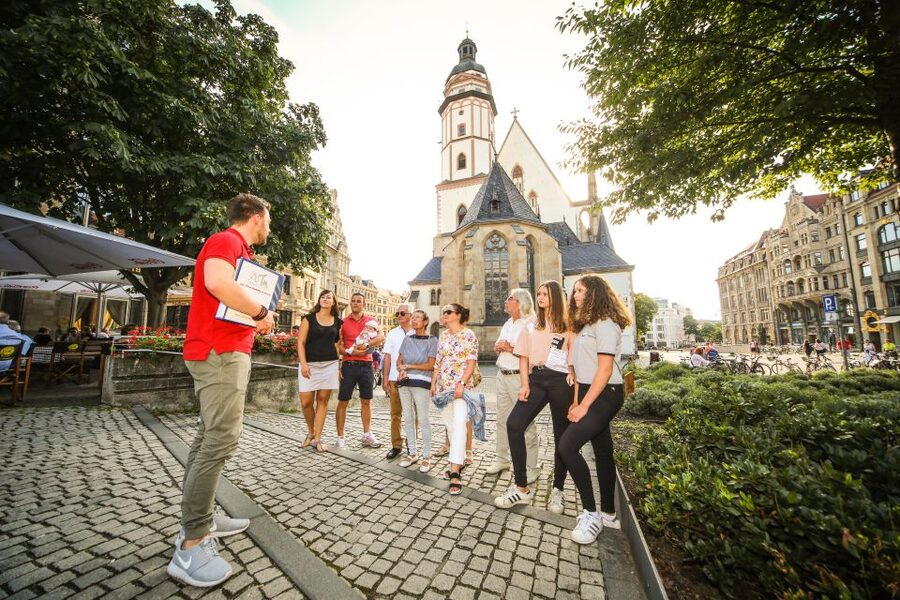
You meet at Tourist-Information, Katharinenstr. 8, Leipzig. That location is practical because it places you in the thick of the center early, so you spend more time walking the sights and less time crossing the city.
The tour is designed to keep a steady rhythm. Expect frequent stops for pointing out buildings and explaining how they connect. It’s not the kind of tour where you linger for long interior visits. In fact, interior church visits aren’t included, so you’ll spend your time outdoors or in street-level settings.
If you’re doing this as part of a longer Leipzig day, I’d schedule it early. After this walk, the city center makes more sense. You’ll know what you’re looking at when you wander back on your own later.
Augustus Square: opera house views and the Gewandhaus area

The route kicks off around Augustus Square, which is Leipzig’s classic “big-city” centerpiece. Here you’ll see the opera house and the Gewandhaus concert hall. Even if you’re not a music buff, this area helps you understand Leipzig’s public face: culture as a civic identity.
The value of this stop is that it sets the tone for everything that follows. Architecture and institutions here don’t feel random. They’re part of why Leipzig became known beyond its region.
A practical tip: if you can, pause for a minute and look at the whole square rather than only individual facades. This tour makes you notice the relationships between buildings, streets, and open space—something you can’t always see when you’re hurrying through on your own.
Nikolai Church: why this landmark matters in reunification-era Leipzig
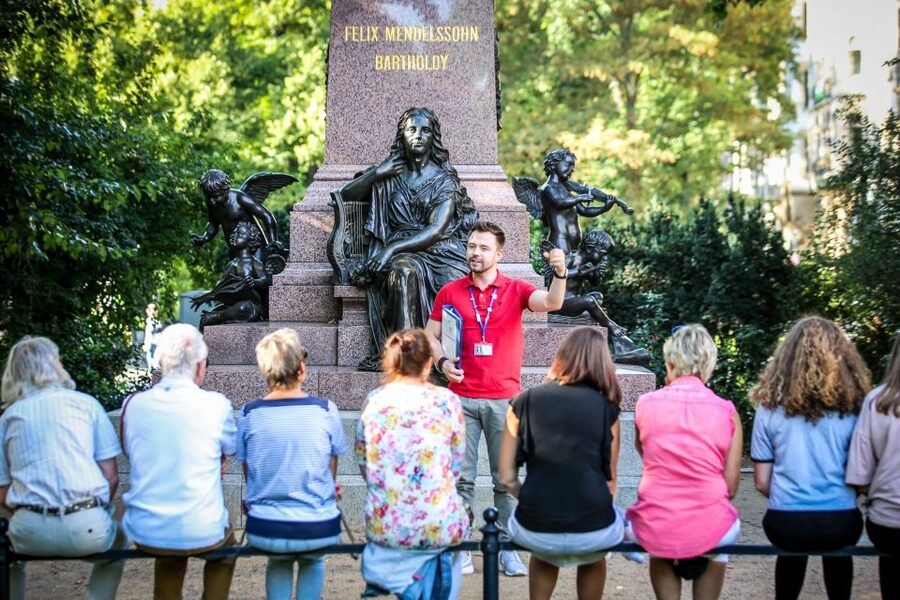
Next comes the Nikolai Church, and it’s more than a photogenic building. This is one of those Leipzig sites where the street you’re standing on carries real historical weight. The tour frames it as a center point for events around German Reunification in 1989.
That context is the reason this stop lands for many people. A guide can explain how a church in the city’s core wasn’t just a religious site—it was part of the public conversation during a turning point in modern German history.
One thing to keep in mind: since interior visits aren’t included, you’ll want to focus on exterior details and the guide’s spoken context. If you’re someone who likes to see meaning in stone and layout, this is a great moment on the walk.
Specks Hof arcade to Naschmarkt and the Old Exchange
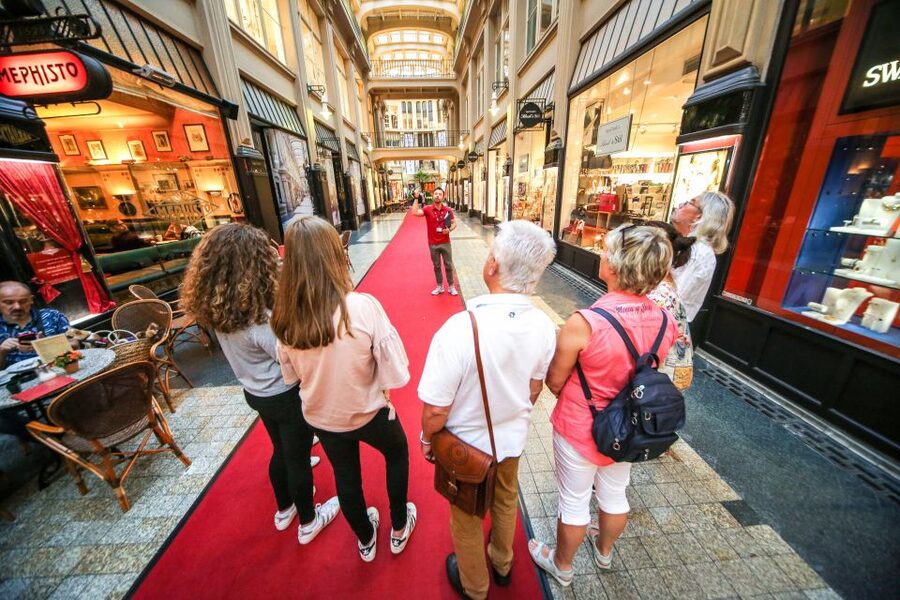
Leipzig isn’t only about big squares. It’s also about passages—covered streets and arcades where everyday life happens. Specks Hof is one of the modern arcade stops you’ll walk through, and it’s a useful contrast to the older landmarks you’ve been seeing.
From there you reach Naschmarkt Square and the Old Exchange. This portion helps you understand how Leipzig’s center works on a pedestrian level. It’s not just sightseeing; it’s circulation, shopping, and city flow.
The takeaway for you: arcades and exchange buildings show how Leipzig functioned economically, not only culturally. Even in a two-hour tour, this segment gives you a sense of city planning and commerce. And because this is a walking route, you feel it in motion, not only in descriptions.
You can also read our reviews of more guided tours in Leipzig

Mädler arcade and Auerbach’s Keller: history you can almost smell
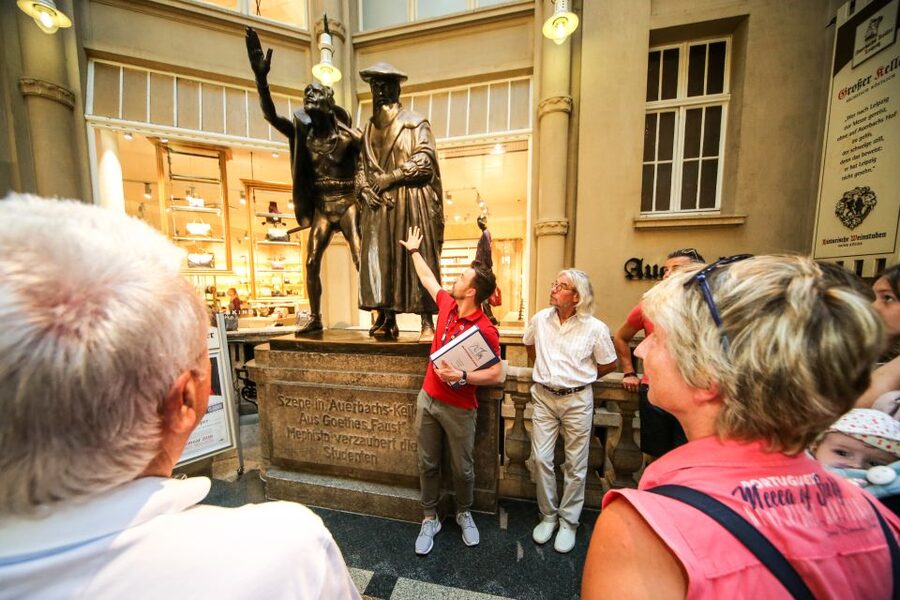
Right near the Mädler arcade you’ll be walking toward Auerbach’s Keller, a historic restaurant tied to Leipzig’s long dining-and-gathering tradition. This isn’t an interior visit; it’s a stop that uses the building and its setting to tell a wider story about Leipzig’s social life.
Why I like this moment for your trip: it adds texture. So far you’re in institutions and civic landmarks. Now you get the city as people experienced it day to day—food, conversation, and places where social scenes formed.
If you like to understand cities through their habits, not only their monuments, you’ll enjoy this stop. It also sets you up for what’s next: the pub-and-restaurant energy of Leipzig’s best-known street.
The Old Town Hall: Renaissance beauty at the market square
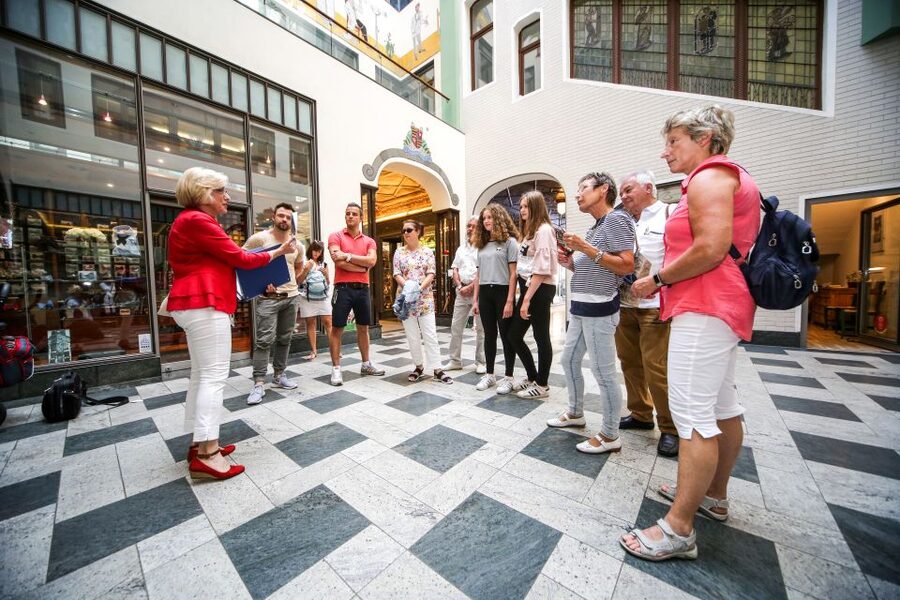
The Old Town Hall is a highlight for anyone who loves classic European city centers. The tour points out its Renaissance character, and you’ll see why it’s often described as one of Germany’s most beautiful renaissance buildings.
What makes this stop valuable isn’t just the facade. It’s what a market-square town hall represents: governance and public life in one place. Even if your German is limited, you’ll leave with the bigger idea. This is where civic identity was displayed, not hidden.
Practical note: take a few minutes to look around the market square area. In a walking tour format, you can miss the wider composition if you keep your eyes only on one wall.
Barthels Hof and the transition to Barfußgässchen
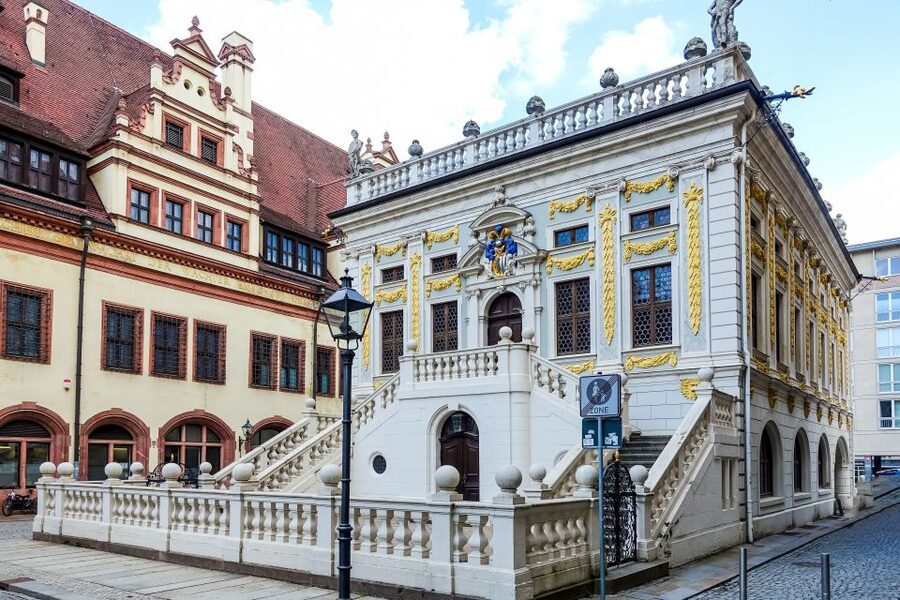
After the Old Town Hall, the tour continues to Barthels Hof, a tavern area that adds a different kind of Leipzig atmosphere. It’s a step toward the city’s more casual side—places that feel like they belong to the living present as much as the documented past.
Then comes the star street: Barfußgässchen. You’ll walk through the most well-known street in Leipzig, known for a variety of restaurants and pubs. The name itself hints at history-as-lifestyle, and the street delivers it through the mix of venues clustered close together.
This is where you can decide how you want to explore afterward. If you want nightlife energy, you’ll know where to aim. If you prefer calm wandering, you can treat this street as your “baseline” area and branch out into quieter side streets.
St. Thomas Church: the St. Thomas Choir atmosphere in the final stretch
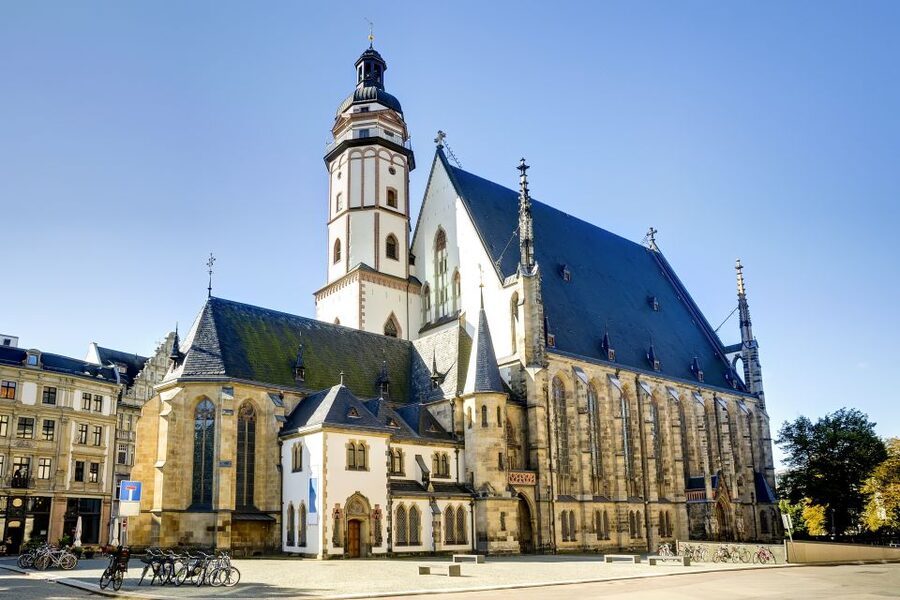
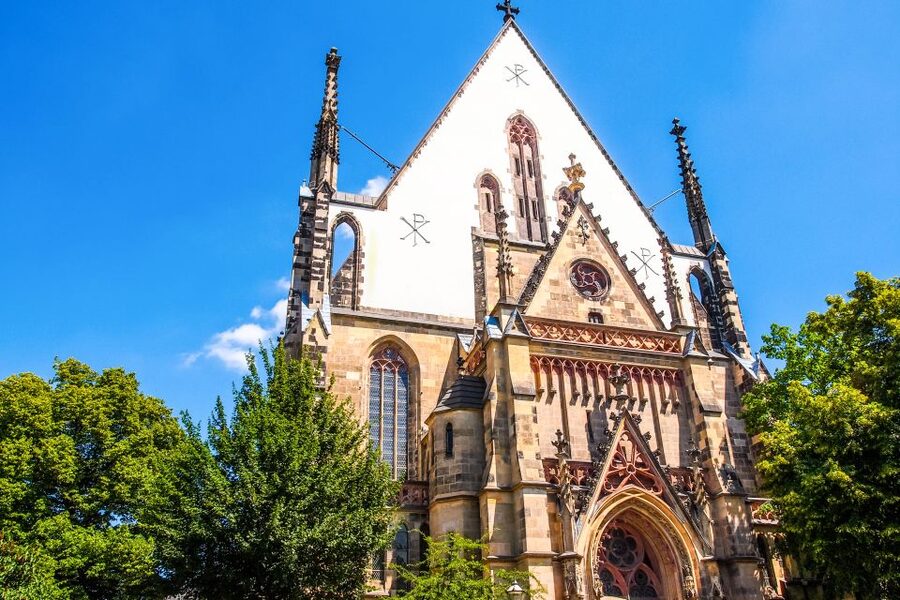
The last major stop is St. Thomas Church (Thomaskirche). The tour frames it as the home of the globally renowned St. Thomas Choir of Leipzig. That connection turns the building from a historic landmark into a living tradition.
Even without an interior visit included, the exterior setting and the guide’s explanation help you connect the church to the choir’s reputation. Leipzig is one of those places where classical culture isn’t locked in time. It continues.
One detail that shows up in feedback: people have mentioned hearing concert-style sounds during the visit, which makes this final stop feel extra special when the timing aligns. Even if you don’t catch music, you’ll still walk away with a clear understanding of why this church is so important to Leipzig’s musical brand.
Price and value: why $18 for two hours is a smart deal
Let’s talk value honestly. At $18 per person for a two-hour guided walking tour, you’re paying for more than movement from place to place. You’re paying for someone to interpret the center while you’re standing right in front of it.
If you were to explore alone, you’d likely spend money on coffee plus time on reading signs slowly. This tour compresses that learning into a tight route, and the guide does the heavy lifting: architectural cues, city development context, and major historical connections like the 1989 reunification role linked to Nikolai Church.
So who is this best for? People who:
- want a first-pass orientation of Leipzig’s center
- enjoy architecture and how cities evolved
- like practical storytelling more than strict museum-style history
- want a German-speaking guide for richer context
Who this tour fits best (and who should consider another option)
This tour works especially well for first-timers, because it covers the city’s core identity in a single short session. It also suits travelers who plan to wander afterward, since you’ll know what to look for when you return.
You might prefer a different format if you want deep interior time in churches. Interiors aren’t included, so your experience will be driven by exterior views and guide explanations.
One more planning note: the tour information includes wheelchair accessibility, yet also states it’s not suitable for wheelchair users. If you use a wheelchair, I’d treat this as a red flag and contact the provider to confirm what “accessible” means for this specific walking route and its stops.
And if you tend to feel cold quickly, layer up. One of the most direct pieces of feedback points out how cold it can be. Two hours is short, but Leipzig winter air doesn’t negotiate.
The tour guide factor: humor, relaxed pace, and real explanations
A big reason people rate this tour so highly is the guide style. Feedback repeatedly highlights engaging, humorous guiding and a relaxed approach—so the information lands without turning into a textbook.
Herr Hannemann is one name that appears in reviews as someone who led in an entertaining way, keeping the group enjoying the walk. Others also mention guides being very good at explaining architectural features plus older and newer history, along with the economic importance of Leipzig through change.
For you, that means the tour is more than facts. It’s delivery. If you’ve ever been on a walking tour where the guide talks nonstop and the group tunes out, this doesn’t sound like that. It sounds like a tour that keeps you listening while still moving.
Should you book this Leipzig 2-hour guided walking tour?
If you want a fast, guided “read” of Leipzig’s center—town hall beauty, church-and-history significance, arcade-and-commerce passages, and the fun energy of Barfußgässchen—then yes, I think this is a strong booking.
Book it if:
- you only have a short window in Leipzig and want the essentials with context
- you appreciate architecture and historical connections
- you’d rather spend two hours learning efficiently than wandering in guesswork
Skip it or choose something else if:
- you’re mainly interested in long interior church visits
- you can’t comfortably handle outdoor walking in colder weather
- you need clear, confirmed wheelchair route details (since the information is inconsistent)
Overall, at $18 for two hours, this is good value for a guided overview that feels lively, not stiff. It’s the kind of tour that helps you leave with a mental map—and a better sense of why Leipzig’s streets look the way they do.
FAQ
How long is the Leipzig guided walking tour?
It lasts 2 hours.
Where is the meeting point?
You meet at Tourist-Information, Katharinenstr. 8, Leipzig.
What language is the tour in?
The live guide speaks German.
Is the tour focused on the city center sights?
Yes. It covers major sights in Leipzig’s city center, including squares and landmark buildings.
Which notable places will I see on the route?
Expect to see Augustus Square (with the opera house and Gewandhaus area), Nikolai Church, Specks Hof arcade, Naschmarkt Square, the Old Exchange, the Mädler arcade, Auerbach’s Keller, the Old Town Hall, Barthels Hof, Barfußgässchen, and St. Thomas Church.
Are church interiors included?
No. Interior visits of the churches are not included.
How much does it cost?
The price is $18 per person.
Is the tour family-friendly or suitable for children?
The provided details do not specify child suitability, so you’d need to check with the provider for guidance.
Is there a cancellation policy?
Free cancellation is offered up to 24 hours in advance for a full refund.
Is it wheelchair accessible?
The activity info says wheelchair accessible, but it also says it is not suitable for wheelchair users. You should confirm the practical details with the provider before booking.