REVIEW · BUENOS AIRES
Buenos Aires: La Boca Guided Walking Tour in English
Book on GetYourGuide →Operated by Buenos Aires Free Walks · Bookable on GetYourGuide
La Boca has a way of grabbing you fast. In two hours, you’ll get the story behind the colorful conventillos, learn how tango took shape, and finish near La Bombonera. The tour is short and mostly easy, but you will be on foot in a busy neighborhood, so plan for street-level walking and bring water.
What I love most is how the guide turns quick sightseeing into context you can actually use. You’ll also get a strong football-focused thread, not just a photo stop, so Boca Juniors makes sense when you see the stadium area. One consideration: traffic is heavy at the start, and the guide only waits 10 minutes at the meeting point before moving on.
In This Review
- Key points to know before you go
- Where you start: Caminito’s corner and the fast check-in
- The La Boca walk: Conventillos, culture, and street-level details
- Colorful conventillos and the community story
- Fileteado art: more than decoration
- Tango history, with live performances in the mix
- Puente Transbordador and the riverside vibe
- Mid-tour stops: walking pace, shade, and what your guide watches for
- Finishing outside La Bombonera: football history you can see
- Price and value: why $13 works (when you’re short on time)
- What makes the guides so well-liked
- Rain, time, and practical expectations
- Who should book this and who might skip it
- Should you book the Buenos Aires La Boca Guided Walking Tour in English?
Key points to know before you go
- Conventillos with real backstory: you’ll learn where the color and community roots come from.
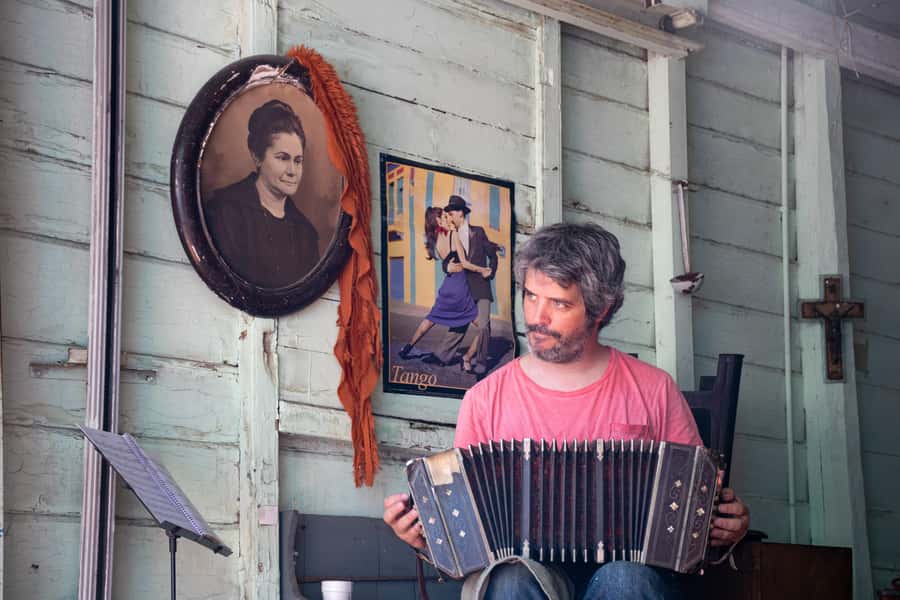
- Tango history on the street: live street performances can pop up while you walk.
- Fileteado art explained: you’ll understand the origins of the bold painted style you see everywhere.
- Boca Juniors in context: the tour ends outside La Bombonera so you can connect club history to the place.
- English guides who tell it well: many guides are praised for engaging storytelling and clear English.
- Pacing that accounts for conditions: guides are repeatedly noted for keeping the group safe and using shade when possible.
Where you start: Caminito’s corner and the fast check-in
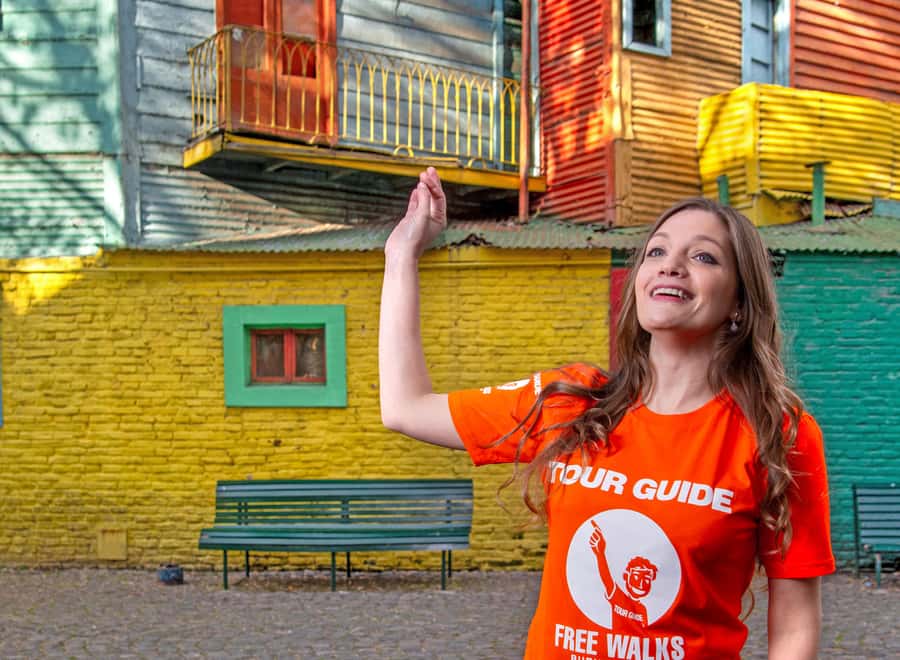
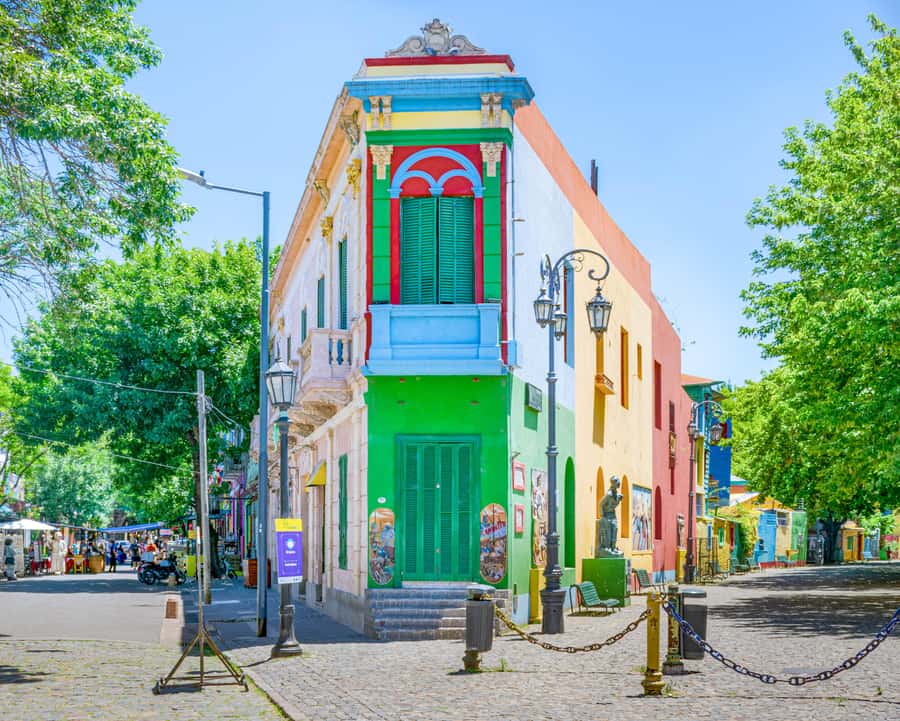
Your tour meets at the corner of Caminito and Magallanes Street (look for an orange t-shirt/umbrella). The address is Magallanes 808, inside/at the entrance area of the Cachafaz shop (the meeting point is right there in the La Boca visitor flow).
Arriving matters here. Because traffic can be slow, the guide waits 10 minutes. After that, they continue to the first stop about a block away near the riverside. So if you’re coming from farther off, give yourself a buffer rather than hoping for the best.
Tip I’d follow: take a quick look for that orange marker even before you’re “done” walking up. It saves time when you’re also trying not to get tangled in crowds.
You can also read our reviews of more tours and experiences in Buenos Aires.

The La Boca walk: Conventillos, culture, and street-level details
This is a guided walking tour for about two hours. That length is a sweet spot. It’s long enough to see more than one photo-worthy corner, but short enough that you won’t feel like you’ve been wandering all day.
Colorful conventillos and the community story
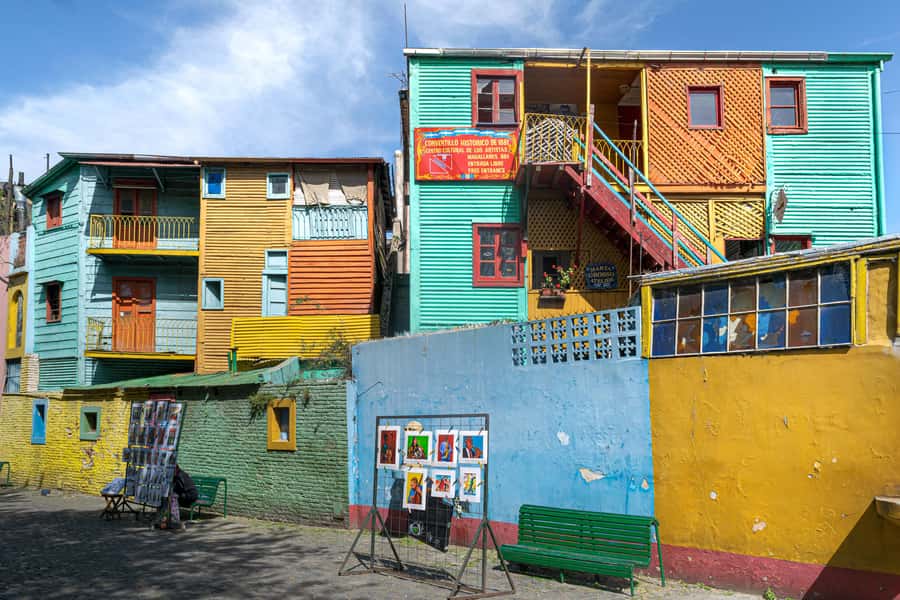
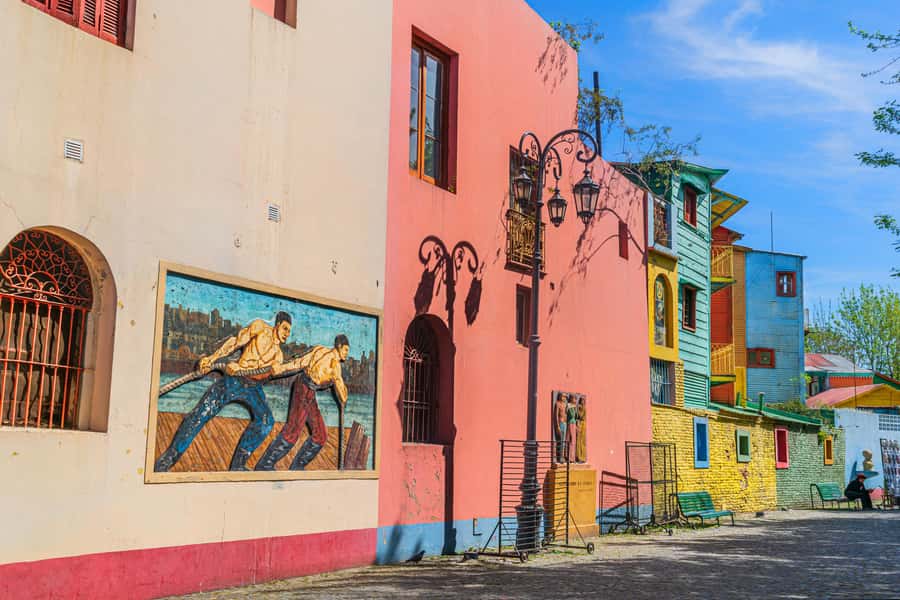
You’ll start building the mental picture of La Boca through the conventillos—the colorful, historic apartment buildings that helped shape the neighborhood’s identity. The big value here is interpretation. On your own, these facades can look like pure scenery. With a guide, you learn what brought people there, why the buildings developed the way they did, and how the area’s mixed roots show up in what you’re seeing now.
I especially like this approach because it changes how you look at the street. You start noticing details that are easy to miss when you’re only chasing the perfect shot.
Fileteado art: more than decoration
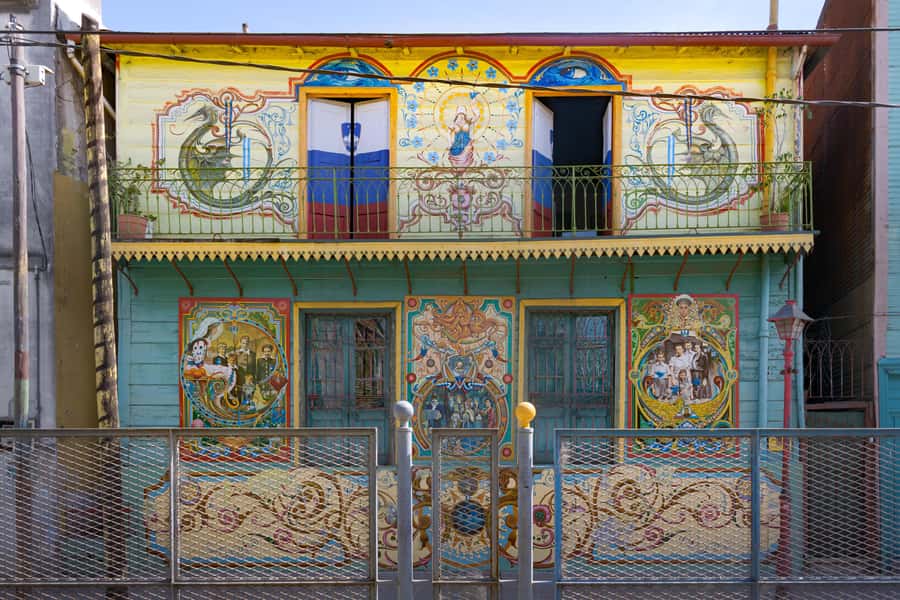
You’ll also see plenty of fileteado. This is the bold, hand-painted style that shows up in the neighborhood’s visual language. The guide explains where it comes from and how it developed—so it stops being random decoration and becomes a clue.
That matters if you like getting beyond “look at the colors.” Once you know what fileteado represents, you’ll spot patterns faster and you’ll understand why it belongs here.
Tango history, with live performances in the mix
Tango isn’t just a stage performance in this neighborhood. During your walk, you might catch street tango dancers doing live sets right in the flow of foot traffic. Even when you don’t get a performance at the exact moment you pass, the guide’s tango history ties what you see to how the dance formed and spread.
This is a practical advantage: it helps you connect the rhythm you hear (and the outfits you notice) to a broader story, instead of treating tango like a souvenir.
Puente Transbordador and the riverside vibe
One of the tour segments includes time around Puente Transbordador (the guided stop is built into the route). You’ll get context for why this area matters and how La Boca’s waterfront presence connects to daily life and local history.
The benefit for you is perspective. La Boca isn’t just about painted buildings. It’s also about the movement of people, goods, and ideas that shaped the neighborhood. The guide’s job is to make those connections feel obvious—almost like you’re seeing the neighborhood’s timeline overlayed on the street.
If you’re sensitive to uneven ground, take it slow on corners. Street layouts can be a little unpredictable, especially near busy crossings.
Mid-tour stops: walking pace, shade, and what your guide watches for
The route includes several guided “moves” through the neighborhood, not a constant long sprint. That’s good news if you’re traveling with kids, older relatives, or just want a pace that lets you look up.
What stands out from the guide styles people praise is care and control. Many guests highlight guides who:
- keep the group safe, and
- work to find shade during hotter hours.
So you’re not just getting facts. You’re also getting a guide who’s paying attention to conditions and timing. That makes the two hours feel smoother, not hectic.
If you’re visiting on a hot day, I’d still bring basic sun protection. Even with shade breaks, you’re in the sun for at least part of the walk.
Finishing outside La Bombonera: football history you can see
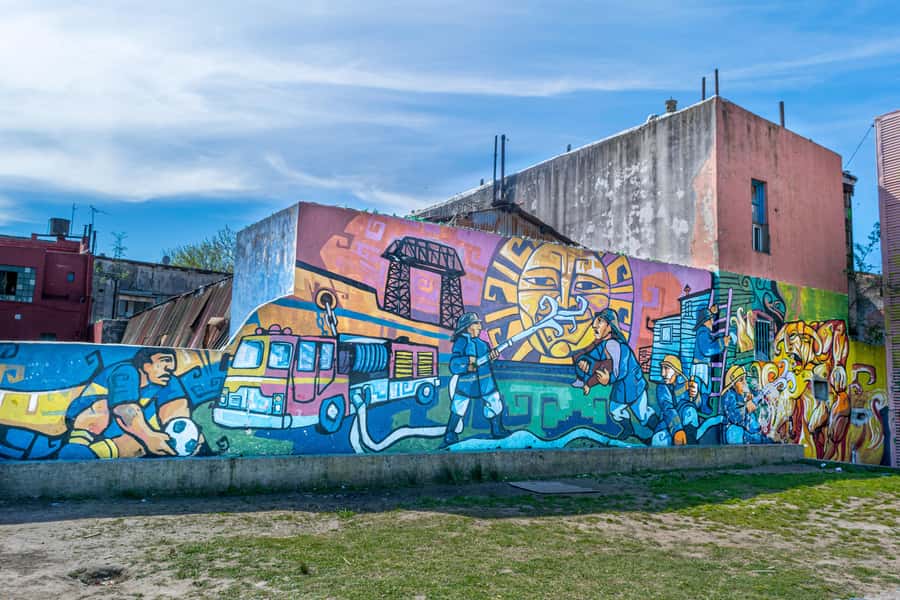
The tour ends outside La Bombonera. By the time you get there, you’ll understand why Boca Juniors is such a big deal in Argentina—not just as a team, but as a cultural symbol.
This is one of the strongest “value for time” choices in the whole experience. You don’t just stare at the stadium from the street. You get a guided explanation first, then you arrive with context. That makes the final approach more meaningful.
After the walking portion, you can enter the stadium and visit the Boca Juniors Museum (stadium admission isn’t included in the tour price). If you’re a serious football fan, this is the natural next step. If you’re not, the museum can still be a neat way to keep the story going after the walk.
Price and value: why $13 works (when you’re short on time)

At $13 per person for a 2-hour English walking tour, the math is simple: you’re paying for guided time in a high-interest area without shelling out for museum tickets during the walk itself. Since Boca Juniors admission and food/drink are not included, the tour stays focused on the storytelling and street-level sights.
This pricing makes sense if:
- you’re doing La Boca as a first-time visit,
- you want history and context rather than just photos, or
- you have a limited schedule and want the key points covered efficiently.
You’ll also notice from how often guests rate it highly that the biggest reason people love it isn’t fancy perks. It’s the guides—their ability to pack a lot of local context into two hours and keep it engaging.
What makes the guides so well-liked
A recurring theme in the guide feedback is storytelling that feels alive. Different guides come with different styles, but the praise clusters around the same strengths:
- They’re clear in English.
- They give lots of local context, not just dates and names.
- They use humor and strong presentation skills to keep the walk moving.
- They manage the group with safety in mind.
Some guide names that show up often include Santiago, Maria, Juan, Vito, Victoria, Maru, and Marianne. One detail that makes Santiago’s style sound especially engaging is that he’s described as having a background in theatre, which explains the performative way he shares stories.
Bottom line: if you care about how the information is delivered, not just what you see, this tour has a good reputation for that.
Rain, time, and practical expectations
The tour runs even if it rains. That’s handy in Buenos Aires, where weather can shift quickly. Do wear something you’re comfortable walking in for two hours, and consider a lightweight rain layer.
About timing: you’ll want to be at the meeting spot early enough that you’re not stressed when traffic is unpredictable. The guide waits 10 minutes, then they go on.
Also note what’s not included:
- Boca Juniors stadium ticket (for entering)
- Food and drink
So if you plan to do the museum after, decide how you’ll handle timing and snacks on your own.
Who should book this and who might skip it
Book it if you want a guided orientation to La Boca that connects:
- colorful conventillos and their story,
- tango history with street-level sightings, and
- Boca Juniors context timed to the approach to La Bombonera.
Skip it if you already know a lot about the neighborhood’s history and you prefer a slow, self-guided wander with no structure. This tour is made for learning efficiently, not for drifting.
You’ll also be a good fit if you want a short “must-do” in a limited schedule. Two hours is enough to feel grounded in La Boca without burning your whole day.
Should you book the Buenos Aires La Boca Guided Walking Tour in English?
Yes, if you want the best shot at understanding La Boca quickly. This tour stands out because it’s not only about the scenery—it’s about what the scenery means. With a strong guide, you leave knowing why the buildings look the way they do, why fileteado shows up, and why Boca Juniors matters before you even reach La Bombonera.
My decision rule: if you’re spending only a half-day in La Boca, book the tour. If La Boca is going to be a long, leisurely day anyway, you can still book it—but you’ll get the most value when you use it as your orientation first, then explore on your own afterward.