REVIEW · NARA
Nara Half Day Trip Walking Tour (Private Option Available)
Book on Viator →Operated by MagicalTrip Inc. · Bookable on Viator
Nara has a way of pulling you in fast. This half-day walk hits the big UNESCO sights and the smaller streets that make Nara feel like its own world. I particularly like the tight 5-hour route with admission tickets included, and the lunch stop in an old-town setting that actually feels local. The one thing to think about: it’s still a walking tour, so you’ll want to plan for crowds and pace, plus you’ll be on your feet for much of the day.
I also like how the best guides turn obvious sightseeing into something more useful. On this tour, you’ll get practical context for temples and shrine customs, plus clear guidance on how to interact with Nara’s deer without turning it into chaos. And yes, guides such as Shin, Yuki, Nao, Miyabi, and Eri-san have been praised for exactly that: clear English, calm pacing, and making the deer part feel respectful.
In This Review
- Key points worth knowing before you go
- Kicking off at Kofuku-ji’s five-story pagoda
- Todai-ji Main Hall and Nandaimon: the Great Buddha moment
- Lunch in old-town Nara: what 107 Zōshichō does well
- Kasuga Taisha and the Kasugayama forest: shrine time that feels local
- Nara Park deer zone: cookies, bowing, and boundaries
- Naramachi old streets and a merchant-house look at daily life
- Timing, pacing, and group size (the stuff that changes your day)
- Who this tour fits best (and who should rethink)
- Price and value: is $105.45 worth it?
- Practical prep so the day stays fun
- Book it or skip it? My honest take
- FAQ
- How long is the Nara half-day walking tour?
- What does the tour include?
- Which major temples and shrines will I visit?
- Where is the meeting point?
- Is it suitable for all ages?
- What about food restrictions or allergies?
- Will I need cash?
- How big is the group?
- What should I bring for the weather?
- What if it rains or the weather is poor?
Key points worth knowing before you go
- UNESCO pair in one smooth circuit: Todaiji and Kasuga Taisha without wasting your time bouncing around.
- Lunch is built in at a traditional restaurant in Nara’s older areas, not tacked on as an afterthought.
- Max 8 people keeps the vibe manageable and helps you get attention when questions come up.
- Deer etiquette matters: your guide shows you how to behave so the animals stay playful, not pushy.
- Naramachi old-town texture: you’ll end in historic streets, including a chance to step into an older merchant-house style space.
Kicking off at Kofuku-ji’s five-story pagoda
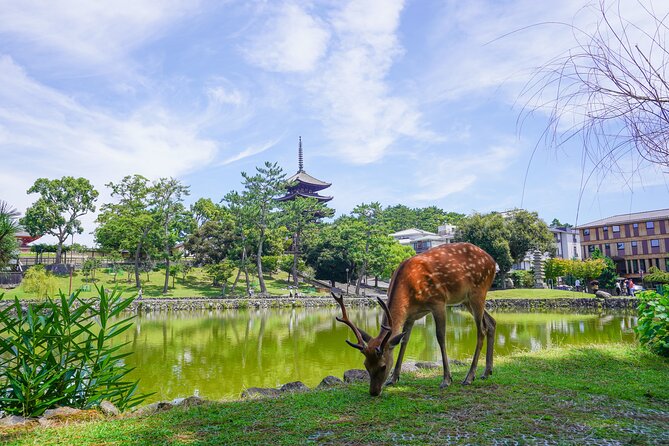
You start with a classic Nara landmark: Kofuku-ji Temple’s five-story pagoda. The stop is short, around 15 minutes, and designed as an easy warm-up—enough time to take photos and get the feel of the temple complex before you move on to the heavier hitters.
What makes this stop work is placement. You’re not jumping straight into the largest crowds or the longest halls. Instead, you ease into temple architecture and Nara’s Fujiwara-era legacy, then you’re ready for Todaiji with your eyes already tuned.
One practical note: this is a photo-and-orientation moment. If you hate stopping for “quick looks,” pair this tour with a slower second day in Nara so you can linger later.
You can also read our reviews of more walking tours in Nara
Todai-ji Main Hall and Nandaimon: the Great Buddha moment
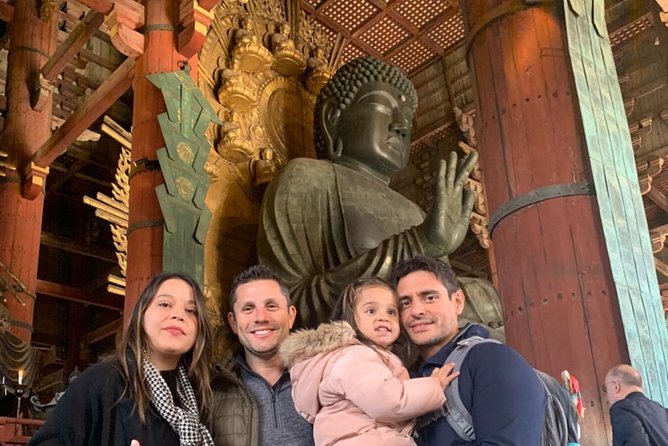
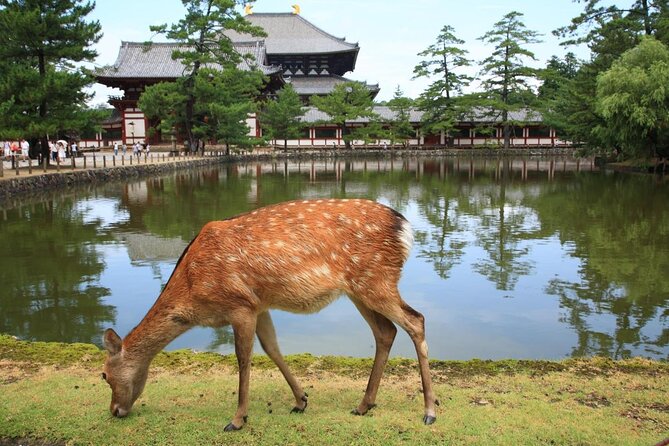
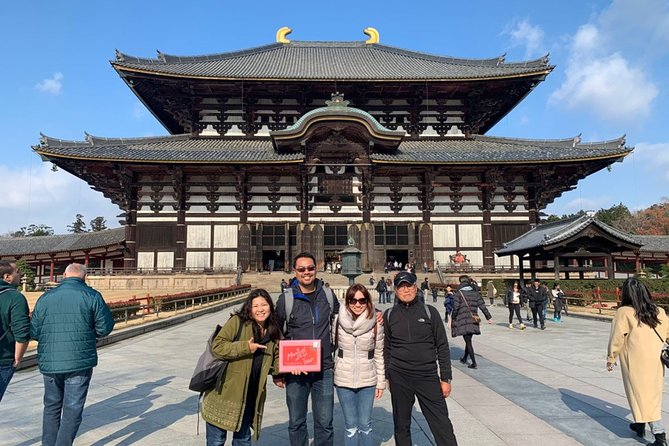
Then it’s Todaiji Temple—your real anchor stop. Expect about 30 minutes, with admission included, and a focus on the Main Hall and Nandaimon. As you approach, the entry experience is theatrical in the way only big Japanese religious sites can be: you’ll meet the imposing Kongorikishi guardian statues, and then the Great Buddha is what you came for.
Why I like this part of the tour: a guided walk changes how you see the scale. Left on your own, it’s easy to feel overwhelmed and just snap pictures. With a good guide—people mention Shin, Yuki, and Jimmy especially for explaining context—you’re more likely to notice the layout, the purpose of the big gate, and what you’re looking at rather than just how it looks.
Crowds can be a factor here, so pay attention to your guide’s timing and where you stop for views. Also, wear shoes you trust. Even if the pace feels relaxed, you’ll still be covering temple grounds with a lot of standing and walking.
Lunch in old-town Nara: what 107 Zōshichō does well
About mid-route you eat. The tour builds lunch at roughly 45 minutes at a traditional Japanese restaurant located in 107 Zōshichō. This is one of the smartest parts of the schedule because it’s not a generic convenience stop; it’s in an older merchant-area setting that matches the rest of the day.
From the feedback, lunch is a real highlight. People praised it as filling and authentic, with guides steering you to a spot you might not find on your own. If you’re traveling with kids, this is also the part that keeps everyone happy—deer can wait until after you recharge.
Diet is where you should read carefully. Gluten-free requests can’t be accommodated. For other dietary needs, the tour asks you to request in advance (by the day before), and they can’t guarantee allergy-free kitchens. Still, some guests reported vegetarian options and even a vegan teishoku meal arranged successfully—so it’s worth messaging your needs early.
Kasuga Taisha and the Kasugayama forest: shrine time that feels local
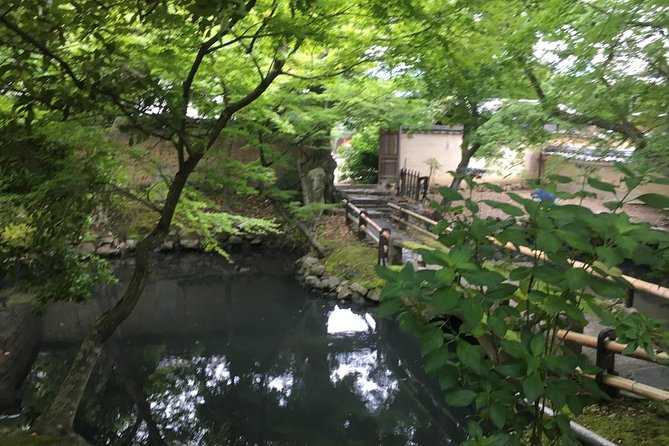
Next up: Kasuga Grand Shrine, with about 30 minutes on site. You’ll explore Kasugayama Primeval Forest and then Kasuga Taisha Shrine itself, with admission included.
This is one of those places where the details matter. The shrine’s vibe is calmer than the biggest temple crowds, and the setting helps you understand why people connect these spaces to nature and seasonal change. Your guide’s job here is to connect the dots: what you see, what it means, and how shrine customs work.
Based on the kinds of comments you’ll see around this tour, guides like Nao and Eri-san are particularly strong at explaining religious customs in plain terms. That makes the visit feel less like walking through a checklist and more like understanding the rules of the place.
If you’re sensitive to uneven ground, let your guide know early. Even when the route is manageable, shrine paths can include small steps and natural textures.
Nara Park deer zone: cookies, bowing, and boundaries
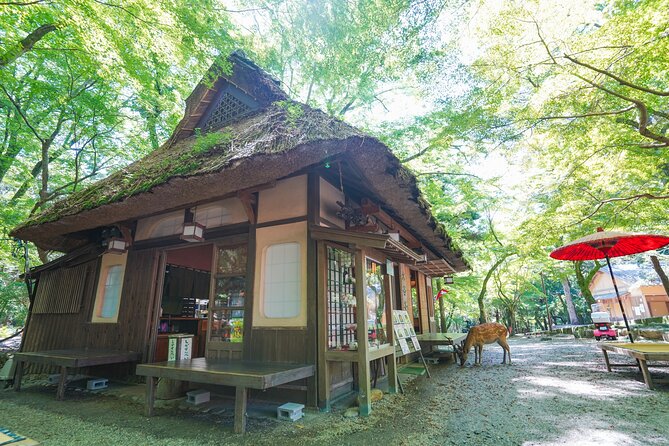
Now comes the moment most people are excited about: Nara Park. You’ll get about 30 minutes to explore, with time to see the deer. Your guide also teaches you how to behave—how to handle feeding, how to stand your ground, and how to avoid encouraging the deer to crowd you.
The key detail here is that the deer aren’t just scenery. They’re interactive, and the difference between a fun photo and a stressful scramble is etiquette. Multiple guides are praised for giving clear instructions, including the idea that deer may bow before getting cookie treats.
Also: deer can be more pushy at times, especially earlier in the day. That doesn’t mean you should skip the deer experience—it just means you should follow your guide’s approach and don’t improvise.
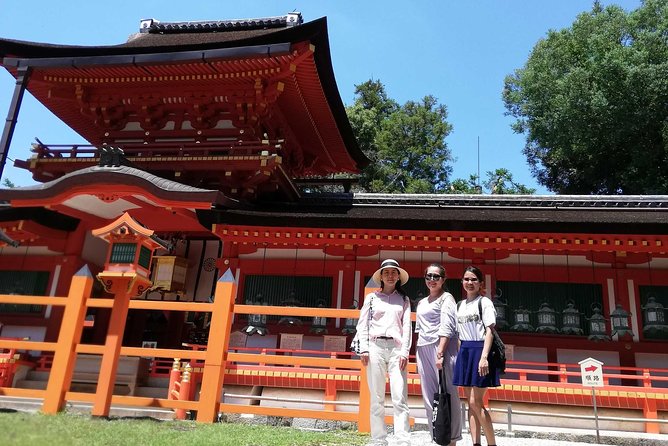
In the same stop, you’ll also get a chance to explore a red shrine area known for housing hundreds of lanterns. That’s a nice visual break from open lawn space and gives you a different kind of photo.
Naramachi old streets and a merchant-house look at daily life
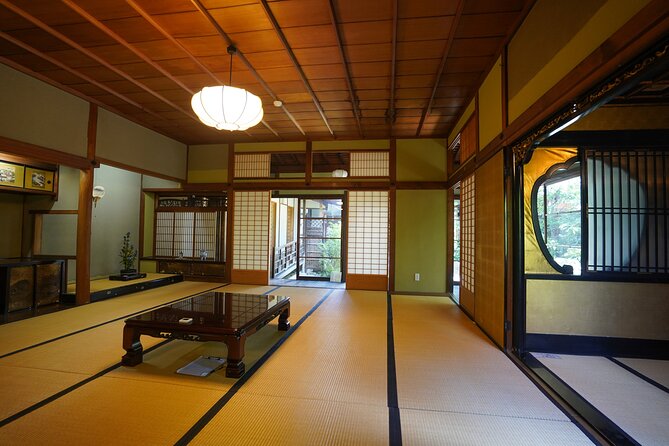
The tour’s finish is in Naramachi. You’ll spend about 35 minutes exploring the historic streets and then head for Naramachi Nigiwai no Ie, where you can experience an old Japanese townscape in a more hands-on way.
This is where Nara stops being only temples and turns into everyday life. You’ll walk among preserved-looking buildings, and you’ll get a sense of how the city functioned around the shrine-and-temple economy. For many first-timers, this is the missing piece after Todaiji and Kasuga.
One more reason I like the ending: it’s easier to linger and wander afterward. The day ends back at the starting area, so you’re not stuck deep in transit once you’re done. If you still have energy, you can extend your stroll or grab dessert nearby.
Timing, pacing, and group size (the stuff that changes your day)
This is a half-day tour of about 5 hours, with a maximum group size of 8 travelers. That small cap is a big deal in Nara, where major temple sites can get crowded quickly.
What you’ll likely feel is a steady flow rather than a stop-and-go slog. The schedule is built to mix major sites with shorter blocks, like the quick Kofuku-ji pagoda photo stop and the lunch recovery time. It helps you see more without burning out.
You should still plan for walking. The tour mentions short breaks, but it’s not a sit-down museum day. If someone in your group has health concerns, tell the operator in advance so they can plan the pace.
Who this tour fits best (and who should rethink)
This tour fits best if you:
- Want a first-time Nara plan that covers the core religious sites plus old-town streets
- Like guided context more than pure self-guided wandering
- Appreciate a small group pace (max 8 people)
It may not be your best match if you:
- Need gluten-free meals (not accommodated)
- Prefer a slower day with lots of free time at one site
- Hate any interaction with deer, even when your guide teaches respectful boundaries
Families often do well here too. The tour is described as welcoming for all ages, and the deer moment tends to land with kids—especially when your guide helps everyone stay calm and safe.
Price and value: is $105.45 worth it?
At $105.45 per person for a roughly 5-hour guided walking tour, the value is mostly in what’s included.
You’re getting:
- Admission tickets included for major stops (like Todaiji and Kasuga Taisha)
- Lunch (built into the schedule)
- A guide to keep the day moving and explain what you’re seeing
If you were to price out guide time plus entry tickets plus a planned lunch, the cost starts to make sense. The other value is less financial and more practical: you’re not spending your morning figuring out routes, entry timing, and where to eat in a spot that fits the vibe of old Nara.
If you’re on a tight itinerary and want the most iconic highlights with less friction, this price typically feels fair.
Practical prep so the day stays fun
Nara weather can swing, but summer is especially tough. The tour specifically warns it’s hot and humid, sometimes reaching extreme heat, so bring water and wear a hat to reduce heat-stroke risk. In winter, conditions can also be cold, so plan for layers if you’re going in cooler months.
Also bring cash if you want extra snacks or drinks. The tour notes you do not need to cover the guide’s food and drinks, but if you want extra purchases, cash is useful.
For the deer portion, follow your guide’s instructions exactly. If you want better photos, give yourself room and don’t chase the animals into crowded areas.
Book it or skip it? My honest take
Book this tour if you want the smartest half-day version of Nara: Todaiji and Kasuga Taisha, plus Nara Park deer time, plus Naramachi old streets, all with admission and lunch handled. The standout benefit is the guide-driven flow—many guides (Shin, Yuki, Nao, Miyabi, Eri-san, and others) are praised for clear explanations and keeping the day relaxed even when places get busy.
Skip or switch if you need guaranteed gluten-free options, or if your ideal Nara day means slow wandering without a structured route. Otherwise, this is a strong choice for first-timers who want to feel like they really got it in one go.
FAQ
How long is the Nara half-day walking tour?
It runs for about 5 hours (approximately).
What does the tour include?
It includes a guided walking experience with admission tickets and lunch.
Which major temples and shrines will I visit?
You’ll visit Kofuku-ji Temple (five-story pagoda area), Todaiji Temple (Main Hall and Nandaimon), and Kasuga Taisha Shrine (including time around Kasugayama Primeval Forest). You’ll also spend time at Nara Park and in Naramachi.
Where is the meeting point?
The tour meets at the Statue of Gyoki-bosatsu, 27 Higashimuki Nakamachi, Nara, 630-8215, Japan.
Is it suitable for all ages?
Yes. The tour is described as welcoming for all ages. There are short walking breaks, and you should notify the operator in advance if anyone has health concerns.
What about food restrictions or allergies?
Gluten-free requests can’t be accommodated. The operator can’t guarantee allergy-free food or substitutions because meals are prepared in kitchens outside MagicalTrip. Dietary requests should be submitted in advance (by the day before), and changes on the day of the tour aren’t accepted.
Will I need cash?
You do not need to cover the guide’s food and drinks. Bring cash if you want to purchase extra snacks or drinks during the tour.
How big is the group?
The maximum group size is 8 travelers.
What should I bring for the weather?
In summer, it can be very hot and humid. Bring water and wear a hat to help prevent heat stroke. Japan’s climate can also be very cold in winter, so plan clothing accordingly.
What if it rains or the weather is poor?
This experience requires good weather. If it’s canceled due to poor weather, you’ll be offered a different date or a full refund. You can also cancel for free up to 24 hours in advance for a full refund.