REVIEW · OAHU
Honolulu Downtown Walking Tour
Book on Viator →Operated by Hawaii Free Tours · Bookable on Viator
Downtown Honolulu teaches fast, on foot. For just $5, you get a guided route through the city’s civic and royal landmarks, with stories that connect Polynesian roots to modern Hawaii. It’s a tight, easy morning plan that fits first-timers and history nerds alike.
Two things I especially like: the guide-led storytelling, often in plain language with real personalities and connections between events, and the free admission at multiple key stops so you’re not adding costs as you go.
One thing to know upfront: the pace is more standing and talking than long walking. If you’re hoping for lots of mileage, you may feel it’s more “short hops” than an all-day hike.
In This Review
- Key Highlights You’ll Feel on the Walk
- Downtown Honolulu, but Make It History
- Route Basics: Where You Meet and What the Walk Feels Like
- Stop 1: King Kamehameha Statue and the Big Timeline
- Stop 2: Aliiolani Hale and Why Architecture Signals Power
- Stop 3: Iolani Palace and the Collision of Worlds
- Stop 4: Hawaii State Capitol and the US Territory-to-State Arc
- Stop 5: Kawaiaha’o Church, Then Through the Civic Core
- Stop 6: King Lunalilo Mausoleum and Garden
- Pace and Accessibility: What Your Body Needs to Know
- English, Small Details, and Why the Meeting Point Matters
- Value at $5: Cheap Doesn’t Mean Low Effort
- Weather Reality in Honolulu
- Who This Tour Fits Best (and Who Might Want Something Else)
- Should You Book the Honolulu Downtown Walking Tour?
- FAQ
- How much does the Honolulu Downtown Walking Tour cost?
- How long is the tour?
- What language is the tour offered in?
- Where do I meet the guide?
- Is it mostly walking or more standing?
- Are the sites included free to enter?
- What’s the weather and cancellation plan?
Key Highlights You’ll Feel on the Walk
- Local guide energy: the route comes with lively, chronological storytelling, with named guides like Susan Hogan and Susan showing up in recent experiences
- Small group (max 30): enough structure to keep you together without feeling crowded
- Free-entry landmarks: several major stops are marked as admission ticket free
- Downtown civic core focus: you’ll spend your time around government and historic sites, not just scenic corners
- Easy logistics for a short visit: it starts at a clear meeting point and loops back to the same place
Downtown Honolulu, but Make It History
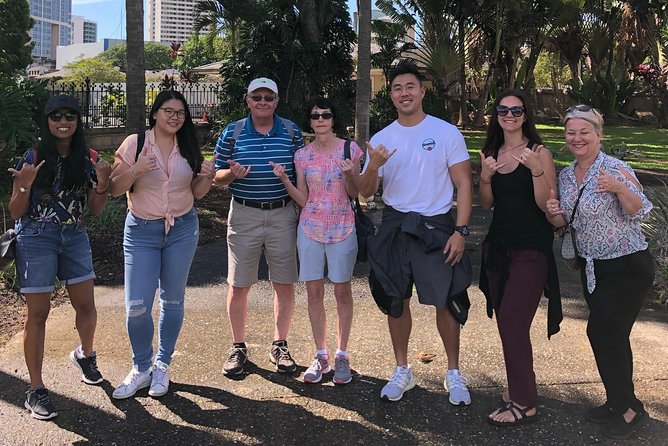
This is the kind of tour that works when you want context fast. Honolulu’s downtown doesn’t only look important—it’s where the island’s political story has been told in stone, architecture, and names for a long time. With a guide, you don’t just see buildings; you get a timeline you can remember.
The route is designed for a short window. The total time is about 1 hour 10 minutes, and the stops are clustered in the downtown area. That matters because it helps you plan the rest of your day—be it beaches, hikes, or more cultural stops elsewhere on Oahu.
And yes, it’s outside Waikiki. You’re in Honolulu’s downtown, near the central civic and historic zone, so the feel of the tour is more city-meets-kingdoms than resort-meets-sunshine.
You can also read our reviews of more walking tours in Oahu


Route Basics: Where You Meet and What the Walk Feels Like
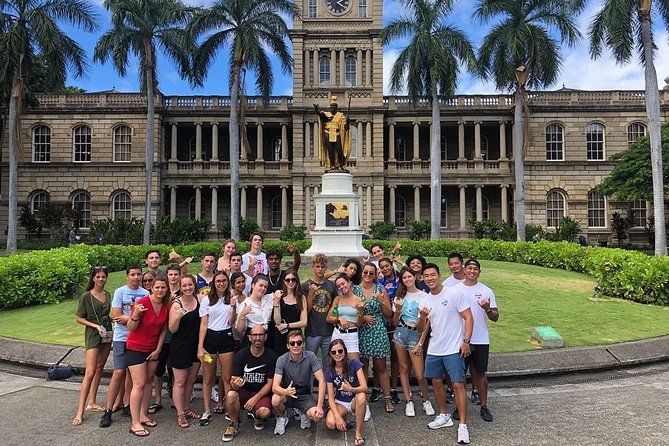
You start at the King Kamehameha Statue at 447 S. King St, Honolulu, HI 96813. Meeting is in front of the statue (the tour description also ties it to Punchbowl St in the same downtown area). The tour begins at 9:00 am.
Guides wear a white or black t-shirt with the Hawaii Free Tour logo. That little detail saves you stress—especially early in the morning, when you’re trying to find the right group without standing around guessing.
In practice, the distance is short. People describe it as a walk where you cover only a small area (one person measured the feel as around 0.5 miles), and most of the time is spent listening. So if you want “lots of stepping” as your main activity, you may want to pair this with something else after.
Stop 1: King Kamehameha Statue and the Big Timeline
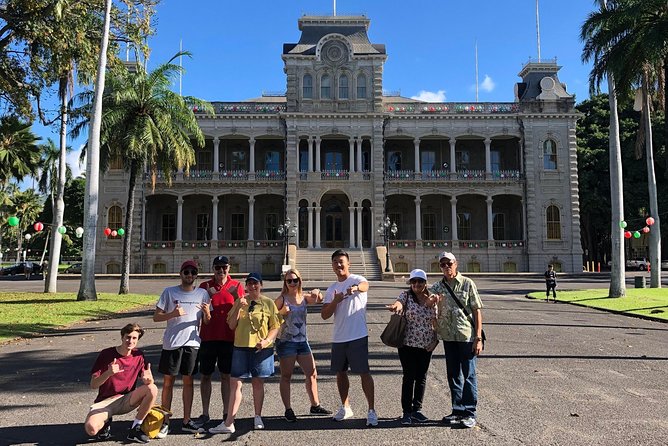
The tour opens at the King Kamehameha Statue, and it sets the tone with origin-level context. You’ll hear about the broader history of Polynesians, Austronesians, and Hawaiians, and then how the Hawaiian nation took shape—framed as the formation of the first and only nation of Hawaii.
This stop works because it gives you a mental map before you start naming buildings. Kamehameha isn’t just a famous figure here. The story helps explain why later monarchs, palaces, and government buildings matter—because the political shift isn’t random. It’s connected.
A practical tip: this is an outdoor start. If Honolulu is doing Honolulu things (sun, wind, or rain), bring what you need for the morning conditions. The experience notes it needs good weather, so don’t plan on wearing your “rain outfit” as a casual afterthought.
Stop 2: Aliiolani Hale and Why Architecture Signals Power
After the opening, the route includes Aliiolani Hale. While the tour description doesn’t list a single headline topic for this exact stop, it’s part of the downtown cluster tied to Hawaiian governance and public life.
This is one of those places where it helps to have a guide who can connect the dots between who held power and what buildings they used. In a short walking tour, you’re not getting a museum-style catalog—so you want someone translating the building’s meaning into human terms.
Stop 3: Iolani Palace and the Collision of Worlds
Next up is Iolani Palace. This stop is about monarchs and how US mainlanders and Europeans played a vital role in shaping Hawaii’s history.
Iolani Palace is one of the most important structures in Honolulu for understanding the islands’ political transitions. With a guide, you’ll connect the palace to the personalities behind rule and the outside pressures that changed the direction of the islands.
What I like here is the balance: you get the inside view of monarchs and the outside view of shifting influence. It’s the kind of contrast that makes “history facts” feel real, because you’re seeing how power changes with people—not just with dates.
Stop 4: Hawaii State Capitol and the US Territory-to-State Arc
Then you reach the Hawaii State Capitol, with a focus on how Hawaii became a US territory and later a US state.
This is where the tour stops being only “royal history” and starts addressing modern political identity. If your day includes any current-city landmarks, this part helps you understand why the US presence is not just a modern backdrop—it’s part of the story.
Since the stops are short and the total tour time stays around that 70-ish minute mark, the guide’s explanations need to be clear. Recent experiences highlight that the storytelling stays in plain language and stays tied to chronology, which is exactly what you want at this pace.
Stop 5: Kawaiaha’o Church, Then Through the Civic Core
Next is Kawaiaha’o Church. Again, the tour data marks it as admission ticket free, and the timing is about 10 minutes at this stop. This portion helps broaden the story beyond politics into cultural and community space.
From there, the route continues through downtown civic landmarks including Honolulu City Hall and the Hawaii State Library. These are the sorts of buildings people walk past without thinking twice. With a guide, you’ll understand how government, law, and public institutions fit into the wider historical timeline.
One warning sign for pacing: if you’re expecting long conversations at every location, the timing won’t allow it. The tour is built for quick orientation plus stories that stick. So listen closely in the moments that feel like the guide is connecting events across stops.
Stop 6: King Lunalilo Mausoleum and Garden
The tour’s finale is the King Lunalilo Mausoleum, including King Lunalilo’s Garden and Burial. This stop gives you a calmer, more reflective ending compared to the more political stops.
A mausoleum is still part of history. But it’s history you experience through place—quiet, grounded, and built to last. If your morning is mostly about governance and transitions, this final stop adds a needed human scale: remembering leaders as people, not just turning points.
Expect about 15 minutes here, with free admission noted for the stop. It’s a good moment to slow down and let the timeline land before you head off for the rest of your day.
Pace and Accessibility: What Your Body Needs to Know
This tour is an easy fit for many people because the walking is short and the landmarks are clustered. The experience also notes that most travelers can participate and that service animals are allowed.
But be honest with your expectations. The most common critique is that it feels like a lot of standing with shorter walking segments. Some folks describe it as only a few main landmarks in a tight radius. That’s not a deal-breaker if your goal is history context in a compact morning plan.
If you’re someone who enjoys stretching your legs as your main activity, I’d treat this as a “guided orientation walk.” Then add your own exploration afterward—maybe a self-paced stroll nearby, or pair it with a longer walk later on the island.
English, Small Details, and Why the Meeting Point Matters
Everything about this tour is designed to be simple to find and easy to repeat. You get a mobile ticket, it’s offered in English, and there’s a clear meeting point right by the King Kamehameha Statue address.
The start time is 9:00 am, and since this is often booked about 30 days in advance, you’ll usually want to secure a spot early—especially if your schedule is tight.
The guide will be wearing Hawaii Free Tour branded t-shirts (white or black), which makes it easy to match with your group instead of wandering around downtown hoping someone looks like a guide.
Value at $5: Cheap Doesn’t Mean Low Effort
$5 sounds almost too good to be true, but the real value is what you’re buying: time saved plus context added. For one morning, you get a guided route across several major sites, each marked as admission ticket free.
That changes the math. You’re not just paying for walking. You’re paying for someone to translate what you’re seeing into a story. If you’ve visited Hawaii before and felt like you needed more context, this is the fast way to build that base without spending hours researching on your phone.
And the group size cap (max 30) helps keep the tour manageable. With fewer people, guides can answer questions and keep the group moving at a human pace rather than a cattle-car pace.
Weather Reality in Honolulu
The experience notes it requires good weather. That’s the honest part. Outdoor starts and walking tours don’t work well when conditions are severe.
Still, Honolulu weather can be gray and light-rain messy without being a full washout. One experience describes a rainy day with a guide still delivering the tour and making it enjoyable, which suggests the guides know how to keep momentum when skies are less than perfect.
Bring a lightweight layer and something for rain just in case. But if the tour is canceled due to poor weather, you should expect a different date offer or a full refund—this is built into the standard process.
Who This Tour Fits Best (and Who Might Want Something Else)
This is ideal if you:
- are a first-time visitor trying to understand what you’re seeing
- want history with a clear timeline, not just scattered facts
- have limited time and want an efficient downtown plan
- like short, structured walks rather than long hikes
It’s less ideal if you:
- need lots of movement and distance to feel like it was worth it
- prefer deep site visits (this tour is short at each stop)
- want to spend most of the morning indoors or inside paid attractions
Should You Book the Honolulu Downtown Walking Tour?
I’d book it if your goal is fast orientation to Honolulu’s political and cultural story. For $5, you get multiple major stops, guided interpretation, and a morning structure that’s easy to slot into a first visit.
Book it too if you enjoy storytelling that stays in plain language and answers questions as you go. Guides named Susan and Susan Hogan come up in recent experiences, and that’s a strong sign that the tour’s delivery can be consistently good.
Just go in with the right expectation: this is a short guided walk with lots of listening. If you want a history primer plus a light downtown stretch, it’s a smart move. If you want heavy walking miles, plan a longer independent route after.
FAQ
How much does the Honolulu Downtown Walking Tour cost?
The price is $5.00 per person.
How long is the tour?
It runs about 1 hour 10 minutes (approx.).
What language is the tour offered in?
The tour is offered in English.
Where do I meet the guide?
Meet in front of the King Kamehameha statue at 447 S. King St, Honolulu, HI 96813. The tour starts at the King Kamehameha Statue at 9:00 am.
Is it mostly walking or more standing?
It’s a short downtown route. The pace can feel like a lot of standing with only limited walking between stops.
Are the sites included free to enter?
The listed stops (including King Kamehameha Statue, Iolani Palace, Hawaii State Capitol, Kawaiaha’o Church, and King Lunalilo Mausoleum) are marked as admission ticket free.
What’s the weather and cancellation plan?
The experience requires good weather. If it’s canceled due to poor weather, you’ll be offered a different date or a full refund. You can also cancel for a full refund up to 24 hours in advance.