REVIEW · OXFORD
Oxford University Walking Tour With University Alumni Guide
Book on Viator →Operated by Footprints Tours Limited · Bookable on Viator
Oxford changes fast when you have a student guide. This is a student-led Oxford University walk that packs major sights into about 2 hours, with help from people who actually live the place. I really liked how guides explain how Oxford works day to day, not just dates on stone, and you get to see iconic buildings like the Radcliffe Camera and Trinity College in a way that actually makes sense.
Two things I especially like: you’ll get student-life context (college choice, funding, and what it feels like to be a student) and you’ll also see standout architecture up close, including stops where admission is part of the experience. I’ve also found the guide names matter here, because I encountered the same energy and clarity in tours led by students such as Jacob and Tom. The only real consideration is pace and access: the tour runs fast, and on some days places like the Divinity School may be limited or closed.
In This Review
- Key things that make this Oxford walk worth it
- How a student-led Oxford University walk helps you see faster
- Price and value: what you’re really paying for
- Meeting points, pickup options, and how to avoid a bad start
- The Oxford University core: from Merton to St Mary’s in one tight loop
- Merton, Oriel, All Souls, Hertford: colleges with drama (and why you should care)
- The Bodleian Library and Weston Library: book power in two styles
- Divinity School and Trinity College: the ticketed moments most people remember
- Radcliffe Camera and the student-style “setup” stop
- Pace, group size, and what to do if you get tired
- Who this Oxford University walk is best for
- Should you book this Oxford University walking tour?
- FAQ
- How long is the Oxford University walking tour?
- How much does the tour cost?
- Is the tour offered in English?
- Where does the tour start in London or Oxford?
- Is there a mobile ticket?
- Are any entrances or admissions included?
- Can the tour include the Divinity School during peak season?
- Is this tour limited to small groups?
- Can I cancel for a refund?
Key things that make this Oxford walk worth it
- Student-led storytelling that connects colleges and traditions to real life at Oxford
- Iconic architecture in a short window, including Radcliffe Camera and Trinity College
- Select ticketed access (not just photos outside) at places like the Divinity School
- A small-group feel, with a cap of 100 travelers so questions stay possible
- Honest “may be closed” planning, especially for time-sensitive access like the Divinity School
- Optional London round-trip transfers in a luxury minibus for less stress
How a student-led Oxford University walk helps you see faster
Oxford can feel like a maze of stone walls and spellings that look the same from far away. What makes this tour click is that you’re not just walking from landmark to landmark. You’re getting a narrated map of how the university fits together: colleges, libraries, ceremonial buildings, and the traditions that keep repeating across centuries.
I also like the pace because it’s designed for a quick visit. In about two hours, you pass through a concentrated slice of Oxford that most first-timers only scratch at when they explore alone. The guide’s job is to help you connect what you see to how Oxford functions, so your photos end up with meaning, not just pretty facades.
One more thing: the tour is built around alumni or current students sharing perspective. That shows up in the details, like how people choose colleges, how Oxford funding works, and what a student experience can look like behind the myths. When I’ve heard guides such as Jacob and Tom, the tone stays friendly and human, with humor that keeps the whole walk from turning into a lecture.
You can also read our reviews of more walking tours in Oxford



Price and value: what you’re really paying for

At $41.59 per person, the headline sounds simple. The value comes from what you get for that money: a guided, structured route through major Oxford University stops, plus admission included at certain buildings.
Most stops are listed as having admission ticket free, while a couple of moments are specifically included with tickets (the Divinity School and Trinity College are both part of the ticketed inclusions). That matters because Oxford’s best indoor experiences are often the ones you can’t guarantee on your own without timing luck.
You’re also paying for the guide’s ability to get you oriented quickly. If you’ve only got a morning or afternoon, paying for this kind of route is often cheaper than spending hours figuring out where to go next and what’s worth your time. If you’re the kind of traveler who wants to see the big architecture and understand the “how did it work” part, this price can feel fair.
Meeting points, pickup options, and how to avoid a bad start

Your day starts in either London or Oxford, depending on the pickup option you choose. If you opt for pickup, the meeting point is at Gloucester Road Tube Station in London. If you don’t, you meet in Oxford at 15 Broad Street.
Either way, you’re dealing with a departure time early enough that missing it is a risk. If you arrive late, the tour provider notes you won’t get a refund in that case, so build in a buffer. It’s a good idea to plan your transit so you’re early, not just on time.
A small practical note: you’ll have a mobile ticket, which helps on-the-day check-in. And the tour is offered in English, with service animals allowed. The walking level is described as moderate physical fitness, so think comfortable shoes and a steady pace.
If you’re upgrading to round-trip transfers, you’ll be taken to Oxford in a luxury minibus from London. That’s a smart move if you want less hassle and more time for your actual visit.
The Oxford University core: from Merton to St Mary’s in one tight loop

This tour works like a fast orientation to how Oxford is built and why it feels different from other university towns. You start with the broader sweep of the university, then narrow in on colleges and key ceremonial sites.
University of Oxford (the big picture stop)
Spanning nearly 800 years and made up of dozens of colleges, libraries, and faculty buildings, this first stop is about framing what you’re about to see. You’re not just admiring views here; you’re getting the explanation that Oxford is an ecosystem, not one campus. It’s helpful because it gives the rest of the tour a backbone.
Merton College: old debates and a bizarre chapel
Merton is presented as one of Oxford’s oldest colleges, with a built-in story about the debate over who deserves the title of oldest. This is the kind of detail that makes college sightseeing feel like a living place, not a museum. You also get a look at what the tour calls one of Oxford’s more bizarre chapels, which is a reminder that traditions can be strange, dramatic, and very human.
University Church of St Mary the Virgin: the epicenter feeling
This stop centers on St Mary the Virgin and frames it as a historical focal point of Oxford University. It’s the kind of place that helps you understand why Oxford’s identity is tied to ceremonies, community, and institutions built around both scholarship and tradition.
Merton, Oriel, All Souls, Hertford: colleges with drama (and why you should care)

Oxford colleges aren’t cookie-cutter. Each one has its own tone, and the tour leans into that. These stops help you spot how a single city can hold many different academic personalities.
Oriel College: a controversial statue
Oriel gets attention for a statue that’s described as the most controversial in Oxford. The story matters because it shows how universities deal with symbols over time. You’ll likely walk away thinking about how public memory works on a campus that changes across generations.
All Souls College: traditions and prestige
All Souls is talked about as a place tied to major traditions and academic prestige. Even if you’re not chasing admissions info, the stop gives you context for why Oxford carries global weight. It’s a good “scale check” moment: you start to feel how the city connects to broader academic culture.
Hertford College: progressive reputation and a photographic spot
Hertford is described as progressive, and the tour also flags its most photographed site in Oxford. That’s useful for you if you like taking pictures but want to know what you’re actually shooting. More importantly, it reinforces the idea that Oxford isn’t a single mood. Different colleges can feel different in tone and values.
One thing to keep in mind: because these are active institutions, access and angles can vary depending on what’s happening that day. The tour keeps moving, so you’ll get quick, high-impact looks rather than long lingering time.






The Bodleian Library and Weston Library: book power in two styles
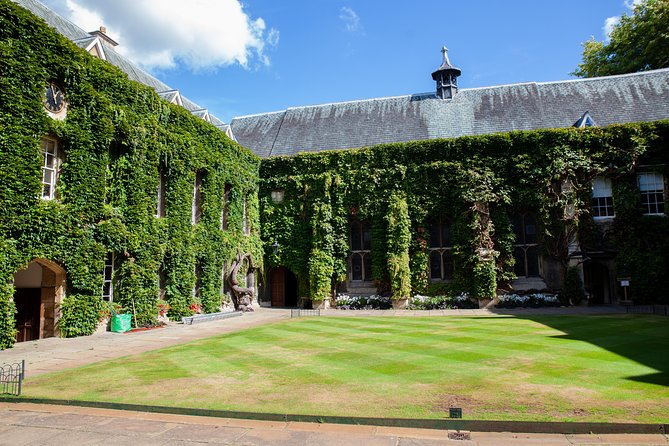
If Oxford had a heartbeat, it would be libraries. This tour gives you two ways to see that power: through the world-famous Bodleian complex and through the newer, grand entrance at Weston Library.
Bodleian Library: the Copyright Library and the daily use of students
The Bodleian stop is framed as a world-renowned copyright library with priceless collections and major shelving. What’s most valuable for me is that the tour doesn’t only highlight what the library has; it explains how students use the building today. That brings the library from myth into routine.
Weston Library: light, architecture, and a massive collection
Weston Library is presented as part of the Bodleian group with an impressive modern entrance hall. The tour points out how light is used in the architecture, and it discusses the scale of the collection, with over 12 million books. For a photo-focused person, this stop helps you get a different look from the older, more traditional library vibes.
What you should expect here
These are big spaces with lots of visual noise. The tour keeps your attention by tying the stories to how the place functions. Still, if your goal is slow, quiet library time, this walking format is not that day. It’s built for understanding at speed.
Divinity School and Trinity College: the ticketed moments most people remember
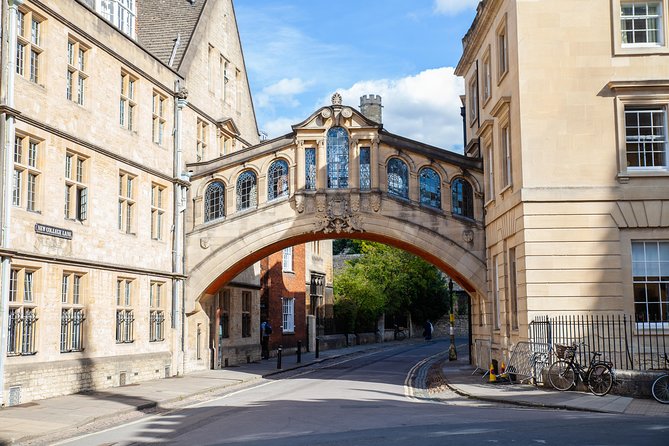
Two stops are called out as having admission ticket included, which is where the tour stops being only sightseeing and starts feeling like an experience.
Divinity School: medieval lecture room and filming fame
The Divinity School is described as the first purpose-built lecture room and one of the greatest examples of medieval architecture in Europe. You’ll hear how it has been used in films such as Harry Potter and other Hollywood productions. That pop-culture connection is real, but the bigger value is the student perspective on ceremonial spaces and how they’re used for important moments.
There’s also a heads-up that matters for planning: during peak season (June–August), Divinity School access can be extremely limited due to frequent closures and high demand, so it may not be included. The tour provider says they prefer honesty upfront rather than risk disappointment. Translation: don’t build your entire Oxford day around that one interior moment.
Trinity College: beauty plus history in one setting
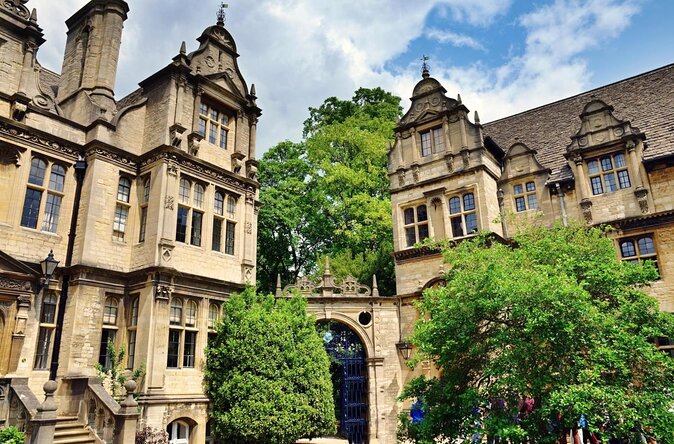
Trinity College is presented as one of the most beautiful colleges at Oxford, and this is another ticket-included stop. The value here is that you see the college setting in a way that’s easier to appreciate after you’ve already learned how Oxford is structured. By the time you reach Trinity, you’ve already heard the tour’s bigger Oxford story.
Radcliffe Camera and the student-style “setup” stop

Two more moments round out the Oxford vibe and help you understand the place from different angles.
Radcliffe Camera: why it looks the way it does
Built in 1748 and part of the Bodleian Library complex, Radcliffe Camera is one of Oxford’s most iconic views. The tour focuses on an external view from multiple angles, so you get the building’s shape and presence without being trapped waiting for ideal lighting.
Footprints Tours Oxford: student energy, not just a route
There’s a stop dedicated to Footprints itself, set up by students from Oxford. This matters because it reinforces the point of the whole experience: you’re not only getting an instructor voice, you’re getting a student-curated perspective on what you should notice.
By the end, you’ll likely feel like you’ve seen Oxford through someone else’s eyes for a couple hours. That’s the difference between collecting landmarks and getting your bearings fast.
Pace, group size, and what to do if you get tired
The tour is designed to cover a lot in about two hours. That’s great if you have limited time. It can feel fast if you like to stop for long photos or you want more time for questions.
There’s also a real-world factor: the maximum group size is 100 travelers, even if the experience is described as a small-group format. In practice, crowd flow depends on timing and day-of logistics, so be ready for a guided pace rather than a leisurely stroll.
My practical advice:
- Wear comfortable shoes and bring a small water bottle if you’re walking in warm weather.
- Plan for quick stops, not long interior time.
- If a particular building matters most to you, keep your eyes on that stop and don’t lose focus when you’re bouncing between college exteriors and library spaces.
Who this Oxford University walk is best for
This tour fits well if you want the big-name sights—without spending your whole trip researching where to go. It’s especially good for:
- First-timers who need a tight orientation to how Oxford is organized
- People who like hearing student perspective on daily life and admissions pathways
- Travelers who want some ticketed access, not only outside views
- Families and groups who prefer a guided route with built-in explanations
It may not be ideal if you’re looking for long quiet time in libraries or you dislike a faster walking pace. Also, if you’re visiting in June–August and you care most about the Divinity School interior, come with flexibility since closures can limit access.
Should you book this Oxford University walking tour?
If your goal is a smart, structured introduction to Oxford University in a short visit window, I’d say yes. For $41.59, you’re buying a guided route that connects major landmarks—Radcliffe Camera, Trinity College, key colleges, and Bodleian-related spaces—with real context about how Oxford works. Add in ticketed inclusions at places like the Divinity School and Trinity College, and the value gets easier to justify.
I’d only hesitate if your schedule is inflexible for one specific interior (especially the Divinity School in peak months) or if you know you struggle with brisk pacing. If you can handle that, this is a strong way to see a lot of Oxford, understand it faster, and still leave time to explore the city on your own afterward.
FAQ
How long is the Oxford University walking tour?
It runs for about 2 hours (approx.).
How much does the tour cost?
The price is $41.59 per person.
Is the tour offered in English?
Yes, it is offered in English.
Where does the tour start in London or Oxford?
If you choose pickup, the meeting point is Gloucester Road Tube Station in London. Without pickup, the meeting point is 15 Broad Street, Oxford.
Is there a mobile ticket?
Yes, the tour includes a mobile ticket.
Are any entrances or admissions included?
Yes. The Divinity School has admission included, and Trinity College has admission included. The other listed stops are marked as free admission ticket stops.
Can the tour include the Divinity School during peak season?
Access can be extremely limited during June–August due to frequent closures and high demand, so it may not be included then.
Is this tour limited to small groups?
The experience is described as a small-group tour, and it has a maximum of 100 travelers.
Can I cancel for a refund?
Yes. You can cancel up to 24 hours in advance for a full refund. If you cancel less than 24 hours before the start time, there is no refund.