Saigon history becomes real, fast. This half-day Ho Chi Minh City walk strings together colonial-era sights and modern street life, with a local guide who explains how the city got here. It’s a low-cost, tips-based way to see District 1 without playing history detective for hours.
I especially like the mix of major landmarks and quick sidesteps into everyday places. The stop at 42 Nguyễn Huệ St. feels like the kind of spot locals actually return to, not a staged photo stop.
One thing to consider: it’s marketed as free, but it’s truly a tips-style tour. Some guests reported tip expectations that felt high to them, so I’d plan your budget for a real tip, not loose change.
In This Review
- Key things worth knowing before you go
- Getting Started at Bitexco: the quickest way to orient yourself
- Saigon River stop: where the city’s past changes shape
- Nguyễn Huệ Street and the café apartment at 42 Nguyễn Huệ
- Saigon Opera House: pretty architecture with useful context
- People’s Committee Building and the Ho Chi Minh Statue
- Pittman Apartments: war history told through a single powerful photo
- Notre Dame Cathedral and the Central Post Office: French architecture walkthrough
- Book Street: the calm cultural break you’ll remember
- The War Museum angle: why the day’s storyline is built that way
- Pacing, group size, and the hearing factor
- Price and tips: how to judge value here
- Who this walking tour is for (and who should pick something else)
- Should you book this Ho Chi Minh City walking tour?
- FAQ
- How long is the Ho Chi Minh City Highlights & Hidden Gems walking tour?
- Where do I meet the guide?
- Where does the tour end?
- Is it really free?
- What’s included in the tour price?
- Is coffee or tea included?
- What tickets or admissions are included or not included?
- How big is the group?
- Will I receive a ticket on my phone?
- Can I cancel, and is there a refund?
Key things worth knowing before you go
- Tips-style tour, not a fully free guided experience
- District 1 in 2.5 hours: easy first-night orientation
- French colonial highlights on foot (Opera House, Post Office, Cathedral)
- Saigon River perspective plus a café stop at 42 Nguyễn Huệ
- War-era context at stops like the Pittman Apartments story
- Small group feel, with a max group size of 50
Getting Started at Bitexco: the quickest way to orient yourself
The tour meets outside the main entrance of Starbucks Coffee at Bitexco Financial Tower in District 1 (2 Đ. Hải Triều, Bến Nghé, Quận 1). That location is handy. You’re starting near a major landmark, and it’s close to public transportation, so showing up is usually painless.
From there, you’ll head toward Saigon’s colonial quarter, walking past scenes of everyday life as you go. This is one of those tours that works even if you’re jet-lagged. Why? Because the guide is doing the “what am I looking at?” work for you while you get your bearings on foot.
Expect a steady walking pace. It’s not a museum shuffle. You’ll stop often, but you’ll still cover ground—so wear shoes you don’t mind getting hot.
You can also read our reviews of more walking tours in Ho Chi Minh City

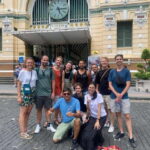

Saigon River stop: where the city’s past changes shape
The first major stop is at Saigon River, with about 30 minutes there. You get a new perspective on the old city—then the guide ties in background from the city’s origins in the late 1600s, before French arrival later on.
This stop also includes some free entry elements (the tour lists admission ticket as free for this part). Even if you don’t go into anything formal, you’ll still get a sense of how rivers shape trade, neighborhoods, and power.
A practical tip: the guide builds in time to enjoy the area’s current vibe, including trendy cafés nearby. So you’re not stuck staring at history with no reward. You’re combining views with something you can actually use later when you’re hungry and want a quick place to sit.
Nguyễn Huệ Street and the café apartment at 42 Nguyễn Huệ
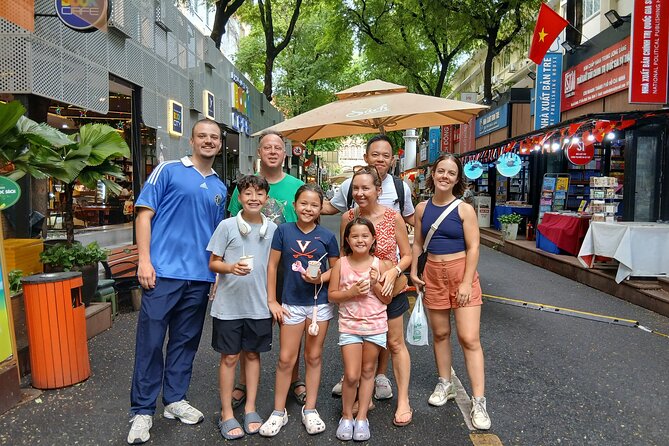
Next up: Nguyễn Huệ Street, roughly 20 minutes. The star here is the café apartment at 42 Nguyễn Huệ St. The idea is simple. This is the kind of space that attracts people who want to work, meet friends, take photos, or just hang out without feeling like you’re in a mall.
The value for you: you get a feeling for where to spend time after your tour is over. When I’m in a new city, I want at least one or two places I can return to that feel local—not only sightseeing zones.
One heads-up: a café stop means you might be buying drinks/snacks on your own, and the tour doesn’t list coffee or tea as included. If caffeine is part of your travel rhythm, bring a little extra money for your own order.
Saigon Opera House: pretty architecture with useful context
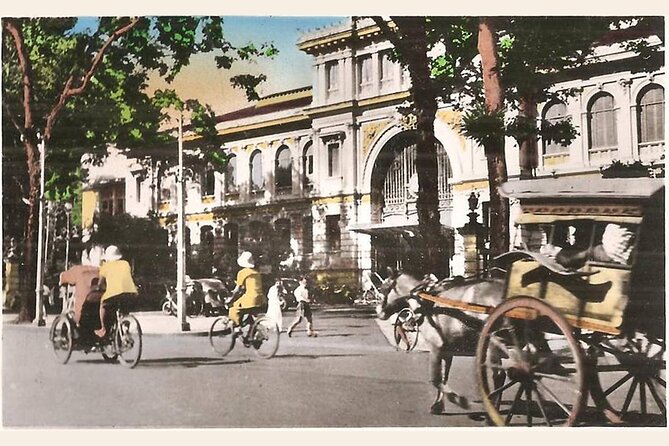
The walk continues to the Saigon Opera House (also called the Ho Chi Minh Municipal Theater). You’ll spend about 10 minutes here, mostly for views and the story behind the building and its surrounding landmarks.
This is a quick stop. But it’s the kind of stop that pays off later because you start recognizing the French-era style that shows up again and again around the center. You also get reference points like the Continental Hotel (noted as the first hotel in Saigon) and the Caravelle Hotel.
If you want photos, this is one of the better spots—just know you won’t have long enough to do a full photo session. Keep your camera ready and let the guide finish their context before you start shooting like a tourist with tunnel vision.
People’s Committee Building and the Ho Chi Minh Statue
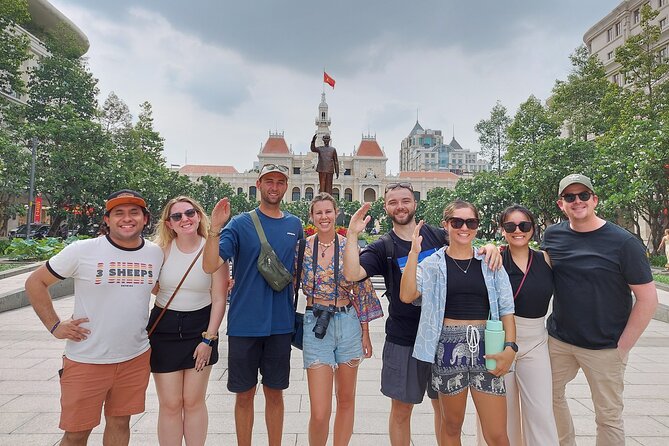
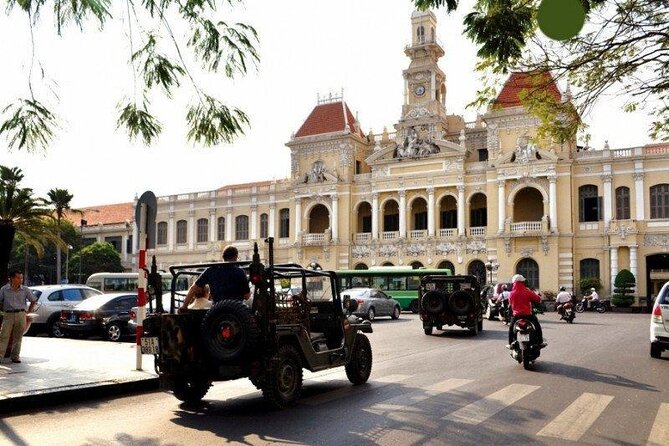
You’ll head to the People’s Committee Building, where the tour includes the area around the President Ho Chi Minh Statue in front of the Nguyen Hue walking street. Time here is around 10 minutes.
This stop works well because it connects politics to space. You’re not just looking at a statue; you’re seeing how the city frames leadership in public life and central streets.
The practical benefit: once you understand this area, it’s easier to navigate around Nguyen Hue later. You’ll recognize the main visual anchors without relying on maps every ten minutes.
You can also read our reviews of more city tours in Ho Chi Minh City
Pittman Apartments: war history told through a single powerful photo
Then comes a stop that packs a punch: the Pittman Apartments. About 10 minutes is allocated, but the story behind it is the real focus.
Here’s what the tour highlights: in 1975, photojournalist Hubert van Es, working for UPI, captured an iconic image of U.S. government employees evacuating the city by helicopter during the Fall of Saigon.
Even if you’ve read Vietnam War history before, this kind of street-level anchor helps your brain remember details. A photo you’ve seen online suddenly has a place attached to it.
For your experience: ask questions here if you want clarity on timelines. This is one of those stops where a good follow-up question can tighten the whole narrative of your day.
Notre Dame Cathedral and the Central Post Office: French architecture walkthrough
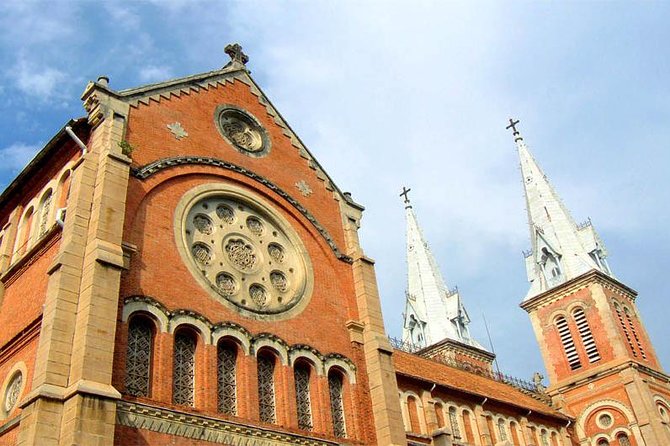
The tour includes a look at Saigon Notre Dame Cathedral for around 10 minutes. Admission is listed as not included for this part, which usually means you’ll admire it from the outside or wait for a guide-led view rather than expect entry.
Right after that, you’ll move to the Central Post Office, another 10-minute stop. This is where the French colonial line becomes very visible. The tour points out the Central Post Office as one of the best examples of French colonial architecture represented in the area, alongside the cathedral.
Why this matters for you: French architecture in Saigon isn’t only about buildings. It’s about planning, commerce, and the city’s layers of control and identity.
Quick advice: if the weather is hot (it will be), keep your expectations realistic. You’re not touring every corner inside these landmarks. You’re collecting the big visual ideas fast, which is exactly what makes a walking tour worth it.
Book Street: the calm cultural break you’ll remember
One of my favorite types of travel stops is the one that isn’t designed for a postcard. Here, it’s Ho Chi Minh City’s Book Street.
You get about 10 minutes to browse or simply understand what’s happening there. The tour describes a range of books, from literature and politics to science and foreign languages, plus comics and novels across a lot of genres.
This stop is useful even if you don’t buy anything. It’s a reminder that Vietnam isn’t only war monuments and colonial façades. People live through ideas, too—right in the middle of the tourist circuit.
The War Museum angle: why the day’s storyline is built that way
The tour is designed to show Ho Chi Minh City through past and present, and one of its stated features is a connection to the War Museum. Even when your exact stop order is fast, the point is the same: you’re getting the political and war-era background that explains why the city looks the way it does.
Why I think that matters: without context, it’s easy to treat Saigon landmarks like separate snapshots. With context, you start noticing patterns—how architecture, public space, and street life reflect major shifts in power and memory.
If you’re the type who likes your sightseeing with a thread connecting it all, this tour’s structure is built for you.
Pacing, group size, and the hearing factor
This tour caps at 50 travelers. That’s not tiny, but it’s also not a giant herd. The key is how well your guide keeps the group together and controls stop timing.
Several guides are mentioned by name in the experience feedback—like Mike and Joseph, and also Son in some cases—which gives you a clue that the experience can vary by guide style. Across those examples, a common theme is that guides use humor and interaction to keep the day moving, while still packing in history.
Also, heat management shows up in the feedback: guides may break the walk with shaded listening spots and even aircon time at certain moments. That’s not guaranteed, but it’s a good sign. Still, plan for walking in Vietnam humidity. Bring water if you can, and expect you’ll be sweaty even if you look graceful.
If you struggle with hearing in louder group settings, choose a spot nearer to the guide when you can.
Price and tips: how to judge value here
The advertised price is about $0.71 per person, and the tour operates on a tips-only basis. That can feel confusing on first read. Here’s how I’d think about value:
- You’re paying a booking amount, but the guide’s real compensation comes from tips.
- The guide provides a local expert experience in English, plus organized routing, stop-by-stop explanations, and help navigating the center.
- Some guests reported that the guide’s tip expectations felt like an expectation rather than a suggestion, with numbers like $15–$50 per person mentioned in feedback.
So what does that mean for you? Don’t treat it like a “pay nothing and walk.” Treat it like an ultra-low-cost booking that leads into a guided experience you should support.
My practical recommendation: set aside a tip amount you’ll feel good about before you arrive. If you do that, you’ll enjoy the tour without stress.
Who this walking tour is for (and who should pick something else)
This is a great fit if you want:
- A first-day or first-night orientation to District 1
- A guided explanation of Saigon’s layered history without spending all day in museums
- Quick access to landmarks like the Opera House, Notre Dame Cathedral, and the Central Post Office
- A local-feeling café stop at 42 Nguyễn Huệ St.
It may not be perfect if:
- You only want long stops inside major sites
- You get unhappy with tips-based economics
- You hate walking in heat and want lots of slow indoor time
If you’re traveling with a kid or someone who needs frequent breaks, this tour can still work because guides tend to control pacing and may add shade/aircon stops.
Should you book this Ho Chi Minh City walking tour?
Yes, if you go in with the right mindset. Book it when you want a fast, guided storyline through District 1—river views, colonial landmarks, a meaningful war-era stop, and a very practical café-and-books break. The best part is that you come away with places you can find again on your own, plus context that makes the streets make sense.
I’d especially book it early in your trip. Once you know where Nguyen Hue, the post office area, and the cathedral zone sit relative to each other, the rest of your Ho Chi Minh City days get easier.
But do yourself a favor: plan your tip budget like it’s part of the real price. Then show up curious, ask questions at the more intense stops like the Pittman Apartments story, and you’ll leave with a city you can actually navigate and understand.
FAQ
How long is the Ho Chi Minh City Highlights & Hidden Gems walking tour?
It runs for about 2 hours 30 minutes.
Where do I meet the guide?
Meet outside the main entrance of Starbucks Coffee at Bitexco Financial Tower, 2 Đ. Hải Triều, Bến Nghé, Quận 1, Hồ Chí Minh City.
Where does the tour end?
The tour ends at 216 Lê Duẩn, Bến Nghé, Quận 1, Hồ Chí Minh City.
Is it really free?
The tour is described as a Tips-only experience. It’s priced very low when booked, but the guide’s work is meant to be supported through tips.
What’s included in the tour price?
Included are a local expert fluent in English and the tour operating on a Tips-only basis.
Is coffee or tea included?
No. Coffee and/or tea are not included.
What tickets or admissions are included or not included?
The tour lists admission ticket free for some stops (like Saigon River). Admission for Saigon Notre Dame Cathedral is not included.
How big is the group?
The maximum group size is 50 travelers.
Will I receive a ticket on my phone?
Yes. You’ll have a mobile ticket.
Can I cancel, and is there a refund?
Yes. You can cancel for a full refund up to 24 hours in advance of the start time. If you cancel less than 24 hours before, the amount you paid is not refunded.