A few blocks can change how Istanbul feels. This half-day Fener-Balat walking tour takes you through historic Greek, Jewish, and Orthodox places side by side, with real-photo moments around the colorful streets. I love the way it’s not a checklist of famous landmarks, but a neighborhood story you can actually walk through.
Two things I like a lot: you get free admissions at several key stops, and the pace is usually tight enough that you finish with time for lunch without rushing. The group stays small (up to 20), which makes it easier to ask questions and keep up on a street-level tour.
One thing to consider: the area is a bit hilly, and there are clothing rules at the Greek Orthodox Patriarchate—plan your outfit so you can enter smoothly.
In This Review
- Key highlights you’ll feel fast
- Why Fener and Balat is a smart half-day move
- Price, timing, and what you actually get
- Before you go: dress code and comfort checklist
- The route, stop by stop: what each place gives you
- 1) Fener Rum Patrikhanesi (Greek Orthodox Patriarchate)
- 2) Ozel Merkez Rum Lisesi (Greek Orthodox Highschool)
- 3) Church of St. Mary of the Mongols
- 4) Colorful Stairs for rainbow-stair photos
- 5) Dimitrie Cantemir House (Romanian Prince and Lord)
- 6) Balat: Panagia Paramythia Church
- 7) A Jewish essence stop inside an alcohol seller store
- 8) Ahrida Synagogue (big synagogue of Balat)
- 9) Bulgarian Orthodox Church (Sveti Stefan Church)
- The rest of the walk: Kiremit Caddesi and colorful houses
- The guides make the tour: Kubra, Yunus, Janus
- How hard is it, and who it fits best
- What this tour is good for (and what it won’t do)
- Practical photo tips for the colorful stairs
- Final call: should you book this Fener-Balat walk?
- FAQ
- How long is the Fener-Balat walking tour?
- What does the ticket include?
- Is lunch included?
- What’s the meeting point?
- Is the tour offered in English?
- Is there a dress code?
- Is the group large?
- Is the tour accessible by public transportation?
- Can I cancel for a full refund?
Key highlights you’ll feel fast
- Multi-faith street-level viewing: mosques, synagogues, and churches in close proximity
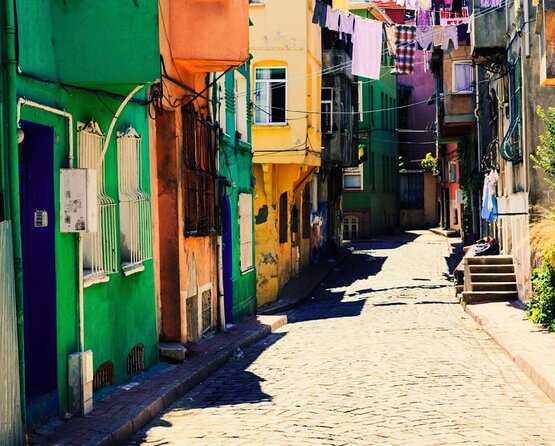
- Photo stops that make sense: colorful houses, rainbow stairs, and a ruined church
- Small group energy: up to 20 people, so the guide can keep control and context
- Value via included entrance access: entrance for the Greek Orthodox Patriarchate and Bulgarian Church
- Guides with strong storytelling: names like Kubra, Yunus, and Janus show up in the guide lineup
Why Fener and Balat is a smart half-day move

If you’ve already done the big-draw sights in Istanbul, you’ll appreciate this one for a simple reason: it’s not built to impress from a distance. You walk into everyday streets where different communities have lived for centuries, and you see how faith, language, and architecture can sit next to each other instead of competing for attention.
Fener and Balat are also ideal for a short tour because the best moments are visual and close together. Colored facades, stairways that look like art projects, and surviving houses with layered identities all sit in walkable pockets. It’s the kind of morning where your camera gets used, but your brain gets used more.
At $20.39 for about three hours, the value comes from the fact that you’re not just paying for movement. You’re paying for context at real sites—plus entrance access for two major buildings—so you spend less time guessing what you’re looking at.
You can also read our reviews of more walking tours in Istanbul


Price, timing, and what you actually get
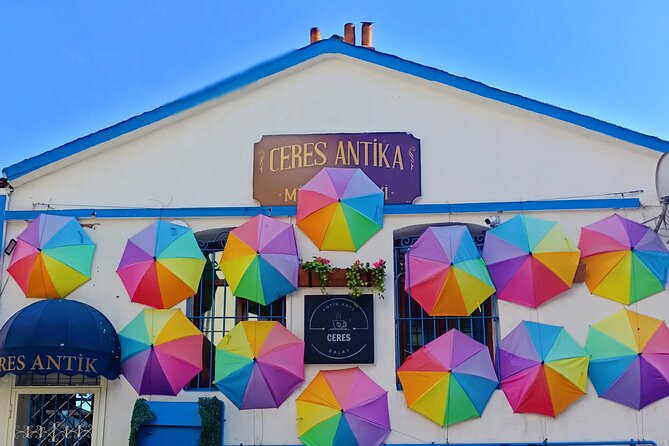
This is a 3-hour walking tour in English, usually booked about three weeks (around 23 days) in advance on average. You’ll get a mobile ticket, and the whole thing ends back at the starting point in the Fener-Balat area.
Included access matters here. The tour includes entrance for the Greek Orthodox Patriarchate and Bulgarian Church, plus all fees and taxes. Lunch is not included, so plan to turn your morning into an early meal.
The group size cap (maximum 20 travelers) is one of the practical wins. Smaller groups move more smoothly through religious sites and also make it easier for the guide to check that everyone can hear and see what matters.
The only drawback on the logistics side is that this is still a neighborhood walk. You’ll want a moderate fitness level and comfortable shoes, especially if you’re sensitive to hills.
Before you go: dress code and comfort checklist
The one “must-do” item is clothing for the Greek Orthodox Patriarchate. You can expect entry rules that won’t allow people with mini shirts and skirts, sleeveless tops, or tank tops for both men and women.
So I’d plan your outfit like this:
- Wear a top that covers your shoulders
- Choose bottoms that won’t be considered too short
- Bring lightweight layers if the weather changes
Comfort helps everywhere else too. Even if you’re not doing a long trek, the terrain can include slopes. Reviews also hint at this: you’ll likely notice the hills.
If you’re traveling with a service animal, service animals are allowed on this tour.
The route, stop by stop: what each place gives you
The best way to think about this tour is as a chain of “clues.” Each stop adds another piece to the same puzzle: how Istanbul’s communities overlapped in one neighborhood.
1) Fener Rum Patrikhanesi (Greek Orthodox Patriarchate)
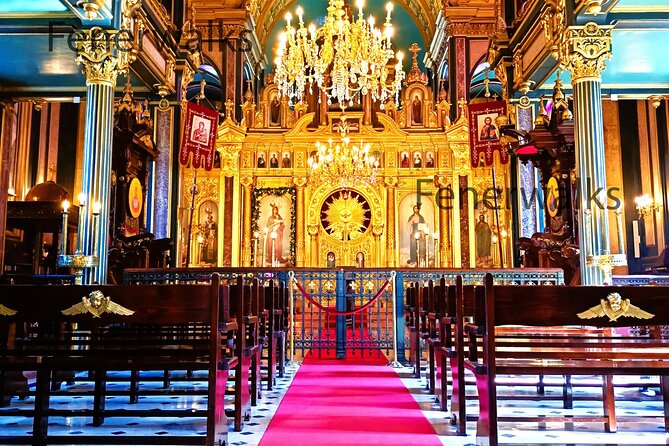
Your first stop is the Fener Rum Patrikhanesi, the Greek Orthodox Patriarchate. You’re there for about 45 minutes, and admission is free.
The setting is the point. This isn’t just a pretty building; it’s a living institution with deep roots tied to the broader story of Orthodox Christianity in Istanbul. The tour frames it as a long journey—history that dates back to earlier major eras and then a new location after many moves.
Practical note: plan extra time for the clothing screening. Once you’re inside, you’ll be able to focus on the architecture and the meaning of the site without feeling rushed.

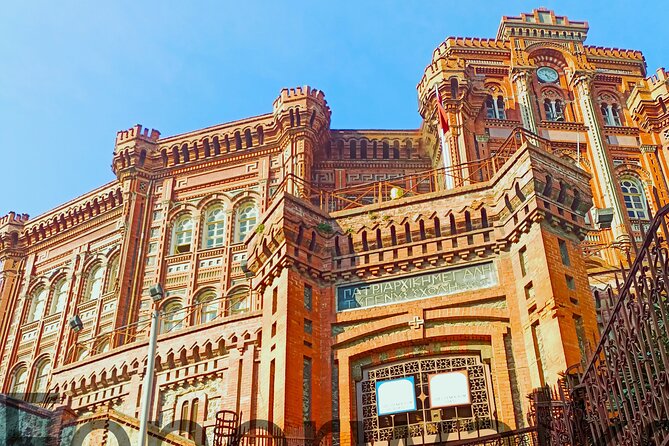
2) Ozel Merkez Rum Lisesi (Greek Orthodox Highschool)
Next comes Ozel Merkez Rum Lisesi, a Greek Orthodox high school on top of Fener. Expect about 30 minutes and free admission.
This stop works because it shows you religion as a lived system, not only worship as an event. Schools shape language, identity, and daily culture. When you see a learning institution in the middle of a historic neighborhood, the area stops feeling like a museum.
3) Church of St. Mary of the Mongols
After the school, you’ll walk to the Church of St. Mary of the Mongols for around 20 minutes with free admission.
This one is less about scale and more about story. The tour’s focus is the tale attached to the church, centered on a brave woman sent from Constantinople toward Mongolia. Whether you care most about legend or architecture, it’s a classic Istanbul move: a religious building tied to the wider world.
A small timing note: churches can have limited viewing time, especially if other visitors are inside. The tour’s short allotment keeps you from waiting too long.
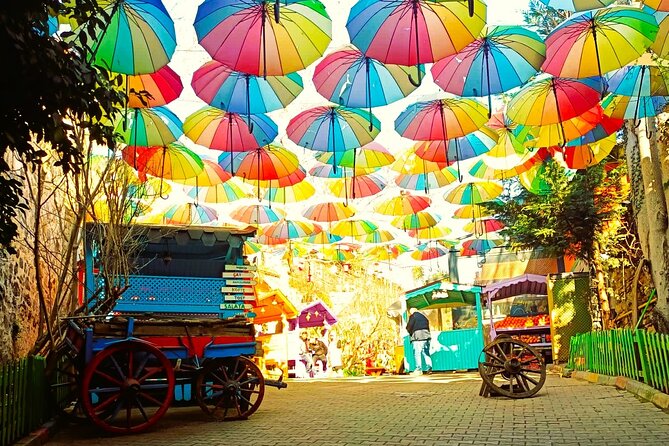
4) Colorful Stairs for rainbow-stair photos
Then it’s straight to a photo hotspot: the colorful stairs. You’ll have about 10 minutes here, free.
This is one of the stops that makes the tour feel modern. People come to Istanbul for history, then end up missing the neighborhood visuals. Here, you get a quick shot at the iconic stair look—then you move on before the stairs turn into a traffic jam.
If you’re sensitive to crowds, go at the group’s pace and take your photos as you arrive, not after you’ve watched someone else frame the perfect shot.
5) Dimitrie Cantemir House (Romanian Prince and Lord)
There’s also a stop for the Dimitrie Cantemir House, tied to the Romanian Prince and Lord of Moldovia. The provided schedule doesn’t list a specific time block, so treat it as a shorter storytelling stop rather than a long museum visit.
This is the kind of stop I like on walking tours: it connects Istanbul’s neighborhood life to figures across the region. It also gives you variety between religious buildings and residential streets.
6) Balat: Panagia Paramythia Church
In Balat, you’ll visit Panagia Paramythia Church (about 5 minutes, free). The tone here is different: the church is described as being in the last days, with the implication that it’s close to disappearing from history before the last visitors see it.
That makes this quick stop hit harder. Even a short visit can feel meaningful when the guide frames it as fragile. You’re not just looking; you’re witnessing something that may not last.
The tradeoff is obvious: if you’re hoping for a long, calm interior visit, this stop won’t be that.
7) A Jewish essence stop inside an alcohol seller store
Next is a shorter “story in a place” stop—Jewish essence within an alcohol seller store, described as once a hot place for many rich and young people.
It’s a reminder that neighborhoods reuse space. A building can change function while still holding cultural memory. If you like history that lives in everyday businesses, you’ll appreciate this angle.
Because the schedule doesn’t list a long time block, focus on listening to the explanation and spotting details rather than expecting a full visit.
8) Ahrida Synagogue (big synagogue of Balat)
Then you reach Ahrida Synagogue, around 15 minutes with free admission.
This is one of the most important faith stops on the route. The tour highlights that it’s the biggest synagogue of Balat, with a special praying area. It also connects the story to Jewish migration, including the movement from Spain to Ottoman lands.
This is where the tour’s multi-faith theme becomes more concrete. You’ll feel the neighborhood’s layers: not just coexisting groups, but linked histories across centuries.
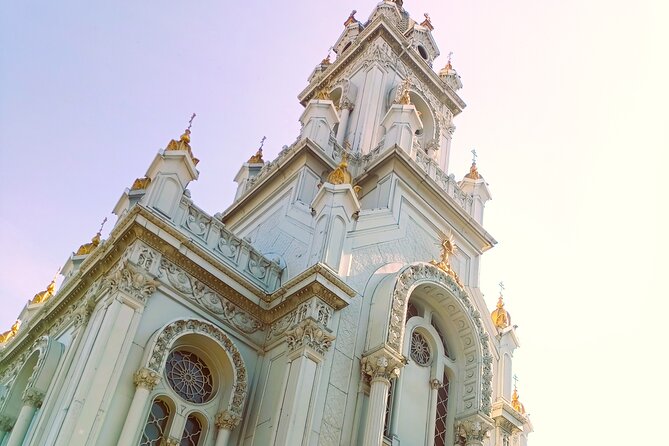
9) Bulgarian Orthodox Church (Sveti Stefan Church)
Finally, you’ll visit Sveti Stefan Church, the Bulgarian Orthodox Church, about 20 minutes with admission included.
The tour frames it as a Bulgarian masterpiece and also talks about its position relative to the Greek Patriarchate—basically, a visible statement of a community building in front of another major religious center.
This stop helps you close the loop: you see a chain of institutions with different identities, and then you see how they relate spatially in Istanbul’s fabric.
The rest of the walk: Kiremit Caddesi and colorful houses
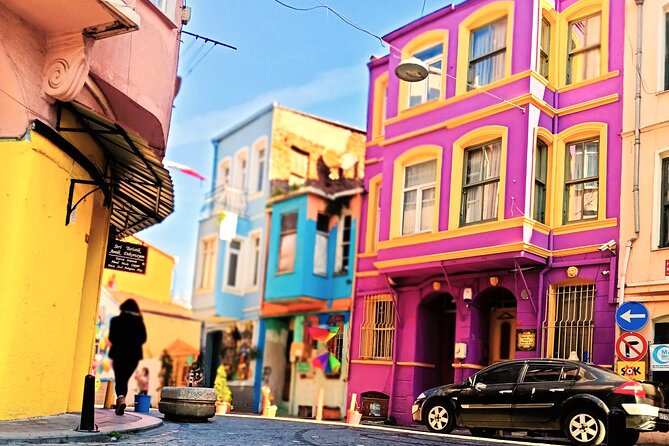
Between major religious sites, you’ll also pass through streets that are made for walking and looking. One of the time-coded stops is Kiremit Caddesi, about 10 minutes, focused on colorful houses.
This is the “reward” portion of the route. It’s where you get those classic photo angles and where the neighborhood looks most alive. It’s also a helpful contrast to the more formal settings of churches and synagogues—your eyes switch gears.
The guides make the tour: Kubra, Yunus, Janus
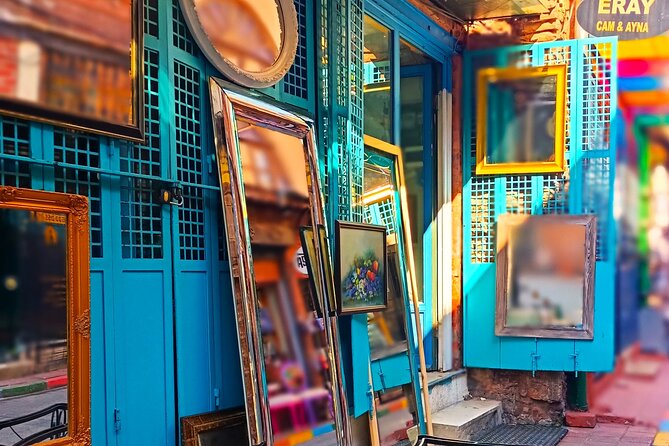
This tour lives or dies on the storytelling, and your experience will depend heavily on your guide. The names that show up strongly are Kubra, Yunus, and Janus, and the common thread is pace control and clear explanations that keep people engaged—even when the group includes kids or teens.
What I’d watch for (and hope for) is the way your guide connects places to human behavior: schools, worship spaces, and small storefront stories. That’s what turns “I saw a building” into “I understand what that building meant.”
A practical bonus: several reviews emphasize that guides stick around with helpful suggestions, including food ideas after the walk. If you want to turn this into a complete neighborhood morning, ask your guide where to eat next.
How hard is it, and who it fits best
This isn’t an endurance hike, but it’s also not flat. Reviews note it can be a bit hilly, so if you have knee issues or you hate stairs, plan for slower pacing.
You’ll likely enjoy this tour most if:
- You want a different Istanbul than Sultanahmet and the usual museum circuit
- You care about religious and cultural history at street level
- You like photo moments, but you also want the stories behind them
- You’re traveling in a small group or want a more personal guide experience
If you’re the type who needs a lot of time inside buildings, this tour might feel like “quick stops.” It’s built for variety and mobility, not for long quiet visits.
What this tour is good for (and what it won’t do)
Good for:
- Getting your bearings in Fener-Balat fast
- Learning how multiple communities appear in one walk
- Taking photos in a way that still feels respectful at active religious sites
- Using a half-day slot efficiently, so you’re free for lunch plans afterward
Not ideal for:
- People wanting a long, inside-only museum experience
- Anyone unable to meet the dress code at the Greek Orthodox Patriarchate
- Travelers who want private transportation or a car-based route (private transport isn’t included)
Practical photo tips for the colorful stairs
For the colorful stairs stop, the biggest tip is simple: don’t wait. Ten minutes goes quickly.
- Take your wide shot first, then your close details second
- Watch your footing. Stairs mean uneven ground in old neighborhoods
- Keep one hand free if you’re climbing or leaning for framing
- If you’re wearing rule-appropriate clothing (shoulders covered), you’ll also feel more comfortable moving through the religious sites afterward
Final call: should you book this Fener-Balat walk?
I think this is an easy yes if you want a morning that mixes neighborhood atmosphere with real multi-faith context—and you don’t want to spend your whole trip chasing the biggest tourist names.
Book it if:
- You like walking tours with strong guide storytelling
- You want included entrance access at major stops
- You’re okay with a bit of hill walking
- You can dress appropriately for religious sites
Skip it if:
- You need long indoor time at each location
- You want wheelchair-level smooth surfaces (the tour only says moderate fitness, and the area can be hilly)
- You’re hoping for a car-based or private-transport schedule (private transportation isn’t included)
If you do book, do one thing: plan your outfit for the Patriarchate and bring comfortable shoes. That’s how you turn a simple half day into a morning you’ll remember when the city blur starts to fade.
FAQ
How long is the Fener-Balat walking tour?
The tour runs for about 3 hours.
What does the ticket include?
It includes entrance for the Greek Orthodox Patriarchate and the Bulgarian Church, and all fees and taxes.
Is lunch included?
No. Lunch is not included, so you’ll need to plan it on your own after the tour.
What’s the meeting point?
The tour starts at FenerBalat, 34087 Fatih/İstanbul, Türkiye, and ends back at the same meeting point.
Is the tour offered in English?
Yes, it’s offered in English.
Is there a dress code?
Yes. For entry to the Greek Orthodox Patriarchate, you’ll need clothing that meets their rules. Sleeveless tops and tank tops, as well as mini shirts and skirts, are not allowed.
Is the group large?
No. The tour has a maximum of 20 travelers.
Is the tour accessible by public transportation?
It’s near public transportation.
Can I cancel for a full refund?
Yes. Free cancellation is allowed up to 24 hours in advance for a full refund. If you cancel less than 24 hours before the start time, the paid amount is not refunded.