REVIEW · VALLETTA
Guided Walking Tour of Valletta with Licenced Guide
Book on GetYourGuide →Operated by Robert Arrigo & Sons Limited · Bookable on GetYourGuide
Two and a half hours can change your Valletta. This guided walk takes you past Baroque façades, fortified corners, and the big stories of the Knights of St John, with a licensed guide shaping what you notice and Grand Harbour views worth lingering over. I like how the guide connects buildings to real events, and I like that you get a clear stop at Upper Barrakka Gardens instead of just passing by. One possible drawback: the pace can feel slow, and there can be pauses for the group.
Valletta is an UNESCO World Heritage-listed old city founded in 1566, and the tour is built around that idea: streets as a timeline. You’ll move through church squares, palaces, and mixed architectural styles, plus a bit of free time (about 30–40 minutes) and an optional add-on visit to St. John’s Co-Cathedral.
It costs $22 per person for the guided walk, but a couple of key sights are optional and paid on the spot. If you want nonstop sightseeing, go in with that in mind and wear comfortable shoes.
In This Review
- Key things I’d watch for before you book
- Valletta on foot in 2.5 hours: what this tour really accomplishes
- Meeting at Phoenicia Hotel: the one logistics detail that matters
- The Knights of St John story: why the streets make sense
- Baroque palaces, churches, and fortifications: what to look for while walking
- Upper Barrakka Gardens: the Grand Harbour viewpoint stop
- St. John’s Co-Cathedral (optional): what you gain and what it costs
- Free time and the audio-visual show: pacing choices you should expect
- Guide quality in the real world: what the best ones do
- Who this tour suits best (and who should pick another plan)
- Price and value: $22 for a licensed guide, with optional extras
- The decision: should you book this Valletta walking tour?
- FAQ
- What time does the tour start?
- Where is the meeting point?
- How long is the walking tour?
- Is the St. John’s Co-Cathedral visit included?
- Is the audio-visual show included?
- What languages are available?
- Do I need hotel pick-up or drop-off?
- What should I wear or bring?
- Are pets allowed?
Key things I’d watch for before you book
- Licensed guide, multiple languages: French, Polish, English, Spanish, German, Italian, with occasional two-language delivery due to operations.
- Upper Barrakka Gardens is in the plan: the Grand Harbour view is a dedicated moment, not a random glance.
- Optional St. John’s Co-Cathedral visit: you can trade extra time for admission paid on location.
- Time for breathing room: about 30–40 minutes of free time may be built into the walk.
- Pace depends on the day: some groups have slower rhythm or more waiting than you’d expect.
- Not for wheelchair users: plan for stairs and uneven old-stone walking.
Valletta on foot in 2.5 hours: what this tour really accomplishes
This is a compact Valletta walking tour, designed to help you understand the city, not just collect photos. In about 2.5 hours, you’ll get a guided route through the visual highlights: churches, grand architecture, and the fortifications that make Valletta feel like a fortress city.
The value is the interpretation. Valletta can look like one long row of old buildings unless someone points out the right details. Here, the guide ties the city’s founding (1566) and the Knights of St John to what you’re seeing on the street—so you’re not just staring at stone, you’re reading it.
You also get built-in structure. Even though the order can shift (the provider reserves the right), the tour is essentially built around three big ideas:
1) Valletta as a fortified foundation,
2) Valletta as Baroque city planning and design,
3) Valletta as a viewpoint city, with Upper Barrakka Gardens as a key stop.
You can also read our reviews of more walking tours in Valletta


Meeting at Phoenicia Hotel: the one logistics detail that matters
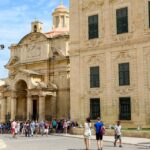
Your meeting point is in front of the Phoenicia Hotel in Valletta, near the main staircase entrance. The meeting time is 9:30 AM, and the guide has a list of participants and checks names from the group waiting at the front.
This small detail matters because old cities move at street speed. If late guests show up, the whole start can wobble. One review specifically flagged waiting for latecomers, including a situation where the group didn’t get rolling until close to 10:00 AM.
My practical advice: arrive a little early and don’t hang back. Not because it’s strict, but because Valletta is best in the morning light, and the tour has limited time.
The Knights of St John story: why the streets make sense
Valletta was founded by the Knights of St John in 1566 and governed by the Order for 268 years. That long stretch shows up everywhere, from the way the city was built to the way its major buildings were designed to project power and faith.
On this tour, you’ll hear that story while walking past significant architecture—many of it dating back to the 16th century. So when you see a grand church front or a palace-like façade, you’re not guessing what it is. You’re getting the why behind it: the Order’s role in shaping the city during centuries that included the Great Siege of 1565.
The most helpful part is that you’ll learn to spot architectural clues. Valletta’s look is predominantly Baroque, but you’ll also notice traces of Mannerist, Neo-Classical, and modern influences layered on over time. That mix can feel confusing if you arrive cold; a guide helps you sort the styles as you go.
Baroque palaces, churches, and fortifications: what to look for while walking
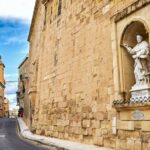
This is a sightseeing tour, but it’s also a pattern-recognition tour. You’ll spend time admiring the city’s character—historical buildings, picturesque squares, and impressive churches—while also taking in the fortifications that give Valletta its “built to last” feel.
Here’s how I’d approach it while you’re on the ground:
- When you pause at a square or streetscape, look for symmetry and bold ornamentation. That’s often where the Baroque character shows.
- When you see defensive features and city edges, connect them to Valletta’s “fortified marvel” concept. It changes how you read everything else.
- Treat churches as landmarks, not only worship spaces. The tour is designed to lead you from the outside impact to the artistic reputation you’ll hear about.
One review praised the guide’s professionalism and ability to handle a large group (32 people). That’s not a small point. In a group that size, the best guides keep everyone moving and keep the explanations focused instead of turning into a long bottleneck at every corner.
Upper Barrakka Gardens: the Grand Harbour viewpoint stop
If you only care about one view, this is the one. Upper Barrakka Gardens is included as a must-see stop, and it delivers stunning views of the Grand Harbour.
This viewpoint works for two reasons:
1) it gives you a wide-angle sense of how Valletta sits against the sea, and
2) it gives you time to frame photos without frantic schedule pressure.
Go with a simple mindset: accept that this is your reset moment. If earlier streets felt like a flood of façades, this stop turns it into a coherent picture—city, sea, fortifications, all in one view.
If you’re planning your day around photos, try to keep your camera battery and phone storage ready. The view is the kind that makes you forget there’s a walking tour still waiting.
You can also read our reviews of more guided tours in Valletta

St. John’s Co-Cathedral (optional): what you gain and what it costs
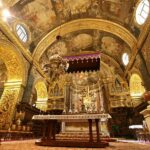
You have an optional guided visit to St. John’s Co-Cathedral dedicated to St John the Baptist. Admission isn’t included; you pay the ticket on location if you choose to go.
The cathedral is described as being built shortly after the Great Siege of 1565 and completed in 1577. That timeline matters because it explains why the building carries so much symbolic weight—this wasn’t just a pretty church. It was a statement of survival and identity, made by the Knights.
Why do people choose the optional visit? Because the reputation comes from tangible things: stunning artwork and intricate design. If you’re the type who likes to connect architecture to history and religious art, this is usually the payoff stop.
The trade-off is time and cost. Since it’s optional and paid on site, it’s best suited if you’re confident you want to add at least another focused segment to your day.
Free time and the audio-visual show: pacing choices you should expect
The tour includes some free time—about 30–40 minutes—during the walk. That’s a nice option in an old city where your interests might pull you off the main route. You can grab a quick look around, use a restroom, or just slow down and let the streets feel less like a checklist.
At the end of the itinerary (generally), there’s also an optional audio-visual show about Malta’s history. Admission is paid on location. This is designed to be educational and entertaining, covering Malta’s tumultuous past and how the island nation survived major challenges to flourish.
One thing to keep in mind: show timing and stop order can shift. So if you’re trying to catch a specific later appointment that afternoon, don’t schedule it tightly.
Guide quality in the real world: what the best ones do
A walking tour can rise or fall on the guide. Here, the reviews strongly point to guide skill and attitude.
One review highlighted a guide described as very attentive, extremely experienced, and professional with style. Another said the guide was friendly and competent. There’s also feedback that a French guide was interesting and gentle—showing the tour can feel comfortable, not robotic.
But there are also caution signals:
- One review mentioned two pauses during a 2.5-hour tour and felt the rhythm was too slow.
- Another flagged long waiting due to latecomers.
So here’s the “choose your expectation” advice. If you want fast-moving highlights with minimal downtime, show up early, and remember that group logistics can affect pace. If you’d rather get clearer context and explanations, the structure plus guide storytelling is exactly what you’re buying.
Who this tour suits best (and who should pick another plan)
This tour is a good match if you:
- want Valletta’s big landmarks in a short time,
- enjoy learning how styles and major buildings connect to historical events,
- like a guided walkthrough more than a self-guided map-only approach.
It’s not a good match if you:
- have mobility impairments or use a wheelchair, since it’s not suitable for mobility needs and likely involves stairs and older surfaces,
- need a strictly nonstop route, because pauses can happen depending on group timing.
Also, if you’re sensitive to slow pacing, go in mentally prepared for breaks and consider bringing a bit of patience. The tour is only 2.5 hours—when that includes stops, the schedule becomes fragile.
Price and value: $22 for a licensed guide, with optional extras
At $22 per person for a 2.5-hour guided walking tour, you’re mostly paying for the licensed guide and the interpretation of Valletta’s architecture and fortifications. That’s generally good value in Malta’s historic core, where a lot of what you pay for is expertise.
Just remember what you’re not paying for in the base price:
- St. John’s Co-Cathedral admission (optional, pay on location),
- the audio-visual show admission (optional, pay on location),
- hotel pickup and drop-off (not included),
- food and drinks (not included).
So the real cost depends on your choices at the free-time/optional-parts decision points. If you skip both paid add-ons, you can keep it lean. If you add the cathedral, your day becomes more art-and-architecture focused. Either way, the guide walk is the core product you’re getting for $22.
The decision: should you book this Valletta walking tour?
Book it if you want Valletta explained in plain language and you value a proper guided route through Baroque streets, fortifications, and key viewpoints. Upper Barrakka Gardens is included for a reason, and the optional cathedral can turn the tour into a deeper art and symbolism experience.
Skip or choose another option if you:
- hate slower pacing and dislike waiting,
- need a fully accessible route,
- only want independent sightseeing without paying optional admissions.
If you do book, your best strategy is simple: arrive early at the Phoenicia Hotel meeting point, wear comfortable shoes, and decide ahead of time whether St. John’s Co-Cathedral is a “yes” for you. That one choice can make the afternoon feel either efficient—or genuinely memorable.
FAQ
What time does the tour start?
The meeting time is at 9:30 AM. You’ll meet in front of the Phoenicia Hotel in Valletta.
Where is the meeting point?
The meeting point is in front of the Phoenicia Hotel in Valletta, near the main staircase entrance.
How long is the walking tour?
The duration is 2.5 hours.
Is the St. John’s Co-Cathedral visit included?
It’s optional. Admission to St. John’s Co-Cathedral is not included, and you pay the ticket on location if you choose to go.
Is the audio-visual show included?
It’s optional. Admission to the audio-visual show about Malta’s history is not included, and you pay the ticket on location.
What languages are available?
The tour is offered in French, Polish, English, Spanish, German, and Italian.
Do I need hotel pick-up or drop-off?
No. Hotel pick-up and drop-off are not included.
What should I wear or bring?
Bring comfortable shoes. The tour involves walking, and it’s not suitable for wheelchair users.
Are pets allowed?
No, pets are not allowed on this tour.