REVIEW · SEOUL
Gangnam Walking Tour on Youth and Society in Seoul Korea
Book on Viator →Operated by SeoulDude's Walking tours · Bookable on Viator
Gangnam can feel like a glossy highlight reel—until you walk it with context. This tour uses the neighborhood’s real places to explain youth pressure and modern social life, with the kind of guide-led storytelling that fans often call out for Jessica or June. My favorite parts are the small group size (up to 15) and the way serious topics get anchored to specific spots; the main thing to consider is that it’s a lot of walking and conversation, not a checklist of major landmarks.
If you want Seoul beyond K-drama scenes and souvenir streets, this is built for you. You’ll get a local-style Q&A feel as you move through Gangnam’s most recognizable districts, then step into the less comfortable questions behind the polish.
The goal is balance: the bright ambition and the heavy price that can come with it. Expect a tour that talks plainly about things like beauty industry pressure, cram-school culture, love motels, and lookism, using Gangnam as the setting.
In This Review
- Quick hits: what makes this Gangnam walk work
- Gangnam, not Seoul-as-a-Postcard
- Price and logistics: $31.98 plus one subway ride
- Where you meet, where you end, and how the timing feels
- Stop 1: 강남역사거리 (Gangnam Station area) and the price of development
- Stop 2: 호텔시애틀 (Hotel Seattle) and love-motel culture
- Stop 3: Gangnam Daeseong cram school and the education race
- Stop 4: Sinsa-dong (Gangnam-gu) and the business of appearances
- Stop 5: Hangang Park Playground and the darker edge of “development”
- Q&A with June or Jessica: the real value is the explanations
- What to ask your guide (so the tour feels personal)
- How much walking is involved, and who this suits best
- Should you book this Gangnam youth-and-society walking tour?
- FAQ
- How long is the Gangnam walking tour?
- How much does it cost?
- Is public transportation involved during the tour?
- Where do I meet and where do we finish?
- What happens if the weather is bad?
- Is there free cancellation?
Quick hits: what makes this Gangnam walk work
- Up to 15 people, so your questions actually get answers
- Youth and society themes tied to real locations like a cram school and love-hotel area
- Guide storytelling is a standout, especially with June or Jessica
- No paid museum stops for the sights themselves; the tour is built for street-level learning
- A route that ends at the Han River area, so the last stop has room to breathe
Gangnam, not Seoul-as-a-Postcard

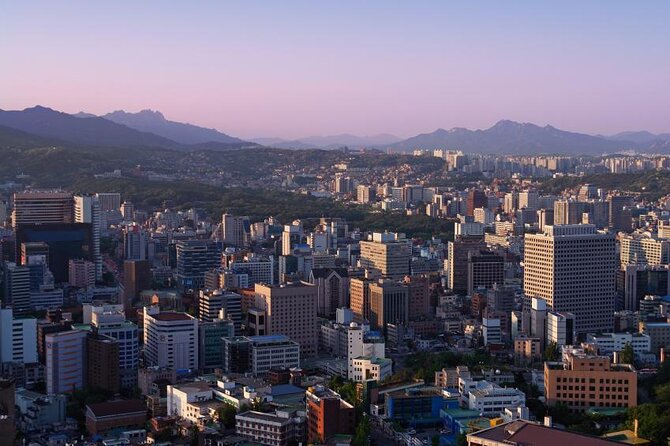
This tour takes Gangnam seriously, which is rare. Instead of treating it like a shopping backdrop, you’ll use it as a map for modern Korean society—how people chase success, how they manage appearance, and how relationships and education get shaped by intense expectations.
What I like is the plain way the tour frames tradeoffs. You don’t just hear buzzwords like “pressure” or “achievement”—you see where those forces show up in day-to-day spaces.
And because the guide is built around Q&A, you’re not stuck passively listening the whole time. If something connects to what you’ve seen in dramas, ads, or social media, you’ll get a chance to ask what’s real and what’s simplified.
You can also read our reviews of more walking tours in Seoul



Price and logistics: $31.98 plus one subway ride
The price is $31.98 per person, and it’s positioned as a value walking experience rather than a ticketed attraction day. The tour includes gratuities, and the named stops are listed as free to enter, so you’re mainly paying for the guided interpretation and time.
One cost to keep in mind: a one-time subway fee of 1,800 won is not included. That’s a normal part of moving across Gangnam without turning the day into a long outdoor hike.
You’ll also get a mobile ticket, which is handy in Seoul. Less time fiddling, more time moving.
Where you meet, where you end, and how the timing feels

The tour starts at 10:30 am at 820-10 Yeoksam-dong, Gangnam District, Seoul. It ends at Apgujeong Station Exit 4, and you’ll finish at the Han River Park area—so you’ll naturally transition from guided walking to open-air decompression.
The total duration is about 2 hours 30 minutes, which is a nice sweet spot. Long enough to build a theme, short enough that you can still fit other Gangnam plans the same day.
A practical tip: wear shoes you trust. This is a neighborhood walk with multiple stops and short segments, so you’ll want comfortable support more than dramatic flair.
Stop 1: 강남역사거리 (Gangnam Station area) and the price of development
You kick off in the Gangnam Station crossroads area (강남역사거리). It’s the kind of place that looks instantly recognizable on a map, but the tour treats it like a starting point for a bigger story: how Gangnam became what it is, and what that growth costs.
You’ll hear talk about housing problems and the history of development, tied to the area around the station. That matters because it sets a baseline for everything that follows: if you want to understand education pressure, beauty expectations, or the speed of social life, you need context for why Gangnam became a magnet for ambition.
What’s good here is the framing. This first stop helps you read the neighborhood instead of just walking through it.
A consideration: since this is a story-driven walk, you might spend more time standing, listening, and asking than you would at a site with huge visuals. Bring curiosity, not expectations of a picture-perfect museum stop.
Stop 2: 호텔시애틀 (Hotel Seattle) and love-motel culture

Next comes the Hotel Seattle area, described as a love hotel district. This stop is not for everyone’s comfort level, and the tour doesn’t pretend it’s fluffy.
Instead, the explanation uses the physical neighborhood layout to talk about romance, privacy, and how relationship culture can take on shaped forms in a high-pressure society. If you’ve ever wondered why certain parts of Seoul feel designed for quick, discreet encounters, this is where you’ll get cultural context rather than just guesswork.
Why I think this stop is valuable: it grounds the topic in an actual zone. You’re not watching a lecture about dating; you’re watching how the city provides spaces for certain social realities.
Possible drawback: if you prefer tours that avoid sensitive themes, you might want to mentally prepare for this section. The tour is clearly aimed at understanding under-the-surface Seoul, not keeping everything polite.

Stop 3: Gangnam Daeseong cram school and the education race
Then you move to a well-known private cram school area: Gangnam Daeseong Cram School. This is one of the most important stops for understanding youth pressure, because education is where a lot of stakes concentrate.
The guide discusses education culture and connects it to related pressures like birthrate themes. Even if you’re not Korean or not from a similar education system, the ideas translate: when a society treats schooling as the main ladder, it affects mental health, choices, and how young people plan their futures.
What makes this stop work in a walking format is how the neighborhood helps you visualize the system. You’re seeing where the hustle is literally located, not just hearing abstract explanations.
If you’re the type who likes asking follow-up questions, this stop is likely one where you’ll get your best conversations. The Q&A element is built for exactly that.
Stop 4: Sinsa-dong (Gangnam-gu) and the business of appearances
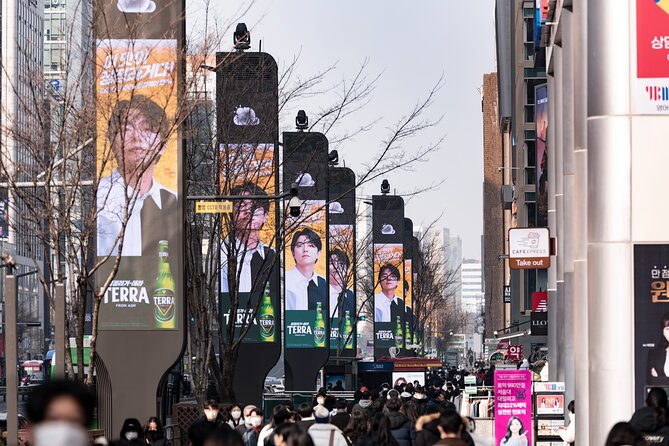
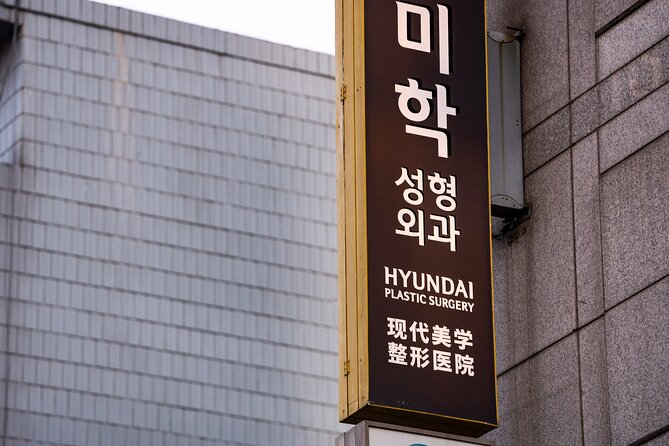
After the cram school stop, the tour heads to Sinsa-dong (Gangnam-gu)—noted as a top area for plastic surgeries. This is where the topic of beauty and lookism becomes concrete.
You’ll hear about the plastic surgery culture and the social logic behind it. Whether you care about cosmetic procedures personally or just want to understand how social status gets reflected in appearance, this stop helps explain the incentives and the social pressures young people face.
I like that the tour ties appearance culture to societal expectations rather than making it a one-note story. You’ll get a way to think about it that’s more grounded than social-media takes.
A consideration: depending on how you feel about body-image topics, this may hit close to home. The tour talks about reasons and effects, but it still stays honest about the pressures.
Stop 5: Hangang Park Playground and the darker edge of “development”
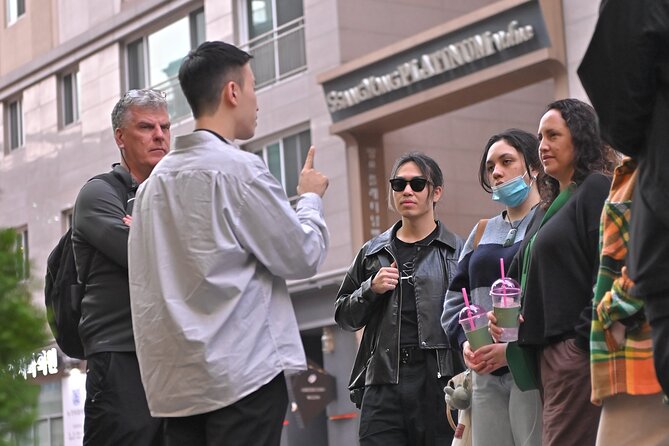
The final stop is Hangang Park Playground, at the Han River. The theme here is development and suicide, with the guide sharing histories connected to that river space.
This is an emotionally heavier stop, and it’s also one of the most important. Ending at the Han River gives the whole tour a sense of gravity with some open-air space afterward, instead of finishing in traffic or a shop street.
If you’ve been thinking through the education and appearance pressure pieces, this stop shifts the lens to what can happen when stress meets limited outlets. It’s not a scare-story; it’s a reality-check that helps the tour feel complete.
Practical angle: because this is outdoors near the river, plan for weather. The experience specifically requires good weather, and the provider notes that changes may happen if conditions are poor.
Q&A with June or Jessica: the real value is the explanations
The most praised part of this experience is the guide. Many people highlight June and Jessica for being highly organized and for connecting modern topics to history and everyday places.
Here’s why that matters to you: Gangnam is full of visuals, but without context it’s easy to miss the story. A strong guide turns streets into explanations—why certain industries cluster here, how social pressure spreads, and how young people learn to manage expectations.
You’ll also benefit from the small group format. When you’re in a group of 15 or fewer, you can actually ask a question and expect it to matter to the flow of the walk, not get swallowed by the crowd.
If you like comparing what you see in Seoul with what you know from home, this tour seems especially suited. The explanations are designed to be accessible, not academic.
What to ask your guide (so the tour feels personal)
Use your questions to connect the themes. Here are a few you can bring up during the walk, especially with guides like June or Jessica:
- How did Gangnam’s development change what young people feel they must achieve?
- What role do education and cram schools play in shaping future plans?
- How does appearance culture show up in everyday social expectations?
- Why do love hotels exist in the form they do, and what does that say about privacy and relationships?
- What outlets do young people have when pressure becomes too heavy?
These questions line up with what the tour is built to discuss, so you’ll get answers that feel connected rather than random.
How much walking is involved, and who this suits best
The pacing is built around multiple short stops and a lot of movement. That’s part of the design: you’re learning as you go, not sitting through one long indoor segment.
So this is best for you if:
- You like guided walking tours with real-world explanations
- You can handle a couple hours of outdoor time and standing
- You want culture through modern social issues, not only historic landmarks
It may be less ideal if you’re looking for lots of separate “attraction-style” sights or huge photo ops. One note from feedback is that it can feel more like walking and discussion than a list of flashy set pieces.
Also, plan with your comfort level in mind. Some guests have noted that the walking can be substantial, so if mobility is a concern, you might want to think twice or ask in advance what the pace is like.
Should you book this Gangnam youth-and-society walking tour?
I’d book it if you want Seoul with an opinion—an honest look at youth pressure and how it shows up in education, appearance, dating culture, and even the darker themes around development. The structure works because each stop adds a layer, and the guide’s skill turns Gangnam into a teaching tool.
Skip it if you mainly want classic sightseeing, big monuments, and lots of time in major indoor attractions. This tour is about interpretation and conversation more than “look at this, take a photo, move on.”
If you’re curious, respectful, and ready for a more serious side of Gangnam, this is a strong value at $31.98 for a guided small-group walk with a clear theme and a real local perspective.
FAQ
How long is the Gangnam walking tour?
It runs for about 2 hours 30 minutes.
How much does it cost?
The price is $31.98 per person.
Is public transportation involved during the tour?
Yes. The tour includes one subway ride, and the subway fee is 1,800 won. Transportation fee is not included.
Where do I meet and where do we finish?
You meet at 820-10 Yeoksam-dong, Gangnam District, Seoul at 10:30 am. You finish at Apgujeong Station Exit 4 near the Han River Park area.
What happens if the weather is bad?
The experience requires good weather. If it’s canceled due to poor weather, you’ll be offered a different date or a full refund.
Is there free cancellation?
Yes. You can cancel up to 24 hours in advance for a full refund.