REVIEW · FRANKFURT
Frankfurt: Private or Shared Walking Tour
Book on GetYourGuide →Operated by Show-me-Frankfurt.de · Bookable on GetYourGuide
Frankfurt can look modern at a glance.
But this walk pairs the Altstadt with the city’s newer “old” rebuilds, so you see how the past and present share the same streets.
I especially liked the clear, practical route: you start at Justitia-Brunnen (Römerberg), then move through the riverside views near the Eiserner Steg and into the big civic landmarks. The other thing I really liked is the way you get to the “why this matters” moments, including the historic context around the first German national assembly area.
One consideration: it’s a tight 1.5-hour loop. If you want to linger for photos at every stop, you’ll need to choose what gets the longer glance and what’s just a quick look.
In This Review
- Key points at a glance
- Frankfurt’s best contrast: Altstadt landmarks next to modern city change
- Starting at Justitia-Brunnen on Römerberg: the easiest way to get your bearings
- Eiserner Steg (1868) and the riverside intro you can actually picture
- WWII damage and the 2008–2009 renovation story, told at the right moments
- Römer and Paulskirche: the first national assembly site in plain view
- Neue Altstadt: walking through the city’s latest rebuild project
- How long is enough? The 1.5-hour pace and what to do if you want more time
- Guide quality: what stands out about how this tour is taught
- Price and value: why $17 can feel like a bargain in Frankfurt
- Who should book this Frankfurt walking tour (and who might not)
- Should you book this tour?
- FAQ
- Where is the tour meeting point?
- How long is the walking tour?
- Does the tour end back at the starting point?
- Is the tour shared or private?
- What language is the live guide?
- What’s the price per person?
- What does the tour focus on?
- Is free cancellation available?
- Is there a pay-later option?
Key points at a glance
- Meet at Justitia-Brunnen (Römerberg) and keep everything easy to follow with a guide
- Eiserner Steg (built 1868) gives you an early, meaningful orientation point
- Römer and Paulskirche connect civic architecture to Germany’s first national assembly
- Neue Altstadt shows you Frankfurt’s latest rebuilding effort in the middle of daily life
- WWII damage and the 2008–2009 renovation story is explained as you walk, not as a lecture
Frankfurt’s best contrast: Altstadt landmarks next to modern city change
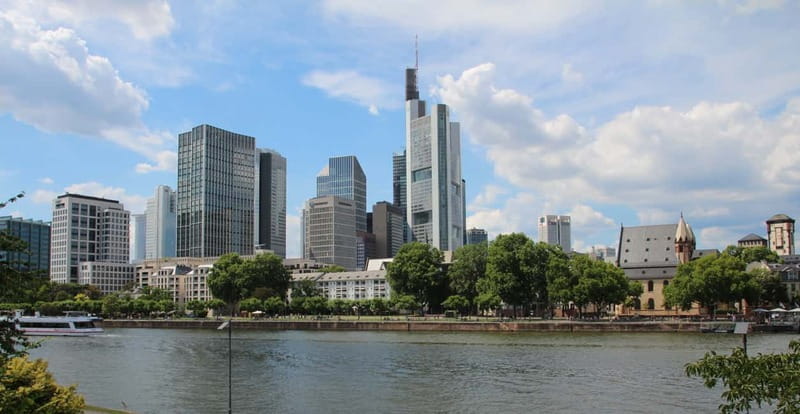
Frankfurt has a habit of surprising you. From one corner you’re looking at historic squares and church façades. From the next, the city’s modern edge shows up in the same frame.
That contrast is exactly why this tour works. You’re not just collecting pretty buildings. You’re learning how the city re-made itself after major destruction in World War II, then how it continued rebuilding into the 2008–2009 period. The guide also helps you connect the historic monuments to the skyline vibe, so you understand what you’re seeing instead of guessing.
If you like your sightseeing with a storyline, you’ll probably feel the same: the “old” and the “new-old” aren’t separate chapters here. They’re neighbors.
You can also read our reviews of more walking tours in Frankfurt

Starting at Justitia-Brunnen on Römerberg: the easiest way to get your bearings
The tour begins at the Justitia-Brunnen statue at Römerberg. This is a smart meeting point because it’s central and instantly recognizable once you’re there.
From that start, the guide gets you moving right away toward the first stop. That matters in a walking tour, because you’re spending less time figuring out where to go and more time hearing the story behind where you stand.
Römerberg also sets the tone: this is the kind of area where people linger, take photos, and cross paths constantly. So even though the tour is structured, it still feels like you’re stepping into real Frankfurt life, not into a staged route.
Eiserner Steg (1868) and the riverside intro you can actually picture
Your first major walkaway lesson comes at the Eiserner Steg, the iron footbridge built in 1868. For a lot of visitors, a bridge can be a background detail. On this tour, it becomes an orientation anchor.
Walking toward and around that riverside area helps you understand Frankfurt’s geography in motion. You’re learning the city’s layout with your feet, not just from a map on your phone.
It’s also a good place for the guide to set up what comes next. The tour’s theme is comparison: historic structures against newer modern-era changes. Starting at a bridge from the 1800s gives you a “time marker” early, so the later buildings and rebuilding efforts land with more meaning.
WWII damage and the 2008–2009 renovation story, told at the right moments
A big part of this tour focuses on what happened to Frankfurt’s grand buildings during World War II, and then how renovation shaped what you see today—especially the major renovation period in 2008–2009.
The practical value here is that the guide ties the historical explanation to what’s around you. You don’t just hear that buildings were destroyed or rebuilt. You walk past the spaces where you can connect the dots between loss, restoration, and modern planning.
This is one of the most satisfying parts for me, because it turns “architecture sightseeing” into something you can interpret. Instead of wondering why a façade looks a certain way, you get language for what changed and why.
Römer and Paulskirche: the first national assembly site in plain view
Two stops do the heavy lifting here: the historic Römer and Paulskirche.
Paulskirche is especially important because it’s tied to the 1st German national assembly. When your guide points out the significance of the location, the building stops being just a scenic church and becomes a civic landmark. You can feel why it matters without needing a museum ticket.
Römer, meanwhile, anchors the civic side of the story. Even if you don’t know Frankfurt’s political history, the combination of these two stops helps you see the city as more than banking and skyscrapers. It’s also a place where national-level decisions were made in a very specific historic moment.
If you enjoy history that connects directly to architecture, this segment is the tour’s payoff section.
Neue Altstadt: walking through the city’s latest rebuild project
Then comes the newest “old” part of the story: Neue Altstadt, Frankfurt’s “new old town.”
This is one of those concepts that sounds a little confusing until you’re actually walking it. On the tour, you’re guided through what this project means in real terms—how Frankfurt is choosing to rebuild and re-stage traditional-looking spaces for how people live now.
What makes this worth your time is the comparison angle. You’re not asked to accept the rebuild as either authentic or fake. The guide’s job is to help you understand it as a city project shaped by history, need, and design choices after years of change.
So when you see newer-feeling streets and façades, you’re not just thinking about aesthetics. You’re thinking about the city’s direction and priorities.
How long is enough? The 1.5-hour pace and what to do if you want more time
This experience runs about 1.5 hours. That length is the sweet spot for people who want meaning without spending half a day standing still.
The “shared or private” format affects how the guide can pace the group. A private option usually means the guide can slow down for questions. The shared option usually means you’ll move at a common group rhythm.
A small caution: if you’re the type who likes to stay at one photo angle until the lighting changes, this tour won’t be built for long linger time. It’s designed to cover key areas and give you useful context throughout the walk.
Guide quality: what stands out about how this tour is taught
The overall rating is high: 4.8 with 156 reviews, which usually signals consistent guide performance. The strongest praise centers on new insights and engaging explanations.
I also took note of the way guide flexibility comes up in the feedback. One review highlighted how the guide adapted with time limits during a rainy evening while still giving strong insights. That’s a real-world skill, because weather and delays happen.
Another review credited a guide named Sanel with in-depth history of Frankfurt, and it’s the kind of detail that matters. When a guide can connect city facts to what you’re seeing on the street, you walk away feeling like you understood the city better—not just “took a tour.”
Price and value: why $17 can feel like a bargain in Frankfurt
The price is $17 per person. For a guided walking tour that covers multiple major landmarks, that’s competitive.
Here’s the value angle I like to watch for: this isn’t a tour that only hits one neighborhood. It’s built around a comparison theme—historic Altstadt touchpoints plus the Neue Altstadt project—so you’re getting a wider range of impressions in 90 minutes.
You’re also getting a live guide in German, which is part of the value if you’re comfortable with that language or you’re okay following along with context. If you’re not, it’s still a worthwhile tour, but you may get more out of it if you can pick up key words during the explanation.
If you want a short, structured intro to Frankfurt that doesn’t turn into a checklist, this price-to-time ratio makes sense.
Who should book this Frankfurt walking tour (and who might not)
This tour suits you if:
- You want a guided intro to Frankfurt’s Altstadt + Neue Altstadt contrast
- You care about the civic and historic meaning of places like Paulskirche
- You like “see it, then understand it” explanations as you walk
You might think twice if:
- You want a long, slow photo-focused stroll with lots of free time at each stop
- You need an English guide (the tour data specifies German)
In general, it’s a good match for first-timers and return visitors who want a sharper understanding of how Frankfurt changed over time—without spending the whole day doing it.
Should you book this tour?
Yes, if you want a compact walking tour that explains Frankfurt in a way you can actually use. The best reason to book is the structure: it starts at Justitia-Brunnen, moves through the Eiserner Steg orientation point, lands at the historic Römer and Paulskirche sites connected to the first national assembly, then shifts into the city’s newer Neue Altstadt rebuild.
If that mix sounds like your style—history plus present-day streets—this is an easy choice at $17 for about 1.5 hours.
If you tell me your travel dates and whether you prefer shared or private, I can help you pick a departure time that fits your day.
FAQ
Where is the tour meeting point?
You meet your guide at Justitia-Brunnen in Römerberg.
How long is the walking tour?
The tour lasts about 1.5 hours.
Does the tour end back at the starting point?
Yes. The activity ends back at the meeting point.
Is the tour shared or private?
Both options are available. You can choose a shared walking tour or a private group option.
What language is the live guide?
The live tour guide speaks German.
What’s the price per person?
The listed price is $17 per person.
What does the tour focus on?
It covers Frankfurt’s highlights by comparing the Altstadt and the Neue Altstadt, and it includes key locations such as the Paulskirche connection to the 1st German national assembly.
Is free cancellation available?
Yes, you can cancel up to 24 hours in advance for a full refund.
Is there a pay-later option?
Yes. You can reserve now and pay later (pay nothing today).