REVIEW · FLORENCE
Experience Florence’s Art and Architecture on a Walking Tour
Book on Viator →Operated by Free Tour Florence – Another Florence · Bookable on Viator
Florence without the maze of maps. This walking tour strings together big art-and-architecture landmarks in a single morning, from Santa Maria Novella to Santa Croce.
What I like most is the great value for the time you get, plus the fact you’re following a leader instead of guessing your way around. You also cover the city’s headline sites in about 2 hours 15 minutes, so it works even if you’ve only got one morning.
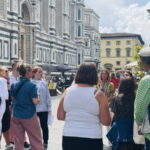
One possible drawback: hearing can get tricky once you’re in busy plazas. If you’re far from the guide, you might miss details—so try to stay near the front and keep an eye on how loud your surroundings are.
In This Review
- Key things to know before you go
- The real value: a guided shortcut through Florence’s art center
- Stop-by-stop: Santa Maria Novella to Via de’ Tornabuoni
- Piazza della Repubblica: where the Roman thread shows
- Santa Maria del Fiore complex: the big names and the one extra ticket
- Orsanmichele church and museum: sculpture you can name
- Piazza della Signoria: the outdoor museum effect
- Santa Croce and Dante: a meaningful finish without dragging time
- Price and logistics: why this deal feels almost too good
- Guides, pacing, and what to expect on the ground
- Who should book this express Florence art walk?
- Should you book this walking tour?
Key things to know before you go
- Express route, morning pace: A compact loop built for getting oriented fast.
- All the major sight categories: Churches, sculptures, Medici-era landmarks, and the Duomo complex.
- Small group size: Up to 20 people, which makes the walk feel manageable.
- Some admissions are free, one big exception: Duomo-area entry is not included.
- English-language guiding: The tour is offered in English.
- Audio depends on where you stand: In loud squares, location matters for hearing.
The real value: a guided shortcut through Florence’s art center
Florence is gorgeous, but it can also be chaotic. Signs look similar, streets twist, and it’s easy to spend an entire morning reading your map like it’s a novel. This tour is designed to solve that problem with a clear route and a leader doing the heavy lifting for you.
At $3.63 per person for roughly 2h15, it’s the kind of deal that makes you double-check you read it right. The goal is not a slow museum crawl. It’s a “get your bearings” walk that still gives you context—so when you come back on your own, you’ll know what you’re looking at.
The group size is capped at 20, which matters more than people think. Smaller groups keep you from getting stretched out across multiple corners, and that’s especially helpful in Florence’s tight pedestrian streets. The tour is also mobile-ticket based and offered in English, so you’re not juggling paperwork.
You can also read our reviews of more walking tours in Florence
Stop-by-stop: Santa Maria Novella to Via de’ Tornabuoni
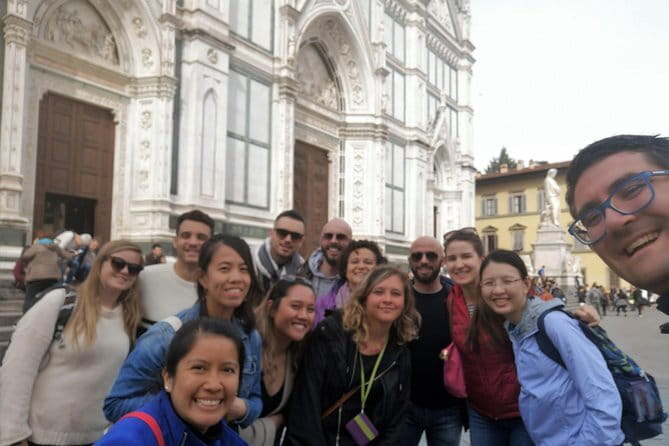
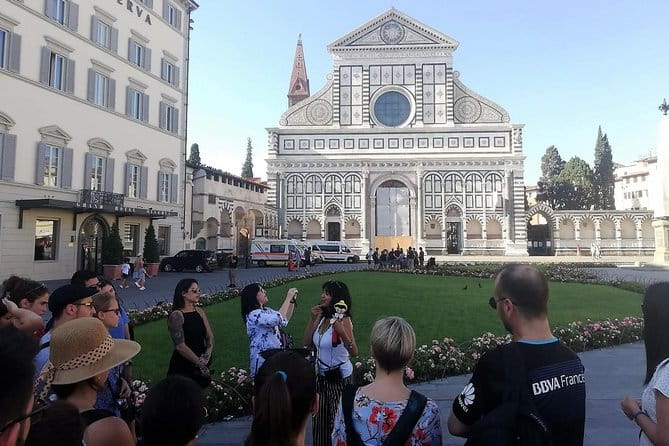
The walk starts at P.za di Santa Maria Novella, 4n at 10:30 am. From there, you begin with Basilica of Santa Maria Novella, a great first stop because it sets the tone for what comes next: Florence’s mix of religion, politics, and art you can actually see.
You’ll spend about 10 minutes here. The emphasis is on storia della chiesa—in plain terms, you learn what the building is, why it mattered, and what to notice as you move through the area. Even if you don’t go inside later, you’ll leave with a better sense of why this neighborhood is a starting point for so many visitor routes.
Next comes Via de’ Tornabuoni (and nearby stops like Piazza Antinori, the shopping streets, Palazzo Strozzi, and Piazza Santa Trinita). This part of the walk is useful because it shows Florence as a living city, not just a postcard. You’re not only collecting monuments; you’re seeing how grand buildings and elegant streets sit side-by-side with everyday street life.
The tradeoff is time. This section is built to be fast—great for orientation, less great if you want to sit and linger. Still, 10 minutes here can give you enough context to know what you’re passing: Strozzi as a power symbol, Santa Trinita as another key piece of the local story, and the whole street as a corridor of status.
Piazza della Repubblica: where the Roman thread shows
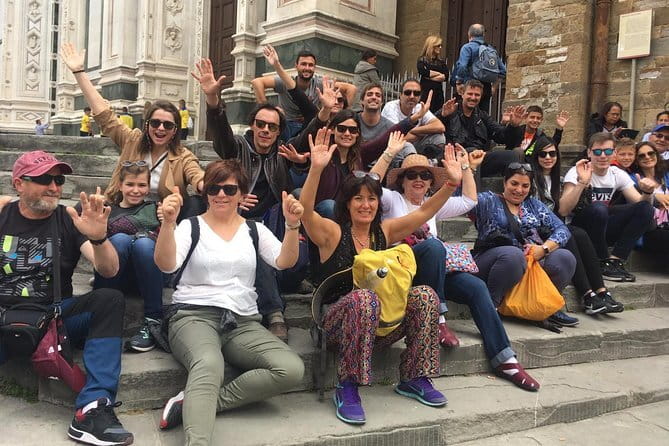
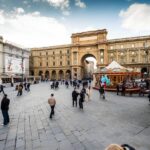
Then you hit Piazza della Repubblica for about 5 minutes. This stop is short by design, but it’s a smart one: you get a quick look at how Florence’s identity stretches back into Firenze Romana.
What’s valuable here is the mental shift. Many people come to Florence thinking it begins in the Renaissance. A brief Roman connection helps you understand why the city feels layered—why streets and plazas feel like they were “chosen” over and over across centuries.
If you’re the type who likes to take your time, you might wish this were longer. But for an express morning, that’s also the point: you’re building a map in your head, not checking off a to-do list.
Santa Maria del Fiore complex: the big names and the one extra ticket
Your next landmark is the Cathedral of Santa Maria del Fiore zone. Plan for about 10 minutes, and do note this: admission is not included for this stop.
That’s not a downside if you plan ahead. The Duomo complex is one of the most famous places in the city, and it has multiple entry points and ticket types. Not including admission keeps the tour price low, but it also means you have to decide what you personally want to see later.
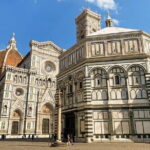
During this stop, the focus includes the Battistero, the Campanile di Giotto, and the Cupola del Brunelleschi. You’ll get a quick guided “what is what” so the first time you look up, you’re not just admiring a skyline—you’re reading it.
Practical tip: this area is where Florence gets crowded. If your hearing was already marginal earlier, it may be even tougher here. Stay close to your guide, and don’t be afraid to step to the side of the crowd when you need a better line of sight.
Orsanmichele church and museum: sculpture you can name
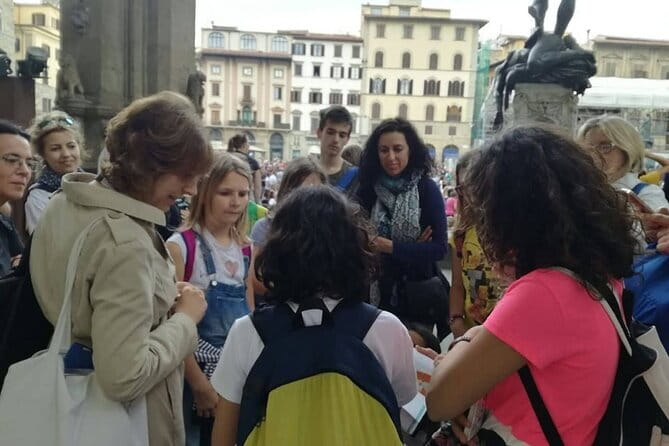
One of the tour’s strongest art moments comes at Orsanmichele (church and museum). You’ll spend about 10 minutes here, with a focus on sculpture and artists you’ll actually recognize.
The tour highlights statue di Donatello and works connected to Ghiberti and Giambologna, plus other named artists such as Brunelleschi, Verrocchio, Sangallo, and Orcagna. That list might sound like a class syllabus, but in practice it’s helpful. It gives you a set of reference points, so you can connect what you see in Florence to who made it.
This is also a stop with payoff because the sculptures are tied to Florence’s guild and civic identity. You’re not only looking at art; you’re seeing how art functioned as public messaging.
The pacing here is the main limitation. Ten minutes is enough for the “I get it now” level, not enough for the “I could spend an hour in every corner” level. If you want to go deeper, treat this stop as your scouting mission.

Piazza della Signoria: the outdoor museum effect
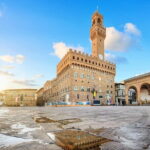
Next you step into Piazza della Signoria, where the group spends about 15 minutes. This is where Florence starts feeling like an outdoor gallery.
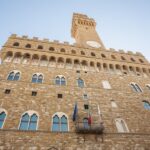
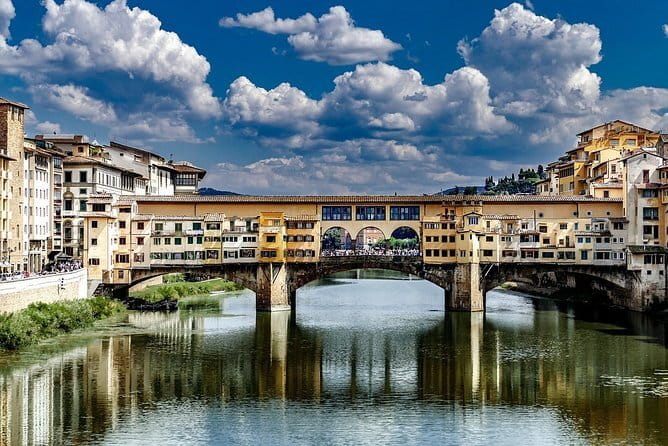
You’ll get references to Palazzo Vecchio, the Uffizi area, Ponte Vecchio (as seen from the broader view), and Loggia de’ Lanzi. The tour also calls out specific statues and monuments such as David, Marzocco, Cosimo de’ Medici, Perseo, and Cellini, plus the Torre di Arnolfo.
Even if you’ve seen photos of these pieces, a guided walk helps you place them in context. Why is David here? What does the placement say? How do political power and art get staged in public space? That kind of “why” is what turns a square into a story you remember.
There’s a fun practical angle too. This part of the walk is where Florence’s density becomes real—street performers, crowds, and people stopping to take pictures. That can make hearing tougher, but it also makes the experience feel authentic. You’re not in a quiet museum wing. You’re in Florence.
Santa Croce and Dante: a meaningful finish without dragging time
You end at Piazza di Santa Croce, 18R, about 10 minutes at Basilica of Santa Croce. This is a good way to close the loop because it brings you back to Florence’s cultural center in a softer, more reflective mood than some of the power-saturated earlier stops.
The tour includes storia della basilica and the monumento a Dante. That pairing matters. It’s one thing to see famous sites; it’s another to connect Florence’s art world to writers and ideas people still read today.
If you want to keep your momentum after the tour, Santa Croce is a solid base area to continue exploring. You’re not walking away from the city’s core; you’re landing in one of its most historically meaningful zones.
Price and logistics: why this deal feels almost too good
Let’s talk money and what it buys you. The tour lists at $3.63 per person and runs about 2h15. That’s the kind of price that usually comes with either a tradeoff (very short stops, rushed info, limited guiding) or a very specific value proposition.
Here, the value comes from structure: a pre-built route connecting major landmarks, plus an English-speaking leader to explain what you’re seeing. You’re also not paying extra for most stops, since several are marked as admission ticket free (Santa Maria Novella, Via de’ Tornabuoni area sites, Piazza della Repubblica, Orsanmichele, and Piazza della Signoria, and Santa Croce). Only the Duomo-area admission is explicitly not included.
One more reason it feels fair: the tour limits group size to 20, and short time slots like 5 to 15 minutes force focus. You’re not wandering for an hour to find the next photo spot. You’re moving, learning, and resetting.
Small caution: a few people mention audio challenges in busy spaces. The good news is you’re not stuck if you adjust your position. Staying nearer the guide and avoiding the back of the group is an easy fix.
Guides, pacing, and what to expect on the ground
The experience seems to shine when you get a leader who makes Florence feel like it’s a living place. Names that show up in the tour’s guide lineup include Ludi, Ludovica, Natalia, and Ryan. Across those guides, the common theme is clear: they connect art and architecture to how Florentines lived and ruled—especially through Medici-era context and the meaning behind sculpture placement.
Pacing also matters here. On hot days, a good leader will try to manage shade breaks. If your main goal is comfort while still seeing a lot, you’ll appreciate a guide who can keep the group together without turning it into a sprint.
Audio is the wildcard. Florence is loud, and squares are echo chambers. A mini-speaker can help, but it doesn’t beat physics. If you’re sensitive to sound, plan to stand where you can hear clearly. If you notice you can’t, shifting a few steps can make a big difference.
Who should book this express Florence art walk?
This tour is ideal when you want a fast, guided orientation. If it’s your first time in Florence and you want to understand what makes the city matter—religion, politics, art, and civic power—this is a strong match.
It’s also a good choice if you like practical planning. You’re spared the map-and-guidebook scramble, and the route covers multiple “types” of Florence in one morning: churches, sculpture-rich stops, palace-adjacent squares, and the Dante finish.
People who might need to adjust expectations:
- If you want to spend long minutes inside major sites, you’ll likely still need a second visit on your own (since Duomo admission isn’t included).
- If you hate crowds, the Duomo and Signoria areas may feel busy.
- If you’re a distance-hearing person, go early in the group line so you’re closer to the guide.
Should you book this walking tour?
Yes—if your goal is a guided Florence starter kit in the real center of the action. This works especially well for first-timers because it links the big names (Duomo complex, Orsanmichele sculptures, Piazza della Signoria) to what you should notice, not just what you should photograph.
Book it if you want value, an English-speaking leader, and a route that finishes near Santa Croce so you can keep exploring afterward. Skip it only if you need lots of time inside the Duomo complex or you know you’ll struggle in noisy public squares and you can’t position yourself well.
If you’re trying to decide between wandering alone and getting context fast, this is the kind of morning walk that makes your next hours in Florence easier.