REVIEW · BRUSSELS
Historical Walking Tour: The Story of Brussels – by Legends
Book on Viator →Operated by Legends of Bruges Free & Private Tours · Bookable on Viator
Brussels has a way of telling stories in stone. This walking tour strings the city’s landmarks into a single, easy-to-follow narrative, with a guide waiting for you right at Grand Place under a red umbrella. I like tours that help me connect the dots fast, and this one does that by bouncing between royal power, everyday whimsy, and big public spaces.
Two things I’d highlight right away: you get a smart mix of famous stops and local details, and you finish with a payoff view from Mont des Arts. I also like that so many stops are listed with free admission time, so you’re not constantly digging for tickets or paying extra to keep the tour moving.
One consideration: it’s weather-dependent. The itinerary works outdoors and the operator notes poor weather can trigger a cancellation, so I’d plan to wear layers and keep a flexible mindset if the forecast looks rough.
In This Review
- Why This Walk Feels Like a Real Brussels Orientation
- Meeting Point at Grand Place: How This Tour Sets You Up Fast
- Stop by Stop: What You’ll See and Why It Matters
- 1) Grand Place: Guildhalls, Town Hall, and the City’s Big Moment
- 2) Comic Art Museum (Brussels): Tintin, the Smurfs, and Local Pride
- 3) Manneken Pis: The Little Statue With a Serious Backstory
- 4) Church of St Nicholas: 12th-Century Roots and Wealth in the Details
- 5) La Monnaie – De Munt: Opera House Grandeur Without Needing a Ticket
- 6) Les Galeries Royales Saint-Hubert: Old Arcade Shopping With Classic Character
- 7) Saint-Géry Island: From Old Market Area to Modern Hangout
- 8) St. Michael & St. Gudula Cathedral: Brabant Gothic and Local Legends
- 9) Parc de Bruxelles: Royal Park Calm Between Big Institutions
- 10) Royal Square Area: King Albert I and Neoclassical Power
- 11) Mont des Arts: Your Final View Over Brussels
- Guides Matter: What You Can Expect From the Human Side
- Value Check: $3.62 Per Group for a 2.5-Hour Brussels Primer
- How to Plan Your Day Around This Tour
- Should You Book This Brussels Legends Walk?
- FAQ
- What is the tour price and group size?
- How long is the walk?
- Where do I meet the guide?
- Is it offered in English?
- Are any admissions included?
- What if weather is bad?
Why This Walk Feels Like a Real Brussels Orientation
- Grand Place as your launch pad: meet at Grote Markt, right by the Town Hall area, then get your bearings before heading out.
- Comics and history in the same route: you’re not only seeing old buildings—you’re also picking up why Brussels loves Tintin, the Smurfs, and street-style storytelling.
- Legends you can point to: stops like Manneken Pis and St. Michael & St. Gudula Cathedral are explained with the kind of local lore that makes photos more meaningful.
- A practical 2.5-hour format: the pacing is built for first-time visitors who want highlights without losing the whole day to walking.
- Small-group energy: capped at 35 travelers, plus a professional local guide setup, so you get help when you ask questions.
Meeting Point at Grand Place: How This Tour Sets You Up Fast
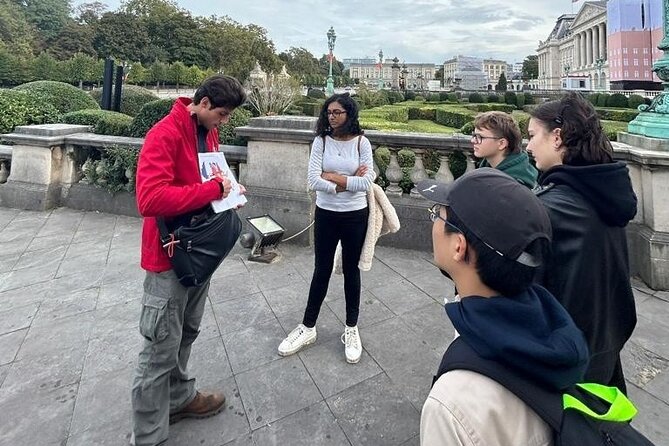
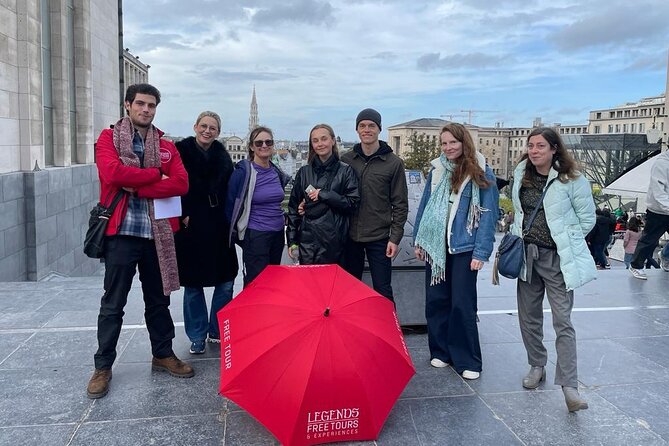
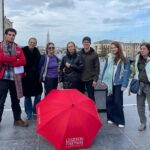
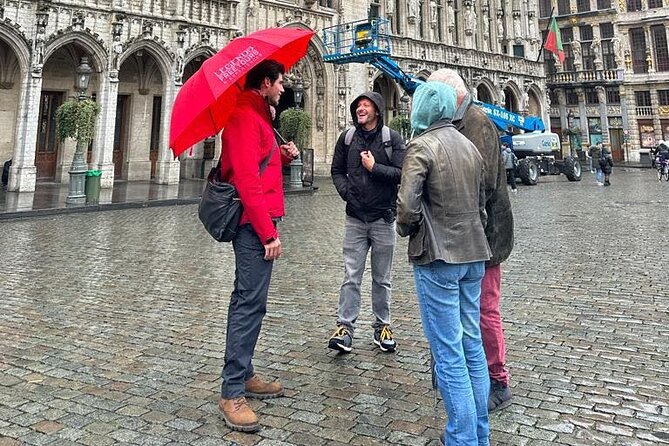
Start your morning (or afternoon) at Grote Markt, Brussels’ main square. The guide meets you in front of the city hall with a red umbrella, which is a small detail but a big stress-saver. You’ll spend the first minutes getting oriented, which matters in a city where the streets can feel close together but the landmarks are spread in clever ways.
Grand Place is a UNESCO World Heritage site and that label isn’t just paperwork. This square is known for its guildhalls and the Town Hall, a mix of Gothic and Baroque looks that creates that classic Brussels wow-factor. Even if you’ve seen photos, being there in person helps you understand why locals treat this square like a living room.
A practical note: the tour is English-offered and uses a mobile ticket, so bring your phone battery. It’s also close to public transportation, which helps if your day includes other sights.
You can also read our reviews of more walking tours in Brussels


Stop by Stop: What You’ll See and Why It Matters
1) Grand Place: Guildhalls, Town Hall, and the City’s Big Moment
Grand Place is the kind of place that makes you stop walking without meaning to. If your attention usually slips on first stops, aim to lock in for these first 15 minutes. You’re learning the “why” behind what you see—who built what, and how the square reflects civic pride.
You’ll also get your first taste of the tour style: quick context, then you’re asked to look closely at details. That approach pays off later when you hit places where the legend is tied to something physical you can still point to.
2) Comic Art Museum (Brussels): Tintin, the Smurfs, and Local Pride
Brussels is famous for comic strips, and this stop helps you understand it beyond murals. You’ll connect the dots between the city’s playful side and its real cultural identity. Tintin and the Smurfs show up as more than decoration here—they’re part of a comic tradition that feels deeply local.
What I like about this inclusion is simple: it widens your idea of what a “historical” walking tour can cover. This isn’t only medieval stuff and royal buildings. It’s also about modern Brussels using art to tell stories.
If you’re a fan of comics, you’ll probably enjoy this stop more than you expect. If you’re not, you can still appreciate it as a lens for how Brussels talks about itself.
3) Manneken Pis: The Little Statue With a Serious Backstory
Manneken Pis is small, but the attention it gets is huge. You’ll meet the bronze boy and get the context: it dates back to the 17th century and has become an iconic Brussels landmark.
This is the kind of stop that turns into a fun photo moment and a useful memory anchor. Later, when the tour explains other legends, you’ll see how Brussels uses symbols—some official, some oddball—to keep its identity vivid across centuries.
If you hate standing around in tourist clusters, treat this as a quick stop. Give it a minute or two for photos, then move on while the tour momentum stays smooth.


4) Church of St Nicholas: 12th-Century Roots and Wealth in the Details
Next up is the Church of St Nicolas. It’s one of the oldest churches in Brussels, with foundations laid in the 12th century. That alone makes it worth a glance, but the tour also focuses on how the church used to carry the one and only belltower of Brussels.
That idea—one belltower as a signal of wealth and independence—helps you read the city’s power dynamics in a new way. This isn’t only about architecture. It’s about how communities used public structures to announce status.
Keep expectations realistic: churches are often quieter and more reflective than squares. If you prefer louder public spaces, you might find this stop calmer than you’d like. It’s still a strong story stop.
5) La Monnaie – De Munt: Opera House Grandeur Without Needing a Ticket
La Monnaie, the Théâtre Royal de la Monnaie, is known for opera performances and for its architectural presence. Even if you don’t attend a show, the building gives you context for Brussels’ cultural life—how the arts took physical form and became part of the city’s image.
This is a good transition stop. You’ve moved from medieval and legendary symbolism into something more civic and cultural. By the time you reach this point, the tour’s theme of power and identity starts to feel consistent.
If you’re into performance arts, this stop may spark plans for later. If opera isn’t your thing, you can still appreciate the building as a statement of taste and ambition.
6) Les Galeries Royales Saint-Hubert: Old Arcade Shopping With Classic Character
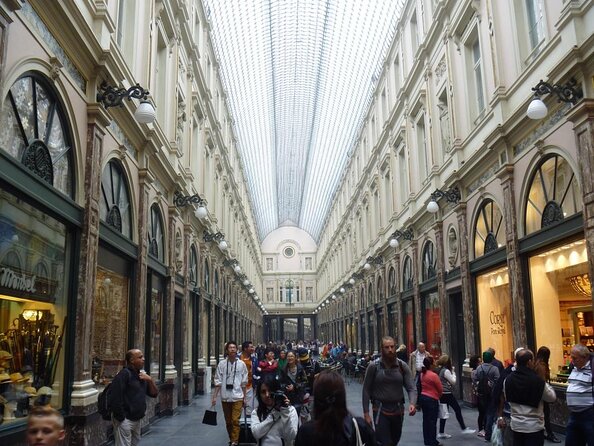
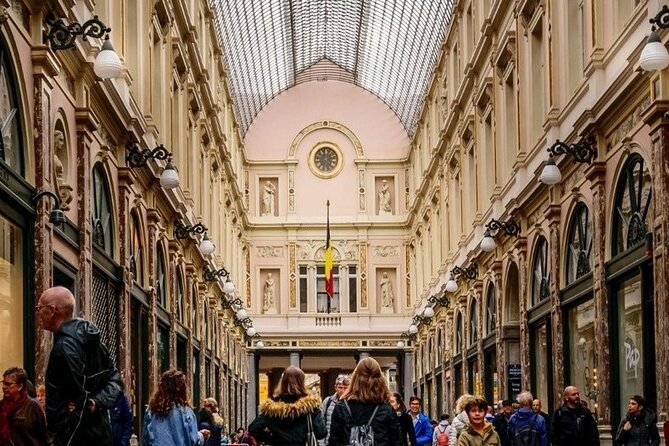
Les Galeries Royales Saint-Hubert is one of the world’s oldest shopping galleries, and that’s the kind of fact that changes how you look around. You’ll see how the arcade concept created a covered, stylish route for strolling, shopping, and watching life happen.
The gallery is known for luxury boutiques, theaters, and cafes. On a walking tour, this stop works because it blends architecture with daily rhythm. Even if you don’t stop to buy anything, you get a clear snapshot of how Brussels mixes elegance with ordinary use.
One practical consideration: arcades can be busy at peak times. If you want room to breathe, pay attention to timing. This tour’s pace is designed to keep you from lingering too long, which helps.
7) Saint-Géry Island: From Old Market Area to Modern Hangout
Saint-Géry Island is described as a trendy district with bars, restaurants, and cultural spaces, located in a former market area. This is where Brussels feels most like a living city rather than a museum of monuments.
Why this stop matters on a history-style tour: it shows continuity. Places that once served one function often shift roles but keep their bones—streets, river edges, and public spaces—long enough that the past still shapes the present.
If you’re planning your evening, you’ll leave with a useful neighborhood idea. If nightlife is not your thing, you can still appreciate the area as a sign of where people gather now.
8) St. Michael & St. Gudula Cathedral: Brabant Gothic and Local Legends
St. Michael & St. Gudula Cathedral is a major stop and it has that classic Brussels Gothic feel. You’ll learn it was built in Brabant Gothic style, taking you back to the 13th century, and you’ll hear legendary tales tied to the cathedral.
This is one of the most satisfying stops if you love stories attached to buildings. A cathedral is already visually impressive, but the legend layer helps you feel like you’re learning meaning, not just shapes.
If you prefer quiet sightseeing, you’ll probably enjoy the time here. If you rush through churches on your own, this stop is exactly the sort of place where a guide’s framing can slow you down in a good way.
9) Parc de Bruxelles: Royal Park Calm Between Big Institutions
Parc de Bruxelles is a green space between the Royal Palace and the Belgian Parliament. After a run of buildings and monuments, this is your reset button.
This park stop matters because it gives you a sense of scale. Brussels can feel dense, but parks remind you there’s breathing room built into the city plan—especially near political power.
If you’re traveling with kids or you just want to sit for a minute, this stop is where that works. Even though the tour time is brief, the location is ideal for a short pause and a quick regroup.
10) Royal Square Area: King Albert I and Neoclassical Power
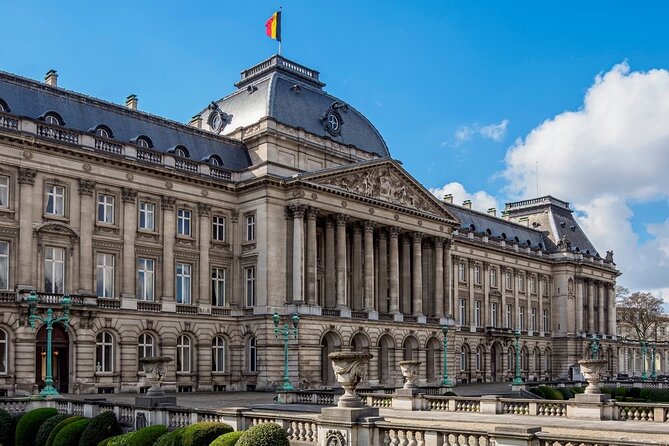
At the Rue Montagne de la Cour 2 area, the tour points you toward Royal Square and an imposing statue of King Albert I. You’ll also see neoclassical buildings, including the Royal Palace and the Belgian Parliament.
This is where the tour’s “story” becomes political, in the simplest sense. You’ll walk through the visible symbols of monarchy and state power, and it helps you understand why Brussels doesn’t just look old—it also functions as a seat of national identity.
This stop can feel more “street geography” than “stand and stare.” That’s okay. If you’re the type who likes to connect landmarks into a mental map, you’ll likely appreciate it.
11) Mont des Arts: Your Final View Over Brussels
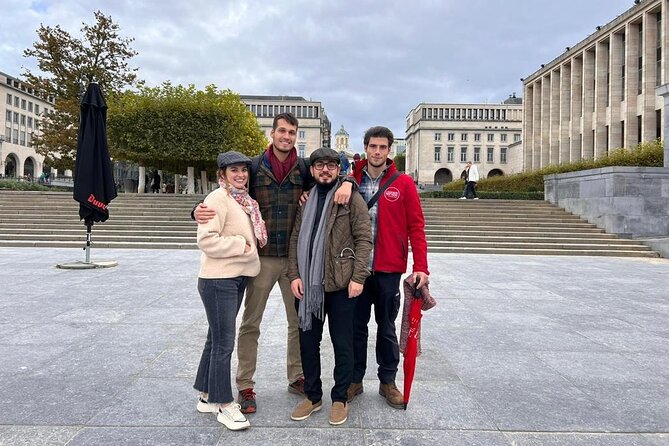
You end at Mont des Arts, on top of the Mount of Arts. The timing is about 15 minutes at the stop, and the big reward is the view over Brussels. It’s also close to the main square, which makes this a smart finishing point if you want to continue exploring on your own after the tour.
You’ll leave with a picture you’ll probably use later when you compare neighborhoods or decide where to go next. For me, ending with a viewpoint is one of the best ways to make the whole walking route “click.”
If the weather is clear, this stop is pure payoff. If it’s gray or windy, dress for it and treat the viewpoint as still worth it—even partial visibility can help you orient yourself.
Guides Matter: What You Can Expect From the Human Side
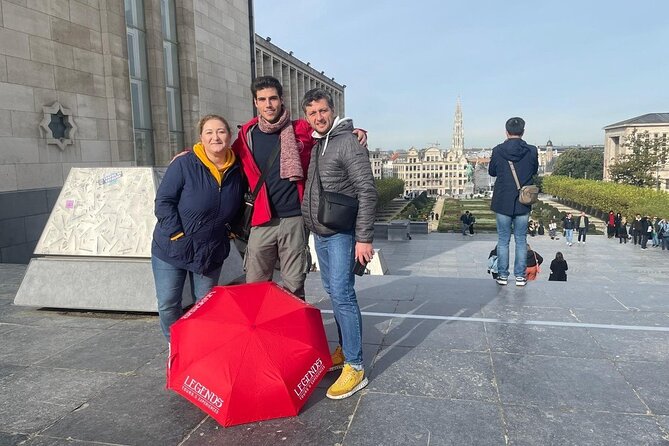
The guides are a big part of why this experience scores so high. The tour has multiple guides across dates, and names like Dan, Julien, Isabella, Rita, Patrick, and Pablo have been connected to standout experiences. People consistently praise guides for making the history feel clear and for sharing extra local tips, like food recommendations and practical sightseeing suggestions.
You might even catch small extras depending on the guide—for example, there’s mention of a chocolate taste and guided attention to details inside a church. You shouldn’t count on every add-on, but it’s a good sign that the guides pay attention to what your group wants to see.
One more thing: the tour is designed to be light and readable, not a lecture marathon. That balance is ideal when you want depth without feeling overloaded.
Value Check: $3.62 Per Group for a 2.5-Hour Brussels Primer
The price is listed as $3.62 per group up to 6. That pricing structure is the first reason this can feel like strong value: if you’re a small group, you often get the benefit of a guided walk at a cost that feels almost too low compared to typical private or ticketed tours.
You’re also not just paying for movement—you’re paying for a guide who connects monuments, landmarks, and legends into a single route. That kind of storytelling can save you time later. Instead of wondering what you’re looking at, you’re leaving with a usable framework for where to go next.
Two practical ways to judge value for yourself:
- If you’re visiting for the first time and you want highlights without hours of planning, the structure is a win.
- If you already know the city well and you hate walking tours, you may feel the value is less obvious.
But for most first-timers, this is the type of “orientation plus stories” deal that pays off within the same day.
How to Plan Your Day Around This Tour
Because you start at Grand Place and finish near the main square, you can treat this as the opening chapter of your trip. Schedule it early enough that the viewpoints and landmark connections still help you make decisions later.
A smart rhythm:
- Do the tour first, then choose one or two neighborhoods for deeper wandering.
- If you have tickets or timed entries later, keep a buffer after Mont des Arts so you don’t feel rushed.
Also, since admission is listed as free at the stops on the route, you can plan around the tour rather than hunting down separate entry rules for each monument.
Should You Book This Brussels Legends Walk?
I’d book it if you’re craving a clear, guided route that helps you understand Brussels quickly. It’s especially good if you like legends, comic culture, and public spaces where the city shows off its identity. The ending viewpoint gives you a natural stopping point that makes the rest of your trip easier.
I’d think twice if you’re very weather-sensitive or you hate outdoor walking in unpredictable conditions. Also, if you prefer long stays at just a couple of sites, the pace may feel like you’re always moving on.
If you want a fun, practical history-and-legend sampler from Grand Place to Mont des Arts, this is a solid pick.
FAQ
What is the tour price and group size?
The tour costs $3.62 per group and is listed for groups of up to 6.
How long is the walk?
The tour lasts about 2 hours 30 minutes.
Where do I meet the guide?
You start at Grand Place (Grote Markt, 1000 Brussel, Belgium). The guide meets you in front of the city hall with a red umbrella.
Is it offered in English?
Yes, the tour is offered in English.
Are any admissions included?
The itinerary shows admission ticket free at the stops listed, and the tour includes all fees and taxes.
What if weather is bad?
The experience notes it operates in all weather conditions, but the cancellation policy also says it requires good weather and may be canceled due to poor weather, with a different date offered or a full refund.