REVIEW · BRISTOL
Bristol: Blackbeard to Banksy Guided Walking Tour
Book on GetYourGuide →Operated by Blackbeard to Banksy - Walking tour · Bookable on GetYourGuide
Street art meets real history. This 2-hour walk ties Banksy to Bristol’s past, from the 12th-century cathedral area through the harbor. It’s built for people who want a quick, guided way to understand why Bristol looks the way it does today.
I especially like the balance: you get short, guided looks at landmarks (cathedral, churches, the Cenotaph, St Nicholas Market) and then rapid hits at art spots like Banksy’s Well Hung Lover. Another big win is the guide delivery style I’ve heard again and again, with names like Owen, Henry, Luke, and Mike showing up for clear, funny storytelling and an easy walking pace that fits mixed ages, including teens.
One thing to consider: you’ll be on old-city cobbles, and there’s one set of steps that can be avoided if needed. So wear grippy shoes, and if you use a mobility aid, plan to mention your needs upfront.
In This Review
- Key things that make this Bristol tour worth your time
- Entering Bristol through street art and 1000 years of layers
- Meeting at Bristol Cathedral on College Green: a 12th-century starting point
- Banksy’s Well Hung Lover: how the guide helps you read street art
- Hatchet Inn to St John’s Church: the route keeps changing your perspective
- WWII scars at the Norman castle site: why the history part hits
- Markets and mural spotting: Nelson Street and St Nicholas Market
- Castle Park, Bristol Bridge, and the photo-stop rhythm
- Queen Square to Llandoger Trow: connecting names to places
- The Matthew of Bristol and the Arnolfini finale
- Price and value: what $17 buys in two focused hours
- Who this tour is best for (and who should choose something else)
- Practical tips before you go
- Should you book the Bristol Blackbeard to Banksy guided walking tour?
- FAQ
- How long is the Bristol Blackbeard to Banksy guided walking tour?
- Where does the tour start and where does it end?
- How much does the tour cost?
- What languages are the tours offered in?
- Will I see Banksy artwork on the route?
- Is the walking tour wheelchair accessible?
- What should I bring?
- Is the route difficult because of steps or uneven ground?
- Can I cancel for a full refund?
Key things that make this Bristol tour worth your time
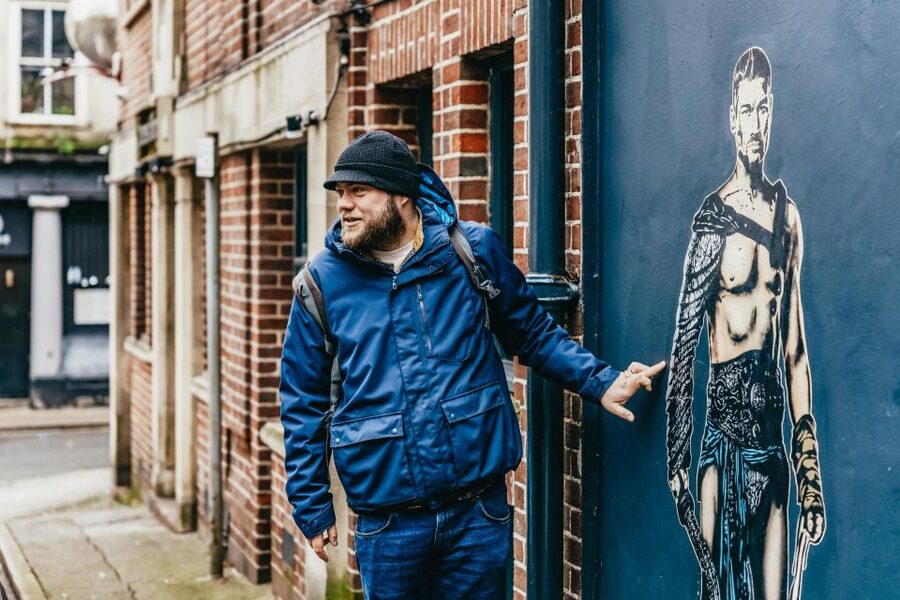
- Banksy stop is specific: you’ll visit the well-known work called Well Hung Lover.
- You cover more than murals: churches, markets, monuments, and the harbor all show up in the route.
- WWII evidence is part of the story at the Norman castle site area between the River Avon and River Frome.
- The route ends at the harborside with a finish at Arnolfini, so you get a satisfying finale.
- Mostly easy walking, with one stepped section you can work around if necessary.
- 2 hours for $17 makes it one of the easiest “yes” choices for a short Bristol stay.
Entering Bristol through street art and 1000 years of layers
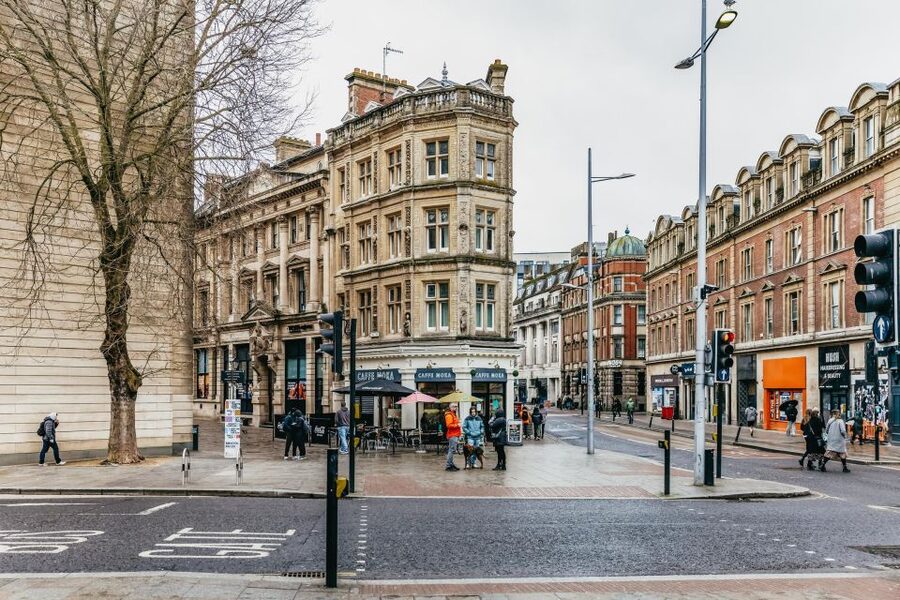
This tour works because it doesn’t treat street art as a separate hobby. Instead, the guide connects it to the city’s long memory—trade, politics, war, and reinvention—so the murals feel like part of Bristol, not decoration pasted on top.
You start with a sense of place right away, not with abstract facts. Bristol Cathedral anchors the beginning, and then the route keeps switching scales: a medieval building here, an art face-on moment there, then a wider city view at bridge and park photo stops.
If you only have a day (or even half a day), this kind of guided loop is a practical shortcut. You leave knowing what to look for on your own walks, not just having seen a few murals.
You can also read our reviews of more walking tours in Bristol

Meeting at Bristol Cathedral on College Green: a 12th-century starting point

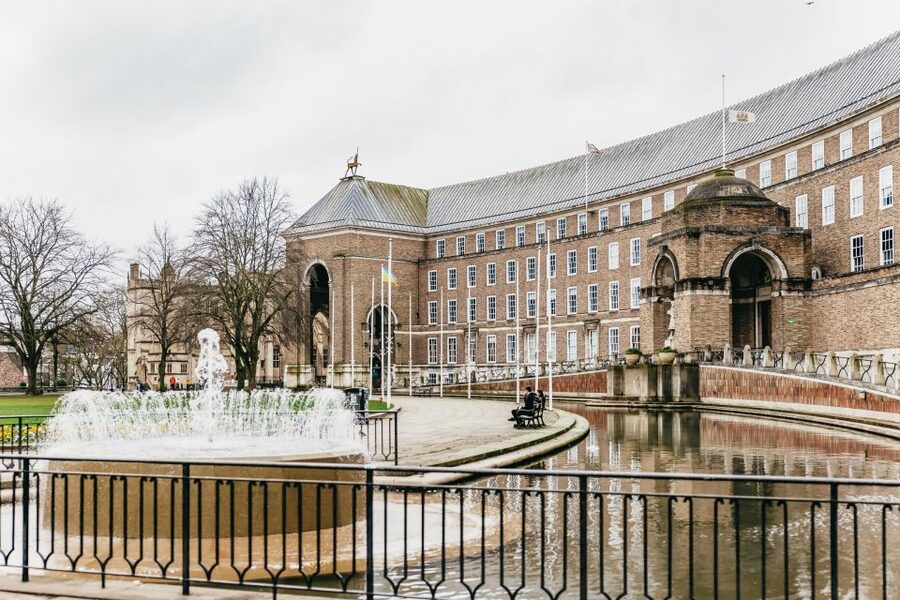
The tour meets in front of Bristol Cathedral’s main entrance on College Green. That matters because it sets the tone: this is a history-and-art walk, not a random street-art hunt.
You’ll get a guided visit at the cathedral for about 10 minutes. It’s not a long stop, so it won’t bog you down, but it gives you context for the medieval-era city center you’ll be moving through next.
From there, the pace stays brisk. You’re walking through the old core, and the guide keeps pulling threads together—origins of Bristol, how the city center took shape, and why certain spots matter when you’re trying to understand the city quickly.
Banksy’s Well Hung Lover: how the guide helps you read street art

One of the reasons this tour earns such high marks is how it treats Banksy like a doorway. You don’t just see a famous piece; you learn how Bristol’s creative scene fits into the wider story.
A dedicated stop is made for Banksy’s Well Hung Lover. It’s short (around 5 minutes), which is actually helpful for most people. You get the key details fast, then you move on before the group cools off or attention drifts.
What I like about this approach is that street art can be easy to misunderstand on your own. With a guide, you start noticing patterns—how artists comment on power, community identity, and everyday life. Even if you’re not a hardcore Banksy fan, the explanations make the walls feel like they’re saying something.
Hatchet Inn to St John’s Church: the route keeps changing your perspective
After the Banksy stop, the walk threads through several iconic landmarks. You’ll pass the Hatchet Inn, stop at the Cenotaph, and visit Centrespace, with quick guided comments along the way.
Then you’ll come to St John’s Church. You’re not spending long there either, but the brief look helps you see how the city’s religious buildings sit beside newer cultural scenes, including street art.
This section is also where you start feeling the structure of the tour. Short stops keep energy up, and you’re constantly recalibrating: art, architecture, public memorials, and community spaces in a tight sequence. It’s an efficient way to understand Bristol’s identity without turning the day into a marathon.
WWII scars at the Norman castle site: why the history part hits
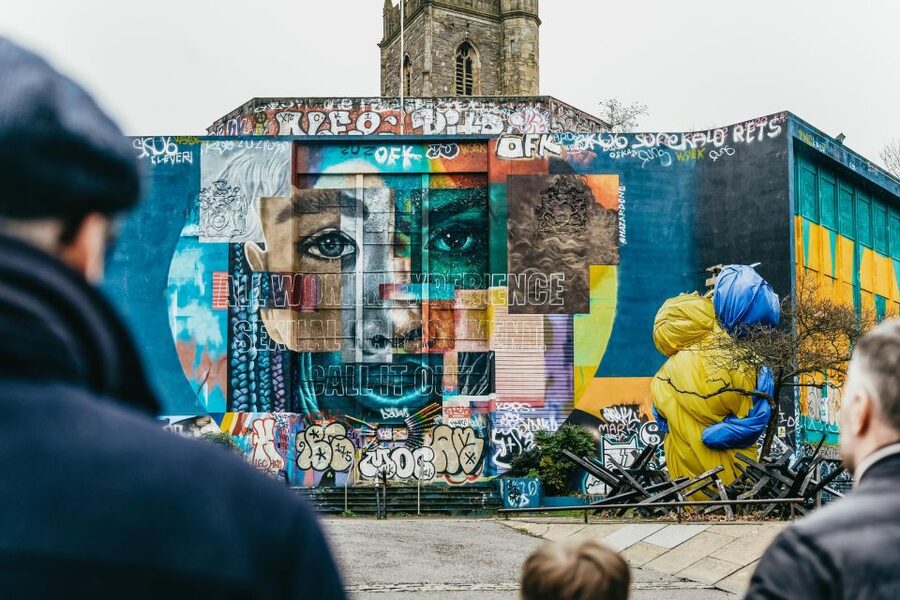
The tour’s history isn’t just medieval and tidy. You’ll move toward the Norman castle site, positioned between the River Avon and River Frome, and the guide points out evidence of blitz damage from the Nazis during the Second World War.
That’s a heavy topic, but it’s handled through place-based facts. Seeing wartime scars in the layout of a city makes the story more real than reading a paragraph on a sign.
This is one of the moments where the tour’s title makes sense beyond marketing. Blackbeard and Banksy are modern references, but they frame the bigger idea: Bristol’s identity is shaped by shock, reinvention, and adaptation.
You’ll also hear about bizarre echoes at some points along the way. Those small sensory moments are underrated, because they help you remember the route and recognize landmarks later when you’re on your own.
Markets and mural spotting: Nelson Street and St Nicholas Market
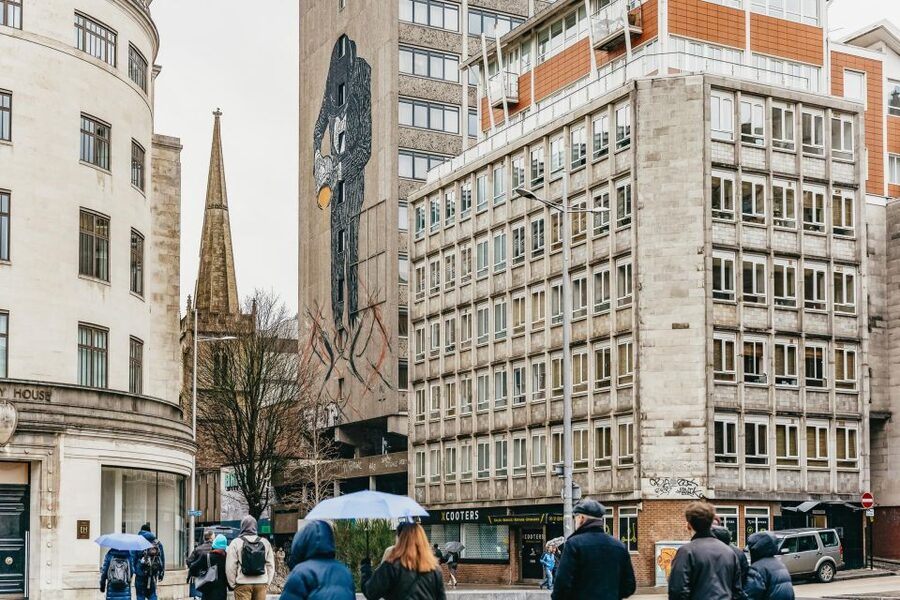
You’ll spend time around Nelson Street and St Nicholas Market, with guided visits for a bit longer at the market area. Nelson Street is a strong stop if you enjoy spotting art details beyond the headlines, because the city’s street scene can feel layered even block to block.
St Nicholas Market is included as a guided stop, around 10 minutes. It’s one of the places where a history-and-art tour becomes practical: after you see the murals and understand the context, a market is where you can actually slow down, browse, and turn the knowledge into a real Bristol experience.
Even if you don’t plan to shop, markets help you understand how the city lives day to day. And because this tour is only 2 hours, it avoids the trap of turning into a long shopping detour.
Castle Park, Bristol Bridge, and the photo-stop rhythm
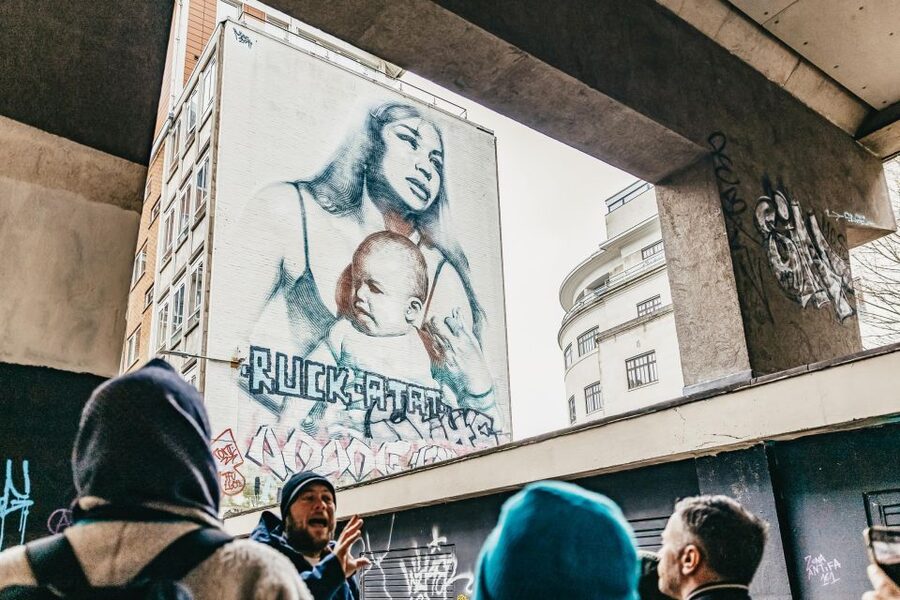
Midway through, you’ll hit a few photo stops, including Castle Park and Bristol Bridge. These are brief (about 5 minutes each), but they’re useful. They give you breathing room and help you connect what you just heard with what you can see.
Photo stops also do something psychologically helpful: they make the route feel doable. You don’t have to keep your eyes locked on tiny details the whole time, and you get a chance to reorient with wide views.
From a practical standpoint, bring a phone with storage or be ready to delete a few photos. Street art and views move fast, and you’ll want quick snapshots of both the skyline/bridges and the art moments you pass close up.
Queen Square to Llandoger Trow: connecting names to places
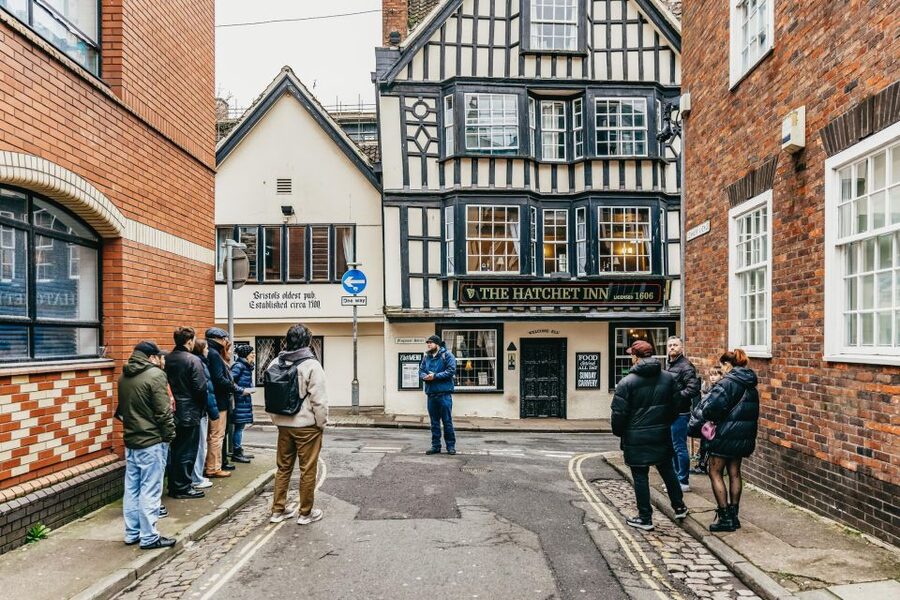
The walk continues through Queen Square and then to Llandoger Trow. These stops help link the stories the guide tells—names and cultural references—to actual physical locations you can revisit later.
Queen Square is another reminder that Bristol’s public spaces matter. It’s where the city becomes readable as a set of connected zones: squares and churches in one band, markets in another, and the harbor closing the loop.
Then Llandoger Trow brings the tone back toward maritime legend and city lore. That’s where the Blackbeard side of the tour title starts to feel less like a gimmick and more like a thread tying Bristol’s sea past to its present-day identity.
The Matthew of Bristol and the Arnolfini finale
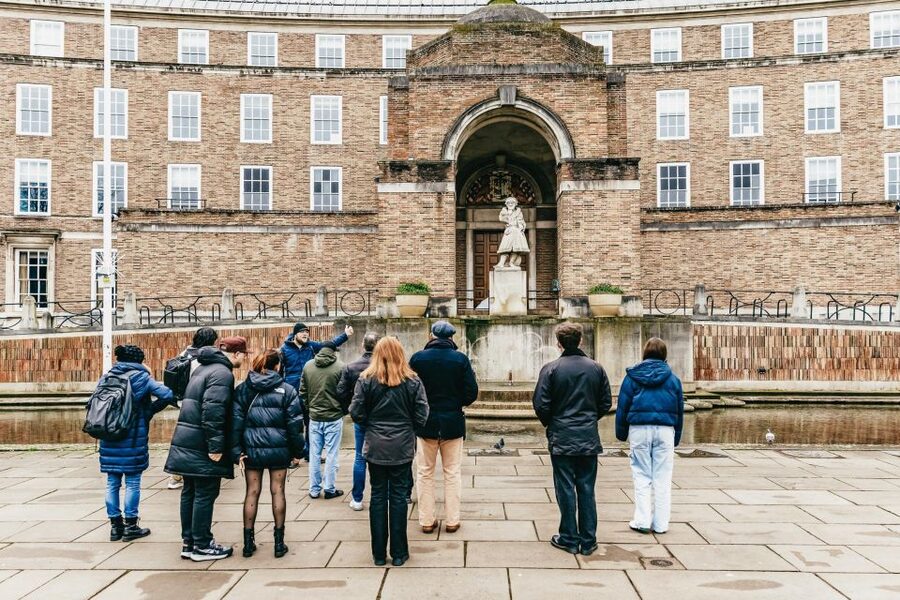
The tour ends on the harborside, finishing at Arnolfini. Before that, you’ll have stops such as Pero’s Bridge and The Matthew of Bristol, each with brief guided time (often around 5 minutes).
Ending at Arnolfini is a smart choice for two reasons. First, it gives you a clear conclusion point you can navigate from after the walk. Second, the harbor area naturally supports the tour’s two halves—old Bristol stories and modern creative energy—right next to each other.
This finale also sets you up for what to do next. If your schedule allows, you’ll likely want to keep exploring in the same area after the tour, because the guide’s context makes the waterfront feel like part of a living story, not just a scenic backdrop.
Price and value: what $17 buys in two focused hours
At around $17 per person for a 2-hour guided walk, this is strong value if you’re short on time. You’re not just getting a couple of photos and a route map. You’re getting guided storytelling across multiple landmark types—cathedral, churches, memorials, market space, river-adjacent history, and street art.
Most importantly, the guide doesn’t treat Banksy as a standalone headline. The explanations connect it to Bristol’s civic and historical background, including WWII damage and the city’s longer timeline back through the medieval center.
For visitors who are trying to do Bristol in a single day (or who want an easy start before adding your own plans), this is the kind of ticket that can save you time. You’ll know what to look for on your next walk without needing a second guide.
Who this tour is best for (and who should choose something else)
This tour is ideal if you:
- Want a first-time overview that mixes street art + city history.
- Like guided stories told with humor and a steady pace, rather than long museum-style stops.
- Have limited time and still want a route that covers multiple Bristol neighborhoods.
It’s also a good pick for families and teens, since the walk is paced and designed for mixed attention spans. The main limitation is the walking surface. If cobbles and one set of steps are hard for you, bring supportive shoes and plan to ask for the step-avoidance option.
If you only want deep study of a single topic—either street art theory or medieval architecture—you might prefer a more specialized tour. But for most people trying to understand Bristol fast, this hits a useful middle ground.
Practical tips before you go
Wear comfortable shoes. The old-city cobbles can be uneven, and there’s at least one stepped section that can be avoided if necessary.
Bring weather-appropriate clothing. Bristol weather can shift quickly, and this tour stays outdoors while you move between stops.
If you care about photography, expect multiple chances: there are photo-stop moments around Castle Park and Bristol Bridge, plus close-up street art stops like Well Hung Lover and other mural areas. A fully charged phone helps.
Also, listen closely during the art explanations. The tour’s strongest moments are when the guide turns a wall into a story you can carry afterward.
Should you book the Bristol Blackbeard to Banksy guided walking tour?
Yes, if you want a fast, guided way to understand Bristol’s identity—street art plus serious history—without spending half your day in transit. The route is short enough to fit a day plan, but broad enough to make you feel like you saw the city’s key layers.
I’d especially recommend it if you value a clear, funny guide style. Guides like Owen, Henry, Luke, and Mike come up repeatedly for being engaging, easy to follow, and good at keeping momentum.
Book it if you’re comfortable on cobbled streets and can manage a short section of steps, or if you’re able to request the step-avoidance route. If that part is a concern, still consider booking, just plan your needs around the tour’s old-city terrain.
FAQ
How long is the Bristol Blackbeard to Banksy guided walking tour?
It lasts 2 hours.
Where does the tour start and where does it end?
It starts in front of Bristol Cathedral’s main entrance, and it finishes at Arnolfini.
How much does the tour cost?
The price is $17 per person.
What languages are the tours offered in?
The tour is in English.
Will I see Banksy artwork on the route?
Yes. The tour includes a stop at Banksy’s Well Hung Lover.
Is the walking tour wheelchair accessible?
Yes, it is wheelchair accessible.
What should I bring?
Bring comfortable shoes and weather-appropriate clothing.
Is the route difficult because of steps or uneven ground?
The route includes cobbled streets that can be uneven, and there is one set of steps that can be avoided if necessary.
Can I cancel for a full refund?
Yes. Free cancellation is available up to 24 hours in advance for a full refund.