REVIEW · BIRMINGHAM
Birmingham: Guided City Center Walking Tour (10:30am & 2pm)
Book on GetYourGuide →Operated by Walking Tours In · Bookable on GetYourGuide
Birmingham’s story fits in a walk. I love how this tour starts at St Philip’s Cathedral, so you immediately get Birmingham’s scale and ambition, and I love the way guides link grand buildings to day-to-day city life. In 1.5 hours, you’ll finish at Ikon Gallery, with a much clearer sense of where things are and why the city developed the way it did.
One thing to plan for: it runs rain or shine, and most of the time is spent outside. If you only have a short trip to Birmingham, you might also feel like the route skips a few big stops you hoped for, such as Bullring or the Jewellery Quarter.
In This Review
- Key things to look forward to
- Why this Birmingham city-centre walk feels efficient
- Meeting Point at Cathedral Square: find the orange jacket fast
- Cathedral Square and St Philip’s Cathedral: your orientation starts with English Baroque
- Broad Street: nightlife energy with an industrial-era backdrop
- Victoria Square and the civic core: Town Hall and Council House make sense on foot
- Chamberlain Square, Centenary Square fountains, and Hall of Memory
- Museum & Art Gallery and Baskerville House: the practical city details you’d miss
- Ikon Gallery finish: a strong landing pad for your next plans
- Price and timing: is $20 worth 1.5 hours?
- Who should book this walking tour
- One thing to watch: rain, short-route limits, and weather stamina
- Should you book this Birmingham walking tour?
- FAQ
- What is the duration of the Birmingham city center walking tour?
- How much does it cost per person?
- Where do I meet the guide?
- What if there is a ferris wheel in Cathedral Square?
- What sights are included on the walk?
- Does the tour run in bad weather?
- What should I bring?
- What language is the tour guide speaking?
- Is transportation included in the price?
- Can I cancel, and can I pay later?
Key things to look forward to
- A genuinely local guide voice that makes industrial-era Birmingham feel personal, not textbook
- St Philip’s Cathedral at the start in Cathedral Square, so the walk begins with an instant sense of place
- Broad Street on your route to understand why the city’s nightlife and city identity sit side by side
- Civic landmarks like Victoria Square plus Town Hall and Council House for real “city center” perspective
- Cultural stops that keep the walk moving through places like Symphony Hall and Ikon Gallery
- Small-group energy can happen when weather is rough, which can mean more chances to ask questions
Why this Birmingham city-centre walk feels efficient
Birmingham is one of those UK cities where the big story isn’t tucked in a single monument. It’s spread across squares, streets, and the spaces between them. That’s exactly why a guided walk works well here: you get the “why” behind the layout without waiting around.
This tour lasts 1.5 hours, which is the sweet spot when you want context but you still need time for museums, shopping, or just getting your bearings. You also walk through areas that show different eras of the city: religious architecture, civic power, late-night streets, and modern cultural venues.
At $20 per person, the value comes from the guide. The route hits major points of interest, but what you’re really buying is a local narrator who can connect them into one story. And the reviews make it clear that the best part is the human factor: guides like Peter, Philip, and Dee are described as friendly, funny, and full of city knowledge, with tips that go beyond the landmarks.
You can also read our reviews of more walking tours in Birmingham


Meeting Point at Cathedral Square: find the orange jacket fast
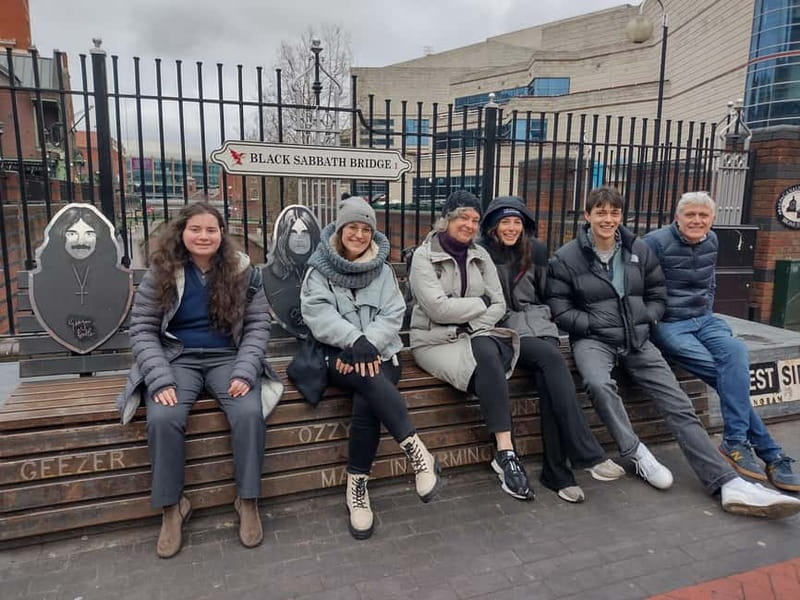
The meeting point is easy to locate if you’re paying attention. Meet your guide by the flag pole in Cathedral Square. They wear an orange jacket or an orange lanyard, so even if you arrive a few minutes early, you should be able to spot them quickly.
There’s one practical note that can save time: if a ferris wheel is in Cathedral Square, the guide may be closer to the Cathedral’s main entrance. In that case, just look for bright orange.
This matters because Birmingham’s city center is busy, and you don’t want to burn your first 10 minutes hunting your group. If you’re arriving by train or bus, I’d give yourself extra buffer before the start time so you can start the tour relaxed.
Cathedral Square and St Philip’s Cathedral: your orientation starts with English Baroque
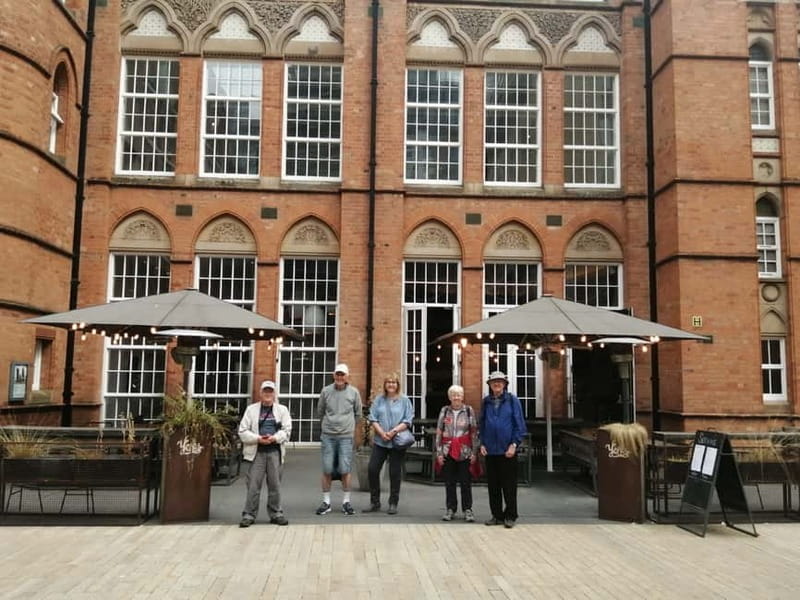
The tour begins in Cathedral Square, where St Philip’s Cathedral anchors the whole area. Even if you’re not into architecture for its own sake, it helps to start here because it sets the tone: Birmingham isn’t only industrial; it’s also civic, religious, and artistic.
Your guide points out details you’d likely miss if you were just walking through. Expect a mix of the building’s look and the bigger idea of what it means for a city center—how a major landmark becomes a meeting place, a symbol, and a navigation tool.
I like starting strong like this. It makes the rest of the walk easier to follow mentally. After Cathedral Square, the city feels less like a blur of streets and more like a sequence of purposeful spaces.
Broad Street: nightlife energy with an industrial-era backdrop
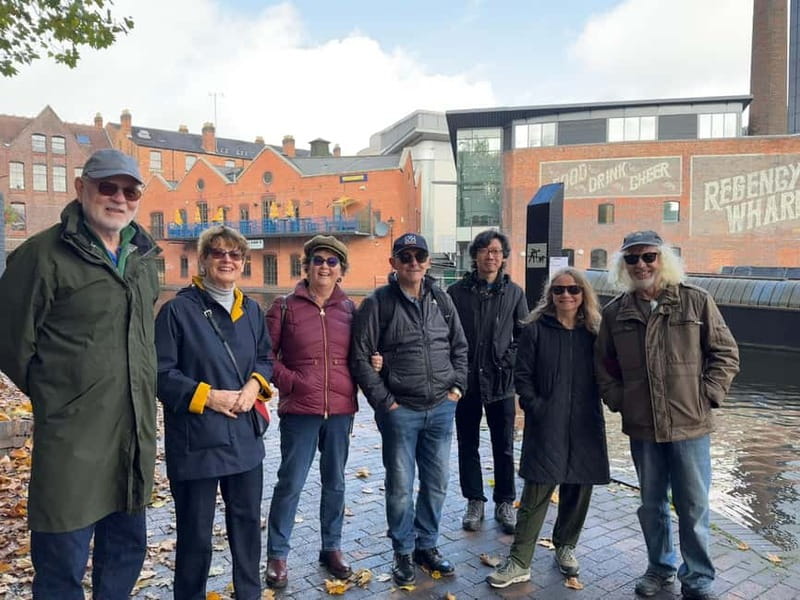
From Cathedral Square, you head toward Broad Street, one of Birmingham’s best-known city-center streets. It’s popular for its lively evening scene, and that’s not just about bars. It’s also about how the city keeps moving and re-inventing itself in public spaces.
Here’s where the guide storytelling matters most. You’ll hear how Birmingham grew and how the industrial revolution shaped the city’s identity. The canal story also comes up—Birmingham’s “can do” development didn’t happen by accident, and canals were a big part of how goods and people moved.
And yes, the tour connects the city to Cadbury chocolate, which is a nice example of how “industry” can turn into something everyday people still enjoy. This is exactly the kind of connection that makes a walking tour feel worth it, because it turns a street name into a clue.
Victoria Square and the civic core: Town Hall and Council House make sense on foot
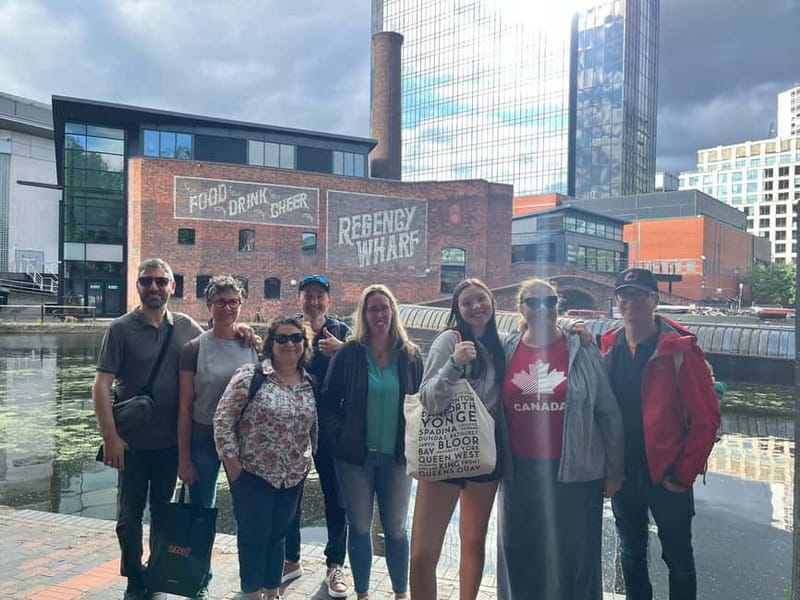
Next comes the heart-of-city feel: Victoria Square. This is one of those places where you can feel the planning—wide space, strong landmarks, and a layout that makes it easy to compare old and new.
You’ll see the Town Hall and the Council House, both of which help explain how Birmingham projects authority and order in the center. Even if you don’t go inside, the exterior framing teaches you how the city wants to present itself.
If you’ve ever looked at a city map and wondered where the “center” really is, this stop usually clears that up fast. You start seeing how the squares connect and where people naturally gather.
As you move through the area, you’ll also pass Symphony Hall—a modern landmark that works as a contrast point. It’s a useful reminder that Birmingham didn’t stop at the industrial era. The city keeps building culture into the same geography.
You can also read our reviews of more guided tours in Birmingham

Chamberlain Square, Centenary Square fountains, and Hall of Memory
The walk keeps layering atmosphere. Chamberlain Square is part of that central rhythm, and it helps break up the long-street feel into spaces where you can actually pause and look around.
Then you reach Centenary Square, known for its fountains. This is a good spot for a reset. If your shoes are starting to feel like shoes and not a decision, take a moment here. It’s also one of those areas where the guide’s comments about modern life click, because the square is where daily routines meet the visual statement of the city.
After that, you may pass the Hall of Memory. Stops like this matter because they shift the story from building-and-industry into human scale—what the city chooses to remember in public space.
These segments are also where you’ll see why the 1.5-hour format works. You get a sequence of emotional tones—grand, lively, reflective—without turning your day into a marathon.
Museum & Art Gallery and Baskerville House: the practical city details you’d miss
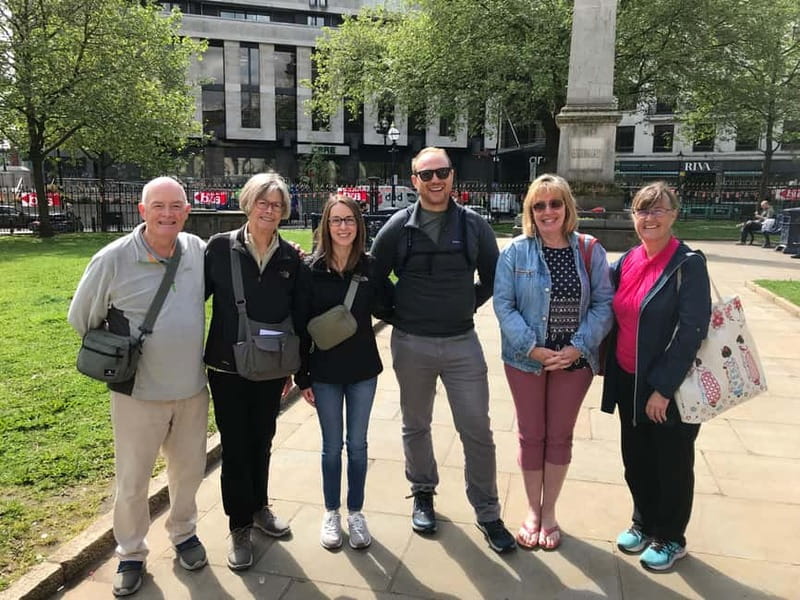
As the route continues, you’ll see Birmingham’s cultural and architectural threads through stops that connect daily city life with the big institutions.
The route includes Birmingham Museum & Art Gallery, which adds a “this city has taste” angle. Even if you don’t go in, it helps you understand why people choose Birmingham not only as a place to pass through, but as somewhere worth lingering.
You’ll also pass Baskerville House, a stop that’s more about feeling the streets than reading a plaque. These are the moments where a local guide’s commentary pays off, because they point out the significance behind a building name or a facade style you’d otherwise ignore.
One review mentioned how a guide made a point of tailoring the tour to interests. That kind of flexibility is most valuable at stops like these, because there’s often more than one angle to talk about—architecture, industry, or modern usage.
Ikon Gallery finish: a strong landing pad for your next plans
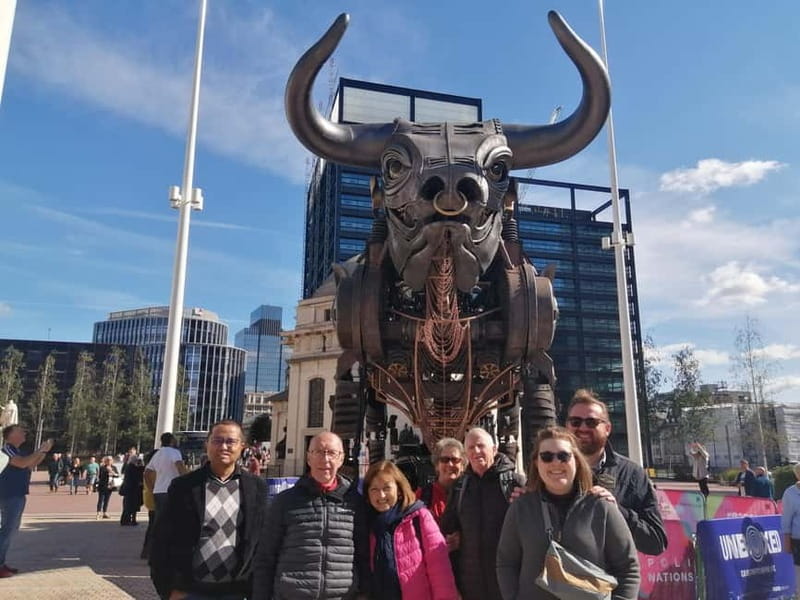
The tour wraps at Ikon Gallery, a 19th-century venue that makes a fitting final stop. Ending at a gallery does two things well: it signals culture without forcing you into a timed ticket, and it leaves you in a part of the city where it’s easy to continue on your own.
If you want to keep exploring after the tour, a final cultural anchor is helpful. You’ll have just enough context to notice what feels traditional and what feels new.
From a practical point of view, finishing at a walkable destination also helps you avoid the “now what” feeling. You’ll know the neighborhood better than you did at the start, even if your plans after the tour are simple: grab a coffee, browse, or head toward dinner.
Price and timing: is $20 worth 1.5 hours?
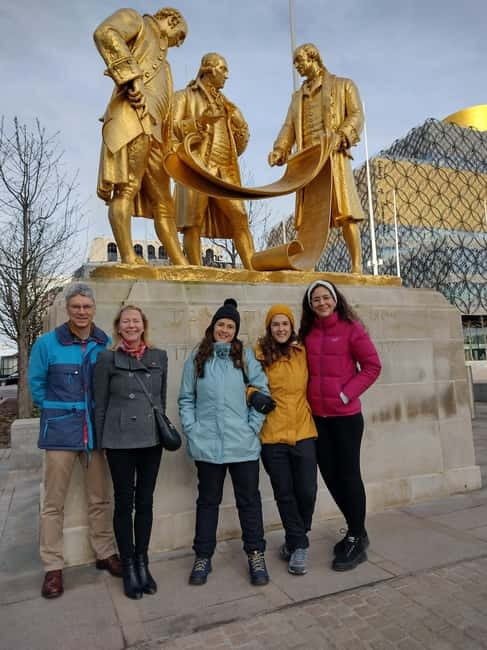
For $20 per person, this is best value if you’re the type of traveler who likes structure. The tour isn’t trying to replace a guidebook. It’s trying to give you the city’s logic in one pass, so the rest of your visit gets easier.
One more plus: the tour runs at 10:30am and 2pm. That flexibility helps if you’re juggling train times, museum hours, or day trips. It also means you can pick the start time that fits your energy level. If you’re more of a morning person, the first slot can feel calmer. If you prefer a later start, the afternoon can pair nicely with other plans.
Think of it like this: the walking part gets you from landmark to landmark, but the guide part helps you understand Birmingham’s development from a small market town into a major city. That perspective can make even a short visit feel more intentional.
Who should book this walking tour
I’d point you toward this tour if:
- You’re visiting Birmingham for the first time and want quick orientation.
- You have limited time and want a route that covers both historic and modern city cues.
- You like hearing stories about industry and how the city shaped itself—especially canals and that connection to Cadbury.
- You enjoy practical guide tips, like where to eat and drink and what might not be worth your money.
It also suits travelers who prefer conversation. Several guides mentioned in the reviews are described as humorous, friendly, and ready to answer questions. One reviewer even said they felt the guide tailored the tour around different interests, which is a sign the group isn’t treated like a factory line.
And if you’re traveling with mobility needs, there’s at least one reported case where a wheelchair user said it made no difference on the tour. I can’t promise that for every person and day, but it’s a reassuring data point.
One thing to watch: rain, short-route limits, and weather stamina
This tour takes place rain or shine, and that’s not a marketing line. It means you should bring comfortable shoes and dress for wet weather. One review described an extremely wet and windy Saturday morning, and the guide still kept the tour going with humor and engagement. Still, your experience will be better if you’re ready for the elements.
The other consideration is time. At 1.5 hours, the route has to choose its priorities. One review specifically wished the tour had included stops like Bullring or the Jewellery Quarter. So if those are your must-see areas, treat this as a strong foundation, then layer on extra Birmingham time afterward.
Group size can also shift. On a very bad-weather morning, there were only three people, which made questions and conversation easier. On a nicer day, you might have a fuller group. Either way, you’ll get the main city-center thread.
Should you book this Birmingham walking tour?
If you want a smart first pass through Birmingham’s core, yes, book it. I like how the tour connects big landmarks—St Philip’s Cathedral, Victoria Square, and Ikon Gallery—with the city’s growth story and everyday modern life. You’re not just collecting photos; you’re learning the city’s logic.
If your schedule is ultra tight and you only care about a couple of specific neighborhoods like Bullring or the Jewellery Quarter, you might feel you’re missing some targets. In that case, use this tour for orientation and history, then spend your remaining time exactly where your interests pull you next.
FAQ
What is the duration of the Birmingham city center walking tour?
The tour lasts 1.5 hours.
How much does it cost per person?
It costs $20 per person.
Where do I meet the guide?
Meet the guide by the flag pole in Cathedral Square. The guide wears an orange jacket or lanyard.
What if there is a ferris wheel in Cathedral Square?
If the ferris wheel is in Cathedral Square, the guide will be closer to the main entrance to the Cathedral. They’ll still be wearing bright orange.
What sights are included on the walk?
You’ll see St Philip’s Cathedral in Cathedral Square, then you walk through areas including Broad Street, Centenary Square, Symphony Hall, Victoria Square, and you finish at Ikon Gallery. Stops also include Birmingham Town Hall, Birmingham Museum & Art Gallery, Chamberlain Square, Hall of Memory, and Baskerville House.
Does the tour run in bad weather?
Yes. The tour takes place rain or shine.
What should I bring?
Bring comfortable shoes and weather-appropriate clothing.
What language is the tour guide speaking?
The tour is in English.
Is transportation included in the price?
No. Transportation is not included.
Can I cancel, and can I pay later?
Free cancellation is available up to 24 hours in advance for a full refund, and you can reserve now and pay later.