REVIEW · DERRY LONDONDERRY
Derry City: The Bloody Sunday Story – Walking Tour
Book on Viator →Bookable on Viator
Bloody Sunday hits different when you walk it. This Derry City Bogside tour pairs real landmarks with firsthand context, led by locals with deep ties to the events and the push for justice. I like how it stays practical and place-based, not vague or lecture-y.
I especially love the human angle: hearing from a guide connected to the day, including people like John McKinney, who framed the story as lived reality rather than distant history. I also like the tour stops that take you from the symbolic Free Derry Corner to the Bloody Sunday memorial and on to Republican murals tied to the civil rights story.
One thing to consider: the subject is heavy and can get detailed, including remembrance of victims. If you want a lighter, purely historical overview, this may feel emotionally intense—and a few stops are short, so you’ll want questions ready.
In This Review
- Key highlights you should care about
- Bloody Sunday feels real in the Bogside streets
- Start at the Museum of Free Derry and get your bearings fast
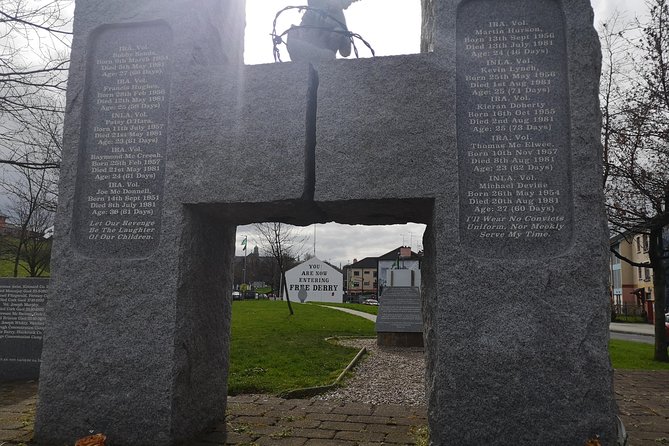
- Free Derry Corner: where symbolism meets street-level history
- Bloody Sunday Memorial: short stop, heavy meaning
- Republican murals and the Civil Rights Association story
- The guides’ firsthand ties are the real engine
- How long it is, how the pace feels, and why the group size helps
- Price and value: about $28.34 for a place-based justice walk
- Weather matters more than you think for a Derry walk
- Who should book this, and who might prefer something lighter
- Should you book the Bloody Sunday Story walking tour?
- FAQ
- How much does the Derry City Bloody Sunday story walking tour cost?
- How long is the tour?
- Where does the tour start?
- What stops are included?
- Is the tour offered in English?
- What group size should I expect?
- Do I need a mobile ticket?
- Do I need good weather for the tour?
- Is free cancellation available?
Key highlights you should care about
- A guide with personal ties to Bloody Sunday, including named guides such as John McKinney, Noel, Mickey, and Neal
- Bogside landmarks close up, with the route built around the Free Derry Corner and key memorial moments
- A short, efficient walk at about 1 hour 30 minutes total with a small max group size of 12
- Civil rights context through murals, including the Republican murals and Civil Rights Association theme
- Multiple departure times during the day, so you can fit it into your Derry plan
Bloody Sunday feels real in the Bogside streets
If you’ve ever read about Bloody Sunday, you know how easy it is for words to turn into something abstract. This tour keeps the focus on place—streets, corners, and community memory—and that shift matters.
What makes it especially compelling is the way it connects the day itself to the longer fight for justice. The tour is led by people tied to the Bloody Sunday Justice Campaign, and the emphasis is on what happened, what followed, and how the community carried it.
You’ll also get a sense of how the neighborhood thinks about itself. In Derry’s Bogside, the past isn’t locked in a museum case—it’s on walls, in names, and in the way guides explain tension points that fed into the Troubles.
You can also read our reviews of more walking tours in Derry Londonderry
Start at the Museum of Free Derry and get your bearings fast
The tour starts at Museum of Free Derry, 55 Glenfada Park, Londonderry BT48 9DR, and ends back at the meeting point. That simple loop helps. You don’t have to worry about transfers or figuring out where to go next.
This is also the kind of location where you can “arrive with context.” Even if you only do the walking tour, starting near the museum gives your brain something to anchor to before you hit the streets.
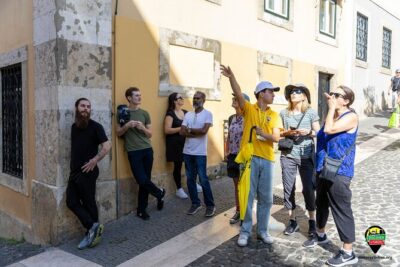
Practical notes that matter: it’s in English, it uses a mobile ticket, and the meeting point is near public transportation. The group is small (max 12 travelers), which usually means you can actually ask questions without feeling like you’re shouting over a crowd.
Free Derry Corner: where symbolism meets street-level history
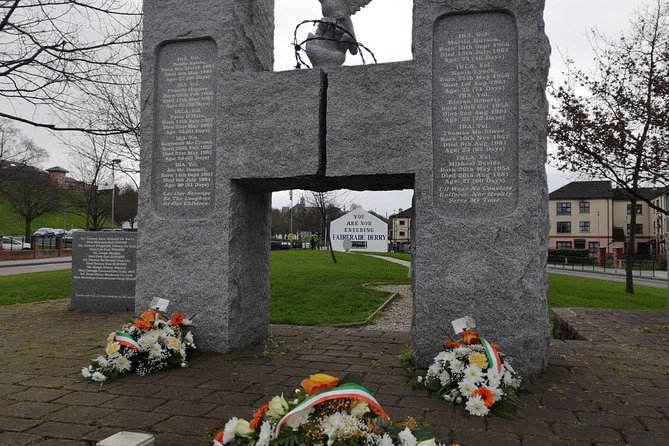
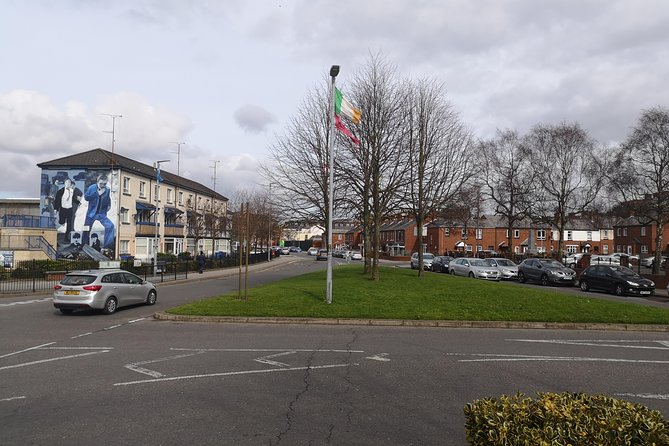
The first and longest stop is centered on the historical Bogside and the Free Derry Corner area, with about 1 hour on this main segment. Admission here is free, but the real “admission” is attention.
This portion of the walk is about how the community marked itself. You’ll learn what the Free Derry idea meant on the ground and how the neighborhood’s identity and politics fed into the bigger story of the Troubles.
Look at it as your orientation to the whole area. Once you understand what the Free Derry Corner represents, the rest of the route lands with more weight—especially when you move from symbols to memory.
One practical drawback: because this segment is packed into an hour, you’ll want to be ready with basic questions early. If you wait until late in the tour, you may only have short moments at the memorial and murals to cover anything deeper.
Bloody Sunday Memorial: short stop, heavy meaning
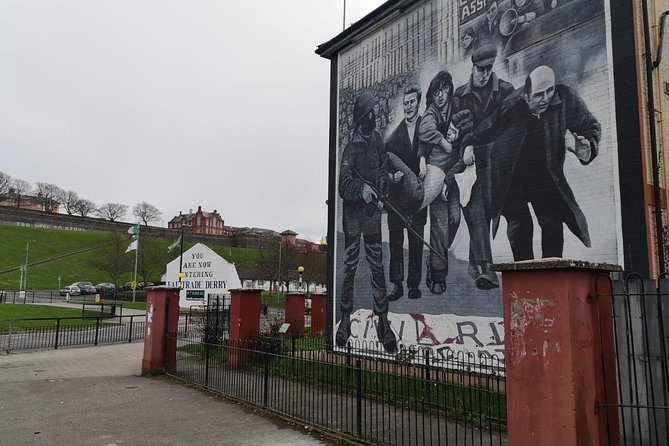
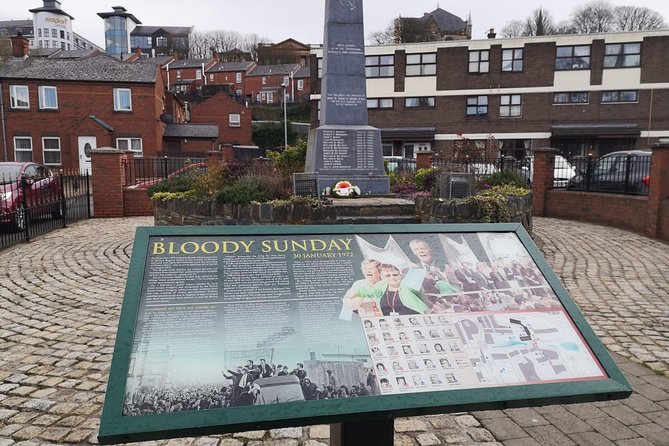
Next you’ll visit the Bloody Sunday Memorial, with about 15 minutes here. Again, admission is free, but don’t confuse “short” with “light.”
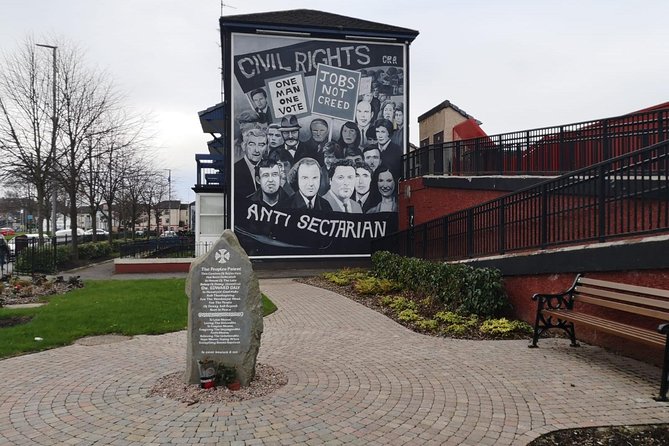
This stop is built for remembrance. It’s where victims are honored, and the guide’s personal connection can make the facts feel more immediate than a textbook timeline.
This is also the moment where the tour’s emotional tone peaks. If you’re traveling with someone who gets overwhelmed by heavy history, you may want to prep them here—this is where the story is most about loss and justice, not sightseeing.
I’d also watch your pacing. The route is short overall, so if you’re moving slowly or need breaks, plan to slow down strategically—right after this stop—rather than trying to stretch the memorial time when it’s already brief.
Republican murals and the Civil Rights Association story
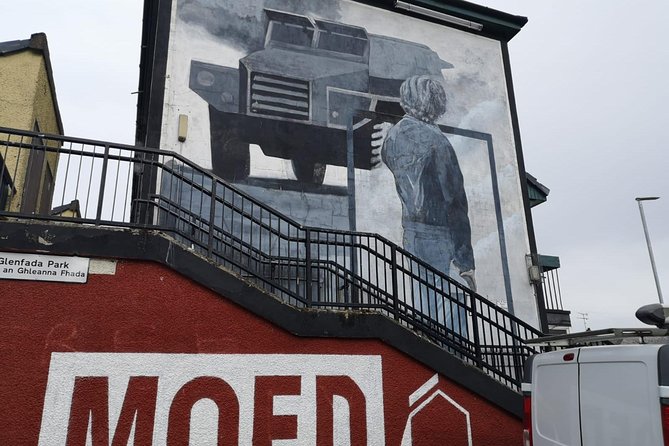
The last stop is about 15 minutes at Republican Murals: Civil Rights Association. This is a smart choice because it keeps the tour from ending with one day of violence and then stopping.
Murals are a kind of public language. They show what the community wanted people outside Derry to understand, and they help explain how civil rights ideas and local politics blended during the lead-up to the Troubles.
Also, murals are one of the few ways history becomes visible without a guide pointing at a single plaque. You’ll likely find yourself looking harder at details, because the guide will connect what you’re seeing to what happened and why people kept pushing for recognition and justice.
A small heads-up: this final stop is brief. If you’re the type who loves photography and street-art study, you might want to add extra time after the tour to take your own look around—so the official walk doesn’t end right when you’re getting into a good rhythm.
The guides’ firsthand ties are the real engine
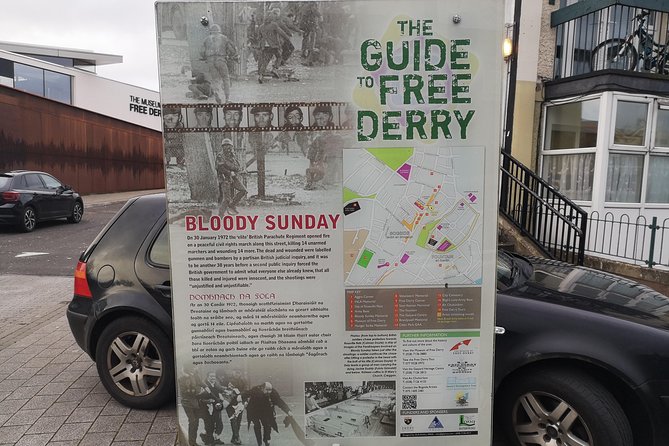
The biggest reason people rate this tour so highly is the people leading it. The tour isn’t just a professional script; it’s tied to community memory, and guides bring personal stakes.
Names that show up in recent guides include John McKinney and also Noel, Mickey, and Neal. One review notes a guide with a brother killed that day and deep ties to the community, and another highlights that John McKinney has been involved in probes and is connected to ongoing legal efforts (including mention of a trial beginning 15 September 2025).
That personal connection doesn’t automatically mean the story is one-note. It usually means the guide cares about how you understand cause and effect—how tensions built, how civil rights pressures shaped events, and why the aftermath still matters.
It also explains why the tour can feel both factual and emotional at the same time. You get specific context, but it’s delivered with a voice that carries the cost of what was lost.
If you’re worried about bias: that’s a fair question. This is clearly rooted in the Bloody Sunday Justice Campaign perspective. What you can count on is honesty about the community’s view and a focus on what the guide believes still needs justice.
How long it is, how the pace feels, and why the group size helps
The full tour is about 1 hour 30 minutes. You’ll hit three main stops: roughly 1 hour at the Bogside/Free Derry Corner segment, then 15 minutes at the memorial, and 15 minutes at the murals. Because the structure is tight, the pace stays purposeful.
The tour caps at 12 travelers, which is key for a subject like this. Smaller groups make it easier for the guide to notice who’s asking questions, who looks like they want clarification, and who needs a slower explanation.
One review describes a very small group (six people), which hints at why the experience can feel more like a conversation than a lecture. Even if you don’t get that small, the cap still keeps the atmosphere from turning into a fast-moving bus tour.
If you hate rushing, go early. You’ll be calmer when the guide starts asking you to pay attention to street-level cues and historical details in real time.
Price and value: about $28.34 for a place-based justice walk
At $28.34 per person, this doesn’t feel like “just another tour.” You’re paying for two things at once: guided context and access to a route shaped around the actual memory sites.
The value question isn’t only cost—it’s what you’re getting for that money. Here, you’re getting a small group, a tight 90-minute format, and stops that connect directly to Bloody Sunday and its wider civil rights context. Admission at the stops is ticket-free as listed, so the price is mainly for the guide’s work and the structured walk.
Compared with tours that charge more for transport, museums, or ticketed attractions, this keeps the spend focused where it matters: explanation, walking route, and the chance to ask questions.
One more value point: the tour is offered at multiple times during the day, so you’re more likely to fit it into your schedule without sacrificing everything else.
Weather matters more than you think for a Derry walk
This tour “requires good weather.” That line is not small print—it affects whether you’ll get the walking experience you signed up for.
In practical terms: bring layers you can adjust, expect damp if conditions are typical for Northern Ireland, and wear shoes that can handle uneven sidewalks. The route is mostly walking, and short stops mean you don’t get long indoor buffers.
The plan also benefits from having a built-in backup if weather cancels it. You should be offered a different date or a full refund if the tour can’t run due to poor conditions.
If you’re deciding between two activities that day, I’d prioritize this one on the strongest forecast window you can find.
Who should book this, and who might prefer something lighter
This tour is a good match if you want more than a facts-only outline. I’d recommend it if you like history tied to lived community experience, and especially if you want the Bogside context around Bloody Sunday and civil rights.
It’s also ideal for solo travelers and couples who don’t mind an emotional topic. The small group setup makes it easier to stay engaged and ask questions.
You might think twice if you’re traveling with someone who dislikes politically charged history or gets distressed by memorial-focused moments. Also, one review suggests the tour may include lots of names or detailed remembrance, which might feel like too much for some people.
In other words: go if you want context with weight. Skip if you’re looking for light, fast, entertainment-style sightseeing.
Should you book the Bloody Sunday Story walking tour?
Yes, I think you should book this if Bloody Sunday and the Troubles are on your “must understand” list. The main reason is simple: you’re not just looking at sites, you’re hearing from people with personal ties, and you’re doing it in the exact areas where memory lives.
Book it if you value a focused route with three planned stops, a small group cap, and a guide-driven format that gives you time to ask questions. The $28.34 price makes sense when you consider the specificity of the story and the fact that the key moments are free to visit.
Only hold back if you want a purely neutral, low-emotion museum-style experience. This tour is about justice and remembrance, and that tone shows up from the first stop onward.
If you go, do one small thing before you arrive: bring curiosity, not a checklist. Let the streets and the memorial do the heavy lifting.
FAQ
How much does the Derry City Bloody Sunday story walking tour cost?
The price is listed as $28.34 per person.
How long is the tour?
The duration is approximately 1 hour 30 minutes.
Where does the tour start?
The meeting point is the Museum of Free Derry, 55 Glenfada Park, Londonderry BT48 9DR, UK, and the tour ends back at the same meeting point.
What stops are included?
The tour includes these stops: Free Derry Corner (about 1 hour), Bloody Sunday Memorial (about 15 minutes), and Republican Murals: Civil Rights Association (about 15 minutes).
Is the tour offered in English?
Yes, it’s offered in English.
What group size should I expect?
The tour has a maximum of 12 travelers.
Do I need a mobile ticket?
Yes, the tour provides a mobile ticket.
Do I need good weather for the tour?
Good weather is required. If it’s canceled due to poor weather, you’ll be offered a different date or a full refund.
Is free cancellation available?
Yes, you can cancel up to 24 hours in advance for a full refund.