Baku’s Old City is one of those places where history hits you fast. Starting at Qız Qalası (Maiden Tower), this walking tour strings together medieval streets, oil-era architecture, Soviet-era scenes, and the modern skyline you can’t help but notice. It’s the kind of route that makes the city feel like it’s talking.
What I like most is the way the guide turns stone and street corners into stories you can actually picture. I’m also a fan of the small group size (up to 15), which keeps the pace friendly and means you’re not just herded from one photo stop to the next.
One thing to consider: it’s a walking tour of around 1.5 to 2 hours, and you’ll still be out in the open for parts of it. If you’re heat-sensitive or have limited mobility, you may want to plan your timing carefully.
In This Review
- Key Highlights You’ll Feel Immediately
- Starting at Qız Qalası: Maiden Tower as Your Compass
- Walking the Old City Layers: Medieval, Oil-Baron, Soviet, Modern
- Getting Oriented Inside the Walls: City Walls and the Shape of the Past
- Juma Mosque and Chinese Mosque: Two Stops, One Strong Street Feeling
- Monument to Lovers and Cats: A Break That Isn’t Just Cute
- The 1.5 to 2 Hour Pace: What It Feels Like on the Ground
- Price and Value: Is $18 Worth It?
- Practical Tips for a Smoother Walk in Baku Heat
- Who This Tour Suits Best (and Who Might Skip It)
- Should You Book the Baku Old City Walking Tour with ATI?
- FAQ
- Where does the tour start?
- What time does the tour run?
- How long is the walking tour?
- What’s included in the price?
- Are museum entrance fees included?
- Do I need a printed ticket?
- How many people are in the group?
- Is there free cancellation?
Key Highlights You’ll Feel Immediately
- Qız Qalası as the starting point for seeing how the whole Old City connects
- Architecture across time, from medieval Oriental styles to oil baron mansions and Soviet-era buildings
- Mosque stops with contrast, including Juma Mosque and Chinese Mosque
- A guided story for iconic spots, like the Monument to Lovers and Cats
- Photo-friendly pacing, with time to look closely and take pictures
- In-person guide for one clear route, not a long, confusing self-walk
Starting at Qız Qalası: Maiden Tower as Your Compass
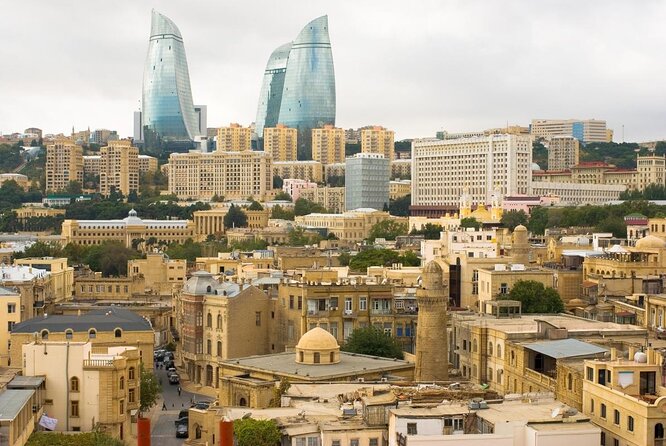
The tour begins right at Qız Qalası, Bakı, which is a smart move. Maiden Tower isn’t just a landmark you pass by—it’s a natural anchor for understanding the Old City. From that point, your guide can connect what you’re seeing now with what the area used to be.
Even if you don’t know much about Azerbaijan before you arrive, you’ll start to notice how Baku’s Old City is layered. You’re not looking at one single “period” of architecture. You’re seeing a city that kept changing roles—trade and empire eras, Soviet influence, and then the modern building boom that sits nearby like a sequel.
The other practical win: because the meeting point is the Maiden Tower area, you can orient quickly. It’s also where it makes sense to take your first wide photos before the route narrows into tighter Old City lanes.
You can also read our reviews of more walking tours in Baku


Walking the Old City Layers: Medieval, Oil-Baron, Soviet, Modern
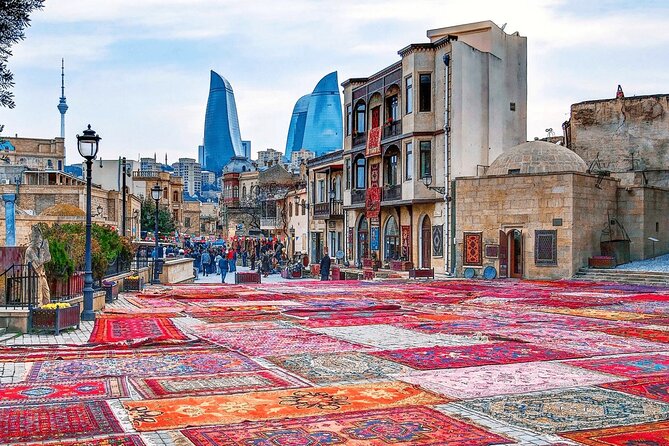
Old City Baku is famous for looking picturesque, but the real value of a guided walk is what happens when the guide links the visual clues to the timeline. On this route, you move through scenes that reflect different eras: medieval Oriental buildings in a typical medieval-city style, European-style mansions associated with the early 20th-century oil barons, and Soviet architecture that still shows up in the streets.
Then you get the modern contrast. Baku has the ultramodern skyline vibe, and the tour format helps you see how that modern energy doesn’t erase the Old City—it frames it. The effect is useful for you as a visitor because it prevents the Old City from feeling like a museum set. It feels lived-in and still relevant.
A personal favorite part of this kind of architecture walk is when the guide points out details you’d normally miss, like how building styles shift block by block. Those small visual transitions are what make the city click.
Getting Oriented Inside the Walls: City Walls and the Shape of the Past
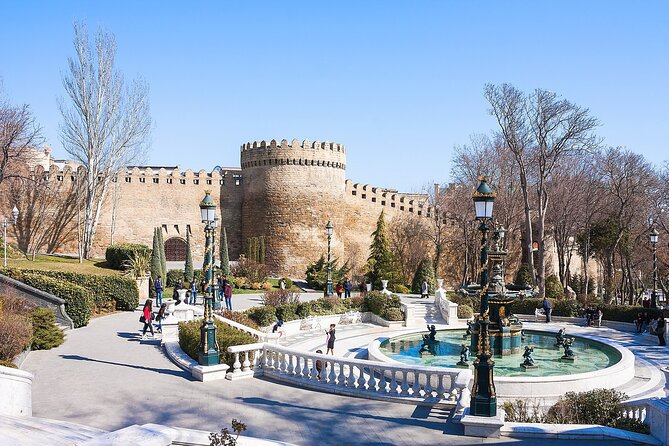
As the walk continues, you’ll focus on how the Old City was designed and defended. The tour includes City Walls, and that matters because walls aren’t only history—they’re also geography. When you understand where the boundaries were, you understand why streets bend the way they do and why certain areas feel more enclosed.
A good guide makes this easy by tying the physical layout to events and everyday life. The goal isn’t to memorize dates. It’s to learn how the city’s structure shaped movement, security, and neighborhood character.
If you love photos, pay attention at the walls: they tend to give you angles that show both the older textures and the surrounding urban context. If you don’t love photos, you’ll still enjoy the way the route becomes clearer, like you’re gradually drawing a map in your head.
Juma Mosque and Chinese Mosque: Two Stops, One Strong Street Feeling
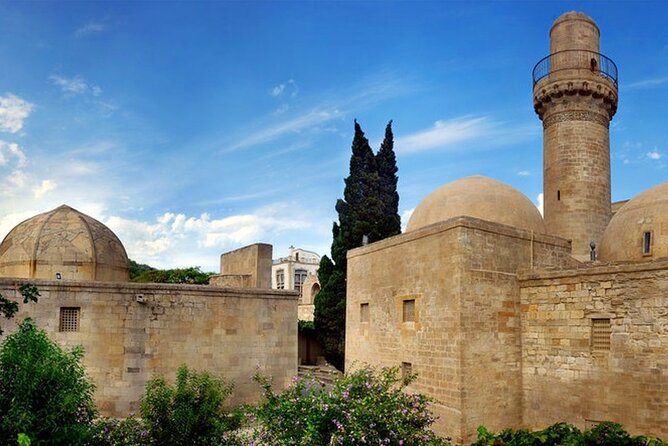
The walk includes two major religious sites: Juma Mosque and the Chinese Mosque. Even if you’re not the type to visit religious buildings as a checklist, these stops are meaningful because they show how cultural influence shows up in architecture and community life.
What makes this part worth your time is the contrast. You get a sense that Baku has never been one-note. Over time, different communities and influences left visible marks. A guide helps you read those marks, instead of just looking at beautiful buildings and moving on.
One more practical point: mosques and historic religious sites can have dress expectations or visitor rules. The tour itself doesn’t include museum entrance fees, but the sites you visit may still involve local etiquette. Wear comfortable clothes you can adjust quickly, and be ready for a bit of pause while you look.
Monument to Lovers and Cats: A Break That Isn’t Just Cute
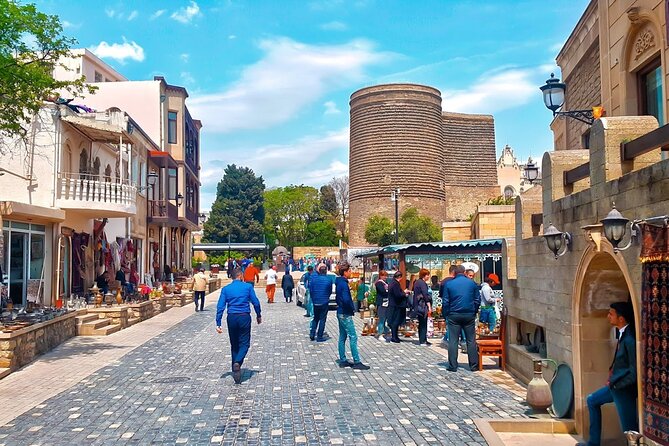
Not every tour gives you a moment like the Monument to Lovers and Cats. This stop works because it changes the tone without turning the walk into a random detour. It’s a playful pause that still fits the Old City atmosphere.
The bigger value is what your guide usually does with stops like this: they connect local symbols to cultural identity and daily life. That’s why even small landmarks matter on a walking tour. They prevent the experience from feeling like only architecture and official facts.
Also, it’s a good spot to reset your eyes after staring at stonework for a while. If you need a breather, this kind of stop gives it to you without breaking the flow.
The 1.5 to 2 Hour Pace: What It Feels Like on the Ground
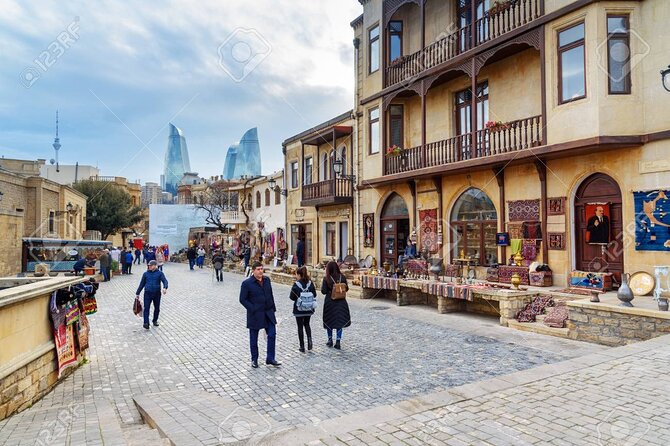
The tour runs about 1 hour 30 minutes to 2 hours. That’s a sweet spot for the Old City. You get enough time to cover multiple key sights, hear the storyline, and still feel like you can continue exploring afterward on your own.
Because the group max is 15 travelers, the pace feels manageable. You’re not stuck behind a line of people sprinting to the next corner. You can ask questions, and the guide can actually steer the group’s attention.
From the reviews vibe (and it matches what tends to work best on site), the best guides on this tour keep things light while still packing in real info. Names that show up in accounts include Seyid, Seyidağa, Nazir, Sulmaz, Selmaz, and Nazpari. The common thread is that they mix humor with history so the walk doesn’t turn into a lecture.
One drawback to mention again: it’s still a walking experience, so bring water and plan for sun. On hot days, your enjoyment will depend on pacing yourself.
Price and Value: Is $18 Worth It?
At $18 per person, this is one of those prices that feels almost too reasonable for what you get: an in-person guide for a focused Old City route.
What you’re paying for isn’t just access. You’re paying for someone to connect what you see—Maiden Tower, walls, mosques, and the Old City’s architectural shifts—to meaning. That’s the part you can’t easily DIY without risking confusion or wasting time.
Also, note what’s not included: entrance fees to museums. That doesn’t mean you’ll be forced into museum stops, but it’s good to know so you don’t budget as if everything is bundled. If your plan includes museum time, set aside a little extra.
In terms of timing, many people book this in advance, usually around 15 days ahead. If your travel dates are fixed, booking earlier helps you lock in a slot.
Practical Tips for a Smoother Walk in Baku Heat
Here’s how to make the most of the time on your feet:
- Start hydrated. You’ll walk through open areas while moving between landmarks.
- Wear breathable layers. Historic areas can mean sun plus shadows that change fast.
- Comfortable shoes matter more than you think. Old City surfaces can be uneven.
- Bring a small plan for breaks. The walk has natural pauses, including the Monument to Lovers and Cats area, but you can still take quick water stops when you need them.
- Use the guide’s photo moments. Reviews note that guides often allow time to take pictures, so don’t rush your camera out of frustration. Ask when it’s a good moment to step back and frame.
If you care about photos, plan to move slowly for the first landmarks around the Maiden Tower area. That’s when you’ll set the tone for the entire walk.
Who This Tour Suits Best (and Who Might Skip It)
This walking tour is a strong fit if you:
- want a clear route through Old City highlights without figuring it out street-by-street
- care about how architecture changes across time in one compact area
- enjoy guides who explain, but don’t make it feel heavy
You might reconsider if:
- you dislike structured walking for 1.5 to 2 hours
- you want deep museum time as the main event, since museum entrance fees aren’t included
Overall, it’s ideal for first-timers to Baku. It gives you the foundation to enjoy what you see after the tour, whether that means more wandering, shopping nearby, or grabbing a meal with better context.
Should You Book the Baku Old City Walking Tour with ATI?
If your goal is to understand Baku beyond post cards, I’d book this. The price is friendly, the route is focused, and the starting point at Qız Qalası helps you get oriented fast. The biggest win is how the guide ties together medieval streets, oil-era mansions, Soviet-era touches, and modern Baku in one coherent walk.
Book it especially if you like being shown the meaning behind landmarks like Juma Mosque, Chinese Mosque, City Walls, and the Monument to Lovers and Cats. You’ll leave with a mental map, not just a memory of pretty buildings.
FAQ
Where does the tour start?
It starts at Qız Qalası, Bakı, Azerbaijan.
What time does the tour run?
The listed opening hours are 8:00 AM to 8:00 PM, Monday through Sunday.
How long is the walking tour?
It lasts about 1 hour 30 minutes to 2 hours.
What’s included in the price?
The tour includes an in-person guide.
Are museum entrance fees included?
No. Entrance fees to museums are not included.
Do I need a printed ticket?
No. You receive a mobile ticket.
How many people are in the group?
The tour has a maximum of 15 travelers.
Is there free cancellation?
Yes. You can cancel for a full refund up to 24 hours in advance.