REVIEW · RICHMOND
Richmond Downtown Walking Tour
Book on Viator →Operated by The Richmond Tour Guys · Bookable on Viator
Richmond’s downtown history works best on foot. This small-group walk strings together Jackson Ward, Capitol Square, and St. Paul’s in about two hours, with headsets so you can hear the guide clearly while keeping distance. I especially like how the format keeps costs down while still covering major turning points of the city, and the only real drawback is if you’re on a tight schedule—there can be late starts sometimes.
I also like that the tour is built for first-timers. You get a guided route that explains what you’re seeing, not just a photo stop-and-go list. On top of that, the guides have real personality—people have raved about Jason’s energy, Kathy’s Richmond-native perspective, Will’s helpful follow-up ideas, and Ray’s storytelling style.
If you want a low-stress way to get your bearings and then roam on your own the rest of the day, this tour fits well. You’ll finish back near the meeting point, and then Richmond is yours.
In This Review
- Quick Hits
- Why This Richmond Walking Tour Works for a First Day
- Meeting at 403 N 3rd St and the Small-Group Feel
- Jackson Ward: The Harlem of the South, Black Wall Street, and Community Pride
- John Marshall House: A Richmond Native With National Impact
- The Valentine and Court End: Burr, Beef Juice, Wickham and Davis Houses
- The White House of the Confederacy: Power, Disaster, and Lincoln Nearby
- Egyptian Building: The Original Medical College of Virginia and the War as a Medical Machine
- Monumental Church: Jefferson’s Apprentice, the Richmond Theater Fire, and Poe
- Virginia Executive Mansion and Capitol Square Monuments: From Governor’s Mansion to Civil Rights Memorial and Brown v. Board
- Virginia Capitol Building: Jefferson’s Plans, a Construction Mishap, and the 1870 Tragedy
- Virginia Women’s Monument: Voices From The Garden, Women’s Contributions, and the Hidden Side of the Past
- St. Paul’s Episcopal Church and the Church of the Confederacy: Tiffany Details and the End of the Story
- Price and Value: Is $37.50 Worth a Two-Hour Walk?
- Who Should Book This Richmond Downtown Walking Tour
- Should You Book It
- FAQ
- How long is the Richmond Downtown Walking Tour?
- Where do I meet the guide?
- How many people are in a group?
- What language is the tour offered in?
- Is the tour good for people who need to hear the guide clearly?
- What happens if the weather is bad or I need to cancel?
Quick Hits
- Small group up to 14 keeps the pace friendly and questions possible.
- Headsets help you hear the guide while the group stays spread out.
- One walking loop, many eras: from early Black community life to Civil War devastation to civil rights milestones.
- Most stops are free to view, with one notable exception for a Confederate-site attraction.
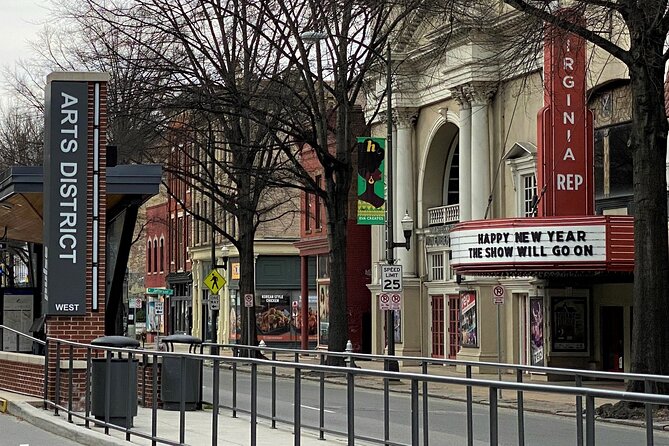
- Meet at the Convention Center area (403 N 3rd St) and get a clear, simple start point.
- Finish back where you started, so your day stays flexible.
Why This Richmond Walking Tour Works for a First Day
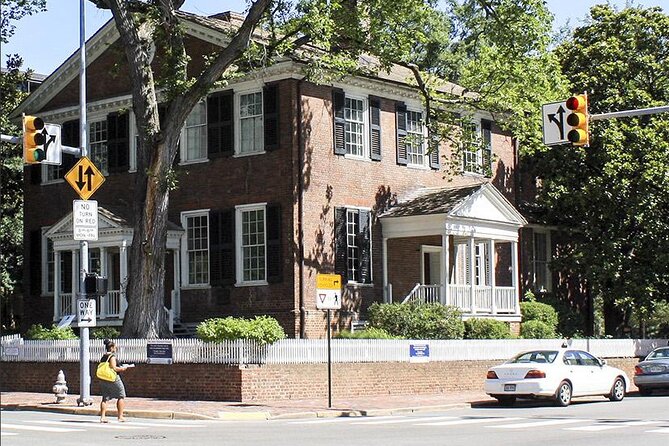
Richmond can feel like it has stories stacked on top of stories. This downtown walk helps you sort them out fast. In about 2 hours, you move through neighborhoods and civic landmarks tied to major chapters of American life, including the Civil War and the long road afterward.
What makes it work is the thread. The tour isn’t only about buildings. It’s about why these blocks matter: who lived here, what decisions were made nearby, and what events changed the city. That turns scattered sights into a timeline you can hold in your head as you explore later.
You’re also not stuck all afternoon. After the walking portion ends (about 1 hour 40 minutes to 2 hours), you get the rest of the day to do your own thing. That’s a big value for travelers who want guided direction without giving up their entire schedule.
Meeting at 403 N 3rd St and the Small-Group Feel
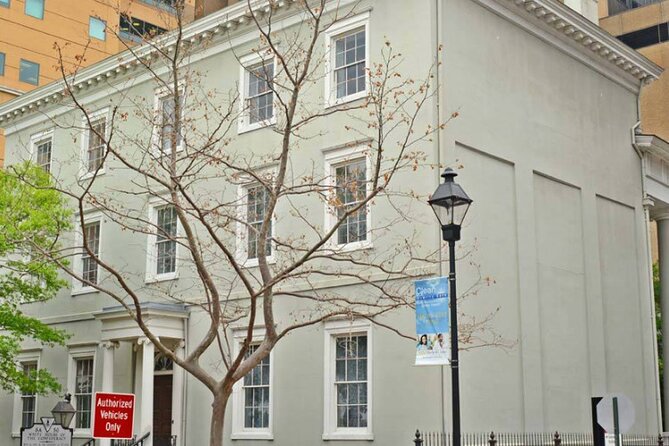
This tour is designed around an easy starting point: 403 N 3rd St, Richmond, VA 23219, with the activity ending back at the meeting spot. That matters more than it sounds. When you know you’ll return to where you began, you can plan dinner, parking, or next-day logistics with less stress.
The group size cap is 14 travelers, and that shows in how the tour moves. It stays organized instead of turning into a crowd shuffle. Even if you’re the type who asks questions (or just wants the story repeated in simpler terms), a smaller group usually means you’re not fighting for attention.
You’ll also wear headsets, which is a practical touch. They’re there to help you hear the guide’s narration clearly even when the group is spread out for safer distancing. If you dislike walking tours where the loudest person controls the soundtrack, this one is set up to avoid that.
Jackson Ward: The Harlem of the South, Black Wall Street, and Community Pride
The first stop sets the tone. You begin in Jackson Ward, a historic district known as the Harlem of the South and the Black Wall Street of the South. That phrase is more than a slogan. It frames the area as a place built on ambition, culture, business, and people moving up and forward—before the city’s later upheavals.
Expect the guide to connect the physical streets to larger themes. You’re not only looking at architecture or old corners. You’re learning what made this area a center of Black life and enterprise, and how that legacy still shapes the way Richmond is read today.
Practical note: because it’s an early stop, it’s a good moment to ask questions about the overall route. Guides tend to set context here, which makes the later stops land better.
John Marshall House: A Richmond Native With National Impact

Next you stop at the John Marshall House, where you hear about the life and contributions of John Marshall, a Richmond native. Even if you didn’t memorize his name in school, you can follow the thread quickly: this is about how Richmond ties into the legal and political foundation of the United States.
This is one of those stops that works even if you’re not a “museum person.” It’s history delivered on the spot—simple, direct, and connected to the city you’re walking through. If you like learning names you can later connect to bigger events, this one helps you build that map.
The Valentine and Court End: Burr, Beef Juice, Wickham and Davis Houses
Then you head to The Valentine, a landmark where you get introduced to Court End and the Wickham and Davis houses. The tour ties this area to some very specific historical hooks, including Richmond’s role in the Burr treason trial and a local detail called Beef Juice.
That kind of specificity is exactly why walking tours like this beat reading plaques on your own. A plaque might list facts. A good guide gives you the angle that makes those facts stick. With this stop, the story feels like it has texture—like you’re hearing gossip from the past, except the guide keeps it grounded in real events.
One consideration: since this stop focuses on context, it’s most satisfying if you give the guide your full attention for those few minutes. If you’re constantly checking your phone, you’ll miss the connections.
The White House of the Confederacy: Power, Disaster, and Lincoln Nearby
At the White House of the Confederacy, you cover how Richmond became the capital of the Confederate States of America, including the era of the Davis years as President. You also hear about the Great Evacuation Fire, a moment when the city burned while the Confederacy fell apart.
Another striking detail: you learn about Lincoln’s visit to Richmond one day after surrender. That one sentence alone captures how quickly the meaning of places can flip. Buildings that represented one side become symbols of a new national reality almost overnight.
Admission note: the tour’s info says admission here is not included. So if you want to go inside beyond the outside storytelling, you may need to plan on that separately. Even without entry, the narration is designed to make the site understandable.
If you’re someone who likes to spend extra time inside major attractions, you’ll probably want to tack it on after the walking portion finishes, when you can move at your pace.
Egyptian Building: The Original Medical College of Virginia and the War as a Medical Machine
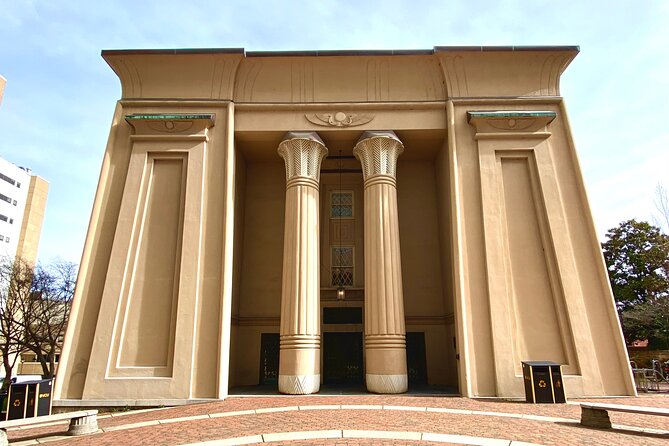
Next up is the Egyptian Building, tied to the original Medical College of Virginia. This is where the tour shifts from politics and war drama into how the city functioned.
Expect stories about Richmond as a major medical center during the Civil War, including some amusingly dark-sounding anecdotes like custodial skullduggery. That blend is common in strong guides: it keeps heavy topics human, not distant.
Why this stop matters for your trip: it shows that the war wasn’t only fought on battlefields. Cities like Richmond were part of the machinery—training, treating, transporting, and managing huge medical demand. You’ll start noticing that theme in later civic landmarks too.
Monumental Church: Jefferson’s Apprentice, the Richmond Theater Fire, and Poe
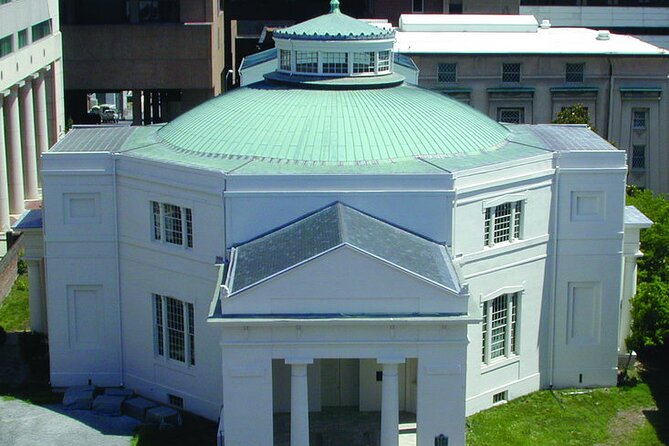
At Monumental Church, you learn that it was designed by Jefferson’s apprentice. That fact gives the building a special place in the architecture storyline, but the tour doesn’t stay purely aesthetic.
The guide also covers the Richmond Theater Fire, including the horrors tied to that event. Then you end up with Edgar Allen Poe becoming a true Richmonder, which adds a literary dimension to the stop. This is a nice reminder that a city’s identity isn’t only made by politics and war—it’s also made by art, tragedy, and people who interpreted it.
If you love architecture and want a walking tour that connects styles to stories, this is a good point to slow down mentally. The guide usually helps you see what makes the church notable, not just that it exists.
Virginia Executive Mansion and Capitol Square Monuments: From Governor’s Mansion to Civil Rights Memorial and Brown v. Board
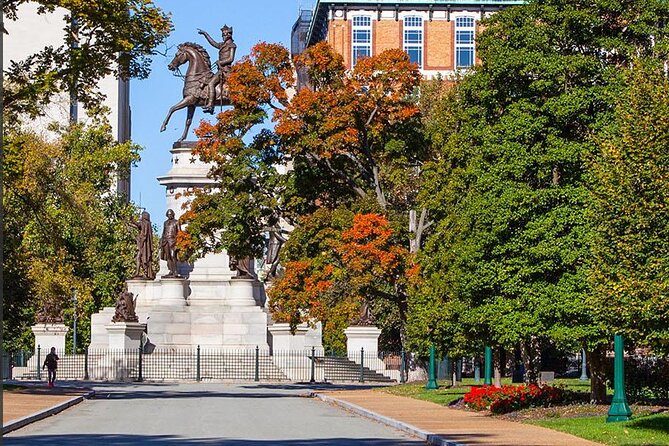
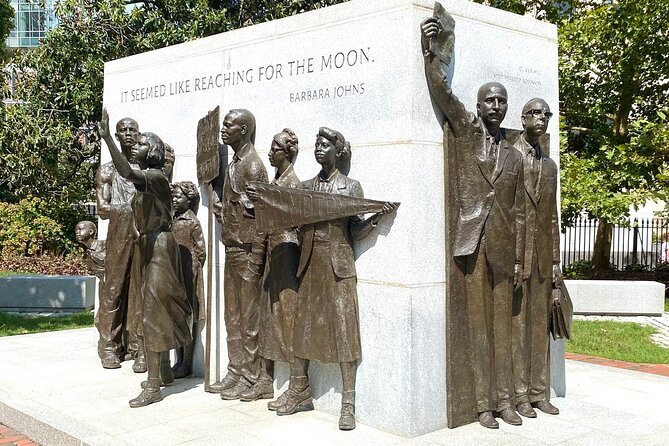
The tour then moves to the Virginia Executive Mansion, described as the second oldest governor’s mansion in the US. From there, the focus expands to monuments around Capitol Square, including the Civil Rights Memorial and the story behind Brown v. The Board of Ed.
This section is powerful because it’s about more than the Civil War. You’re seeing how civic space keeps being used to tell evolving truths. The mansion represents political history; the Civil Rights Memorial ties that history to human rights progress; and Brown v. Board is a hinge point that connects past policies to legal change.
Practical takeaway: this stop is a good place to take a breath. After several quick transitions, you get a section with emotionally heavier content and enough space for the guide to pace the explanation.
Virginia Capitol Building: Jefferson’s Plans, a Construction Mishap, and the 1870 Tragedy
Next you hear the story behind Richmond becoming the third capital of the Commonwealth. You also learn how Jefferson’s plans for the new building went awry, followed by a tragedy that befell it in 1870.
This is another stop where the guide’s job is to translate design and dates into meaning. If you’ve ever wondered why a historic building looks the way it does—or why something about it feels “unfinished” or “off”—this kind of explanation helps you see the causes instead of guessing.
It’s also a reminder that civic structures don’t only represent ambition. They also represent risk: money, labor, politics, and the unpredictable parts of building big things.
Virginia Women’s Monument: Voices From The Garden, Women’s Contributions, and the Hidden Side of the Past
Then you reach Virginia Women’s Monument: Voices From the Garden, described as the newest addition to Capitol Square. The tour focuses on first European women in the colony, the contributions of 12 prominent women, and also the arrival of the first Africans along with the history of slavery in the city.
This stop is valuable because it fills in perspective that many casual visits miss. Civic monuments tend to be interpreted quickly if you only skim. Here, you get a guided explanation that helps you understand why the monument’s categories matter.
If you appreciate context and want your visit to feel fairer and more complete, this is one of the best stops on the route.
St. Paul’s Episcopal Church and the Church of the Confederacy: Tiffany Details and the End of the Story
The tour concludes at St. Paul’s Episcopal Church, also known as the Church of the Confederacy, famous in part for Tiffany splendor.
This is a strong ending because it ties the architecture back to the earlier themes. You’ve been hearing about power, war, and aftermath. Then you end in a place with notable artistic detail, which helps you remember that Richmond’s identity isn’t only about conflict. It’s also about craft, worship, and the human urge to build beauty even during rough times.
And then you’re done—back at the starting area.
Price and Value: Is $37.50 Worth a Two-Hour Walk?
At $37.50 per person for roughly 1 hour 40 minutes to 2 hours, the value is about how much you can learn per minute—and how much you pay for guided interpretation.
For this route, a big part of the value comes from the fact that most stops are free to view in the sense that you’re not paying repeatedly just to stand somewhere and listen. The main exception called out is the White House of the Confederacy, where admission isn’t included. So you’re mostly paying for the guide’s storytelling, not a list of paid attractions.
Also, the small group cap helps keep the experience from turning into a slow, chaotic line. When you can hear the guide well (headsets help), you get more out of the time you spend walking.
If you’re deciding between doing nothing and buying a guided overview, this is the kind of tour that gives you a framework. That framework makes it easier to enjoy what you choose next on your own.
Who Should Book This Richmond Downtown Walking Tour
This is a great fit if:
- You’re visiting Richmond for a weekend or short trip and want a fast way to understand the city center.
- You like walking tours that connect buildings to people, events, and decisions.
- You want to spend time with a guide who can explain what you’re looking at, including civil rights milestones and Civil War-era consequences.
- You want a relaxed plan: a couple hours of structure, then freedom.
It might be less ideal if:
- You have a strict appointment right at the end of the tour and can’t tolerate occasional late starts.
- You only want inside-only museum time. This is mostly about storytelling in and around key stops.
Should You Book It
Yes, if you want a smart first pass at Richmond. The combination of small-group pacing, headsets, and a route that covers everything from Jackson Ward to Capitol Square gives you a strong base for the rest of your trip.
If you’re particularly interested in architecture, monuments, and how big national moments played out locally, you’ll likely enjoy this more than the typical “just show up at viewpoints” approach. My advice: book it early in your visit so the stories can color everything else you do after.
FAQ
How long is the Richmond Downtown Walking Tour?
The tour runs about 1 hour 40 minutes to 2 hours.
Where do I meet the guide?
You can meet at 403 N 3rd St, Richmond, VA 23219, and the tour ends back at the meeting point.
How many people are in a group?
The maximum group size is 14 travelers.
What language is the tour offered in?
The tour is offered in English.
Is the tour good for people who need to hear the guide clearly?
Yes. You’ll use headsets, which are meant to help everyone hear while maintaining safe distancing.
What happens if the weather is bad or I need to cancel?
This experience requires good weather. If it’s canceled due to poor weather, you’ll be offered a different date or a full refund. Cancellation is free, and you can cancel up to 24 hours in advance for a full refund. Service animals are allowed.