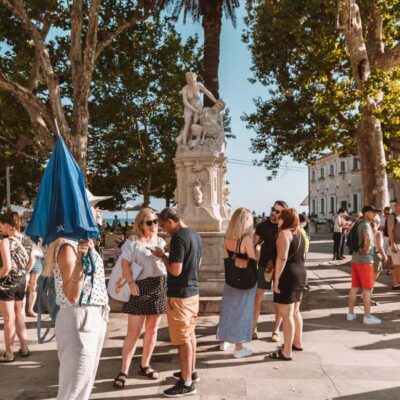
Shanghai gets real on foot. In about 3.5 to 4 hours, you’ll walk through downtown highlights and get the stories behind how a fishing village became a global city. I like that it stays practical and guide-led, not museum marathon energy, so you can fit it into almost any first-day plan.
What I really like is the mix of landmarks and everyday life—you’ll hear how places connect to culture, social change, art, and architecture. I also like the snack break at a local food street, because you get to sample the cheap, classic stuff without turning the tour into a restaurant tour.
One thing to plan for: this is a lot of walking. Based on past guests, expect heat and humidity to hit hard in summer, and you should wear good shoes and be ready for a brisk pace.
In This Review
- Key things to know before you go
- Meeting at People’s Square: the easiest start in Shanghai
- The real value: $5 reservation plus a guide tip you control
- Stop-by-stop: what each area teaches you (and what to watch for)
- People’s Square: City Hall stories and the museums orbit
- People’s Park: green space near the old race club and the marriage market
- East Nanjing Road (Nanjing Lu): shopping street habits and how people buy
- Nanjing Lu snack break: cheap street food, small bites, big payoff
- The Bund: Shanghai’s signature skyline and the stories behind it
- Chenghuang Miao / Yuyuan Garden area: old Chinatown energy and shopping streets
- Guides that keep you moving: what the best ones do
- Food stop realities: how to handle snacks without derailing your day
- What to wear and how to pace yourself in Shanghai heat
- Who should book this tour (and who might want a different style)
- Should you book? My quick decision guide
- FAQ
- How much does the Shanghai City Guided Walking Tour cost?
- Is the tour free or paid?
- How long is the tour?
- What’s the recommended tip amount?
- Where does the tour start?
- What stops are included?
- Is there a snack stop?
- How big are the groups?
- Do I need to bring cash for tipping?
- What happens if the weather is bad?
Key things to know before you go
- A tight 3.5–4 hour loop through central Shanghai’s top highlights, with free entry noted at the stops
- Tips-based model, so budget for a guide tip of roughly 200–250 RMB (or 25–30 USD/EUR)
- Snacks included as a stop, but you pay for what you eat at the local street food area
- Small group limits of up to 4 (adults and kids), which can feel more personal
- Weekend bonus at People’s Park, where the marriage market may be running
- Mobile ticket and central meeting point near public transportation, making it easier to join on time
Meeting at People’s Square: the easiest start in Shanghai
The tour starts at the Shanghai Urban Planning Exhibition Center, right in the People’s Square area. That’s a smart launch point because you’re already in the city’s classic downtown zone, with plenty of transit options nearby. If you want to hit several “big names” quickly, starting here saves you time and effort.
You’ll get a mobile ticket, which is handy for busy travel days when you do not want to juggle paper. The tour also runs with a maximum group size of 30 people, so you’re not stuck in an enormous crowd. With small-group capacity listed as up to 4 people (adults plus kids), the experience can feel more like a guided walk than a giant bus tour.
Practical tip: arrive a little early, especially if you’re new to navigating People’s Square. This area can be confusing at first, even if it’s central, and your best move is to get your bearings before the group rolls.
The real value: $5 reservation plus a guide tip you control
The price you see is only the booking fee to reserve your spot. The guide’s work is supported through a tips-based model, and you decide what the guide deserves. The suggested tip is 200–250 RMB or 25–30 USD/EURO, and that’s positioned as fair compared to a typical paid walking tour.
Here’s the way I think about the value: you’re paying a small reservation amount up front to lock in the tour time, then your final cost reflects how much you enjoyed the guide’s pacing and explanations. If you want a guide who answers questions clearly and keeps the walk moving, you’ll likely feel comfortable tipping in the suggested range.
Budget note: you’ll also likely spend a bit at the snack stop, since food is pay-your-own. So bring some cash or ensure your phone payment works before you meet the group.
Stop-by-stop: what each area teaches you (and what to watch for)
This tour is designed as a highlights walk, but it’s not only about photos. The guide’s job is to connect the sights to how Shanghai thinks, trades, builds, and changes.
People’s Square: City Hall stories and the museums orbit
You’ll start at People’s Square for about 20 minutes. This is where the tour focuses on the origins and the evolution of downtown Shanghai—especially around the impressive City Hall building and the museums clustered nearby. Even if you do not go into museums, you still learn why this area matters in the city’s modern layout.
What you’ll get out of this stop: orientation. You’ll understand where downtown’s “official” core sits and how it shaped the city’s growth. It’s a good opener because it frames what you’ll see later along shopping streets and the waterfront.
Consideration: since it’s an early stop, you might feel a little rushed if you’re trying to take a ton of photos right away. If you’re photo-heavy, tell yourself you’ll slow down later at the Bund.
People’s Park: green space near the old race club and the marriage market
Next is People’s Park for about 20 minutes. The big idea here is contrast: a lush green break in the middle of a dense city. The tour connects the park to nearby historic structures, including the Race Course Club building.
If you’re there on a weekend, the guide may include the Shanghai Marriage Market, which is a distinctive cultural event that’s worth seeing for its social energy and everyday realism. Even if you’re not looking to participate, it’s one of the quickest ways to watch how public life works in Shanghai.
Consideration: park stops can be weather-dependent. If it’s pouring, that “green pause” might not feel as comfortable as it sounds.
East Nanjing Road (Nanjing Lu): shopping street habits and how people buy
You’ll spend about 20 minutes walking Nanjing Lu, Shanghai’s famous shopping strip. This stop is less about specific stores and more about how people shop and move—what the street says about daily life and consumer culture.
What I like about this part: it’s a living street lesson. You see what’s crowded, what’s popular, and how locals handle shopping patterns in a mega-city setting. It helps make the rest of Shanghai feel less like a set of postcards.
Consideration: this is a busy corridor. Wear comfortable clothes you can move in, and expect to share the sidewalk with a lot of foot traffic.
Nanjing Lu snack break: cheap street food, small bites, big payoff
Another stop on Nanjing Lu is the snack break, also around 20 minutes. This is your chance to grab local street food and refreshing drinks at a nearby food street. The tour does not bundle the food cost, so you’re paying for your own items—but the point is that it’s cheap and classic, not a tourist-feeding detour.
This is one of those “small time, big satisfaction” moments. You get to taste what the area is known for while the guide keeps the context flowing—why certain snacks show up here, and what kinds of flavors locals tend to chase.
Practical tip: go hungry but not starving. Food timing in walking tours matters. If you eat too early, you’ll feel weighed down. If you wait too long, you might end up overspending out of urgency.
The Bund: Shanghai’s signature skyline and the stories behind it
Then you get to The Bund for about 30 minutes. This is the easiest moment to understand why Shanghai is famous: you’re looking at one of the city’s most iconic waterfront scenes, with the skyline and architecture across the water.
The guide’s angle here is storytelling—how those tower lines and buildings came to be, and what anecdotes help explain the skyline’s meaning. This stop is ideal if you want big visuals plus quick context without paying for a long tour or a long museum visit.
Consideration: The Bund can be windy near the water. Even on warm days, bring a layer you can pull on so you stay comfortable.
Chenghuang Miao / Yuyuan Garden area: old Chinatown energy and shopping streets
The final cultural hit is Chenghuang Miao (near the Yuyuan Garden area) for about 20 minutes. This part of the city is closely tied to “Chinatown” in the classic sense: centuries-old feel, lots of shops, and a dense street-market vibe.
The tour frames it as both history and shopping district life. You’ll walk through a busy commercial zone where the past and present sit side by side. Expect plenty of opportunities to browse snacks, souvenirs, and street goods—though the guide’s focus is on understanding why this area attracts attention.
Consideration: it can feel hectic for some people. If you want a calmer final stretch, be ready to slow down only when you truly want photos or shopping, and let the group keep the pace when you do not.
Guides that keep you moving: what the best ones do
The tour’s reviews name multiple guides—people like Dinna, Celina, Celine, Trista, Aubrey, and Diana—and the strongest common theme is that the best guides combine humor with clear explanations. They also keep questions moving, and they help you connect what you see to how Shanghai works.
Another repeated note: the walks can be fast. One guest described a guide as super fast, and another mentioned how much walking adds up. So if you know you struggle with speed, tell yourself this: the guide’s job is to cover the highlights, so plan to keep up rather than expect long stop-and-start breaks.
I’d also treat this as a first-day orientation tour, not a slow, deep-history lecture. Even when the storytelling is strong, the format is meant for covering multiple zones in half a day. If you later want deeper dives, you’ll have the right mental map from this walk.
Food stop realities: how to handle snacks without derailing your day
The snack stop is a genuine highlight, but it works best if you approach it like a quick tasting window. Bring small bills if you can. If you use phone payments, double-check it works before you commit to multiple items.
Also, you’re not stuck with a fixed menu. The guide will point you toward the good options, but you choose what you want to eat. This keeps the tour flexible if you have dietary preferences—still, the data here does not promise specific dietary accommodations, so if that matters a lot for you, come prepared to order what you can.
A smart move: decide on one warm snack and one drink, then keep moving. That way you enjoy the flavors and still arrive at the Bund area with energy.
What to wear and how to pace yourself in Shanghai heat
Even with great guidance, this is an active walking tour. One past guest noted a total distance around 7 km. Another warned about summer weather, calling out conditions around 95°F with high humidity. That means you should prepare like you’re going out for a workout, not a casual stroll.
My practical checklist:
- Good walking shoes with grip (you’ll be on streets and crowded sidewalks)
- Water if you can carry it
- A light layer for sudden wind near the Bund
- A quick plan for shade breaks when needed, especially during hot spells
If you tend to overheat, consider joining early in your trip window. The tour is often recommended as a starting tour because it gives you an overview, but you’ll also feel better doing it before you’ve burned through all your energy.
Who should book this tour (and who might want a different style)
This is a great match if you want a high-impact first look at downtown Shanghai. If it’s your first day and you want People’s Square, Nanjing Lu, the Bund, and the Chenghuang Miao area covered in one focused morning/afternoon chunk, this fits well.
You’ll also like it if you enjoy learning through city life. The tour connects landmarks to how people live, shop, and gather—like the weekend marriage market possibility.
It might be less ideal if you want very slow, classroom-style history. The format is fast and story-driven, and you may finish with a strong overview but not the kind of exhaustive detail you’d expect from a dedicated museum or specialized lecture.
Should you book? My quick decision guide
Book this tour if you want:
- A central Shanghai orientation with multiple iconic stops in about four hours
- A guide-led mix of history, culture, and daily-life context
- A low reservation cost plus a tip-based payment model you can adjust based on how it goes
- A snack break that keeps the experience grounded in real food street culture
Skip it or choose something else if:
- You cannot handle long walks or hot weather pacing
- You’re hoping for a slow, ultra-detailed museum-style history session
- You prefer a fixed-price guided tour with no tip at the end
If you book, set yourself up for success: wear your best shoes, bring tip money in a usable form, and treat it as your Shanghai map in motion.
FAQ
How much does the Shanghai City Guided Walking Tour cost?
The booking fee is $5.00 per person. The tour itself runs on a tips-based model, so you’re expected to tip your guide at the end.
Is the tour free or paid?
The reservation fee is paid to reserve your spot. Admission tickets at the listed stops are marked free, and the guide is supported by tips you choose.
How long is the tour?
It runs for about 3.5 to 4 hours.
What’s the recommended tip amount?
The suggested tip is 200–250 RMB, or about 25–30 USD/EURO.
Where does the tour start?
The meeting point is Shanghai Urban Planning Exhibition Center, 100 Ren Min Da Dao, People’s Square, Huang Pu Qu, Shanghai, China 200003.
What stops are included?
The tour includes People’s Square, People’s Park, Nanjing Lu (including a snack stop), The Bund, and Chenghuang Miao near Yuyuan Garden.
Is there a snack stop?
Yes. There’s a snack break at a local food street, and you pay for your own food and drinks there.
How big are the groups?
Booking is limited to groups of up to 4 people (adults and kids). The overall tour maximum is 30 travelers.
Do I need to bring cash for tipping?
The tour is tips-based, so it’s a good idea to be ready to tip. Reviews mention bringing cash or using a phone payment app for tipping.
What happens if the weather is bad?
The experience requires good weather. If it’s canceled due to poor weather, you’ll be offered a different date or a full refund.