REVIEW · SEATTLE
Welcome to Seattle Walking Tour
Book on Viator →Operated by Wander Northwest Walking Tours · Bookable on Viator
Seattle is best learned on foot. This 2.5-mile walk strings together downtown Seattle’s big moments and lesser-seen corners. You start in Pioneer Square, work your way through cultural neighborhoods, then finish at Seattle’s independent radio station, KEXP.
I love how the tour balances major landmarks with street-level stories you won’t spot by yourself. I also love that the guide (James) keeps things interactive, including time for photos at stops and plenty of room for questions—so you leave with ideas for your next days, not just facts.
One thing to consider: this is a moderate-walking, slightly step-and-hill day. You’ll cover about 2.5 miles over roughly 2.5 hours, so wear solid shoes and plan for some pace changes when the group moves between stops.
In This Review
- Key things to know before you go
- Price and logistics: why $44 feels fair
- The walk: Pioneer Square to KEXP in one clear line
- Pioneer Square: where Seattle’s origin story starts
- Occidental Park and the Great Seattle Fire
- Waterfall Garden Park and the Klondike Gold Rush ripple effect
- King Street Station and Seattle’s rail-era grandeur
- SODO and Stadium District: you’ll see it without paying to enter
- Chinatown International District: gates, identity, and “Japantown” + Little Saigon context
- Union Station Great Hall: a defunct treasure you can still read
- Seattle Public Library: the longest stop, and worth it
- Pike Place Market: a walk-past history moment
- Seattle Center Monorail ride: the best included “wow”
- Seattle Center grounds: 1962 World’s Fair, Space Needle area, and decision points
- International Fountain and Seattle Center Food Hall: a practical pause before KEXP
- KEXP finish: coffee, records, and live radio atmosphere
- Who this tour is best for (and who might want a different plan)
- Should you book Seattle Walking Tour?
- FAQ
- How long is the Seattle Walking Tour?
- How much does the tour cost?
- What is included in the tour price?
- What is not included?
- Where does the tour start and end?
- Is the tour offered in the morning and afternoon?
- What language is the tour offered in?
- What kind of walking/fitness level should I plan for?
- What happens if the weather is poor?
- Can I cancel for a full refund?
Key things to know before you go
- Small group (max 15): easier questions, tighter pacing, and you stay together.
- Monorail ticket included: you get an iconic Seattle ride from Westlake Center to Seattle Center.
- Neighborhood storytelling: Japantown, Chinatown International District, and Little Saigon are part of the route.
- Quick but meaningful stops: you get context at each stop, even when you’re just there briefly.
- Designed for first-timers and returners: you’ll likely learn something new even if you’ve been to Seattle before.
- Ends at KEXP: optional coffee, records, and live DJ energy to close out the walk.
Price and logistics: why $44 feels fair
At $44 per person for about 2.5 hours, you’re paying for two things that matter in Seattle: a guided route through multiple districts and one real transit experience built into the itinerary—the Monorail ride. The rest of the walk focuses on architecture, neighborhoods, and stories tied to the streets you’re standing on.
You’ll also notice what’s not included. Food isn’t included (you’ll have chances to buy snacks and drinks), and attraction entry fees aren’t included for several places you’ll pass by. That keeps the ticket price lower than “museum-heavy” tours, but it also means you’ll need a little flexibility if you want to go inside anything later.
Logistically, this is offered in English and uses a mobile ticket. You can choose a morning or afternoon tour to match your day, which is handy in a city where weather can flip from drizzle to downpour without warning.
You can also read our reviews of more walking tours in Seattle


The walk: Pioneer Square to KEXP in one clear line
This route is built to help you understand the city, not just collect stamps. You start at Pioneer Square, then move through a chain of downtown hubs and cultural neighborhoods, and finally end in Seattle Center’s orbit and up at KEXP.
The pacing is the big practical piece. You’ll spend time at each stop (some around 5–10 minutes, one longer library stop), then walk between them to cover roughly 2.5 miles total. If your ideal sightseeing day is lots of long sits and slow strolls, this won’t match that mood. If you like your information delivered in walking chunks, it’s a good fit.
The group stays under 15 people, which makes a difference. When it’s small, your guide can pause, re-group people, and answer the questions that pop up while you’re staring at a building you didn’t know you’d care about.
Pioneer Square: where Seattle’s origin story starts
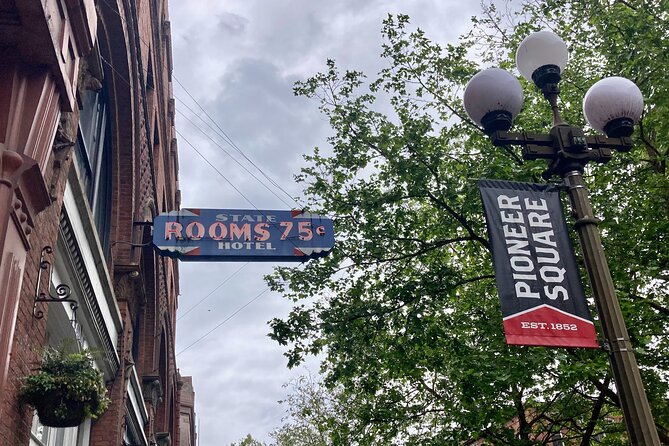
Your tour begins at Pioneer Square (100 Yesler Way). This is the right opening move because it sets the foundation: native people of the area, the city’s early founding, and what Seattle looked like in its first chapters.
The value here is that you get a historical frame before the route starts sprinting across neighborhoods. Instead of piecing together Seattle’s past from scattered plaques later, you’re building a mental map in real time.
A quick tip: Pioneer Square is often a photo moment. If the sky cooperates, take a couple shots right away. If it’s raining, this still works—one of the most common reasons people love this tour is that it stays fun even when the weather is Seattle.
Occidental Park and the Great Seattle Fire
From Pioneer Square, you pass by Occidental Park—lined with cafes and shops—and you learn about the Great Seattle Fire. Even though this stop is short, it’s a smart “cause and effect” lesson. Fires change cities: buildings, streets, codes, and even the way people think about where they build next.
Practical note: since you’re not staying long, don’t expect a deep lecture. Instead, you’re getting the kind of story that helps you understand why Seattle looks the way it does as you move forward.
Waterfall Garden Park and the Klondike Gold Rush ripple effect

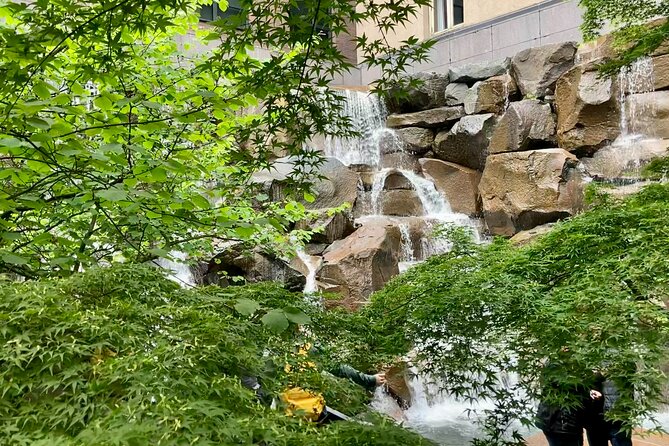
Next you hit Waterfall Garden Park, where you’ll see the small waterfall feature and connect it to the Klondike Gold Rush and what that era meant for Seattle. This is one of the tour’s strengths: it links a headline event to the physical city you’re walking through.
If you like stories that explain why one “big thing” reshaped an entire region, you’ll probably enjoy this stop a lot. And even if gold rush history isn’t your thing, the way Seattle grew around trade and migration becomes easier to understand by the time you reach the next transit and downtown landmarks.
King Street Station and Seattle’s rail-era grandeur
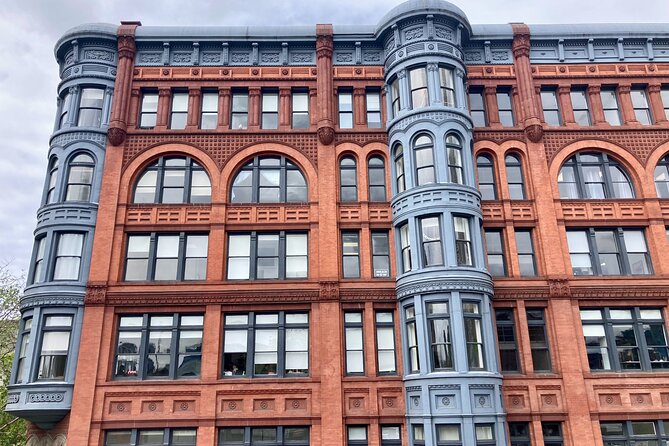
You then pass through King Street Station, including its large clock tower and ornate interior (admission isn’t part of the tour). Even without going inside, it’s a dramatic architectural moment that helps you see Seattle as a city shaped by movement—people, goods, and timelines.
This stop also works well for first-timers because it’s a recognizable piece of downtown. You get the sense that Seattle has long been a hub, not just a port town with a coffee reputation.
SODO and Stadium District: you’ll see it without paying to enter
The tour also passes by Seattle’s SODO neighborhood and Stadium District, home to the Seahawks and soccer teams. You’ll walk past, but you won’t enter.
Why it’s still useful: it positions those venues in the bigger downtown picture—how sports sit next to rail lines, industry-adjacent streets, and the practical reality of a working city.
Chinatown International District: gates, identity, and “Japantown” + Little Saigon context
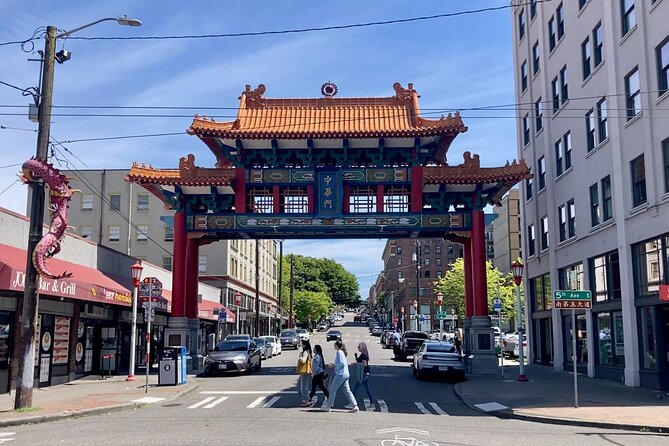
One of the most meaningful parts of this route is the cultural walk through the Chinatown International District area, where you view the gate marking the entry to the district. Here you learn about the ID, Japan Town, and Little Saigon.
This is the kind of stop that can change how you experience Seattle. When you understand a place as a community hub—rather than just a neighborhood name—food, markets, storefronts, and even the street energy make more sense.
A special note: the route also includes Hing Hay Park, and it’s part of the tour’s neighborhood storytelling arc. Even if you only spend a few minutes there, it adds texture to what you’re seeing across the city center.
Union Station Great Hall: a defunct treasure you can still read
You’ll then view Union Station Great Hall, described as a now-defunct architectural treasure. Since you’re not going inside, your guide’s job becomes translating what you can see: scale, design, and why it mattered.
If you like architecture, you’ll get more out of this stop when you look at details—lines, symmetry, and how grand spaces were designed for crowds. Even from the outside, this is the kind of place that makes the city feel layered.
Seattle Public Library: the longest stop, and worth it
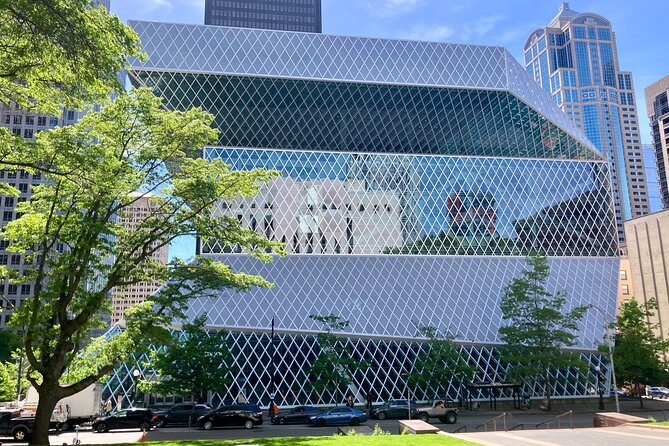
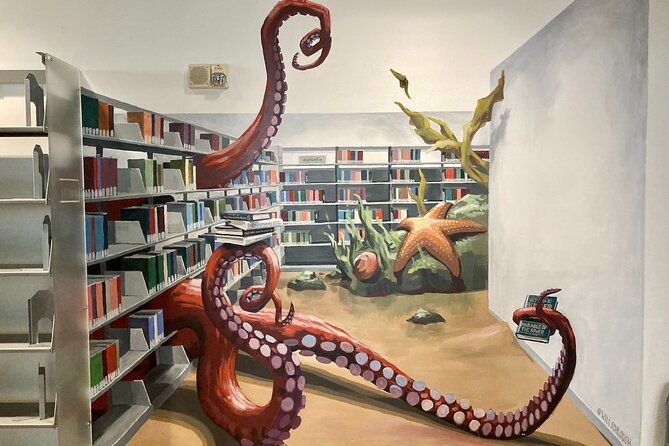
One longer stop is at the Seattle Public Library, with about 20 minutes for you to view it inside and out.
This is a great use of time because it’s not just a building. The library works as a crossroads: it’s public, it’s modern, and it gives Seattle a civic “center of gravity” that’s different from sports or shopping.
Practical tip: if you want quick photos, do the outside first, then use the inside time for angles. The library is popular, and having a guide helps you not waste your limited stop time.
Pike Place Market: a walk-past history moment
You’ll then walk past Pike Place Market, with time that’s short but focused on history—enough to connect the market to how the city became the city.
This is the right way to do Pike Place on a tour like this. You get context without turning the whole day into a crush of pedestrians. If you later want to do a deeper market visit, you’ll know what you’re looking for and why it matters.
Seattle Center Monorail ride: the best included “wow”
Here’s the ticket value payoff. You take an iconic ride on the Seattle Center Monorail from Westlake Center in downtown Seattle to Seattle Center. The monorail ticket is included.
It’s not just transportation. It’s a perspective shift. You’re moving in a way that feels distinctly Seattle—elevated, fast, and a little retro-cool.
If you’ve never done it before, this alone can justify choosing a guided walk that ends up where the monorail makes sense.
Seattle Center grounds: 1962 World’s Fair, Space Needle area, and decision points
After the monorail, you walk through the grounds of the 1962 World’s Fair, now a civic culture center with museums, performance spaces, and theaters. You’ll also be in the area where the Space Needle is the big silhouette, though the tour notes that attraction tickets aren’t included.
This means you get a “what’s here” orientation. You can then decide after the tour whether you want to buy entry tickets to something specific. Your guide can recommend options based on your interests—useful when you’re deciding between museums, views, and a post-walk meal.
You’ll also pass by the Frank Gehry-designed museum concept tied to rock and roll, science fiction, and pop culture, plus other Seattle Center landmarks and science-related exhibits that aren’t entered on the tour. In other words: this is a route that helps you know where things are, even if you don’t pay to go inside during the walk.
International Fountain and Seattle Center Food Hall: a practical pause before KEXP
You’ll pass by the International Fountain (musical fountain) briefly, then continue toward the Seattle Center Food Hall area.
This portion is handy because it gives you a built-in “food decision window” right in the middle of the day. If you want something warm, quick, or shareable, this is an easy time to grab it.
The tour also passes by a historic structure that was renovated into a modern sports and performance venue, but you don’t enter. Again, it’s about reading the city from the sidewalk and knowing what to look up later.
KEXP finish: coffee, records, and live radio atmosphere
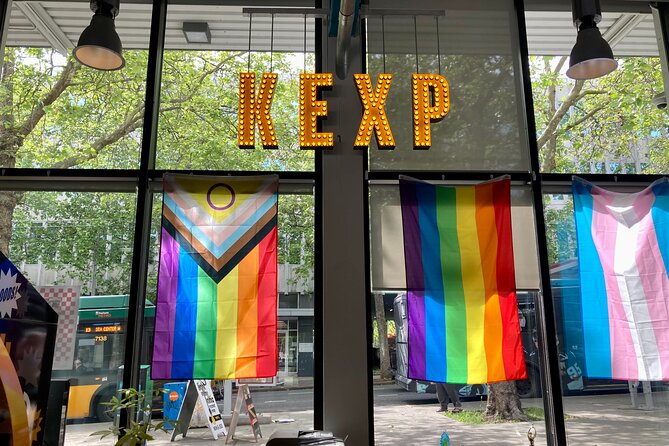
The tour ends at KEXP (472 1st Ave N), Seattle’s independent radio station. This is a fun way to close out downtown-to-neighborhood context with something modern and local.
You can grab coffee, but you purchase your own. You can also peruse records and watch DJs in the booth. If you’re lucky, you might catch a live performance by a touring or local band.
It’s a nice final contrast: after walking through official landmarks and historic districts, you end at a place that feels current and creative. It’s the kind of stop that turns your day into more than a set of photos.
Who this tour is best for (and who might want a different plan)
This tour is a great match if you want:
- A first Seattle overview that connects history and present-day neighborhoods
- A guide who answers questions and adapts to the group
- A balance of “major sights” and districts you might otherwise skip
- Included Monorail time without needing to plan transit
It may be less ideal if:
- You don’t handle walking well. Even though it’s not described as an all-day trek, you are moving steadily for about 2.5 hours.
- You want long museum visits every stop. You’ll mainly pass by or view exteriors, with only a couple longer stops (like the library).
Should you book Seattle Walking Tour?
I’d book it if you want your Seattle trip to start with clarity. This route covers the story of how Seattle became Seattle—from Pioneer Square and fire-and-gold-rush context to major downtown landmarks, cultural neighborhoods, and an end at KEXP.
At $44, you’re getting strong value because the Monorail ride is included, the group size stays small, and you finish with practical local momentum—places to eat, things to check out, and a better sense of where you are on the map.
Just be honest with your body and your schedule. Wear good shoes, plan for rain as Seattle likes to do, and expect to walk. If you do that, you’ll likely come away feeling like you understand the city, not just visited it.
FAQ
How long is the Seattle Walking Tour?
It’s approximately 2 hours 30 minutes. The walking time is about 2.5 miles total, with stops of varying lengths.
How much does the tour cost?
The price is $44.00 per person.
What is included in the tour price?
A local guide is included, and the Monorail ticket is included.
What is not included?
Snacks are not included, and attraction entry fees are not included for places you may pass by. You’ll have opportunities to buy food and drinks during the tour.
Where does the tour start and end?
It starts at Pioneer Square, 100 Yesler Wy, Seattle, WA 98104, and ends at KEXP, 472 1st Ave N, Seattle, WA 98109.
Is the tour offered in the morning and afternoon?
Yes. You can choose from a morning or afternoon tour to better fit your schedule.
What language is the tour offered in?
The tour is offered in English.
What kind of walking/fitness level should I plan for?
It’s described as requiring moderate physical fitness, with about 2.5 miles of walking and some hills/steps at times.
What happens if the weather is poor?
This experience requires good weather. If it’s canceled due to poor weather, you’ll be offered a different date or a full refund.
Can I cancel for a full refund?
Yes. You can cancel up to 24 hours in advance for a full refund. If you cancel less than 24 hours before the experience starts, the amount paid will not be refunded.