REVIEW · VALLETTA
Valletta: 3-Hour Walking Tour
Book on GetYourGuide →Operated by ColourMyTravel · Bookable on GetYourGuide
Valletta rewards you fast. This 3-hour walking tour strings together the city’s top Knights of St John-era sights with Upper Barrakka Gardens views of the Grand Harbour and the St John’s Co-Cathedral façade, all with a licensed English guide. I love how much ground you cover for the price, and I love the way the guide turns stone-and-square landmarks into a clear timeline. One thing to weigh: it is still a steady walk for 3 hours, so you’ll want comfortable shoes and patience with a few busy streets.
You start near the Valletta City Gate by the New Parliament of Malta, created by Renzo Piano, which is a bold modern contrast to the rest of the city. From there, the route favors the kind of Valletta you actually want to return to on your own later: narrow lanes, elegant façades, and key public spaces where you can stand, look, and understand what you’re seeing.
If you hate walking, this won’t fix that. If you’re happy to put your feet to work for a well-paced tour, it’s a strong first move in Valletta.
In This Review
- Key highlights you should care about
- Valletta in 3 hours: why this route works
- Meeting near Valletta City Gate and Renzo Piano’s Parliament
- Royal Opera House to Auberge de Castille: the Knights’ power story
- Piazza Jean de Valette and the public spaces feel real
- Church of Our Lady of Victory: where the city’s devotion shows
- Upper Barrakka Gardens: the Grand Harbour payoff
- Palazzo Parisio: a change of tempo toward elegant city life
- St John’s Co-Cathedral: the façade you’ll keep thinking about
- Republic Street, Courts of Justice, and St George’s Square: the city’s brain
- Price and value: what $25 buys you here
- Guides, pacing, and the small things that make a big difference
- Who should book this Valletta walking tour
- Should you book this tour?
- FAQ
- How long is the Valletta walking tour?
- How much does the tour cost?
- Where do I meet the guide?
- Is the tour in English?
- What’s included in the price?
- Are entrance fees included?
- What should I bring?
- Is there hotel pick-up or drop-off?
Key highlights you should care about
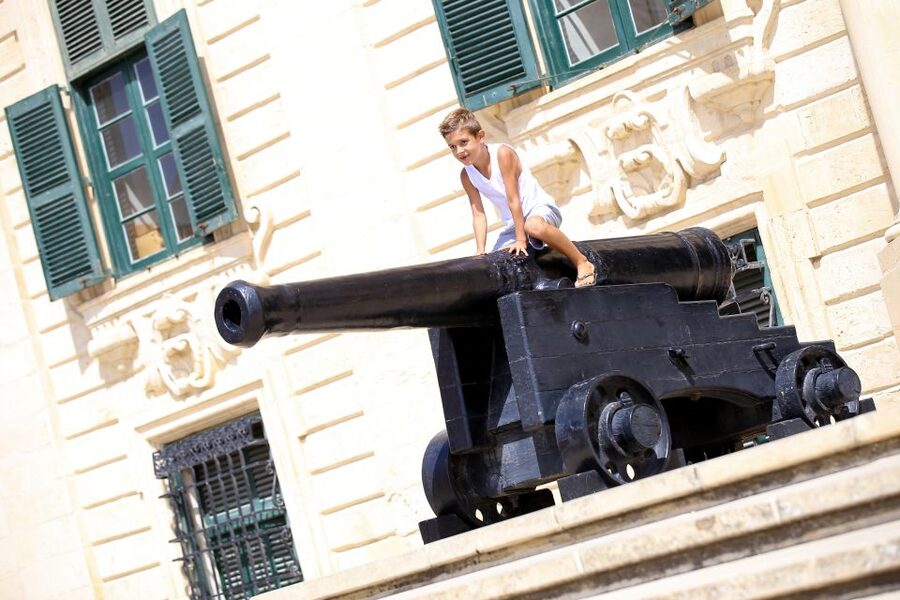
- Upper Barrakka Gardens Grand Harbour views that feel like a reset button during the walk
- Licensed, English-speaking guides who keep the story focused and easy to follow
- Renzo Piano’s New Parliament as a modern bookmark right at the start
- Baroque stops close together, so you can compare details without rushing
- St John’s Co-Cathedral and Valletta’s squares, built for sightlines and photos
Valletta in 3 hours: why this route works
Valletta is compact, but it can feel like an optical puzzle at first. This tour is built to solve that problem quickly, walking you through the capital’s major public landmarks and the older Knight-linked power centers that shaped the city. In a short window, you get a sense of how Valletta developed over centuries, rather than just collecting photos.
The timing is part of the value. Three hours is long enough to cover real ground—Royal Opera House, Auberge de Castille, multiple piazzas, and St John’s Co-Cathedral—without feeling like your day disappears. It also gives you a mental map you can use later when you’re choosing what to revisit on your own.
Another underrated win: the tour doesn’t only point at famous buildings. It helps you connect them—how formal institutions, religious sites, and government spaces sit next to each other in this city layout. That context makes the rest of Valletta easier, because you start to recognize patterns in the architecture and street planning.
You can also read our reviews of more walking tours in Valletta


Meeting near Valletta City Gate and Renzo Piano’s Parliament
Your walk starts at street level, meeting your guide at the bottom of the steps next to the New Parliament of Malta near Valletta City Gate. That’s a smart choice because the area acts like a gateway: modern Malta in sight, then the route naturally pulls you into the older city fabric.
Renzo Piano’s parliament building is controversial, and that matters for how you’ll experience Valletta. You’re not walking through a theme park where every era agrees. Instead, you’ll see how Malta keeps building layers—sometimes harmonizing, sometimes clashing—which is exactly what makes the city interesting to understand.
One practical note from what I’ve seen people say about the start: there can be a step or two right away, but the pace is manageable. If you arrive early, you can also orient yourself visually before the group begins.
Royal Opera House to Auberge de Castille: the Knights’ power story
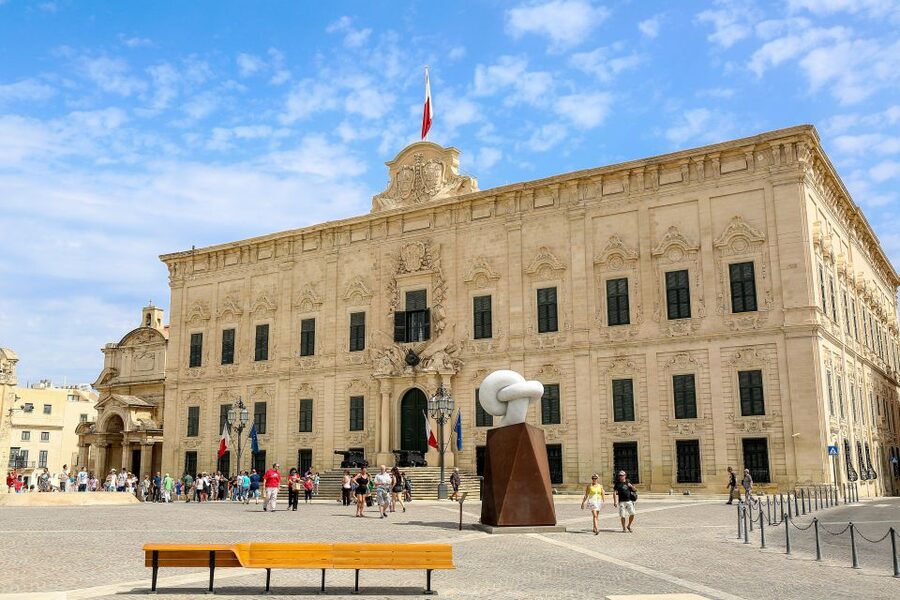
The early stops are designed to set the tone. You begin at the Royal Opera House area, then move toward Auberge de Castille (Castile). Even without stepping inside, these stops help you read Valletta’s structure: who built where, and why these sites mattered.
Auberge de Castille is tied to the Knights of St John era. That’s one reason the tour’s focus on the Knights-linked days feels more than decorative. You start to see Valletta as a planned capital, not just a hillside town with pretty streets.
I like that this part of the walk feels like the foundation of your understanding. Once the guide explains what these places represented, the later scenes—church façades, grand squares, government buildings—start to make sense as part of the same long-running story.
Piazza Jean de Valette and the public spaces feel real
From Auberge de Castille, the route continues through public squares, including Pjazza Jean de Vallette. Valletta’s piazzas aren’t just open space; they’re where the city organizes itself visually. You’ll get the sense of how daily life and official life were staged against dramatic backdrops.
This is also where a good guide can turn confusion into clarity. In a place where streets curve and viewpoints pop up unexpectedly, the guide’s job is to keep you oriented—what you’re looking at now, and why it belongs there.
If you’re the kind of traveler who likes to wander back later, you’ll appreciate that the tour keeps returning you to areas you can recognize. That makes it easier to plan self-guided time after the 3-hour experience ends.
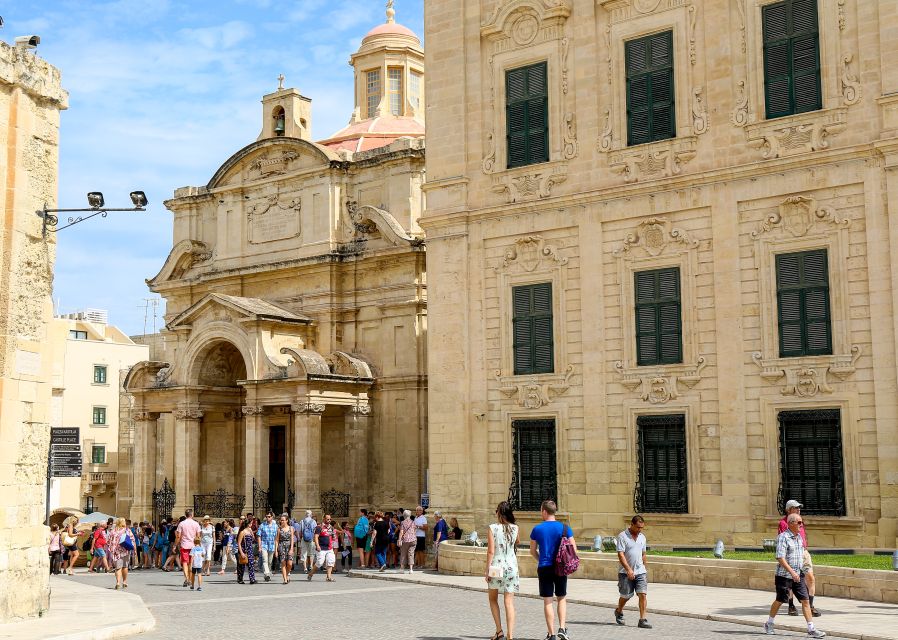
Church of Our Lady of Victory: where the city’s devotion shows
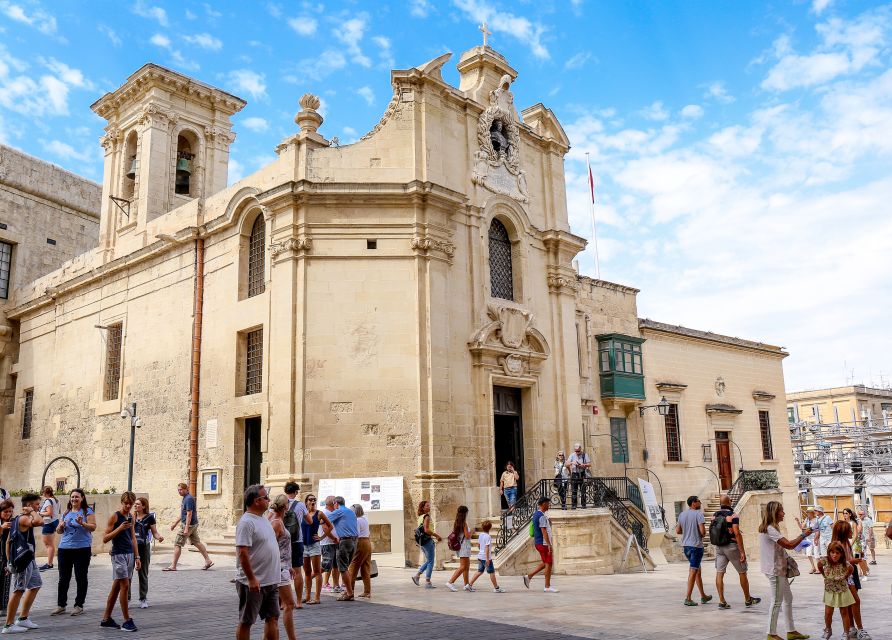
Next up is the Church of Our Lady of Victory. A stop like this changes the texture of the walk. Up to this point, the tour is heavy on institutions and power structures; this gives you a strong look at religious influence as part of Valletta’s identity.
Even from street level, you’re seeing how devotion shows up in architecture and placement. Valletta tends to do that well: you’re not just passing a church; you’re noticing how the city gives it prominence.
Practical reality: churches can mean crowds and uneven foot traffic outside. Keep your pace steady, listen closely, and don’t feel bad if you don’t get every detail at every moment. The guide’s explanations are the key, and the exterior views are enough to make the next stops click.




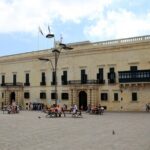
Upper Barrakka Gardens: the Grand Harbour payoff
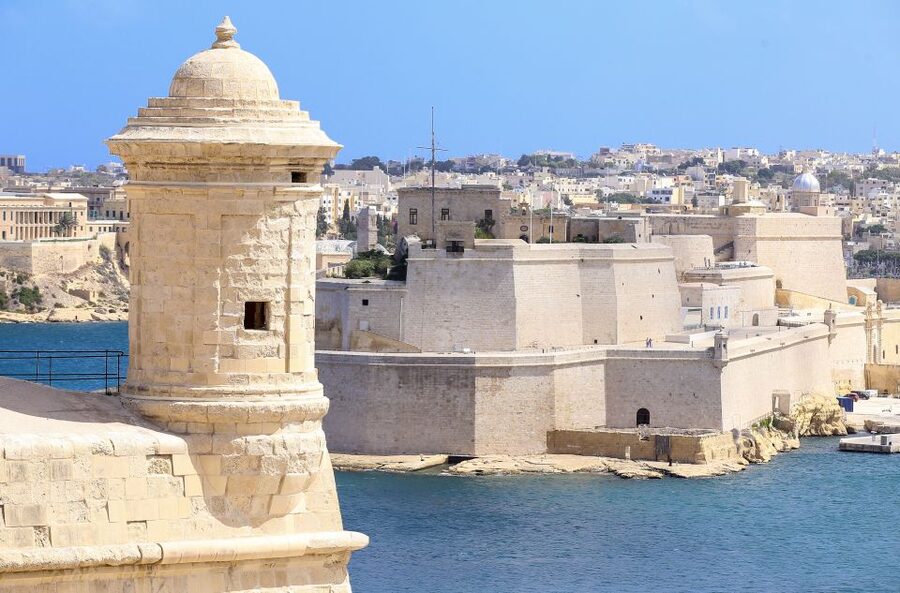
Then comes one of the best rewards in Valletta: Upper Barrakka Gardens, complete with a break time. This is the moment the tour earns its name as a walking experience, because the views of the Grand Harbour make the entire route feel worthwhile.
What I like about this stop is that it breaks the tour emotionally. After a run of streets and façades, you shift into open air and wider sightlines. The guide can also frame what you’re seeing, so the view becomes more than scenery.
A detail worth mentioning: some people have timed their tour so they were around the battery area for the midday gun. That isn’t guaranteed, but it’s the sort of thing that can happen when your schedule overlaps a daily ritual. If you’re there at the right time, it adds a memorable Valletta layer without costing extra time.
Palazzo Parisio: a change of tempo toward elegant city life
Palazzo Parisio is where the tour widens its lens. You still get the classic Valletta architecture vibe, but this stop feels like a bridge toward the city’s cultivated, elegant side—less fortress energy, more refined urban grandeur.
If you’re comparing eras, this is a good point to do it mentally. You’ve already seen public power and religious formality. Now you’re looking at a palazzo connected to the idea of comfort, status, and the wealth that funded Malta’s standout buildings.
The guide’s job here is helpful: you’re less likely to wander into a pretty building and miss the meaning. Instead, you’re guided to notice how the palazzo fits the larger Valletta story you’ve been building since the City Gate.
St John’s Co-Cathedral: the façade you’ll keep thinking about
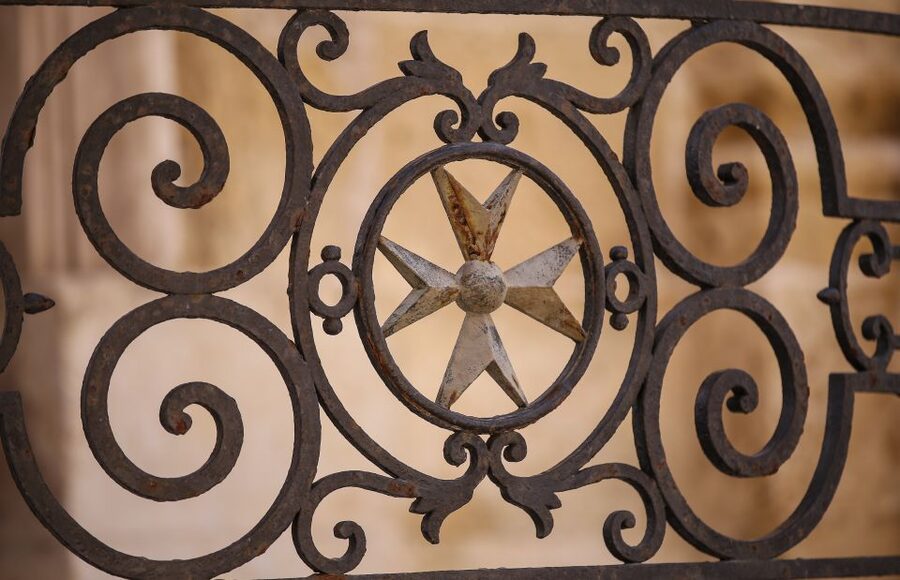
St John’s Co-Cathedral is one of Valletta’s headline acts, and the tour treats it like one. Even if your plan is to keep costs controlled and skip interior entrance fees, you’ll still get a strong exterior moment and clear explanation of why the façade matters.
This is also where the tour’s Baroque framing pays off. Earlier you heard about Knights of St John and Grand Master Jean de Valette. Now you see how those influences show up in a landmark that’s built to impress.
One of the most consistently praised parts of this tour experience is how smoothly the guide handles explanations at high-impact stops like this. People often talk about guides who keep a relaxed pace while still answering questions, and that matters most when you reach a site like St John’s Co-Cathedral—because it’s easy to feel rushed here.
Republic Street, Courts of Justice, and St George’s Square: the city’s brain
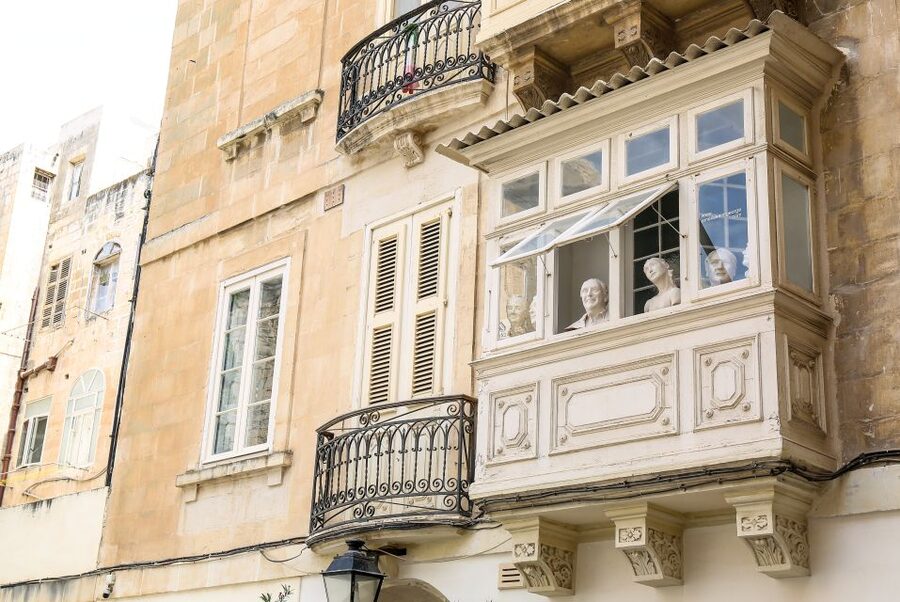
After the cathedral, the walk moves toward the civic side of Valletta. You’ll pass along Republic Street, then visit the Courts of Justice building, and finish at St George’s Square.
This trio matters because it shows how Valletta’s identity isn’t only medieval and religious. It’s also administrative and modern-in-use. You get the sense of a city where older architecture still supports official life.
St George’s Square as a finish point is practical. It’s open and easier to regroup than slipping back into narrow lanes. From there, you can decide what you want next—another church, another view, or simply time to roam without needing your guide’s directions.
Price and value: what $25 buys you here
At $25 per person for a 3-hour walk with a licensed guide, you’re paying for three things: navigation, context, and efficiency.
Navigation: Valletta’s streets can be tricky when you’re new, especially around the City Gate area.
Context: the guide ties landmarks to the Knights of St John era, Grand Master Jean de Valette, and the development of Malta across centuries.
Efficiency: you hit major sites like Royal Opera House, Auberge de Castille, multiple piazzas, Upper Barrakka Gardens, Palazzo Parisio, and St John’s Co-Cathedral in one organized route.
Entrance fees are not included, so think of this as a guided orientation plus outdoor architecture time. That’s a smart budget approach if you plan to pick which interiors you truly want to pay for later.
Also worth noting: the tour is described in English, and cancellation options include free cancellation up to 24 hours in advance. There’s also a reserve now and pay later setup, which helps if your Malta itinerary is still shifting.
Guides, pacing, and the small things that make a big difference
This tour’s repeat praise is strongly about the guide. You may meet guides such as Julia, Matthew, Mario, Carmel, Giulia, Alessia, and Alyzeeya (spelling varies). The common thread in the feedback is not just facts, but delivery: engaging explanations, humor, and a pace that doesn’t feel like a sprint.
People also specifically note a break partway through the walk—often a 15 to 20 minute stop for coffee/snack and bathroom time. That kind of pacing matters in Valletta because stones, steps, and crowds can add up fast.
If you’re traveling as a family, or you just don’t want to feel crammed into a long experience, you might like the way some groups are described as small. In at least one booking, a party of three highlighted how easy it was to hear and ask questions, which suggests that group size can vary and smaller groups can feel better.
Who should book this Valletta walking tour
This is a good fit if:
- You want a first-day plan that gives you bearings fast.
- You care about Baroque architecture and the Knights of St John-era sites, not just random photo stops.
- You prefer guided storytelling so you know what you’re looking at while you walk.
It’s less ideal if:
- You hate walking for 3 hours, even with breaks.
- You need lots of indoor time, since entrance fees aren’t included and the emphasis is on key outdoor/major landmark moments.
If you’re pairing this with other Valletta plans, I’d use it as your anchor activity. After it ends in St George’s Square, you’ll be better at choosing what to revisit, because the route gives you a framework for the rest of your day.
Should you book this tour?
Yes, you should book it if you want a smart start to Valletta. For $25, the big value isn’t just the list of sights—it’s the way the guide connects those sights to Malta’s development across centuries, while giving you the Grand Harbour view break you’ll remember.
Skip it only if your schedule is too tight for walking, or if you’re already fully comfortable navigating Valletta on your own and you don’t want guided context. Otherwise, this tour is a practical, high-ROI way to turn Valletta from confusing to clear.
FAQ
How long is the Valletta walking tour?
It lasts 3 hours.
How much does the tour cost?
It’s $25 per person.
Where do I meet the guide?
Meet at the bottom of the steps next to the New Parliament of Malta near the Valletta City Gate.
Is the tour in English?
Yes, the live tour guide speaks English.
What’s included in the price?
A licensed guide is included.
Are entrance fees included?
No, entrance fees are not included.
What should I bring?
Wear comfortable shoes for a 3-hour walking tour.
Is there hotel pick-up or drop-off?
No hotel pick-up and drop-off is included.