REVIEW · STRATFORD UPON AVON
The Sinister Side of Shakespeare’s Stratford Walking Tour
Book on Viator →Operated by Sinister Stratford · Bookable on Viator
Stratford gets a darker rewrite on this walking tour. You trade the usual Shakespeare highlights for a story-driven route full of plague lore, Civil War ghosts, and murder details—told with laughs, bite, and theatrical energy. I love that it stays light on stiff lectures and heavy on street-level storytelling that keeps both adults and kids tracking the plot.
Two things really work for me: the guide’s performance style (one name you may hear is Joe) and the way the tour connects grim local tales back to the Shakespeare world you came to see. It’s also smart that the route is built around well-known stops like Holy Trinity Church and the Royal Shakespeare Theatre, then twists the spotlight onto the darker side of the same streets.
One consideration: this isn’t a quiet, museum-style walk. If you don’t like someone getting animated—there’s at least one comment about the guide’s volume being a bit OTT—this may feel too theatrical for your taste.
Key points to know before you go
- A 90-minute “story circuit” that uses multiple Stratford corners instead of one long, repetitive route
- Dark themes without feeling endless, with stops paced so the group stays engaged
- Small group size (max 20), which makes questions and reactions easier for the guide to manage
- Shakespeare links baked in, including stories tied to the family and the doctor John Hall
- Evening-friendly atmosphere, especially around the churchyard and river area
- Value at about $16.64 per person, with a full hour-and-a-half of stops and acting
In This Review
- Why this sinister Stratford walk feels different
- Price and value for money (and why $16.64 can be a steal)
- Before you start: meeting point, what to wear, and what the pacing feels like
- Stop-by-stop: from plague outbreak rumors to a murder for building ownership
- Corner of Sheep Street and High Street: Civil War ghosts
- A building that wasn’t there (for centuries): murder and ownership
- School trauma in the 1500s: what you’d have seen out the window
- Shakespeare connections: John Hall, surgery, and the family stories you came for
- Holy Trinity Church and the Royal Shakespeare Theatre: contrast on the same streets
- Churchyard choices and the Avon river walk: atmosphere, risk, and local dates
- River Avon: health briefing and a playful watery warning
- Standing near the river also gives you a break
- The final tragic scene: ancient court, witchcraft, and a return to Tudor-adjacent streets
- Who this tour suits best (and who might not love it)
- The most praised parts: acting, fun pace, and “no boring moment” energy
- Should you book the Sinister Side of Shakespeare Stratford Walking Tour?
- FAQ
- How long is the Sinister Side of Shakespeare walking tour?
- Where do I meet for the tour?
- Is the tour offered in English?
- What ticket type do I need?
- How large is the group?
- Is it okay for children?
- Does the tour depend on weather?
Why this sinister Stratford walk feels different

Most Stratford walking tours try to cover everything. This one doesn’t. Instead, it works like a nighttime story you can walk through, where each street corner turns into the next scene.
The big win is the balance: you get spooky, grisly tales, but the tour never forgets it’s also about place. You pass recognizable landmarks—then the guide re-frames them with stories tied to the city’s darker moments. It’s the same town you already think you know, just with the lights turned down.
Another plus is the tone. Reviews point to a fun mix of mystery, magic, murder, and humor. That’s a tough combo to pull off, but it’s exactly why this tour is popular with families. If your group likes history in a “tell me the story” format, you’ll probably have a great time.
Price and value for money (and why $16.64 can be a steal)
At $16.64 per person for about 1 hour 30 minutes, this fits the sweet spot between a pricey guided experience and a basic self-guided stroll. You’re not paying for a long lecture. You’re paying for a route, a guide who performs the stories, and a run time that feels like you actually got your money’s worth.
Also, the tour runs with multiple departure times, so you’re less likely to end up with an awkward schedule where you miss out. If you’re trying to pack an efficient itinerary, being able to choose your slot matters.
Finally, the tour limits the group size to 20 travelers max. That tends to reduce the “herding” feeling you sometimes get on larger tours. For a small amount of money, that keeps the experience more personal and more fun.
You can also read our reviews of more walking tours in Stratford upon Avon

Before you start: meeting point, what to wear, and what the pacing feels like
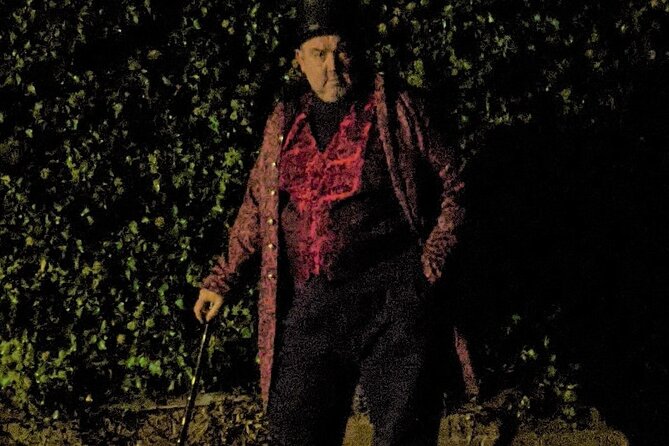
You’ll meet at Sinister Stratford’s Platinum Jubilee Tree, on Sheep Street (Sheep St, Stratford-upon-Avon CV37 6EF). The activity ends back at the meeting point, so you don’t need to figure out your return plan.
Timing-wise, plan around the 90-minute length. It’s long enough for a real route, but short enough that you can still do dinner after—without your whole day collapsing.
If you’re going in cooler months, dress like you expect a walk in English weather. One review calls out that winter nights get chilly, and you’ll be standing around at several stops. Bring a warm layer, and if it’s wet, wear shoes with grip. You’ll also spend time near the River Avon, so footing matters.
Stop-by-stop: from plague outbreak rumors to a murder for building ownership
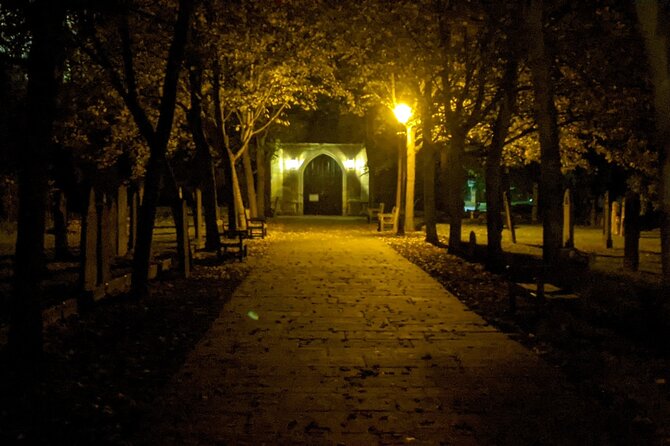
This tour starts fast, with one of its strongest opening hooks. The guide begins at the starting point with the story of the start of the Bubonic Plague outbreak—a grim way to set the tone right away. From there, you keep moving through a sequence of stops that feel like a chain of secrets rather than random facts.
Corner of Sheep Street and High Street: Civil War ghosts
Next, you’re still on the corner area of Sheep Street and High Street, where the tour shifts to a Civil War-era ghost tale. This part matters because it shows you what this tour does best: it links history to imagination. You’re not just learning a date. You’re hearing why the city remembers it.
A building that wasn’t there (for centuries): murder and ownership
Then you “marvel at a building that hasn’t been there or hundreds of years.” That’s the style here: the guide makes the past visible by explaining what used to stand there, then follows it with a story about how a murder was committed to get ownership of the building.
This is one of those stops where the story may feel shocking, but it’s also very practical. It teaches you to read Stratford streets like a living document—because the city’s architecture is the evidence, even when the original structure is long gone.
School trauma in the 1500s: what you’d have seen out the window
After that, the tour plays a clever comparison game: it asks you to consider how tough schooling life could be in the 16th century. Then it nudges you to imagine the view from a window—so you’re not just hearing about suffering, you’re mentally placing yourself into the scene.
If you like history that makes you picture the daily life behind the headlines, this stop is for you.
Shakespeare connections: John Hall, surgery, and the family stories you came for
You’ll hit the Shakespeare angle in a way that feels woven into the walk rather than tacked on. One of the tour’s key stops centers on Shakespeare’s eldest daughter, whose marriage connects to the only doctor in town: John Hall.
This is where the tour stays grounded in something you can map onto Stratford’s identity. Stratford wasn’t just theaters and famous quotes. It was a working town with limited medicine, public risk, and stories that carry fear through the years.
And because the tour is a performance, you don’t just get the facts—you get the emotional question the guide raises: would treatment help you, or harm you? That question turns a simple biography detail into a narrative moment.
Holy Trinity Church and the Royal Shakespeare Theatre: contrast on the same streets
As you move, you’ll pass by Holy Trinity Church and the Royal Shakespeare Theatre. That contrast helps the tour click for first-timers. You can stand near the world-famous Shakespeare stage, then watch the story slide toward death, superstition, and tragedy. Same city. Different lighting.
Churchyard choices and the Avon river walk: atmosphere, risk, and local dates
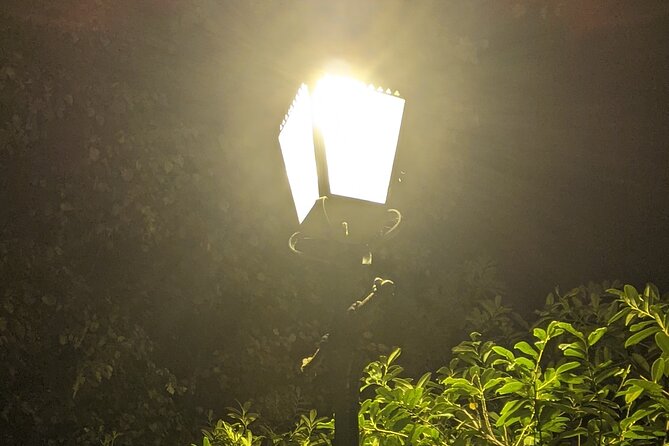
The tour keeps moving toward the church area, and it builds suspense with how it handles the location. One stop asks: enter the churchyard, or should you just stand outside to hear some of the most gruesome tales of the residents?
That staging matters. Standing outside keeps the walk flowing, but it still lets the guide deliver darker stories with the churchyard as a visual anchor. If you want a more atmospheric experience, especially around autumn, you’ll likely feel the impact more during evening walks—one review mentions the sound of bell ringing in the churchyard with leaves falling, which creates a very specific mood.
River Avon: health briefing and a playful watery warning
Then comes the route along the River Avon. The guide includes a Health and Safety briefing and reminds you not to fall in. It’s said in a fun way, but it’s still good advice. You’ll be close to the river path, and Stratford can have uneven ground and slippery edges after rain.
While you walk, you’ll hear stories about the river and learn about the local significance of September the 21st. The key here isn’t the date itself (since the exact meaning isn’t provided in the tour outline you have), but the way the tour uses a specific local date to make the city feel tied to real events and memories.
Standing near the river also gives you a break
The pacing works here because the river stretch often feels like a natural breather. It’s not just “more scary facts.” It’s a change in scenery, with the guide still holding the story thread.
The final tragic scene: ancient court, witchcraft, and a return to Tudor-adjacent streets
Near the end, you’ll peer down an ancient court and hear one final tragic tale, described as involving witchcraft and murder. This last stretch is meant to land emotionally—a finale that brings the tour’s themes together: fear, belief, crime, and punishment.
Then you loop back to the start point, so you don’t need to worry about navigation when you’re tired or your phone battery is low.
One more detail worth noting: you’ll also pass by Tudor World, which claims to be the most haunted building in England. Even if you don’t buy the superlative, it fits the overall vibe. This is a tour that keeps you thinking about Stratford as a place where “normal tourism” and “dark folklore” share the same street corners.
Who this tour suits best (and who might not love it)
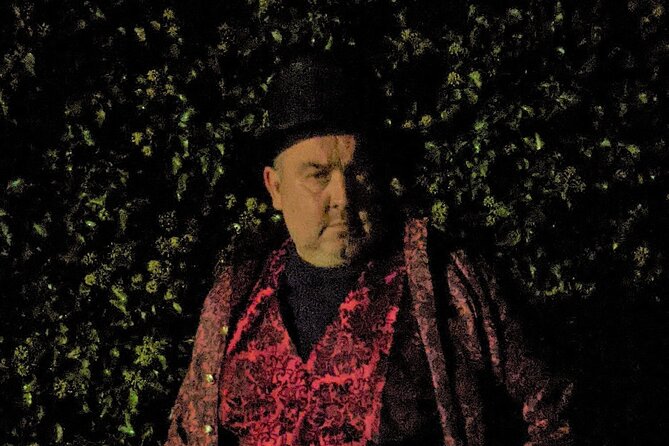
This tour is a great fit if you want Shakespeare-related sightseeing that doesn’t feel like homework. It mixes adults and children well, and reviews mention young kids staying focused for the full 90 minutes when the guide keeps the energy up.
It’s especially good for:
- Families who want history plus scare-factor without a long sit-down session
- Adults who like their city history with humor
- Anyone who prefers short scenes at stops rather than one long monologue
It might be less ideal for:
- People who want a quiet, low-volume guide
- Anyone who doesn’t enjoy grim stories or heavy themes
- Groups that hate theatrical performance cues
One review even points out that older children might enjoy it more, which is a useful clue. The tour is billed for adults and children, but the subject matter is not sanitized.
The most praised parts: acting, fun pace, and “no boring moment” energy
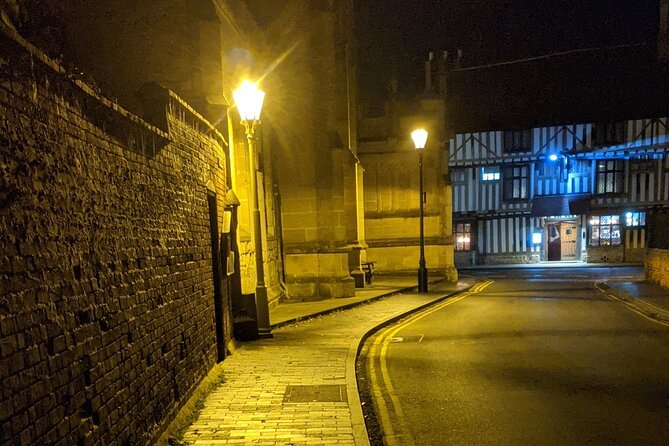
The reviews put a lot of weight on three things. First, the guide’s ability to hold attention through performance. People describe the tour as funny, animated, and packed with spooky facts that still feel connected to Stratford.
Second, the route itself gets praise. It’s not a random loop. It’s a structured sequence: plague rumors, ghost stories, old buildings and ownership, Shakespeare-family links, then the churchyard and river.
Third, the duration is a big deal. People consistently say it lasts about an hour and a half, and the time moves quickly. For the price, that matters. You’re not paying to drag yourself through a long walk with stops that feel optional.
There’s even a recurring theme of small-group energy. With max 20, you’re less likely to feel like a spectator and more likely to feel like part of the experience—especially if you ask questions during the pauses at each stop.
Should you book the Sinister Side of Shakespeare Stratford Walking Tour?
I’d book it if your ideal Stratford day includes stories you can walk to, a guide who performs, and a spooky spin on the same landmarks you’d see on a traditional tour. For about $16.64 and 90 minutes, it’s one of the easier “value picks” if you’re trying to add something memorable without blowing your budget.
I wouldn’t book it if you need a calm, strictly academic tour, or if you’re sensitive to darker themes. This is not just ghosts in the abstract—it’s murder, witchcraft stories, and grisly local legends delivered with theatrical energy.
If you’re deciding between “more standard Shakespeare” and “a darker Stratford story walk,” this one is the better match for groups who like to laugh while learning.
FAQ
How long is the Sinister Side of Shakespeare walking tour?
It runs for about 1 hour 30 minutes.
Where do I meet for the tour?
You meet at Sinister Stratford’s Platinum Jubilee Tree on Sheep Street (Sheep St, Stratford-upon-Avon CV37 6EF, UK).
Is the tour offered in English?
Yes, the tour is offered in English.
What ticket type do I need?
You’ll get a mobile ticket.
How large is the group?
The tour has a maximum of 20 travelers.
Is it okay for children?
The tour is designed as a fun outing for adults and children, and the story format tends to work well for kids who like ghosts and mystery.
Does the tour depend on weather?
Yes. It requires good weather, and if it’s canceled due to poor weather, you’ll be offered a different date or a full refund.