REVIEW · ZANZIBAR CITY
Stone Town Private Walking Tour
Book on Viator →Operated by Zanzibar Walks · Bookable on Viator
Stone Town is a maze, and this fixes it. I love that a private guide turns confusing lanes into a simple mental map, and I also love the local tips for where to eat, drink, and spend your next hours. The one catch: if you mainly want quick photo stops and minimal history, this walk may feel more like learning than wandering.
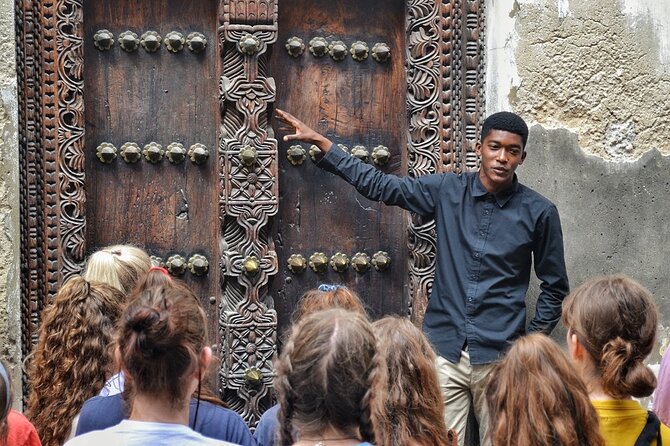
The route links the big emotional anchors of the town—like the Anglican Cathedral and the former slave-market context—with major landmarks such as the Old Fort and the House of Wonders (national museum). One detail that really sticks is how guides explain door carvings, so you stop seeing doors as decoration and start reading them like a story.
It also helps that you can get hotel pickup in Stone Town, then start and end near Mizingani Rd at the Zanzibar tourist information center. This tour is short, so you’ll cover a lot on foot, which means comfortable shoes matter, and a hot day can feel long even at a smart pace.
In This Review
- Key highlights you should care about
- Why this 2-hour private walk works so well in Stone Town
- Stone Town’s UNESCO layout: limestone doors and a 50-hectare maze
- Anglican Cathedral and the former slave-market context
- House of Wonders, Palace Museum, and reading the architecture
- Old Fort, Darajani market, and Hamamni Baths: where Stone Town lives
- Old Fort
- Darajani market
- Hamamni Baths
- Catholic Cathedral to Freddy Mercury House: the lighter side of the walk
- Your guide makes the tour: Mohammed, Imran, Ali, and Ally Jape
- Price and value: $26.23 for a guided orientation
- Timing, booking, and how to get the most out of the walk
- Should you book this Stone Town Private Walking Tour?
- FAQ
- How long is the Stone Town private walking tour?
- What is the meeting point?
- Is the tour private?
- Is hotel pickup included?
- Are there admission fees for stops?
- Is food included?
- What kinds of places will we see?
- What if the weather is bad?
- What happens if I cancel last minute?
Key highlights you should care about
- A private guide who’s focused on you instead of a crowd
- A 2-hour reset to get your bearings fast in Stone Town’s tight streets
- Architecture details that make sense, especially limestone buildings and door carvings
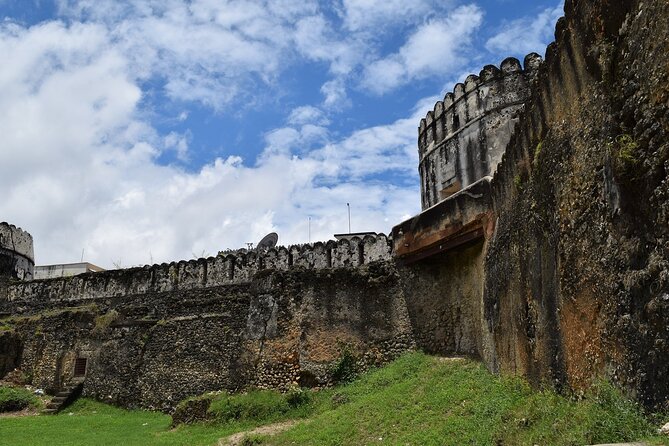
- Key landmarks in one loop, from museums and cathedrals to markets and baths
- Local meal and visit suggestions that help you plan the rest of your trip
- A simple start/end point, plus hotel pickup if you request it
Why this 2-hour private walk works so well in Stone Town
Stone Town can make your brain feel scrambled. Streets twist. Buildings crowd together. You’ll see ornate doors, coral-stone arches, and tangled history in the same block. This tour is built for that reality: it’s short enough that you don’t burn a full day, but packed enough that you leave with a structure for the place.
For first-time visitors, that matters. When you know where landmarks sit in relation to each other, the rest of your walk feels easier. You stop guessing and start recognizing patterns—like which streets feel more commercial, where the religious landmarks cluster, and where the bustle turns into calmer lanes.
And because it’s private, you’re not trapped with a fixed pace. In the feedback, guides like Mohammed, Imran, Ali, and Ally Jape come up with the same theme: they answer questions, slow down when you need it, and keep things upbeat. That’s not just nice. It changes how much you actually retain.
Stone Town’s UNESCO layout: limestone doors and a 50-hectare maze
Stone Town isn’t just old. It’s big old, with real numbers behind the romance. The historic center covers about 50 hectares and includes more than 2,000 limestone buildings. Around 18,000 people live in the surrounding suburbs, which means you’re not touring a dead theme park.
What makes the area so interesting is the overlap of influences: African, Arab, Indian, Persian, and European elements all show up in the architecture and streetscape. The town was designated a UNESCO World Heritage Site in 2000, and once your guide points out the patterns, it’s easier to see why.
The most practical part is that this tour teaches you how to look. You’ll pay attention to carved doors, construction styles, and the way buildings face the street. Instead of walking past details, you understand what you’re looking at—and you can spot it again later when you’re on your own.
Anglican Cathedral and the former slave-market context

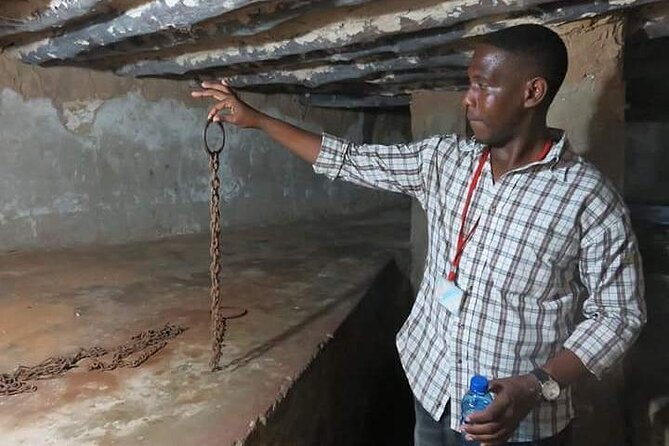
A key emotional stop on this route is the Anglican Cathedral, connected to the former slave market area. This is where the story of Zanzibar becomes hard to ignore, and where a good guide earns their pay.
In the way these tours are commonly run, you’re not just shown a building. You’re given context for why it’s important and how Zanzibar’s history shaped the town. Some guests also note that the framing of the slave-related museum component can feel like it emphasizes British involvement in a particular way. If that’s a concern for you, go in with an open mind and ask questions—your guide can help you understand how different eras and narratives are presented.
The upside is that you don’t need to be a history buff to get something out of it. You’ll walk away with clearer timelines and better instincts about what you’re seeing, which helps if you plan to visit museums later.
House of Wonders, Palace Museum, and reading the architecture
After the heavier context, the tour shifts into the place-based learning that makes Stone Town feel real. You’ll visit the House of Wonders, which is the national museum stop on this route, and you’ll also have time at the Palace museum.
These museum moments are valuable because they put objects and architecture in order. Without that ordering, it’s easy to look at a room of artifacts and feel like you missed the plot. With a guide explaining what to notice, you start seeing connections—between trade, religion, settlement patterns, and the town’s physical design.
One small detail that keeps getting praised is the way guides explain door carvings. You might hear about the meanings behind designs, what different elements suggest, and how the doors signal identity and craft. It sounds niche until you realize it’s everywhere in Stone Town. Once you understand one, you start noticing dozens.
Old Fort, Darajani market, and Hamamni Baths: where Stone Town lives
Stone Town isn’t only about monuments. It’s about everyday life squeezed into narrow lanes. That’s why this walk includes places like the Old Fort, Darajani market, and Hamamni Baths.
Old Fort
The Old Fort stop helps you anchor the town geographically. Forts are built for control and visibility, and even if you don’t love military history, the location gives you a sense of how the coastline and activity were managed over time. Guests often mention this as a highlight because it adds shape to the tour.
Darajani market
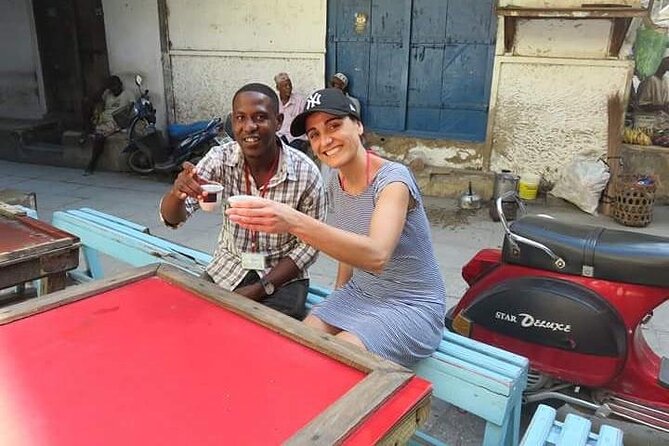
Darajani market is where you get the commercial pulse. You’ll likely see spices and products being discussed, and your guide can point out what’s worth sampling (and what’s just for show). In the feedback, one guide also helped guests bargain a little on souvenirs. That’s practical in a place where prices can move and where a local voice makes the whole experience calmer.
Hamamni Baths
Hamamni Baths add a different flavor. You’re shifting from trading to ritual and daily care. Even if you don’t spend a long time inside, the stop helps you understand Zanzibar as a lived-in city with traditions beyond the postcard sights.
Catholic Cathedral to Freddy Mercury House: the lighter side of the walk

This tour also includes stops that broaden the story beyond one theme. The Catholic Cathedral is part of the religious landmark mix, and it helps you see how different communities built and shaped the town over time.
Then there’s the Freddy Mercury house stop. It’s one of the “wait, this is right here?” moments that can turn Stone Town from history-heavy into human-scale. If you’re a fan, it gives you a pop of modern recognition inside the older streets. If you’re not, it still works as a lesson in how the town layers eras—music, identity, and architecture all sharing the same small space.
Ending up here is a good way to keep the walk balanced. You’ve handled the hardest parts of the story earlier, and now you’re seeing how Stone Town keeps evolving.
Your guide makes the tour: Mohammed, Imran, Ali, and Ally Jape

The private format is only half the story. The other half is the guide’s style.
In the feedback included with this experience, Mohammed is repeatedly praised for being patient, funny, and able to explain history in a way that feels easy to follow. Imran also comes up with strong marks for being articulate and for having a local’s understanding of both long history and present-day challenges to keeping architecture livable. Ali is mentioned for blending facts with a fun approach, and one guest specifically loved how Ally Jape shared informed opinions and took time without rushing.
There’s also a practical angle: some guides go beyond walking and point you to a smart lunch spot. One example included a recommendation that led to lunch at Lukmaan, plus help arranging a tuktuk ride. That’s not guaranteed, but it shows what “local help” can look like when the guide has time and attention.
If you want to keep the tour exactly your style, send a quick message before you go. Let them know if you want more door-architecture focus, more market time, or less shopping. Because it’s private, your guide can usually adjust the balance.
Price and value: $26.23 for a guided orientation
At about $26.23 per person for roughly 2 hours, this tour is priced like an efficient orientation rather than a full-day outing. The value comes from three things:
First, you’re paying for a guide to translate a complex town fast. Stone Town is not intuitive. You can get lost without meaning to. A good walk-through can save you hours of aimless wandering on your first day.
Second, it’s private, so you’re not dividing attention across a group. That matters when you’re asking questions about architecture details, religious landmarks, markets, or the slave-market story.
Third, hotel pickup in Stone Town can reduce your friction. You start near where you’re staying, then you end right back at the meeting point area. Less time transferring means more time learning and seeing.
One more detail: it’s a mobile ticket. That usually makes things smoother on the day, especially in a place where schedules can feel more fluid than you’re used to.
The main value consideration is personal. If you already know Stone Town’s history and you mainly want free-form wandering, you might not need a guided loop. But if you’re arriving with a suitcase, a limited time window, and a desire to understand what you’re seeing, the price is easy to justify.
Timing, booking, and how to get the most out of the walk
This tour typically gets booked about 22 days in advance. That’s a sign you should plan at least a couple of weeks ahead if you’re traveling in peak season or you have a tight schedule.
It’s also a weather-dependent experience. In other words, you’re walking outside. If conditions are rough, the day may change. Plan a backup day in your Stone Town schedule so you’re not stuck rearranging everything at the last minute.
For your own preparation, I suggest:
- Wear shoes that can handle uneven, tight lanes.
- Bring water and something to cover your head if the sun’s up.
- If you care about specific themes, message your operator ahead of time so your guide can lean into what you want (architecture, markets, museums, or the story of the slave-market context).
Also, because this tour includes a market area, it can be tempting to buy stuff right away. If you like shopping, that’s fine. If you don’t, you can still enjoy the market as a cultural stop and focus your purchases later.
Should you book this Stone Town Private Walking Tour?
Book it if you want a fast, guided way to understand Stone Town without spending days figuring out where everything sits. This is especially smart for a first visit, solo travelers, or anyone who wants a clear structure for later independent exploration. The repeated praise for guides like Mohammed, Imran, Ali, and Ally Jape is a real clue: the best version of this tour is when your guide keeps the pace human, explains details like door carvings, and answers questions.
Skip or reconsider if you’re mainly after relaxed, low-effort sightseeing with almost no historical framing. One concern that comes up is that some tours can drift into too much shopping energy for certain visitors. If that sounds like you, set expectations early and steer the conversation.
If you’re on the fence, treat this as your orientation day. It’s the kind of tour that helps you stop walking Stone Town blindly—and start walking it with your eyes open.
FAQ
How long is the Stone Town private walking tour?
It runs for about 2 hours.
What is the meeting point?
The start (and end) is at the Zanzibar tourist information center on Mizingani Rd, Zanzibar.
Is the tour private?
Yes. It’s private, so only your group participates.
Is hotel pickup included?
Pickup from Stone Town hotels is included, but you need to request it and message in advance.
Are there admission fees for stops?
The experience lists admission ticket as free.
Is food included?
No. Food and drinks are not included.
What kinds of places will we see?
You’ll cover key Stone Town landmarks including the Anglican Cathedral (former slave market), House of Wonders (national museum), Palace museum, Old Fort, Darajani market, Hamamni Baths, Catholic Cathedral, and the Freddy Mercury house.
What if the weather is bad?
The experience requires good weather. If it’s canceled due to poor weather, you’ll be offered another date or a full refund.
What happens if I cancel last minute?
You can cancel for a full refund up to 24 hours before the experience starts. If you cancel within 24 hours, the amount paid is not refunded.