REVIEW · JODHPUR
Private Jodhpur Blue City Walking Tour with Guide
Book on Viator →Operated by Deepak tour and transport · Bookable on Viator
Blue streets are best with a guide.
This private Jodhpur Blue City Walking Tour is built for people who want the “wow” factor fast: you’ll ride in a private vehicle between stops, then walk with a local guide so you don’t miss the best alleys and landmarks. I like that it stays easy to manage in 2–3 hours, and I also like that snacks and drinks are included (samosa plus coffee or tea, along with bottled water). One thing to consider: you’re walking through older lanes, so wear comfortable shoes and expect a bit of uneven ground.
What makes this one feel worth your time is the mix of big sights and small streets. You’ll start in the old center around the clock tower area, then head toward water architecture like Toorji Ka Jhalra, and finish with viewpoints where the city’s blue houses make sense in a single glance. Guides on this tour—like Prabhat Singh, Nahendra, Rajesh, and Yogesh—are consistently praised for sharing clear history and practical street-level details, plus they help you time your photos.
If your goal is a low-stress introduction to Jodhpur’s old city, this tour’s structure fits well. It’s private (just your group), and you get hotel pickup and drop-off, which matters when your day is otherwise packed with forts and markets. Just keep the pace in mind: it’s not a slow amble for wandering off-script—it’s a guided route designed to show you the highlights without turning your afternoon into a logistics puzzle.
In This Review
- Quick hits: what you’ll remember from this route
- Why a private Blue City walk beats wandering solo
- Private transport + walking: how the timing works in practice
- Stop 1: Sardar Market and the Ghanta Ghar clock tower
- Stop 2: Toorji Ka Jhalra step well—water architecture up close
- Stop 3: Navchowkiya lanes—blue houses and old-city market life
- Stop 4: Kunj Bihari Temple—1847 memory and quiet atmosphere
- Stop 5: Ranisar and Padamsar Lakes near Fateh Pol
- Stop 6: Pachetia Hill for sunrise-style city views
- Price and value: what $10 actually buys you here
- What makes the guide experience feel personal
- Who should book this Blue City walking tour
- Should you book it or skip it?
- FAQ
- What’s included in the tour price?
- How long does the Private Jodhpur Blue City Walking Tour take?
- Which stops have admission tickets included?
- Is this tour private or shared?
- Do I need to pay for the guide tip?
- Can I get a refund if I cancel?
Quick hits: what you’ll remember from this route
- Hotel pickup + private vehicle keeps you comfortable between walking sections.
- Samosa snacks and coffee/tea are built into the tour flow, not added later.
- Toorji Ka Jhalra (a restored step well) gives you a standout “how did they build this?” moment.
- Navchowkiya’s narrow lanes are where the blue houses and old-city market feel real, not staged.
- Ranisar–Padamsar Lakes sit near Mehrangarh’s back area, giving scenic breaks between viewpoints.
- Pachetia Hill is your photo and skyline stop for sunrise or sunset-style views.
Why a private Blue City walk beats wandering solo
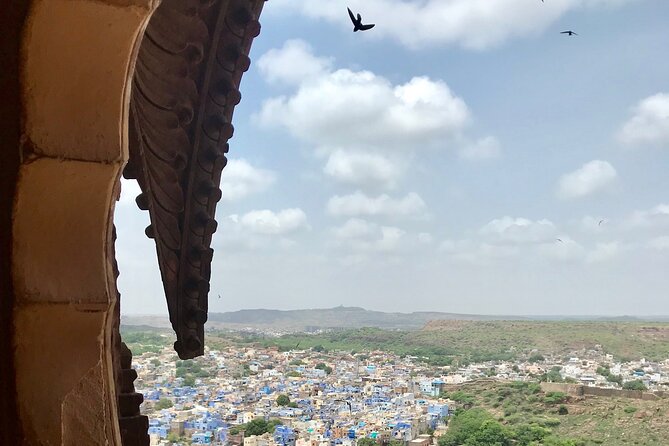
Jodhpur’s Blue City is gorgeous, but it’s also easy to get lost in. The roads curve, the lanes narrow, and the best photo angles aren’t always where you expect. This tour solves that with a local guide who keeps you moving with purpose—so you spend time looking up and around instead of trying to decode street signs.
I also like how the experience blends two kinds of seeing. First, you get the classic landmarks: clock-tower energy at Sardar Market, then the dramatic geometry of a step well. Second, you get the lived-in parts of the old city, like the tight lanes of Navchowkiya where blue-painted homes cluster around market life. That combination is what makes Jodhpur feel like a place, not a checklist.
And at about $10 per person, the value is hard to ignore when you compare what’s included. You’re paying for a private guide and private transport, plus refreshments (bottled water and coffee/tea) and samosa snacks. Several stops include admission tickets directly in the tour, so you’re not constantly switching between paying and sightseeing.
You can also read our reviews of more walking tours in Jodhpur

Private transport + walking: how the timing works in practice
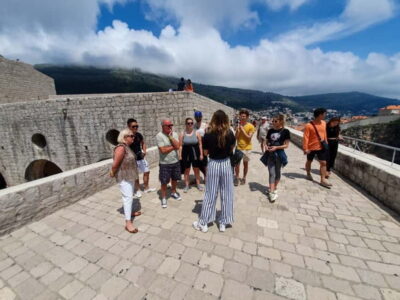
The tour runs about 2–3 hours, which is a sweet spot if you have limited time or you’re saving your full day for Mehrangarh Fort or Rao Jodha Desert Rock Park. You’ll start with hotel pickup and then ride comfortably between key points. Then the guide leads walking sections where it matters—especially when streets get narrow and you’re hunting for the best views of blue houses.
This structure also helps with heat and energy. Even when it’s not scorching, Jodhpur can feel intense in the middle of the day. Moving by vehicle between sights means you don’t spend the entire outing in the sun just to reach your next stop.
The “private” part isn’t just marketing either. It means your guide can pace you, answer your questions, and take you to spots that make sense for your timing—like when you’re trying to photograph the old city without everyone rushing you.
Stop 1: Sardar Market and the Ghanta Ghar clock tower
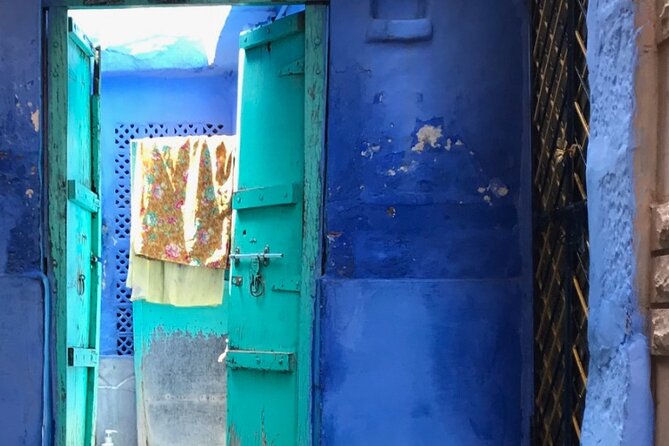
You kick off around Sardar Market, with a focused first stop at the famous Ghanta Ghar (clock tower in the center of the city). The clock tower was built by Maharaja Sardar Singh about 200 years ago, and it’s often described as the clock tower of Rajasthan—meaning, even if you don’t know the details, you feel how central it is.
Expect about 20 minutes here. This isn’t a long museum-style visit. It’s a getting-your-bearings stop: you see the landmark, you learn how it fits into the old city layout, and you start to understand where the foot traffic naturally flows.
The practical value? You get a reference point early. Once you’ve seen Ghanta Ghar, the rest of the route becomes easier to follow later—even after the tour ends. You’ll also pick up context about why the old market area matters beyond shopping, which helps the Blue City feel connected rather than random.
Stop 2: Toorji Ka Jhalra step well—water architecture up close
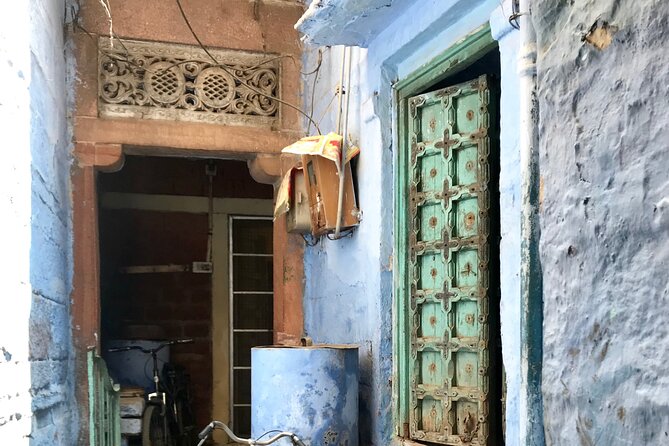
Next comes Toorji Ka Jhalra (Toorji’s Step Well). This is the kind of stop that quietly steals the show. The step well was built in the 1740s by Maharaja Abhaya Singh’s queen. It was submerged for nearly a century, and recent drainage, cleanup, and restoration brought it back into view—so you get the satisfying feeling of seeing something that was forgotten and then revealed.
Plan for about 30 minutes here. What you’ll notice is the vertical drama: a step well isn’t just a hole in the ground. It’s engineered for access to water across time, and its carved steps show careful planning. Your guide’s job is to connect those physical details to why people built this way in Rajasthan—so it makes sense, not just impresses.
Admission is included for this stop, so you can focus on looking. I like step wells because they change how you see a desert city. They remind you that water is the real organizing force here, even when you’re walking through streets that look purely decorative.
Stop 3: Navchowkiya lanes—blue houses and old-city market life
Then you shift into the streets: Navchowkiya. This is where the tour gets hands-on. You’ll walk to a narrow street deep in the old city to view blue houses and the surrounding market area. It’s about 45 minutes of guided wandering at a pace that’s long enough to feel like you’re in the neighborhood, not only passing through.
Admission here is free, which makes sense: you’re mostly experiencing the city itself. The guide helps you spot the “why” behind what you see—like how the blue-painted homes sit within daily street patterns and how market activity shapes the view lines.
From a photography standpoint, this is one of the most important sections. If you only get one chance to photograph the Blue City up close, this is the part where your images become more than wide shots. Look for angles from doorways, small alleys, and street corners where the paint color meets real life.
Stop 4: Kunj Bihari Temple—1847 memory and quiet atmosphere
The route continues to Kunj Bihari Temple, with about 30 minutes on site. The temple was built in 1847 by Maharaja Vijay Singhji in memory of his deceived son Sher Singh, who died at a very young age. Even if you don’t catch every detail, the purpose comes through: this isn’t only architecture; it’s a story memorialized in stone.
Your guide’s interpretation matters here. A temple like this can feel like a pause between louder stops—unless you understand what the name and backstory connect to in the local mindset. That’s also where the tour’s private format shines: you can ask questions without worrying you’re holding up a large group.
Admission is included. So you can treat it as a calm reset before the more scenic, open-area lakes near Mehrangarh.
Stop 5: Ranisar and Padamsar Lakes near Fateh Pol
After temples and lanes, you head to scenery: the Ranisar and Padamsar Lakes, two adjoining lakes built over 500 years ago. They’re located toward the rear of Mehrangarh Fort, near Fateh Pol—so you get a scenic break that still ties back to the fortress area.
This stop takes about 30 minutes, and admission is included. What I like about lake stops in old cities is that they change the scale. You go from tight geometry in streets and steps to something that spreads out. From there, it’s easier to appreciate why the fort area dominates the landscape.
In practical terms, it’s also a good moment to cool down. You’re not walking constantly, and you get a pause where your brain can “refresh” before the final viewpoint.
Stop 6: Pachetia Hill for sunrise-style city views
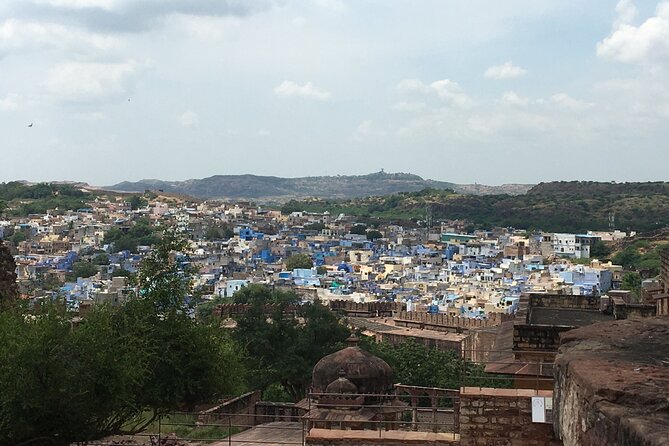
You finish with Pachetia Hill, a classic viewpoint for seeing Jodhpur from above. This is the stop built around sunrise and sunset views, with the chance to spot the blue houses from a wider perspective. Expect about 20 minutes.
Admission is free here, which also helps you stay flexible. If the light is right and you’re the kind of person who likes to linger, your guide can often help you time where you stand for the best lines of sight.
This is the best moment to connect the whole tour in your head. When you look down and understand how the old city spreads, the earlier stops stop feeling like separate locations and start feeling like a connected map of Jodhpur’s history and daily life.
Price and value: what $10 actually buys you here
At $10 per person, the biggest value isn’t just the low price—it’s the bundle. You’re getting:
- A local guide
- Hotel pickup and drop-off
- Private transportation between multiple stops
- Coffee or tea, bottled water, and samosa snacks
- Admission tickets included for several major sights
A guided walking tour without transport can be cheaper, but often costs you time and comfort. Here, you’re paying for fewer hassles: you don’t need to negotiate getting from one old-city area to another, and you don’t lose sightseeing minutes to confusion.
Keep in mind: guide tip isn’t included, so plan a little extra for that at the end if you feel the guide did a great job. Also, the experience asks for good weather—if conditions are poor and it gets canceled, you’re offered a different date or a full refund.
What makes the guide experience feel personal
The guides tied to this tour—like Prabhat Singh, Nahendra, Rajesh, and Yogesh—are repeatedly described as friendly and active with explanations. You’ll notice a pattern: they don’t only state facts. They help you understand what to look for while you’re walking.
That matters most in the hard-to-read parts: the narrow lanes, the step well layout, and the temple context. A good guide turns a “pretty street” into an “oh, that’s why this place was built like that” moment.
You’ll also get small comfort touches that add up. The tour includes coffee or tea, and some routes also include extra local snacking beyond just samosa, like kachori. Either way, the point is the same: you eat, drink, and keep moving without turning the outing into a hunt for refreshments.
Who should book this Blue City walking tour
This is a great fit if:
- You’re visiting Jodhpur for the first time and want the Blue City in one managed outing
- You like walking, but you also want private transport to reduce stress
- You want context for landmarks, not only photos
- You’re short on time and still want a mix of markets, temples, water architecture, and viewpoints
It may be less ideal if you want a long, slow “wander until inspiration hits” day. This tour is paced and guided, with planned time at each stop. Think of it as a curated sprint through Jodhpur’s most meaningful old-city corners.
Should you book it or skip it?
I’d book this tour if you want Jodhpur’s Blue City to feel understandable and intentional. The combination of hotel pickup, a private vehicle, and a guide-led walking route keeps things efficient, while the stops cover the main storytelling points: the clock tower center, the restored step well, the blue-house lanes, a temple with a clear backstory, lakes near Mehrangarh, and a final viewpoint that ties it all together.
Skip it only if you already know exactly where you want to go, you’re comfortable navigating older lanes on your own, and you don’t care much about guided context. Otherwise, for the price and the included food and transport, it’s one of those tours that helps your day make sense.
FAQ
What’s included in the tour price?
The tour includes private transportation, samosa snacks, bottled water, coffee and/or tea, local tour guide service, all taxes/fees/handling charges, and hotel pickup and drop-off.
How long does the Private Jodhpur Blue City Walking Tour take?
Plan on about 2 to 3 hours.
Which stops have admission tickets included?
Admission tickets are included for Sardar Market (Ghanta Ghar area), Toorji Ka Jhalra (Step Well), Kunj Bihari Temple, and Ranisar Padamsar Lakes. Navchowkiya and Pachetia Hill are listed as free admission stops.
Is this tour private or shared?
It’s a private tour/activity, and only your group participates.
Do I need to pay for the guide tip?
Guide tip is not included.
Can I get a refund if I cancel?
Yes. You can cancel up to 24 hours in advance for a full refund. If the experience is canceled due to poor weather, you’ll be offered a different date or a full refund.