REVIEW · LOUISVILLE
ORIGINAL Old Louisville Walking Tour seen in The New York Times!
Book on Viator →Operated by Louisville Historic Tours · Bookable on Viator
Old Louisville has a way of pulling you in fast. This guided walk through Louisville’s historic center mixes Victorian architecture with tight stories that make the neighborhood feel real, whether you start at St. James Court or work your way toward Millionaires Row. I like that the tour is built for seeing more than you’d catch on your own, and I especially like that you’re not stuck peering at plaques—you’re walking through the street level where the history lives. One thing to plan for: you’re walking a lot, and the tour is not ideal if you need frequent stops, since you must be able to walk 90 minutes without a bathroom break.
The best part is the guide energy. Folks mention guides like Angelique, Gabe, David, Frances, and Brenda keeping the pace steady and the stories flowing, including memorable moments like the Witches’ Tree tale. Expect a small group (up to 20), a certified guide, and a mobile ticket that keeps things easy at the start. The possible drawback isn’t the route—it’s the starting area: the meeting point sits in a transitional part of town, where you might encounter panhandlers or people experiencing homelessness.
If you’re the type who likes neighborhoods, architecture, and human stories, this is a strong value. At $25 for about 1 hour 40 minutes to 2 hours, you get a guided orientation to Old Louisville that can genuinely level up the rest of your trip.
In This Review
- Key things that make this tour worth your time
- Old Louisville in 2 hours: why the pace and format work
- Meeting point on West Ormsby and S 4th: plan for the start
- Stop-by-stop street time in Old Louisville’s best-known blocks
- What you can’t do (and why that’s okay)
- The Witches’ Tree: a legend with actual local texture
- Conrad-Caldwell House Museum: see Conrad’s Castle from the sidewalk
- Millionaires Row at Bernheim, then the Filson’s Beaux-Arts stretch
- Central Park with Olmsted design: where the walk cools down
- Price and logistics: is $25 a smart buy?
- Who should book, plus a few practical tips
- Should you book the Old Louisville walking tour?
- FAQ
- How much does the Old Louisville walking tour cost?
- How long is the tour?
- Where does the tour start and end?
- Is the tour offered in English?
- Does the tour include entry into homes and buildings?
- What’s the walking requirement?
- What if bad weather cancels the tour?
Key things that make this tour worth your time

- Small group size (max 20) keeps it personal and makes questions easier to ask
- Victorian-era streets let you see architecture up close without trying to guess what you’re looking at
- Witches’ Tree stop gives you a local legend with real neighborhood consequences
- Exterior-first route focuses on safe sidewalk viewing since most homes are private
- Central Park by Frederick Law Olmsted adds a green reset mid-walk
- Price-to-time value is solid for a 1.5–2 hour guided orientation
Old Louisville in 2 hours: why the pace and format work
This tour is built around a simple promise: you’ll get the stories while you walk, not after. Old Louisville covers about 40 square blocks and includes more than a thousand structures, so a self-guided wander can turn into a guessing game. With a guide, you learn how the neighborhood formed, who lived there, and why particular streets and buildings matter.
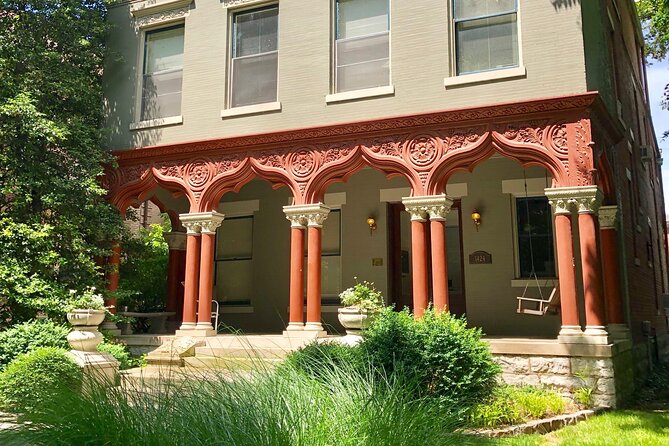
The format also makes it practical. You’re not dealing with tickets to dozens of places, and you’re not waiting around for a group to line up for interior visits. Since most of what you’ll see are private residences, the tour stays outside and lets you enjoy the facades, porches, and street design at walking speed.
You should know what kind of experience this is. It’s not a history lecture, and it’s not a museum day. It’s a neighborhood story walk—architecture plus people—so you’ll leave with a mental map and a sense of how the past shaped the present.
You can also read our reviews of more walking tours in Louisville



Meeting point on West Ormsby and S 4th: plan for the start
The tour begins at West Ormsby Avenue & South 4th Street (W Ormsby Ave & S 4th St). That’s a central location and it helps the start feel straightforward. It’s also in a transitional area, and you should expect you may encounter panhandlers or people who don’t look like you.
This is one of those moments where basic street-smarts go a long way. Stay aware, keep moving, and don’t let anyone’s mood pull you off the sidewalk path you’re already following. If you prefer to arrive early and wait somewhere well-lit and visible, you’ll feel more comfortable.
One more practical point: this is near public transportation, so it’s easy to pair with other Louisville stops. And because the tour ends back at the meeting point, you’re not left figuring out a late-stage ride home.
Stop-by-stop street time in Old Louisville’s best-known blocks
Your walk kicks off in Old Louisville, a historic district famous for scale and density. The area’s big enough that you’ll feel the shift from block to block—especially as you get closer to Fourth Street on the north edge, where you might encounter people asking for help.
Along the way, you’ll pass by standout features tied to the neighborhood’s reputation. You should expect to see the type of streets and public spaces that make postcards look effortless, including St. James Court, Ormsby Avenue, and Floral Terrace. If you love garden-like details on buildings—ironwork, landscaping, and those “who designed this?” front-yard touches—this is where you’ll notice them.
You also get context that’s hard to pull from signage. The tour frames Old Louisville as a transitional neighborhood with a history tied to wealth and ambition. That matters because the streets you’re walking now weren’t just built for show; they were built by people whose choices still shape what you see today.
What you can’t do (and why that’s okay)
This tour doesn’t involve entering homes. Most houses in Old Louisville are private residences, so the experience stays on the sidewalk. That’s a tradeoff, but it keeps the walk smooth and respectful—and it makes the whole tour feel more like a guided neighborhood stroll than a string of restricted stops.
The Witches’ Tree: a legend with actual local texture
A quick stop that people remember is the Witches’ Tree. It’s a gnarled tree associated with local lore, tied to the story of witches and a much bigger act of revenge than anyone would expect.
Here’s the heart of the tale: when the city cut down the original cherished tree, townsfolk believed the witches sent a tornado to damage the city. People still leave small offerings on the twisted trunk, trying to keep things on good terms.
Even if you’re not into spooky stories, this stop works because it’s not random. It gives Old Louisville a “local voice,” the kind that shows up in neighborhoods where generations have shared stories longer than any one building has stood. It’s the kind of detail that makes your photos feel like more than architecture snapshots.
Conrad-Caldwell House Museum: see Conrad’s Castle from the sidewalk
Next comes a moment centered on Conrad-Caldwell House Museum, often called Conrad’s Castle. On this walk, you don’t go inside. Instead, you stop in front of the museum and get the story from the curb.
That matters because the building’s reputation comes from the person and the era behind it, not from a quick hallway tour. If you want the inside experience, you can arrange a visit separately for a fee.
Why is it still worth stopping? Because for many people, this is the first time they’ve seen this architecture type up close in Louisville, and having the guide’s framing makes the exteriors click. You’ll understand what you’re looking at—why the style landed, and what it signaled in its time—without needing to interrupt your walk.
Millionaires Row at Bernheim, then the Filson’s Beaux-Arts stretch
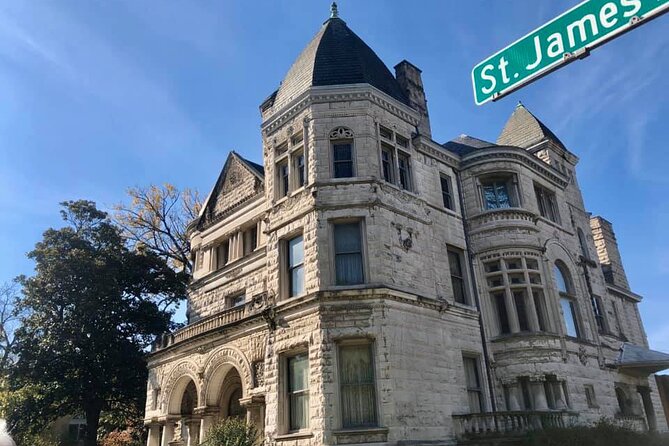
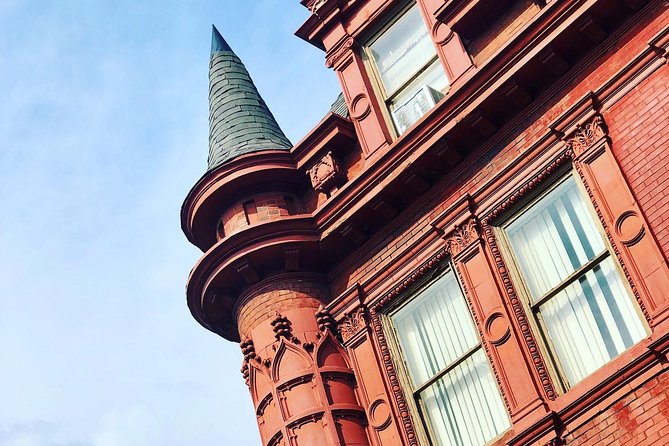
The tour continues deeper into Millionaires Row, where the homes get more dramatic and the details start feeling intentional. A key stop is Bernheim Mansion Bed and Breakfast, known for its distinctive Richardsonian Romanesque style.
Look for the visual punch: green men arranged around a triple Roman-arched porch. That combination of texture, arches, and sculptural details is exactly why this neighborhood is such a hit for architecture lovers. Even from the sidewalk, the design communicates wealth and power, and the guide’s explanation gives you the “why,” not just the “what.”
After Bernheim, you’ll also get a stop tied to The Filson Historical Society. The building dates to 1905, and it was formerly the Ferguson Mansion, once described as the grandest home in the city. Today it’s the headquarters for the Filson Historical Society.
Architecturally, it’s a Beaux-Arts example, which means you’ll likely notice the symmetry and formality that style is known for. Again, you won’t be going inside as part of the walking tour, but the exterior stop is still useful because it connects architectural style to local identity.
If you want extra value here, this is the easiest point to decide whether you want an add-on museum visit later. The tour doesn’t eat your whole day with indoor stops, but it gives you enough context to choose what you care about most.
Central Park with Olmsted design: where the walk cools down
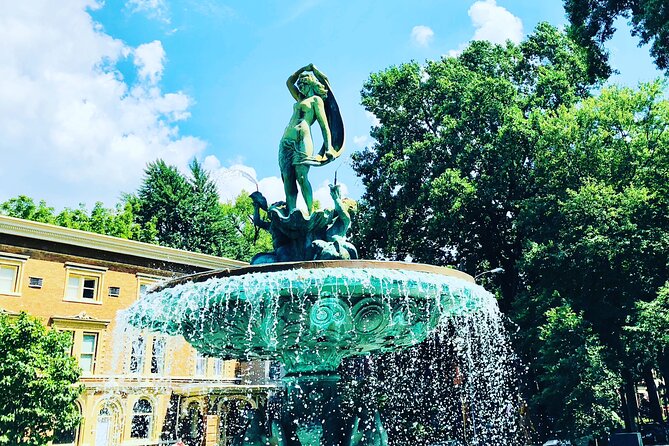
After the mansion energy, you get a green break at Central Park. Louisville’s Central Park was designed by Frederick Law Olmsted, the same name you’ll see in other major American park projects.
This park is about 14 acres and focuses on native tree species, with shaded walkways that make it a real pause instead of just another stop. It also hosts Shakespeare in the Park each summer, starting in 1961—often noted as the nation’s oldest free outdoor Shakespeare event.
This part of the experience helps you shift gears. You’ll stop thinking only about building styles and start noticing street orientation, sightlines, and how open space changes the neighborhood feel. It’s also a smart moment to reset your legs and scan for any details you might want to photograph on your way out.
Price and logistics: is $25 a smart buy?
At $25 per person, this is one of those prices that makes sense if you value interpretation. You’re paying for a guide to connect architecture, neighborhood change, and local stories so the time doesn’t vanish into random sightseeing.
A few factors make the value feel real:
- The tour runs about 1 hour 40 minutes to 2 hours, so you’re not committing a whole half-day.
- The group is capped at 20 people, which generally keeps the guide’s attention on the group rather than on managing a crowd.
- It includes a certified guide, and the experience stays focused on what you can see from the street.
What’s not included matters too. Admission to any optional museum or mansion interior tours is not part of your $25. The walk itself also doesn’t include gratuities; a tip of $5 per person is listed as expected.
So I see the cost as fair if you want orientation and you enjoy stories. If you’re the type who only wants to photograph exteriors and you hate walking, you might not feel the value. But if you’re even mildly into history-as-place, this is a strong deal.
Who should book, plus a few practical tips
This tour suits you if you want:
- Architecture and story at neighborhood scale
- A guided way to understand Old Louisville beyond the obvious highlights
- A paced walk that ends where it started, making it easy to continue your day
It’s not a great fit if:
- You need frequent bathroom stops, because you must be able to walk 90 minutes without one
- You have mobility limitations, since it’s not recommended for visitors with mobility issues
- You want guaranteed interior access, because the tour does not enter most structures (most are private residences)
A tip that can improve your whole day: wear shoes you trust. Old Louisville is beautiful, but it’s still walking. Also, bring a little patience for the start area near the meeting point; once you’re moving with the group, it feels like a normal city walk.
Should you book the Old Louisville walking tour?
Yes, I’d book it if you want a high-value orientation to a fascinating neighborhood. For $25 and under two hours, you get the street-level view of historic architecture plus the local stories that explain why those buildings exist.
If you’re sensitive about walking time or you strongly prefer indoor visits, you may feel frustrated by the exterior-only format and the no-bathroom-break requirement. But if you’re planning Louisville like a place you want to understand, this tour gives you a great head start.
FAQ
How much does the Old Louisville walking tour cost?
The price is $25.00 per person.
How long is the tour?
It runs about 1 hour 40 minutes to 2 hours.
Where does the tour start and end?
The tour starts at West Ormsby Avenue & South 4th Street (W Ormsby Ave & S 4th St, Louisville, KY 40203) and ends back at the meeting point.
Is the tour offered in English?
Yes, it’s offered in English.
Does the tour include entry into homes and buildings?
No. It’s a walking tour where most structures are private residences, so you do not enter. You’ll stop in front of certain places, and any additional interior visits would need to be arranged separately for a fee.
What’s the walking requirement?
You should have a moderate physical fitness level and must be able to walk 90 minutes without a bathroom break. It is not recommended for visitors with mobility issues.
What if bad weather cancels the tour?
This experience requires good weather. If it’s canceled due to poor weather, you’ll be offered a different date or a full refund.