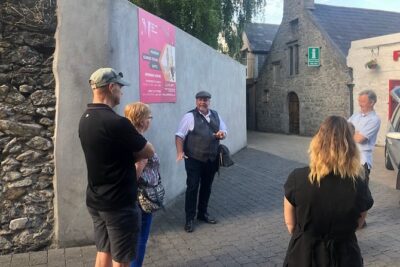
Milan makes more sense on foot. This private walking tour blends headline sights like Castello Sforzesco and Duomo di Milano with a route that your guide can tailor to your interests, so you get a smarter first look at the city. It’s designed to be low-stress and crowd-light, with a local voice guiding you the whole time.
I like two things a lot. First, you get a true private guide (only you and your local), which means you can ask questions and steer the pace. Second, you come away with hands-on advice that helps you keep moving after the tour, including how to use Milan’s tram/metro system and suggestions for where to eat and wander next.
One thing to plan for: entrance fees aren’t included, and the Duomo stop is exterior only. Also, the tour includes a local drink or snack, but it’s smart to check that you actually get it at the start rather than assuming it will appear automatically.
In This Review
- Key highlights worth your attention
- Private guide, no crowd chaos, and the first Milan map you need
- Castello Sforzesco: fortress vibes before the museums
- Duomo di Milano outside only: how to enjoy it even without tickets
- Piazza della Scala: the quick stop that makes the opera streets click
- The 90 minutes that turn sightseeing into a plan: Milan with your host
- How much walking is really involved (and how to stay comfortable)
- Price and value: what you’re paying for at $246.81 per person
- Practical tips so you get more out of your guide
- Should you book this Milan highlights-and-hidden-corners tour?
- FAQ
- How long is the Milan Highlights and Hidden Gems private guided walking tour?
- Is this tour private or a group tour?
- What language is the guide available in?
- Are attraction entrance fees included?
- Will we enter Duomo di Milano?
- Is a drink or snack included?
- Where does the tour start and end?
- Is public transportation nearby?
- What are the cancellation terms?
- How does the carbon offset work?
Key highlights worth your attention
- Private, only-your-group format that cuts through the big-tour crowd problem
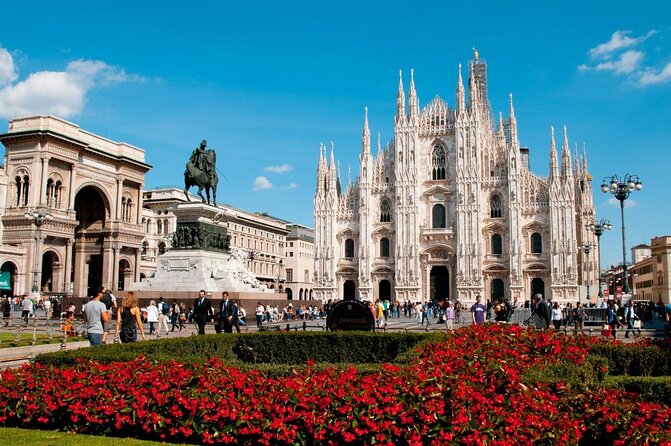
- Duomo di Milano from the outside, with context for what you’re seeing
- Castello Sforzesco as a fortress-first stop, more about structure and story than museum time
- Photo help that actually improves results, including where to stand for good backgrounds
- Transport tips built in, including tram/metro guidance for after the tour
- A local drink or snack plus carbon-offset support, so value goes beyond sightseeing
Private guide, no crowd chaos, and the first Milan map you need
If it’s your first trip to Milan, this tour does a practical job: it helps you understand how the city pieces fit together, quickly. You’re not stuck in a cattle-line group, and you’re not guessing where to go next. Instead, your guide leads you step-by-step and builds a route around what you want to know and see.
What makes the private format matter is time and attention. If you want to linger on a specific detail or ask about how to get from one area to another, you can. One guide, Salvatore, was also praised for pacing and for giving clear photo directions so you don’t just take pictures, you take the right pictures with the right angle and background. Francesca, for example, was noted for being friendly and for adapting the route when needed, which is exactly what you want when your energy level changes.
A small reality check: this is a walking tour, and you’ll cover real ground. One review mentioned around 12,000 steps over about three hours, so it’s best done when you’re in decent walking shape. If you’re traveling in hot weather, bring water and expect some slower moments rather than rushing.
You can also read our reviews of more walking tours in Milan

Castello Sforzesco: fortress vibes before the museums
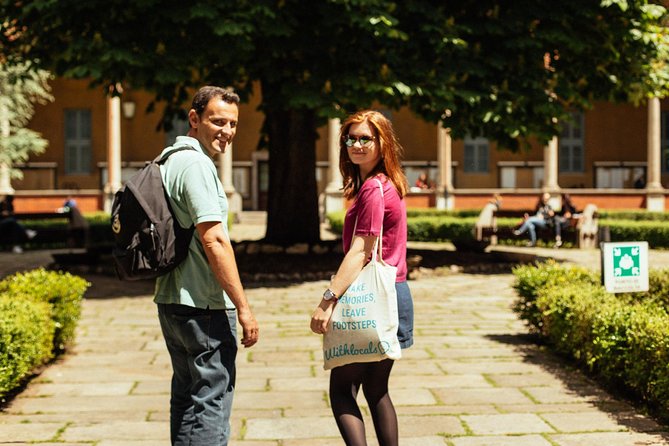
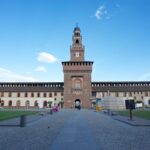
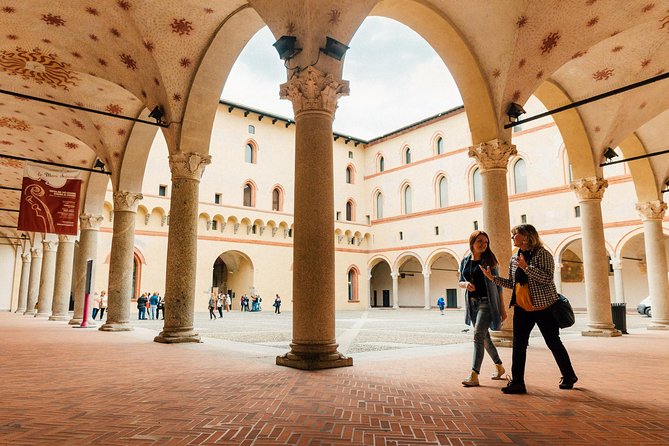
Stop one is Castello Sforzesco, introduced as a major citadel built on the remains of earlier fortifications, and now home to museums and art collections. The tour time here is about 30 minutes, and admission is not included—so think of this stop as a “read the building” moment more than a “go deep in galleries” stop.
Even without museum tickets, Castello Sforzesco works well as an early anchor. It’s one of those places where Milan’s identity shows up in layers: military origins, then civic power, then art and culture. A good guide helps you connect those dots fast, so when you later see other palaces, churches, or monuments, you understand what you’re looking at instead of just seeing pretty stone.
The main consideration is that if you’re hoping to spend serious time inside museums, this stop won’t fully scratch that itch. Since admission isn’t included, you’ll want to plan any museum visit separately. Still, starting here is smart. It gives you the “old Milan” frame before you shift toward the more famous skyline icons.
Duomo di Milano outside only: how to enjoy it even without tickets
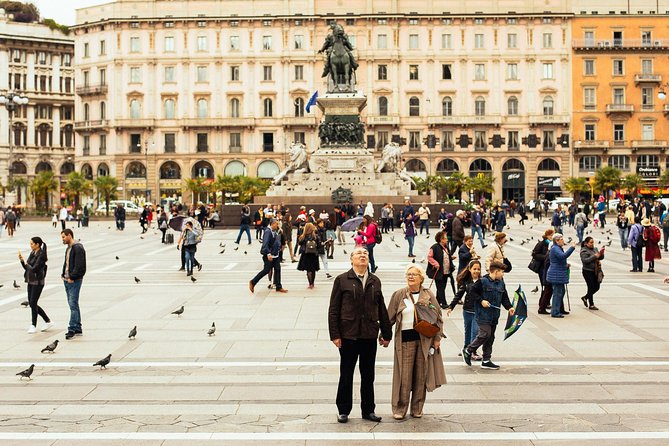
Next up is Duomo di Milano, and here you get an important detail: this tour doesn’t go inside. The time is about 30 minutes and admission isn’t included. You’re there to see it from the outside with guidance on scale and the long timeline behind it—this church took nearly six centuries to build, and it’s described as the largest church in Italy and the second largest in the world.
If you’re on a tight schedule, I actually like this approach. It keeps the tour moving and avoids ticket-and-line stress, which lets you spend your energy on learning and viewing. You also get a clearer sense of the architecture’s overall shape and presence when you’re not inside and rushed by crowds.
What to watch for: focus on how the facade reads as a whole rather than trying to spot everything at once. If your guide is strong (many are), you’ll get pointing and context that helps you notice the details you’d otherwise miss. Salvatore was specifically praised for guiding where to stand for photos, which is a lifesaver around the Duomo when crowds funnel you into bad angles.
The drawback is simple: if you truly want the inside experience, you’ll need to add that on your own with a separate ticket plan. This stop is about exterior understanding and making the rest of your day easier—not about checking every Duomo box.
Piazza della Scala: the quick stop that makes the opera streets click
Piazza della Scala is a pedestrian central square named after Teatro alla Scala, sitting on the north-western side of the square. Your time here is about 30 minutes, and it’s listed as free.
This stop is short, but it pays off because it ties Milan to its music identity. A lot of visitors know Teatro alla Scala exists, but they don’t always connect it to the street life and open space around it. A good guide will help you see how the square works as a meeting point and how it fits into the city’s rhythm.
It’s also a practical pause. After Duomo, you can breathe, reset your legs, and start thinking about the rest of the walk with a calmer head. If you’re the type who likes to wander, this is a good moment to let your guide point out where the neighborhood energy shifts.
Because this stop is free and doesn’t require tickets, it’s one of the easiest parts of the tour to enjoy fully, even if you’re budget-conscious.
The 90 minutes that turn sightseeing into a plan: Milan with your host

The heart of the tour is the final stretch, about 1 hour 30 minutes, where you visit other places in Milan together with your local host. Those additional stops depend on the route your guide chooses, and the tour notes that multiple extra stops may be included depending on what your host picks.
This is where the tour becomes personal. In reviews, guides were praised for showing neighborhoods people would skip on their own and for making recommendations for lunch and dinner. Several reviews also referenced classic Milan contrasts—old vs new, plus romantic angles along waterways. One itinerary variant mentioned Piazza Gae Aulenti, and another review said the route ended near canals, so you can expect at least some mix of modern Milan and softer, more atmospheric areas depending on your guide.
A practical detail: guides also help you move through the city efficiently. One review mentioned using the metro to cover more ground than walking alone, and another praised tram and underground instructions early in the trip. For your value, this matters as much as the sights. You’re not just learning names; you’re learning routes.
If you want to make this portion count, ask your guide two questions early in the walk:
- What area should we come back to on our own first?
- Where should we avoid for crowds or confusion given our limited time?
That’s how you turn a 2–3 hour tour into a multi-day plan.
You can also read our reviews of more guided tours in Milan

How much walking is really involved (and how to stay comfortable)
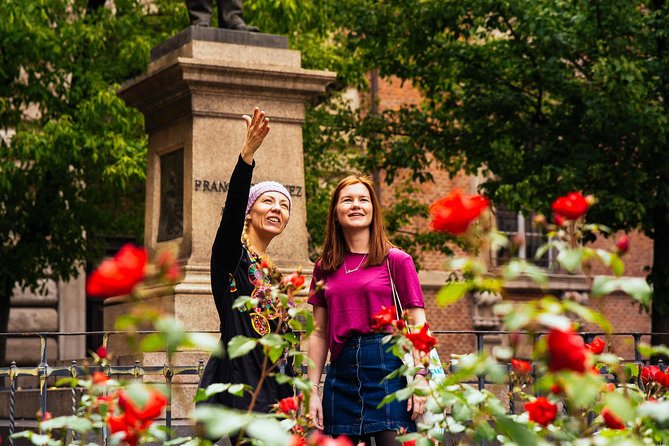
This experience is “most travelers can participate,” but do treat it like a real walking tour. One review noted about 12,000 steps over roughly three hours. That’s a lot of walking for a first-day arrival if you’re jet-lagged, and in hot weather it can feel even heavier.
My suggestion: wear comfortable shoes you trust for long distances, not just for museum-day strolling. Bring water. If it’s warm, expect slower pacing around the most popular areas. One review even mentioned a gelato stop halfway through, which is a good reminder that breaks are part of a good route—not an afterthought.
Also, don’t over-pack your schedule for right after the tour. Your brain will be full of names, eras, and directions. The value of this tour is that it helps you decide what comes next, so give yourself time to absorb it and then use the guide’s recommendations immediately.
Price and value: what you’re paying for at $246.81 per person
At $246.81 per person, this isn’t a budget group deal. You’re paying for private time with a local guide, a flexible route that avoids crowd bottlenecks, and added value like a local drink or snack. You’re also getting carbon-offset support through the tour’s CO2-neutral approach.
Here’s the value logic that makes sense for most people:
- If you’re willing to pay to avoid confusion on day one, the guide time is worth it.
- If you want tailored recommendations instead of a one-size-fits-all itinerary, private access is the point.
- If you’re splitting the cost with family or friends, it becomes easier to justify compared with paying for multiple separate things while you still struggle to orient yourself.
Two “gotchas” are already baked into the value equation. Entrance fees are not included, and the Duomo stop is exterior only. So if your dream includes major museum time, you’ll need to allocate extra time and tickets outside the tour.
One more practical caution from reviews: some people reported that the drink or snack listed as included wasn’t offered. That doesn’t change the tour’s stated inclusion, but it does mean you should politely confirm at the beginning: Can we get the drink or snack now?
Practical tips so you get more out of your guide
This tour seems to work best when you treat it like a conversation, not a lecture. Guides in the reviews stood out for communicating through apps like WhatsApp ahead of time and for being easy to reach with questions. That kind of pre-trip contact helps you arrive ready with a few priorities.
I’d also use this tour to get your bearings on public transit. Several reviews highlighted metro and tram help, which can turn Milan from overwhelming to manageable on day one. Ask how your next destination connects, and ask what time of day to go for your favorite stop.
Finally, be ready to walk and take photos. One guide was praised for giving specific photo placement guidance, which can save you from standing in the wrong spot for 20 minutes while crowds surge around you.
If you’re the type who likes structure, tell your guide you want:
- One classic highlight
- One modern Milan contrast
- One quieter neighborhood walk
- One food recommendation that feels local
Then let your guide steer the exact stops in that direction.
Should you book this Milan highlights-and-hidden-corners tour?
Book it if you want a smart first day in Milan with less crowd stress and a guide who can translate what you’re seeing into where you should go next. It’s a strong fit for first-timers, people with limited time, and anyone who likes walking but also wants a plan rather than wandering blindly.
Skip it or modify your expectations if you’re primarily aiming for inside museum time or inside Duomo time. This tour is built around exterior viewing and guided orientation, with admissions not included. It’s also worth planning for real walking time, roughly a 2–3 hour experience that can run about 12,000 steps depending on the route and pace.
If you do book, choose an early day if possible. You’ll use the transport tips and restaurant leads immediately, and you’ll feel more confident as the rest of your Milan days unfold.
FAQ
How long is the Milan Highlights and Hidden Gems private guided walking tour?
It runs about 2 to 3 hours.
Is this tour private or a group tour?
It’s a private tour, limited to only you and your local guide.
What language is the guide available in?
The tour is offered in English, with a private multilingual local guide.
Are attraction entrance fees included?
No. Entrance fees are not included for the attractions on the itinerary.
Will we enter Duomo di Milano?
No. The tour visits the Duomo di Milano from the outside only.
Is a drink or snack included?
Yes. The tour includes 1 local drink or snack.
Where does the tour start and end?
It starts in Milan, Metropolitan City of Milan, Italy, and ends in central Milan (also in the Metropolitan City of Milan, Italy).
Is public transportation nearby?
Yes. The meeting area is near public transportation.
What are the cancellation terms?
You can cancel for a full refund if you cancel up to 24 hours in advance of the experience start time.
How does the carbon offset work?
The experience is described as carbon neutral, with the tour’s carbon emissions offset.