REVIEW · MARRAKECH
Medina Walking Tour Secrets
Book on Viator →Operated by Marrakech WITH Locals · Bookable on Viator
Marrakech makes more sense on foot. This guided walk gives you a close-up view of the “red city,” plus help navigating the winding old streets without getting lost. You also get real context for what you’re seeing, from mosque landmarks to the evening energy of Jemaa el-Fnaa.
What I like most is the guide’s clarity and flexibility, including Hassan (he’ll adjust on the fly if your group needs a breather or wants to spend a little more time somewhere). I also love that you’re not walking on empty: local pastries and bottled water are included, which matters on a warm afternoon.
One thing to plan for: entry fees can add up, since monument tickets cost extra and some places have access limits (like Koutoubia Mosque’s interior for non-Muslims).
In This Review
- Key highlights you’ll care about
- Why this Marrakech Medina walk is a smart use of 3–4 hours
- Starting at Jemaa el-Fnaa: where your guide helps you get bearings fast
- Koutoubia Mosque and its 70m minaret: the landmark that “reads” the city
- Medina of Marrakesh: learning the old city by walking its small rhythms
- Jemaa el-Fnaa: the square’s morning meaning and its evening drama
- Mouassine fountain and the Foundouks: a calmer break from the busy core
- Souk Haddadine: craftsmen, markets, and the smell of real work
- Medersa Ben Youssef: 16th-century study-school architecture (and extra tickets)
- Price and what you really get for $46.34
- Tips to make the 3 pm start feel easy
- Should you book this Marrakech Medina walking tour?
- FAQ
- How long is the Medina Walking Tour Secrets experience?
- What’s the starting time and where do we meet?
- Is this tour private or shared?
- What is included in the tour price?
- Are entrance fees included for all attractions?
- Can non-Muslims enter Koutoubia Mosque?
- Do I need private transportation for this experience?
- What happens if the weather is poor?
- Is there free cancellation?
Key highlights you’ll care about
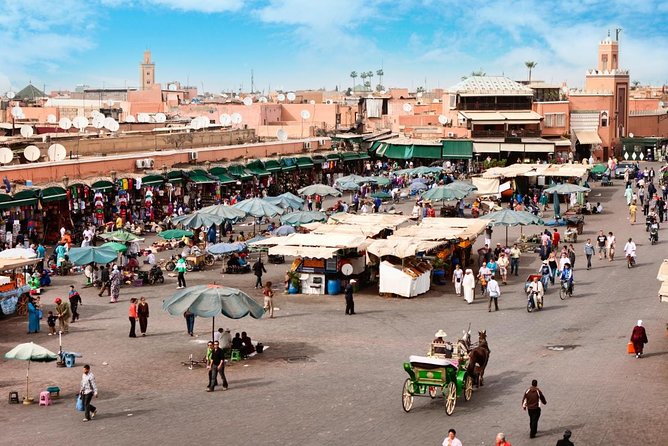
- Koutoubia Mosque as your orientation landmark: a 70m minaret plus a garden walk even when the interior isn’t accessible.
- Jemaa el-Fnaa with story time: you’ll learn what the square meant historically, not just what it looks like.
- Real souk workshop moments: stop at Souk Haddadine where you can see how crafts are made.
- Ben Youssef’s architecture: a 16th-century theological school that’s worth the extra ticket if you’re curious about design.
- Built for walking: 3 to 4 hours, starting at 3:00 pm, with short stops and steady pacing.
Why this Marrakech Medina walk is a smart use of 3–4 hours
Marrakech is one of those cities where being “near” a place is not the same as “knowing how to get there.” This tour’s value is in how it helps you read the city as you go—one landmark at a time—so you’re not just taking photos while feeling slightly lost.
The timing is also practical. You start at 3:00 pm, which gives you daylight to orient yourself and time to reach the edges of the evening scene at Jemaa el-Fnaa. The whole walk is designed around short, focused stops rather than marathon sightseeing.
This is also a private setup for your group only. That matters when streets narrow and the route gets interesting—your guide can slow down, speed up, or regroup without worrying about matching a big tour schedule.
You can also read our reviews of more walking tours in Marrakech

Starting at Jemaa el-Fnaa: where your guide helps you get bearings fast
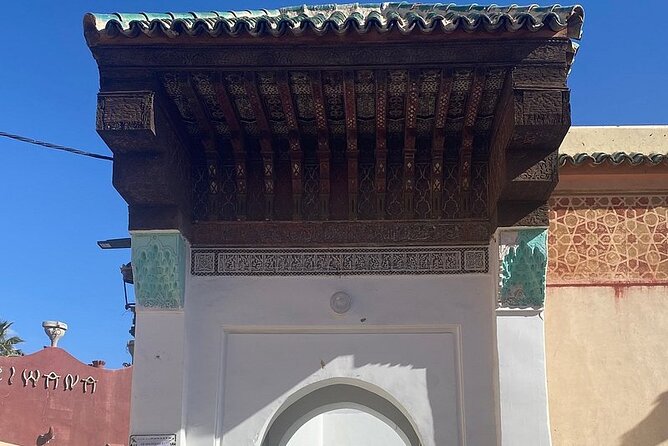
Your meeting point is at Jemaa Al Fna (Groupe L’Adresse – Café & Restaurants Marrakech), right at 5 rue de la Koutoubia, place Jemaa El Fna. Meeting here is smart because it’s the real hub of the Medina and the place you’ll likely return to later.
From there, you’ll start moving through streets that can feel like a puzzle. A guide’s job isn’t only to point; it’s to help you understand what you’re seeing in context—mosque, school, fountain, crafts—so the city stops being a blur.
If you tend to rush through markets on your own, you’ll probably appreciate the structure here. Each stop is short enough to keep energy up, but long enough to learn something that actually changes how you look around.
Koutoubia Mosque and its 70m minaret: the landmark that “reads” the city
Your first stop is Koutoubia Mosque, a 12th-century landmark. The star here is the minaret: 70 meters tall, and basically a built-in navigation tool. Even if you don’t have perfect street sense yet, a tall, recognizable shape anchors your orientation.
Here’s the access reality: the mosque interior isn’t open to non-Muslims, but you can still walk in the garden. That still gives you a calmer start to the afternoon, and it avoids the common disappointment of showing up expecting a full visit.
What makes this stop useful is the guide’s explanation. You’ll get a talk about Islam’s five pillars, plus how Moorish architecture shows up in the mosque design, and local habits of worship. It’s not theoretical only; it’s the kind of background that helps you understand what you’re seeing instead of treating it like a photo backdrop.
Practical note: this is also one of the few moments where the “landmark” aspect matters. After this, you’ll likely feel less pressure when streets twist—because you’ll know what direction the minaret points you toward.
Medina of Marrakesh: learning the old city by walking its small rhythms
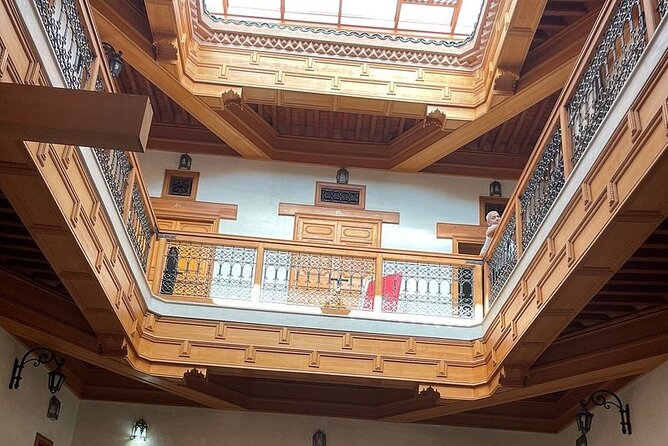
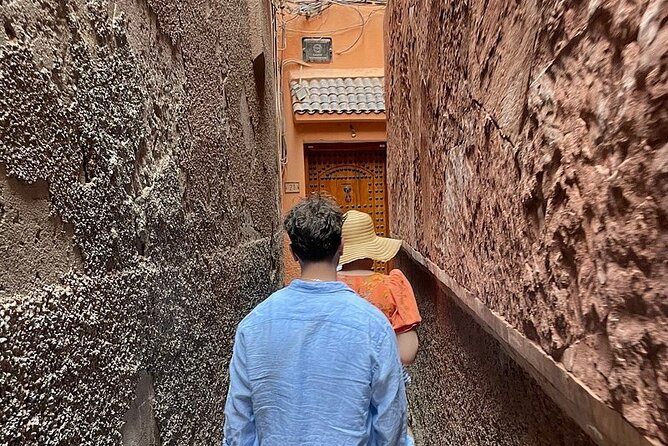
Next you’ll head into the Medina of Marrakesh, with a stroll through narrow alleyways and everyday scenes. This is where the tour earns its keep, because the Medina is not just big attractions placed next to each other. It’s houses, fountains, artisanal work, and daily life stitched together street by street.
The guide’s value is how you move from one sight to the next without losing the thread. You’re not just looking at walls; you’re noticing how water shows up, where craftsmanship happens, and how local neighborhoods operate beyond the main squares.
This stop is about pace. About an hour here is enough to feel the Medina’s texture without turning it into a slog. If you’re the type who likes shade breaks, you might be happy too—one recent comment described finding cooler shaded stretches during the walk.
One caution: the narrow streets and crowds around key areas can make the “quiet moments” feel short. If you hate feeling jostled, bring patience and keep your expectations flexible. A guide helps, but physics still applies.
Jemaa el-Fnaa: the square’s morning meaning and its evening drama
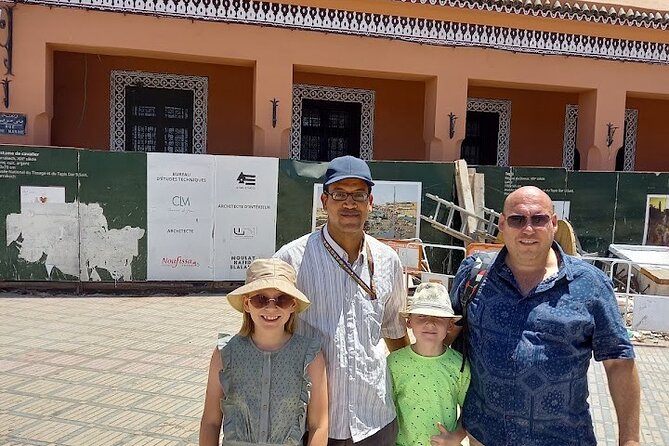
Jemaa el-Fnaa is where Marrakech can feel like theater. You’ll spend time at Jamaâ El Fna, and the guide frames it beyond the spectacle: storytellers, dancers, water sellers, and snake charmers are part of the scene, but you’ll also hear how the square relates to Morocco’s past and present.
What I appreciate is the way the guide connects timing to meaning. The energy builds through the day and reaches a peak only in the evening. That’s useful because it helps you plan how to watch. You’re not stuck trying to understand the whole circus at once—you learn what changes as the day turns.
You’ll also hear a historical layer tied to medieval chronicles written between the 11th and 14th centuries. The tour mentions Rahba al-Ksar, an esplanade connected to palace space, near the Koutoubia minaret. It also notes that public punishments were imposed publicly starting in the 12th century.
You don’t need to memorize dates to benefit from this. The payoff is that you’ll look at the square differently: it’s not only entertainment; it’s also a public stage shaped by history. That context turns a messy scene into something you can actually read.
Tip for your experience: if you’re planning to linger afterward on your own, take mental notes on where the guide stands in the square and which street edges feel easiest to exit. Jemaa el-Fnaa can be rewarding, but it can also eat time.
Mouassine fountain and the Foundouks: a calmer break from the busy core
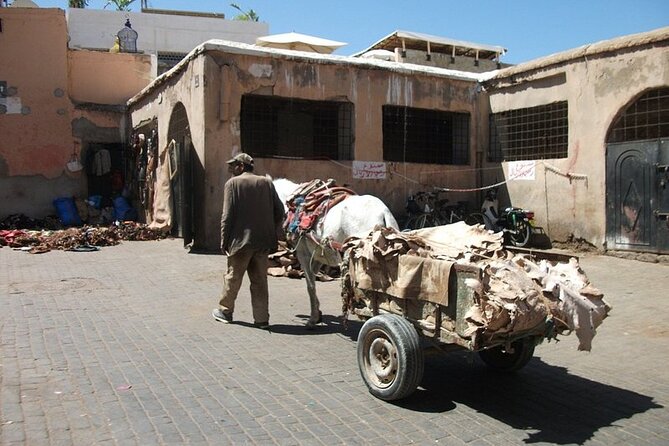
A short hop brings you to Mouassine fountain and the surrounding Mouassine Complex. This is a quieter, more architectural stop compared with the big square.
You’ll learn what to look for: a historical fountain, plus Foundouks (traditional commercial buildings) and the neighborhood feel around them. This kind of stop is valuable because it reminds you the Medina isn’t only marketplaces and monuments. It also includes everyday infrastructure that shaped commerce and daily movement.
The time here is brief—about 15 minutes—so don’t expect a slow museum moment. Think of it like a breather. You get a change of pace and a new set of visual clues before returning to busier street energy.
Souk Haddadine: craftsmen, markets, and the smell of real work
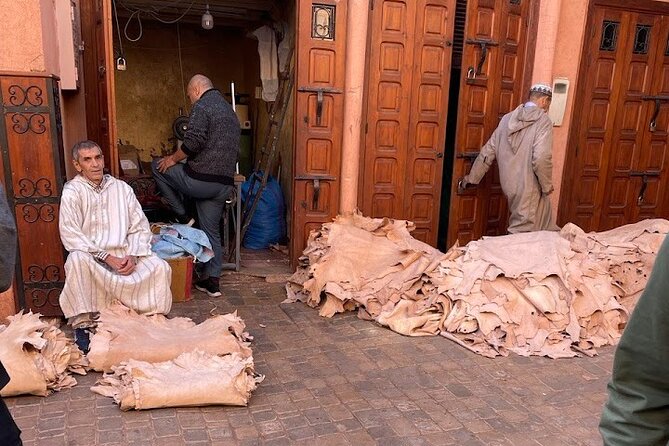
Then you’ll hit Souk Haddadine, one of those places where you can get close to the craft itself instead of only window-shopping. The focus is on workshops and materials—blacksmith work, plus leather-focused areas like the Sheep leather market and Leather Souk market, along with other related trades.
This is the stop where your guide’s explanations can help you separate the “tourist sales pitch” from the rhythm of actual making. Even if you’re not buying anything, watching how artisans work—and why certain materials matter—gives you a better sense of what these souks really are.
The duration is around 30 minutes, which is a good length. Long enough to see variety. Not so long that you’ll lose interest or get overwhelmed by the number of stalls.
If you like photos, this is also where your camera will earn its weight. Just be ready to move with the flow—crowds and handcraft activity mean you can’t treat the market like a quiet street.
Medersa Ben Youssef: 16th-century study-school architecture (and extra tickets)
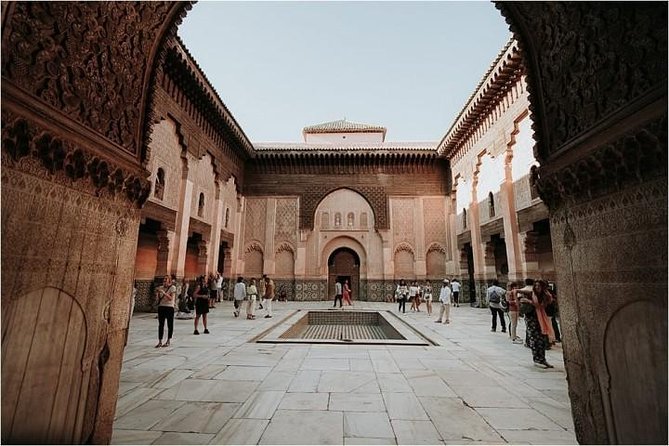
Your final major stop is Medersa Ben Youssef, a 16th-century theological school. The highlight here is architecture, and the tour gives you a chance to appreciate it rather than racing past it.
The catch: entry fees are not included, and Medersa Ben Youssef specifically is listed as admission ticket not included. So factor that into your budget if you want this stop.
Is it worth paying extra? For me, the value is that this place changes how you see the Medina. After fountains and market streets, you get a building designed for learning, with space and ornament shaped around study and worship. It’s the kind of contrast that makes the walking tour feel like more than a route.
If you’re someone who skips architectural stops when traveling, consider whether you enjoy details like patterning and design. If yes, this will likely feel like a good payoff at the end of the walk.
Price and what you really get for $46.34
At $46.34 per person, this tour sits in the “worth it if you’ll actually use the guide” category. The price is reasonable, especially because it includes a certified tour guide and tangible comforts: local pastries and bottled water.
Two things affect the true cost:
1) Entrance fees cost extra for monuments.
2) A few listed places have different access rules (like Koutoubia Mosque’s interior restrictions for non-Muslims).
The good news is that at least one early stop is ticket free (Koutoubia Mosque: admission ticket free, with garden access). Still, if you know you’ll want to go inside Medersa Ben Youssef, you’ll likely pay another ticket on top.
Also consider the format. It’s private for your group, starts from a central hub, and runs about 3 to 4 hours. If you’ve ever paid for a “walk with no real guidance,” this feels more structured—short stops, clear explanations, and navigation help.
One more practical point: it’s popular enough that the average booking happens about 14 days in advance. If you’re traveling in peak season, booking ahead saves you from last-minute stress.
Tips to make the 3 pm start feel easy
This is a walking tour, so plan for that even if the stops are short. Wear shoes you’d trust on uneven old-street surfaces, and keep water in mind even though bottled water is provided.
Bring a simple strategy for your own comfort:
- Keep your expectations flexible. Streets can feel tight or crowded around major sights.
- Use the guide as your navigation tool. Ask questions and let them set the tempo.
- If you’re sensitive to sun, you’ll probably appreciate that the route can include cooler stretches, and you’ll pass through different kinds of streets rather than repeating the same exposure.
Weather matters here. The tour notes it requires good weather and may be offered a different date or a full refund if canceled due to poor conditions. If you’re deciding at the last minute, check forecasts and aim for a day when you’re comfortable being outside for a few hours.
Should you book this Marrakech Medina walking tour?
Book it if you want to understand Marrakech as you walk, not just check off big names. The standout strengths are the guide-led storytelling (Islam context at Koutoubia, historical framing at Jemaa el-Fnaa) and the city orientation you get from starting at a landmark like Koutoubia’s minaret.
Skip or adjust expectations if you hate extra ticket costs. Since entrance fees are not included, your final spend will likely rise if you want in at places like Medersa Ben Youssef. Also, if you were hoping for full access to the inside of Koutoubia Mosque, remember the interior isn’t open to non-Muslims.
If you’re on your first visit to the Medina and you value local explanations plus a guided route you can repeat later, this is the kind of tour that makes the rest of your Marrakech days easier.
FAQ
How long is the Medina Walking Tour Secrets experience?
It lasts about 3 to 4 hours.
What’s the starting time and where do we meet?
It starts at 3:00 pm, meeting at Jemaa Al Fna (Groupe L’Adresse – Cafe & Restaurants Marrakech), 5 rue de la Koutoubia, place Jemaa El Fna, Marrakech.
Is this tour private or shared?
This is private. Only your group participates.
What is included in the tour price?
You get a certified tour guide, plus local pastries and bottled water. A mobile ticket is used as well.
Are entrance fees included for all attractions?
No. Any entry fees to monuments cost extra. Medersa Ben Youssef admission is specifically listed as not included.
Can non-Muslims enter Koutoubia Mosque?
Koutoubia Mosque interior is not open to non-Muslims, but you can still walk in the garden.
Do I need private transportation for this experience?
No private transportation is included. The meeting area is near public transportation.
What happens if the weather is poor?
The experience requires good weather. If it’s canceled due to poor weather, you’ll be offered a different date or a full refund.
Is there free cancellation?
Yes. You can cancel up to 24 hours in advance for a full refund.