REVIEW · MANCHESTER
Manchester: Media City & The Quays Guided Walking Tour
Book on GetYourGuide →Operated by Quayside Tours Media City · Bookable on GetYourGuide
One walk through Media City and the Quays tells you why Manchester reinvented itself so well. I like how the tour begins and ends at Media City Piazza, and I really appreciate the built-in headsets that keep the stories clear even by the water. The only real catch is the walk is outdoors, so you’ll want comfortable shoes and weather-ready clothing.
What makes this one different is the way the guide connects today’s landmarks with the working life of the docks and canal—then points to what’s next for this whole regeneration zone. I found it a smart choice if you want context without getting stuck in a museum line, but it’s also worth knowing the pace may feel brisk for some groups if you’re the type who likes to linger.
In This Review
- Key things to know before you go
- Media City Piazza: the smart start for first-timers
- Media City today: digital culture with real architecture
- Salford Quays and the Manchester Ship Canal: where the story gets physical
- Imperial War Museum North: seeing the area through memory
- Lowry Arts Centre: how redevelopment turned workspaces into culture
- The guide is the difference: stories, photos, and small details
- How the 2 hours actually feels on the ground
- Accessibility, families, and dogs: what you can realistically plan
- Price and value: why $18 can make sense here
- Who this walking tour is best for
- Should you book the Media City & The Quays guided walk?
- FAQ
- Where is the meeting point for the Manchester: Media City & The Quays tour?
- How long is the tour, and how much walking is there?
- What landmarks will the walk include?
- Is the tour suitable for families?
- Is it wheelchair accessible?
- Does the tour run in bad weather?
- Are headsets included?
- Are dogs allowed?
Key things to know before you go
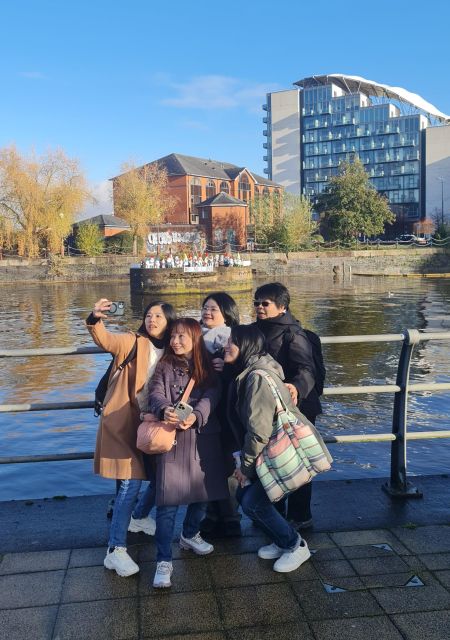
- Headsets included: you won’t have to strain your ears, especially near open water where sound can carry
- A 5 km route in about 2 hours: it’s a solid walking pace, with breaks built in so you can actually see what you’re hearing
- Salford Quays by the Manchester Ship Canal: this is the heart of the dock-and-industry story behind today’s Media City
- Landmarks you can’t miss: the route is set up to pass places like the Lowry and Imperial War Museum North
- Old photos meet current views: the guide uses visual comparisons to show how the area changed
- Family-friendly and adjustable: the pace can be adapted, and the route can be adjusted to avoid steps
Media City Piazza: the smart start for first-timers
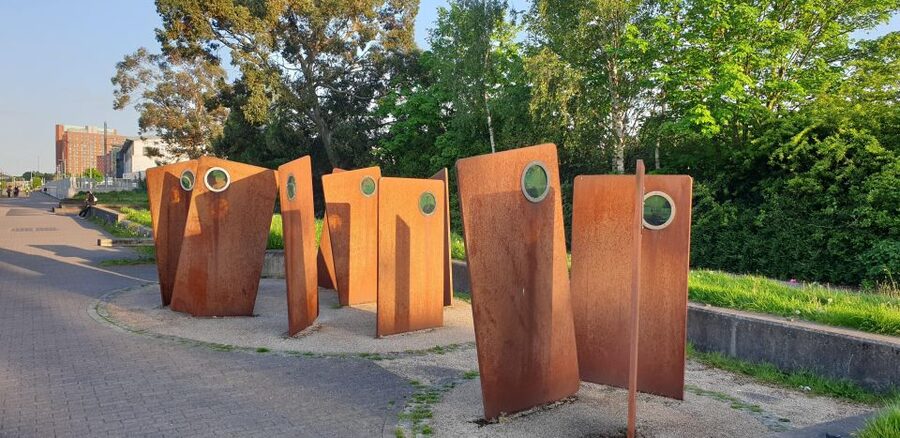
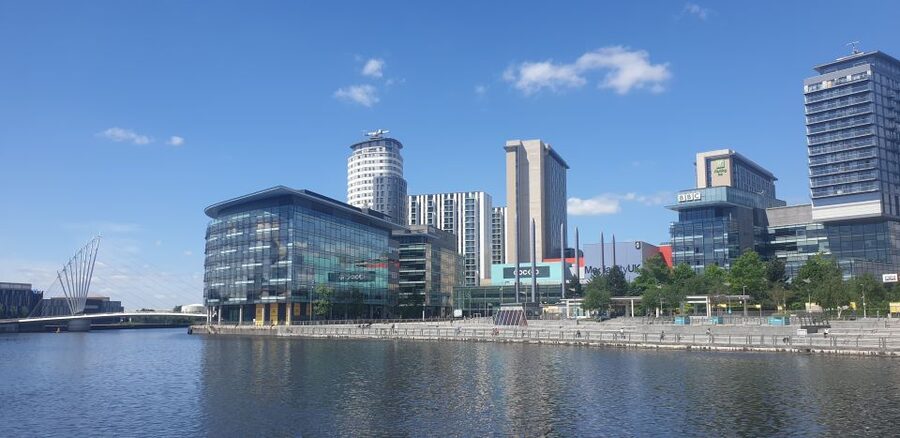
Getting your bearings fast is a big deal in a place like Media City. You meet your guide underneath the big digital screen in Media City Piazza, opposite BBC Quay House and right by the Media City Metrolink tram station. That location is useful because it’s easy to reach, easy to find, and you’re already in the zone the tour is going to focus on.
I like that the tour starts here because it sets the theme in minutes: this isn’t just a pretty waterfront walk. It’s about how a working port area became a creative and media hub, and the buildings around you help tell that story before you even step toward the canal.
One practical consideration: because it’s a guided walk, you’ll get the most out of it if you’re ready to move at a steady rhythm. If your idea of sightseeing is mostly slow wandering, you may still enjoy it, but you’ll want to listen closely during the stops.
You can also read our reviews of more walking tours in Manchester


Media City today: digital culture with real architecture
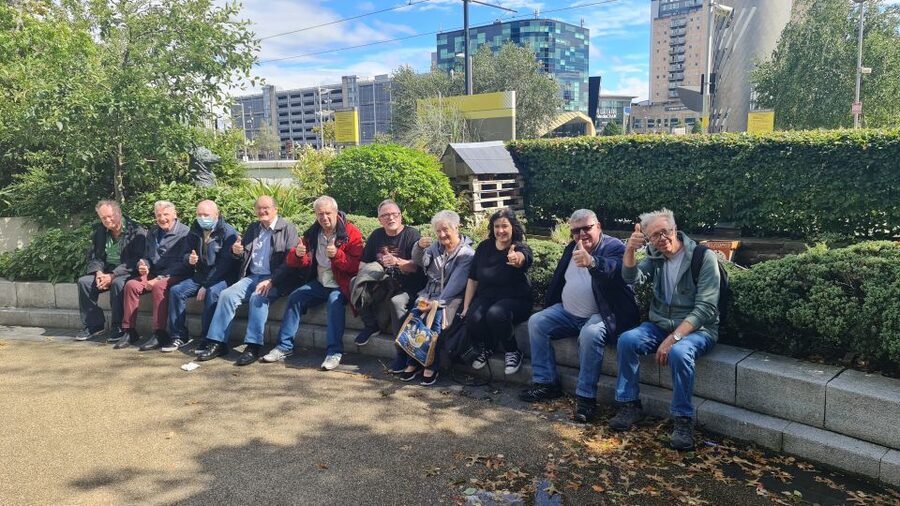
From the piazza, the walk swings you into the modern identity of Media City—imposing, new-feeling, and packed with creative-sector energy. The tour frames it as the beating heart of the UK’s digital and creative industries, which matters because it explains why the area looks the way it does now: it’s built for people who make, produce, and broadcast.
Along the way, you’ll pass major cultural anchors, including the Lowry Arts Centre. Even if you’re not going inside, it helps the story because it shows how arts and public-facing culture became part of the redevelopment, not an afterthought. This is the point where you start to see the Quays as more than a backdrop for photos.
The other reason Media City works so well on a walking tour: it’s visually “legible.” You can connect the dots between media buildings, public spaces, and the canal environment. For first-time visitors, that’s a huge win.
Salford Quays and the Manchester Ship Canal: where the story gets physical
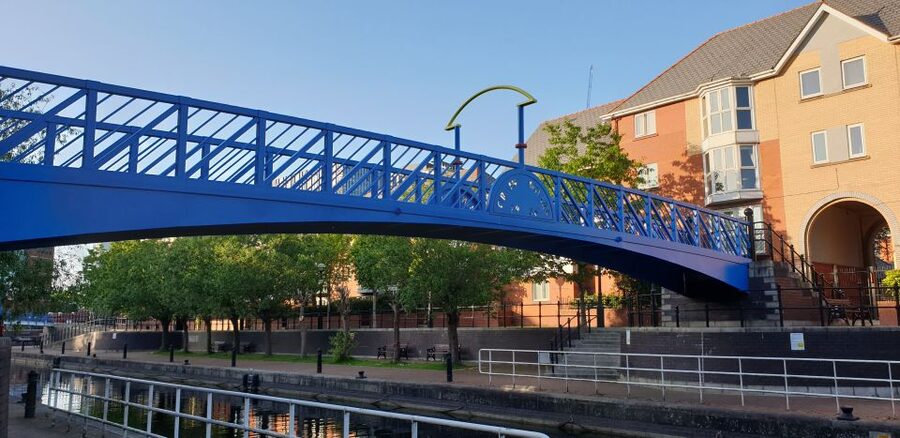
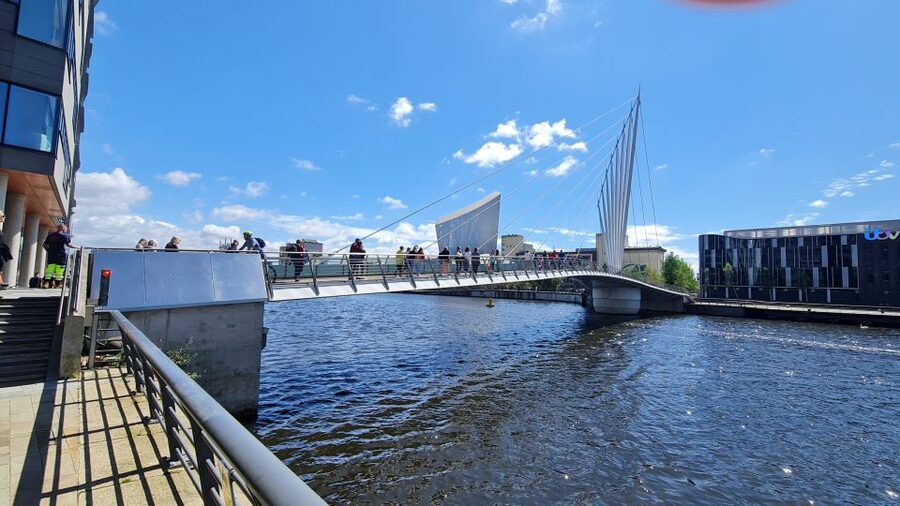
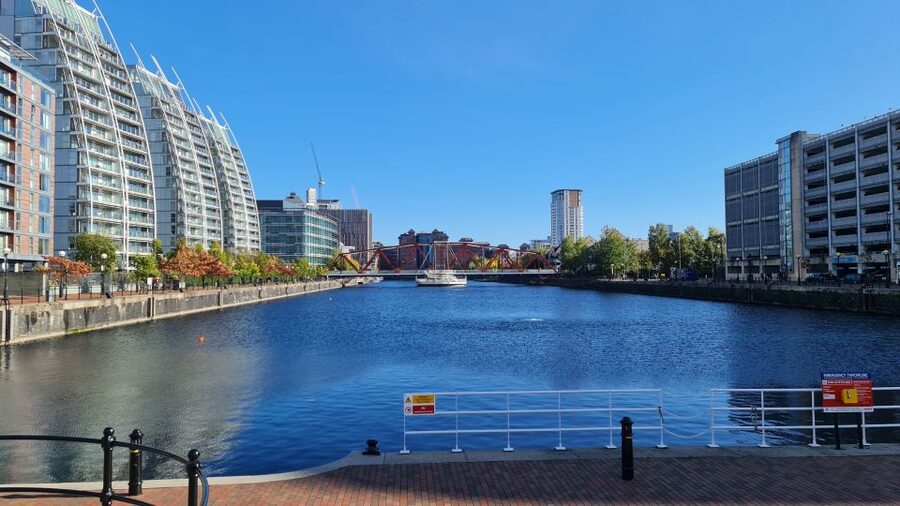
Then the route leans toward the water and the industrial past: walking alongside the Manchester Ship Canal and through Salford Quays. This is where the tour earns its time. You’re not just looking at architecture—you’re tracing the shape and logic of the canal-era port world.
What I like here is the way the guide connects the canal to everyday purpose. The canal wasn’t just a feature; it was an engine for movement, work, and trade. Once you hear that framing, the bridges and waterfront edges stop feeling like generic scenery and start feeling like infrastructure with history.
This stretch is also why the headsets matter. By the water, noise and echoes can interfere, and a clear audio feed helps you stay focused on the guide’s links between then-and-now.
Imperial War Museum North: seeing the area through memory
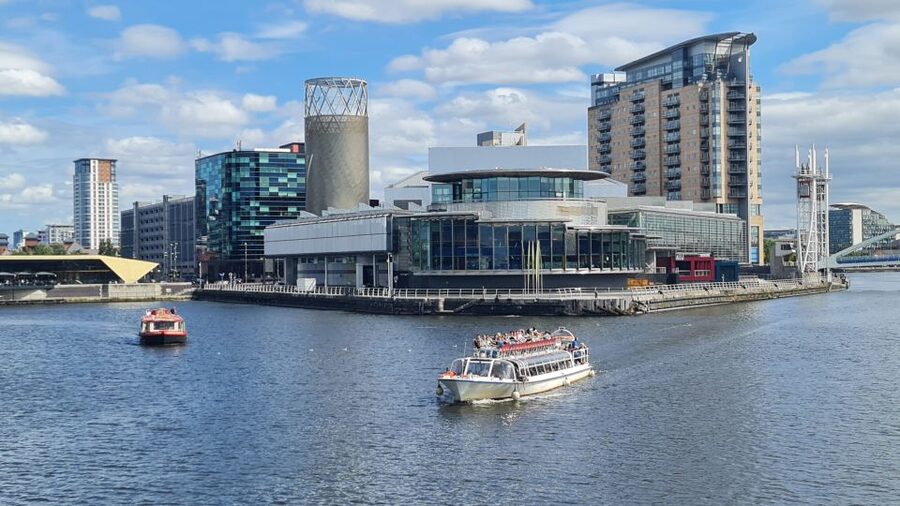
One of the stronger stops is Imperial War Museum North. Even from the outside, it adds weight to the story because it makes you think about the human scale of conflict and recovery—something you don’t get from purely industrial history.
On a walk like this, that balance is important. The canal and dock story can become very technical if you don’t get context, and the museum presence brings the focus back to how cities and communities experience big national events. It also helps explain why redevelopment isn’t only about new buildings—it’s about what a place chooses to remember.
If you’re hoping for deep museum time, this isn’t that kind of experience. But as a landmark stop with interpretive context, it fits the tour’s purpose well.
Lowry Arts Centre: how redevelopment turned workspaces into culture
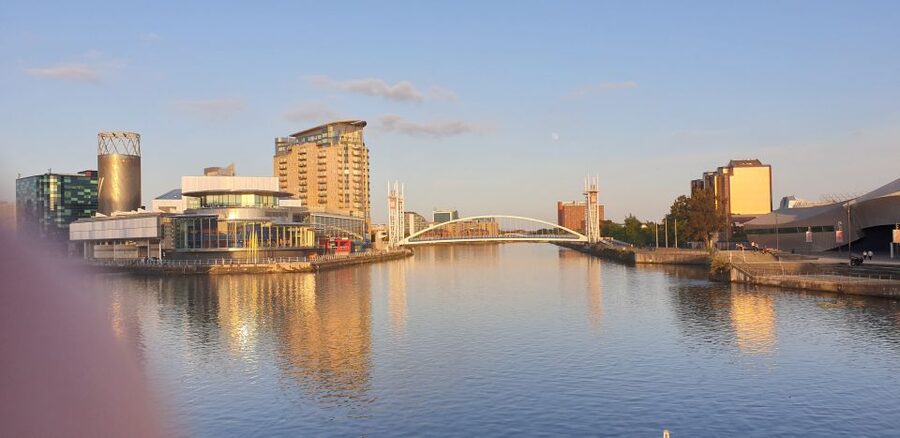
The Lowry Arts Centre is another highlight because it represents a specific kind of change: turning industrial-adjacent space into a cultural destination. The tour uses it to show how the Quays went from serving shipping and dock needs to supporting arts, visitors, and public life.
I like that this isn’t presented as a simple glow-up. Instead, the guide helps you understand the timeline of transformation—the idea that redevelopment didn’t happen all at once. You can see this in the way the tour compares what you’re looking at now with what used to be there.
For you, that makes the Lowry stop more than a photo moment. It becomes a reference point for the whole regeneration story, so you leave with a clearer mental map of what changed and why.
The guide is the difference: stories, photos, and small details

A walking tour lives or dies by its guide, and this one has a clear advantage: the guide Frank is consistently praised for making the area feel alive. Multiple groups describe the same pattern—clear explanations, lots of room for questions, and a story flow that moves between history and upcoming change.
One of the most practical techniques I’d recommend you look for is the visual comparison. The guide uses old photos (and shares them as part of the walk) to help you compare earlier docks and streetscapes with what you’re seeing now. That “then vs now” approach works because it prevents the past from turning into abstract facts.
The tone also seems to land well. Guests talk about the guide being engaging and even humorous when appropriate, which helps when the content covers both heavy history and future development plans. It’s easier to stay attentive when the presentation doesn’t feel like a lecture.
There’s one consideration to keep in mind: one review notes the guide’s long stride and that the walking pace can feel quick. The good news is the tour itself can adjust the route and pace for different groups, including adapting to avoid steps. If you’re concerned, it’s smart to mention it early so the guide can set the rhythm.
How the 2 hours actually feels on the ground
This tour runs about 2 hours and covers around 5 kilometers. That’s long enough to feel like you’ve done something real, but short enough that you’re not stuck on your feet all day. It also helps you fit it into a Manchester or Salford itinerary without wrecking the rest of your schedule.
You’ll also get breaks to look at features and landmarks. Those pause moments matter because the guide’s story includes specific references—bridges, canal edges, and major buildings. If you treat those stops like quick photo stops only, you’ll miss why they were chosen.
Also, it’s rain or shine. So plan like this is an outdoor city walk, not a weather-dependent sightseeing activity. Bring clothing that you don’t mind getting a little damp, and stick to shoes you trust on wet pavement.
Accessibility, families, and dogs: what you can realistically plan
This tour is family-friendly and suitable for all ages, which is a big plus if you’re traveling with kids or grandparents. The route can be adjusted to avoid steps, and the pace can be adapted to suit your group. That means you’re not stuck with a one-size-fits-all walking plan.
If you have mobility needs, it’s still wise to wear your most comfortable shoes and expect some outdoor ground conditions, especially along the canal edge. The tour’s ability to adjust helps, but it’s still a walking tour, so plan for some time on your feet.
Dogs are welcome on leads, which is useful if you’re trying to keep the trip stress-free and keep everyone together.
Price and value: why $18 can make sense here
At about $18 per person, this is priced like an efficient, experience-packed city walk. You’re paying for three things: a local guide, a structured route of major landmarks, and the headset system that improves the listening experience.
The headset point is bigger than it sounds. If you’ve ever tried to hear a guide near open water or busy walkways, you know how quickly you can miss key details. Here, the headsets help you stay connected to the story, which turns the tour from scenery into understanding.
You’re also getting a guided route that’s roughly 5 km in 2 hours. That’s a reasonable amount of ground coverage for a first-time orientation, especially in an area where it’s easy to walk past history without noticing it.
If you like your sightseeing planned but not rigid—moving through real spaces with context—this price-to-time ratio is a strong fit.
Who this walking tour is best for
This one is ideal if you:
- want a first-time orientation to Media City and Salford Quays
- enjoy history that connects to what you see today
- like walking tours but want structure and a clear narrative
- are traveling with mixed ages and want something family-friendly
- care about the role of the Manchester Ship Canal and urban regeneration
If you mainly want a pure photo stroll with no facts, you might find the guided content takes up more attention than you planned. If you want museum-style deep dives, this isn’t that either—it’s a walking format with landmark context.
Should you book the Media City & The Quays guided walk?
I’d book it if you’re the kind of person who likes leaving a city with a clearer mental map. This tour gives you that: the route ties Media City’s modern presence to the canal-and-docks past, then links both to the future of the area.
I’d skip it only if you dislike outdoor walking, hate guided storytelling, or need a slower, low-step, minimal-walking outing. Otherwise, it’s a cost-effective way to turn a waterfront area into a story you actually understand.
If you do book, go in with two expectations: wear comfortable shoes, and listen for the guide’s then-and-now comparisons. That’s where the tour does its best work.
FAQ
Where is the meeting point for the Manchester: Media City & The Quays tour?
Meet your guide underneath the big digital screen in Media City Piazza, opposite BBC Quay House and adjacent to the Media City Metrolink tram station.
How long is the tour, and how much walking is there?
The tour lasts about 2 hours and covers around 5 kilometers.
What landmarks will the walk include?
The route takes you past major sights including the Lowry Arts Centre and Imperial War Museum North, along with stops around Media City and Salford Quays by the Manchester Ship Canal.
Is the tour suitable for families?
Yes. It’s described as family-friendly and suitable for all ages.
Is it wheelchair accessible?
The tour is listed as wheelchair accessible, and the route can be adjusted to avoid any steps.
Does the tour run in bad weather?
Yes. The tour takes place rain or shine.
Are headsets included?
Yes. Headsets are included so you can hear the guide clearly.
Are dogs allowed?
Yes, dogs on leads are welcome.