REVIEW · JODHPUR
Jodhpur Blue City Heritage Walking Guided Tour
Book on Viator →Operated by Blue City Adventures · Bookable on Viator
Blue lanes make you slow down. This guided walk through Jodhpur’s Blue City is built for people who like stories on the street, not just photos from a phone. I really like the licensed local guide angle here: you get place-by-place context for why these spots matter, from fort gates to old waterworks.
I also like the mix of “big landmark” and “quiet corner.” You’ll spend real time at Ranisar and Padamsar Lakes, stop at Toor Ji Ka Jhalra stepwell, and then end in the Clock Tower market area for everyday sights like textiles and spices. One thing to keep in mind: this is a walking tour with short stretches that can feel hilly, so you’ll want good shoes and a relaxed pace.
In This Review
- Key points before you go
- First Stop: Finding the Clock Tower and Setting Your Pace
- Fateh Pol: The Fort Gate That Remembers 1707
- Ranisar and Padamsar Lakes: Built for Water in a Dry Place
- Navchowkiya: Blue City Streets and the Art of Getting Your Bearings
- Toor Ji Ka Jhalra Step Well: Cool Shade and Carved Stone
- Gulab Sagar: A Reservoir That’s Also a Scenic Pause
- Clock Tower Market (Sardar Market): Souvenirs, Spices, and People-Watching
- Price of $13.39: Why This Walk Can Be Great Value
- Pacing, Hills, and What to Wear (So You Don’t Hate the Walk)
- Tips for Getting the Most From Your Guide
- Should You Book This Jodhpur Blue City Walking Tour?
- FAQ
- How long is the Jodhpur Blue City Heritage Walking Guided Tour?
- Where do I meet and where does the tour end?
- What is included in the tour?
- What language are the guides?
- Do I need to pay admission for the stops?
- How big is the group?
- What’s the cancellation policy?
Key points before you go
- Blue City lanes: expect narrow streets and that classic indigo-hued look up close
- Water engineering stops: Fateh Pol area lakes and Toor Ji Ka Jhalra stepwell
- Market finish at Sardar Market: a practical place to grab snacks and small gifts
- Small group cap (up to 15): easier conversation and less crowd pressure
- English/Hindi licensed guide: you’ll get human explanations, not just a map
First Stop: Finding the Clock Tower and Setting Your Pace
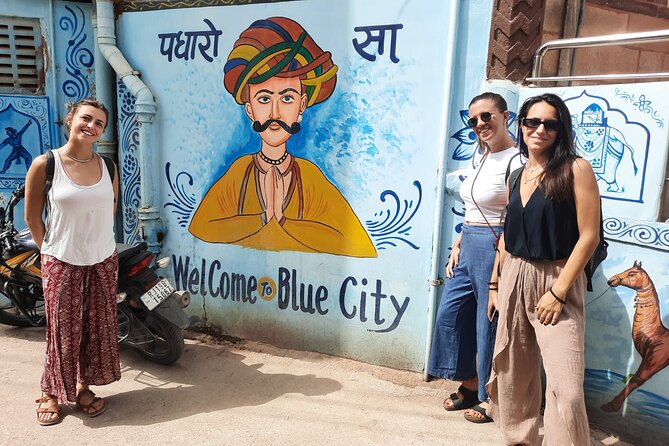
You’ll meet near the Clock Tower in Old City Jodhpur, at the spot marked 72XF+37C Clock Tower, near Makrana Mohalla, behind Pal Haveli. It’s an easy landmark to orient around, and it puts you right where the action starts.
From the start, the tour feels like a neighborhood walk with structure. Expect a guide-led route that moves between heritage sights and the local flow of the market area. The whole experience runs about 1 hour 40 minutes to 2 hours, so it’s long enough to feel meaningful, but short enough that you won’t burn your whole day.
Group size matters here. With a maximum of 15 people, you’re not stuck in a slow shuffle behind a crowd. If you’re the type who likes asking quick questions—how things were used, why buildings look the way they do—this setup makes it easier.
You can also read our reviews of more walking tours in Jodhpur

Fateh Pol: The Fort Gate That Remembers 1707
Early on, you’ll pass Fateh Pol Road and the Fateh Pol gate area. This gate is tied to Mehrangarh Fort and commemorates a victory over the Mughals in 1707. The point isn’t just the date—it’s the carved, imposing look of a fort gateway that was built to impress.
It’s also a good “mental warm-up” stop. Before you start winding through quieter lanes, you get a clear sense that Jodhpur’s old power and old craftsmanship are right here in the street-level details. Admission is free at this stop, which is always a nice bonus when you’re on a tight travel budget.
Practical note: stand back far enough to see the gate as a whole, then lean in to spot carvings. A guide can point out what you might otherwise miss—like how the design signals importance.
Ranisar and Padamsar Lakes: Built for Water in a Dry Place
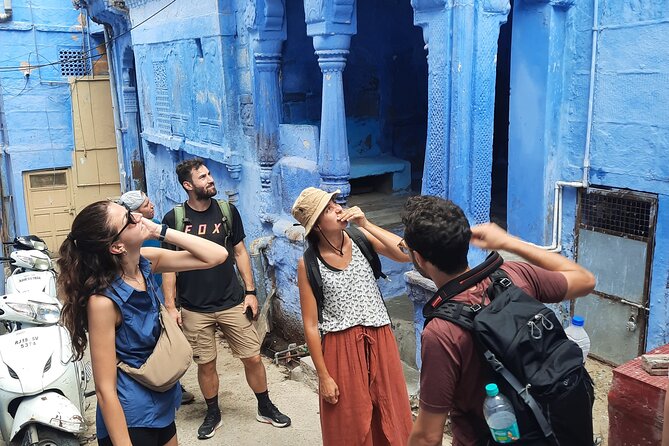
Next up are the Ranisar and Padamsar Lakes, right beside the Mehrangarh Fort area. These interconnected lakes were built in the 15th century and were designed for water storage in an arid region. In plain terms: this is how Jodhpur planned for drought long before modern pipes and pumps.
I like this stop because it flips your thinking. When you travel in desert-adjacent places, you often see beauty first. Here, the waterworks explain the logic underneath the beauty: people engineered calm water for survival.
The lakes also give you a natural break in the walk. Even in warm weather, the area can feel calmer than the market lanes. Admission is listed as free for this stop too, which keeps the value simple.
If you’re the type who enjoys architecture and function, ask your guide what they think these lakes meant to daily life. You’ll usually get a clearer picture than you’d get from standing and looking.
Navchowkiya: Blue City Streets and the Art of Getting Your Bearings
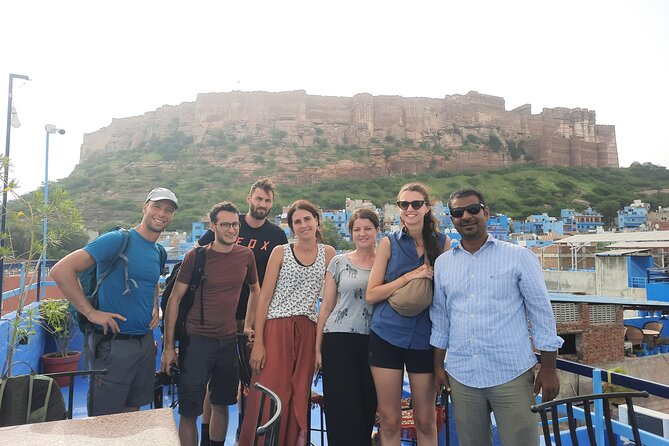
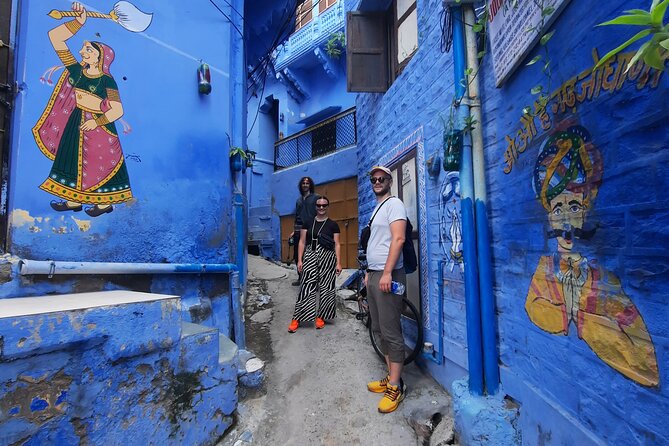
Then you move into Navchowkiya, a Blue City neighborhood known for narrow, winding lanes and iconic indigo-hued homes. This is where the tour starts to feel like real street walking, not museum sightseeing.
Expect a bit of “wait, where are we going” energy—in a good way. The streets are the point. You’ll see how the Blue City is not one view but many small views stitched together by alley turns.
This is also a good stop for photos, but don’t treat it like a photo scavenger hunt. Let the guide slow you down. When you understand what you’re seeing—where people lived, how lanes connect—you’ll take better pictures with less frantic energy.
If you’re prone to motion sickness, give yourself a few minutes to adjust. Narrow lanes and steady turns can feel like a mini maze.
Toor Ji Ka Jhalra Step Well: Cool Shade and Carved Stone
Toor Ji Ka Jhalra, often called Toor Ji’s Step Well, is one of the most visually memorable stops on the route. It dates to the 18th century and was constructed by a queen consort. The stepwell is known for intricate carvings and for showing how engineering and artistry worked together.
I like stepwells because they’re not just pretty. They’re practical public infrastructure that became cultural space. You get the sense of people designing for comfort in hot weather, building a place where shade and water could coexist.
Admission is listed as free at this stop. That makes it even easier to treat it like a true highlight rather than a quick glance.
One tip: take your time here. The carvings reward close looking, and the light changes as you move. If your guide is friendly and talkative (and the good ones usually are), ask them what details you should focus on.
Gulab Sagar: A Reservoir That’s Also a Scenic Pause
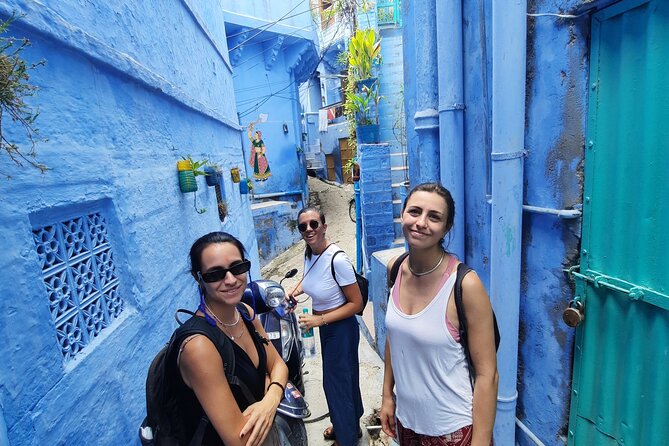
After the stepwell, you’ll reach Gulab Sagar, a scenic lake area in Jodhpur. Like the other water stops, it connects to the city’s old need to store water. It was built in the 18th century and served as a reservoir, and the lake ring gives you a calmer moment in the walking pattern.
This is a short stop by design, but it helps you reset. By now, you’ve seen fort gate energy, water engineering, and street-lane texture. Gulab Sagar is the breather where everything slows down a notch.
Admission is listed as free here too, so you can treat it as a scenic payoff without thinking about tickets.
If you’re sensitive to heat, this is a spot to catch your breath, sip water if you brought it, and watch how people move around the lake area.
Clock Tower Market (Sardar Market): Souvenirs, Spices, and People-Watching
You’ll finish at the Clock Tower Market, also known as Sardar Market. The clock tower is described as late 19th-century architecture built by Maharaja Sardar Singh, and the market area is also linked with colonial-era architectural character.
This part is useful because it connects heritage to daily life. You’re not just looking at old stones; you’re in a place where people actually buy things. You can expect stalls and shops for handicrafts, textiles, spices, and local delicacies, plus the general chatter of a working market.
You’ll likely spend about 30 minutes here, which is long enough to browse without feeling trapped.
A practical way to use this stop: don’t come with a rigid list of items. Instead, let the guide point out what’s worth checking for your travel style. Then you can decide on the spot—like whether you want a small edible souvenir or something easier to carry.
Price of $13.39: Why This Walk Can Be Great Value
At $13.39 per person, this tour is priced like a budget-friendly heritage primer. What makes the value work is the mix: you’re paying for more than “walking and photos.” You’re paying for a licensed local guide, time with multiple major heritage features, and a market finish where you can use the knowledge immediately.
The route includes several stops with free admission (the gate area, lakes, stepwell, and Gulab Sagar are listed as free). That matters. When entry fees stack up, low headline prices can turn into a higher real cost. Here, you’re mostly paying for guiding and time.
Also, the tour has a group cap of 15 people, and you get a mobile ticket. That combination tends to keep the experience organized without feeling like a mass event.
If you like solo travel but don’t want to plan a complicated route, this is the kind of organized shortcut that still feels local.
Pacing, Hills, and What to Wear (So You Don’t Hate the Walk)
The duration is about 1 hour 40 minutes to 2 hours, and it’s mostly on foot. A couple of guide styles and route variations may include climbs toward nearby temples before heading back down toward the Blue City lanes and market area.
So think in terms of an active city walk, not a stroller-and-scones stroll. I’d wear comfy shoes with decent grip. If it’s hot, plan a light layer and bring water. If you’re traveling in cooler months, you’ll still want shoes that handle old stone and uneven sidewalks.
One more small but important prep step: check your phone for any guide messages before you depart. In one experience, a guide contacted the traveler and tried to start earlier than the booked time. That’s not the kind of thing you want to argue about on the sidewalk. The fix is simple: confirm the start time you booked and only move when you agree.
Tips for Getting the Most From Your Guide
This tour lives and dies by the guide’s ability to connect details. The best part is that you’re dealing with a licensed English/Hindi speaking guide, not a script taped to a clipboard.
If you want better answers, ask better questions:
- What was the purpose of the lakes and stepwell?
- How should I read the carvings and fort-gate design?
- Which stops are the best for photos right at the light angle?
If you meet a guide like Imtiaz, you’re in good shape. People have specifically praised his knowledge and the way he helped them see off-the-beaten parts and get great views for photos. You might also hear route ideas that include temple areas on the way, depending on how your day flows.
Should You Book This Jodhpur Blue City Walking Tour?
You should book if you want a compact, guided way to see Jodhpur’s old water systems and Blue City streets without building your own plan. The price is strong for the number of meaningful stops, and the small group size keeps it from feeling like a herd.
You might skip it if you hate walking on uneven streets, or if you need a fully structured timetable where every group visits the exact same points with no route variation. Also, if you’re very sensitive about time changes, double-check messages before you arrive so you’re not negotiating on the spot.
If you’re an independent traveler who still wants someone to explain what you’re looking at, this is a smart pick. It turns Jodhpur’s blue look into a story you can actually remember.
FAQ
How long is the Jodhpur Blue City Heritage Walking Guided Tour?
The tour runs about 1 hour 40 minutes to 2 hours.
Where do I meet and where does the tour end?
Both the start and end are at 72XF+37C Clock Tower, near Makrana Mohalla, behind Pal Haveli, Old City, close to Gulab Sagar, Jodhpur, Rajasthan 342001, India.
What is included in the tour?
The guide and these stops are included: Clock Tower Market, Ranisar and Padamsar reservoirs, Toor Ji Ka Jhalra (Step Well), the Blue City area, and Gulab Sagar.
What language are the guides?
The tour includes an English/Hindi speaking licensed tour guide.
Do I need to pay admission for the stops?
The listed heritage stops are marked as admission ticket free.
How big is the group?
The tour has a maximum of 15 travelers.
What’s the cancellation policy?
You can cancel for a full refund if you cancel at least 24 hours before the experience starts. If you cancel less than 24 hours before, the amount paid isn’t refunded.
If you want, tell me your travel month and whether you’re more into photos or stories, and I’ll suggest the best time of day to do this walk.