REVIEW · JOHANNESBURG
Johannesburg: City Centre Walking Tour
Book on GetYourGuide →Operated by One Day Africa · Bookable on GetYourGuide
Johannesburg’s CBD has layers you can feel. This 3-hour walk in the heart of Jo’burg connects gold-rush streets, courthouse buildings, and creative neighbourhoods, all with a local guide like Refiloe (who people describe as a walking reference for South African history). I especially like the way you get real context for what the city was built on and what it’s dealing with now. One possible drawback: if you hit the wrong day, the Workers’ Museum may be closed, so you’ll miss that physical visit.
You’ll start at Nando’s outside Gandhi Square, then work your way through Central Johannesburg: classic architecture on Main Street, Nelson Mandela’s early legal work in the Ferreirasdorp area, the migrant labour story around the Workers’ Museum, and the cultural pull of Newtown and Market Theatre. The walk ends with photo-worthy views from the Nelson Mandela Bridge, then you finish in the area of Braamfontein, a younger, arts-minded hub.
This is also good value for $40 because entrance fees and bottled water are included, and you’re not just staring at buildings from a bus window. You’ll want comfy shoes and a willingness to walk at city pace. If you’re expecting a light, casual stroll with minimal discussion, you may find the history-heavy stops a bit intense.
In This Review
- Key things that make this walk worth it
- Starting at Gandhi Square: the easiest way to begin
- Safety on foot in the Johannesburg CBD
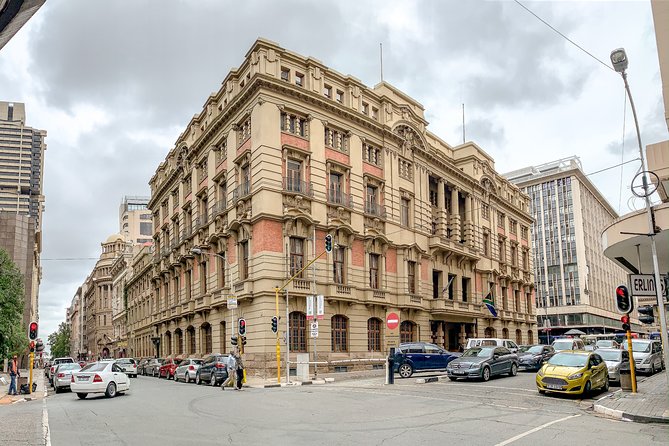
- Gold-rush Johannesburg and Main Street: reading the architecture
- Marshalltown’s civic buildings: post office, courts, and the city’s rules
- Beyers Naude Square and the corporate walls: power at street level
- Ferreirasdorp and Chancellor House: Mandela’s early legal work
- The Workers’ Museum area: migrant labour and human scale
- Newtown, Mary Fitzgerald Square, and Market Theatre: culture you can see
- Nelson Mandela Bridge photos: connecting neighbourhoods with one view
- Price and value: is $40 worth it?
- Who should book, and who should reconsider
- Practical tips so your walk goes smoothly
- Should you book this Johannesburg CBD walking tour?
- FAQ
- How long is the Johannesburg City Centre Walking Tour?
- Where do I meet the guide?
- How much does the tour cost?
- What is included in the price?
- Is lunch included?
- Which places will we visit during the walk?
- What language is the tour guide?
- Is it wheelchair accessible?
- What is the cancellation policy?
- Is the pay-later option available?
Key things that make this walk worth it

- Gandhi Square as a simple, central start outside Nando’s, with the guide meeting you in the Metropolitan Building area
- Architecture + politics in the same route, from gold-era streets to courtroom buildings
- Mandela and Oliver Tambo’s early legal chapter covered in the Ferreirasdorp area (Chancellor House)
- Migrant labour learning at the Workers’ Museum area, plus discussion of what shaped Johannesburg’s workforce
- Newtown’s cultural stops, including Market Theatre and the art/wall energy around the squares
- Mandela Bridge photos and views, with the walk tying the CBD to surrounding neighbourhoods
Starting at Gandhi Square: the easiest way to begin
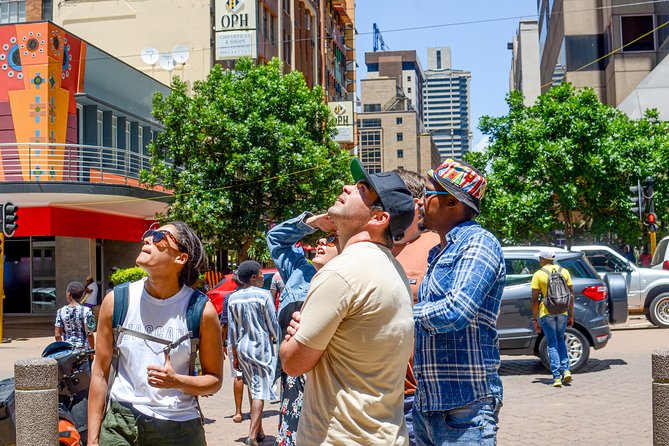
Your tour starts outside Nando’s Restaurant in Gandhi Square, near the Metropolitan Building area. That matters more than you’d think. Johannesburg is huge, and CBD streets can be confusing if you’re relying on taxis and guesswork. Having a clear meetup spot makes it simple: show up, meet your guide, and get moving.
The tone of the walk usually sets fast. You’re not just sightseeing. You’re being taught how to read the city. Expect the guide to explain what you’re seeing and why it matters, then connect it to Johannesburg’s past and its current reality. A few guides in this tour line have been praised for exactly that approach, including Refiloe, Thabo, and Mulalo.
You can also read our reviews of more walking tours in Johannesburg



Safety on foot in the Johannesburg CBD
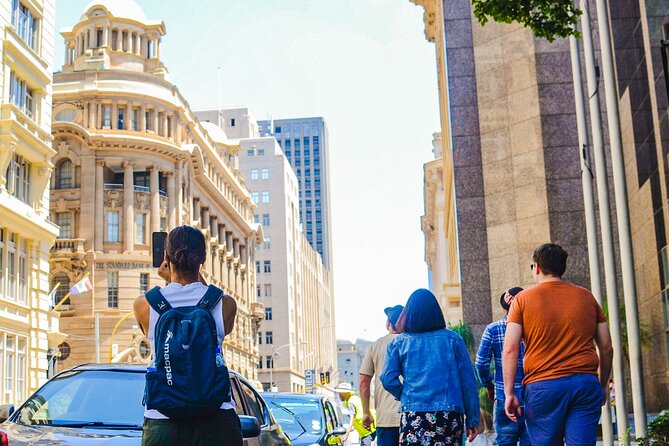
Let’s talk about the big fear: walking in the CBD. The good news is that this tour is designed for people who want to do it on foot with a guide. Multiple bookings mention feeling safe while walking with the group, and the guides are described as careful about where they take you and when.
You’ll still want to use common sense. Stay with the group. Keep your phone secure. Don’t wander off to chase photos. This tour rewards staying present, because the best parts are at street level: architecture details, street art, and the human scale of the neighbourhood.
One nice bonus from the guide experience: you’ll often get help with photos and positioning. Some people specifically mentioned their guides stopping to get good shots and guiding them through the best angles.
Gold-rush Johannesburg and Main Street: reading the architecture
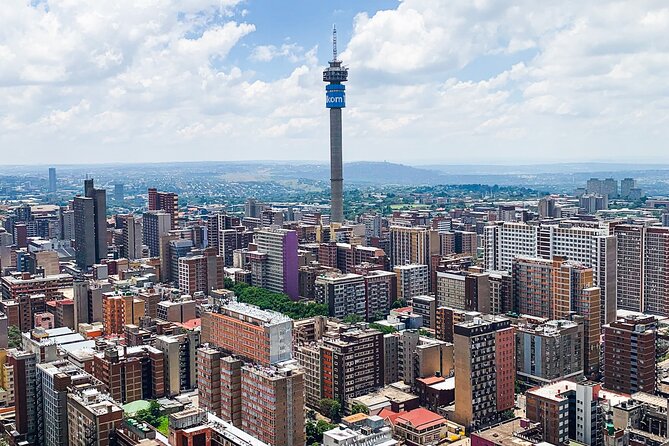
After you’re up and walking, you’ll follow the city’s gold mining story through the CBD’s central streets. That theme shows up in the buildings: Johannesburg’s architecture tells you what money looked like when it poured in, and what power meant when institutions formed around that wealth.
A key stop is the Carlton Centre area. You’ll have time for a guided visit (about 20 minutes). Even if you’re not focused on skyline views, it’s a useful anchor because the centre is part of Johannesburg’s identity. One caution from real-world experience: access to certain viewing options can change over time. If you’re hoping for a specific 360 view, don’t build your whole plan around it. The guide will still help you see what’s accessible and worthwhile that day.
You’ll also make a photo stop at the High Court of South Africa (Gauteng Local Division) and take in the civic gravity of the building. This is where Johannesburg’s story stops being only economic and becomes political. Look at the scale and how the building sits in the streets. The city’s institutions don’t hide; they dominate.
Marshalltown’s civic buildings: post office, courts, and the city’s rules
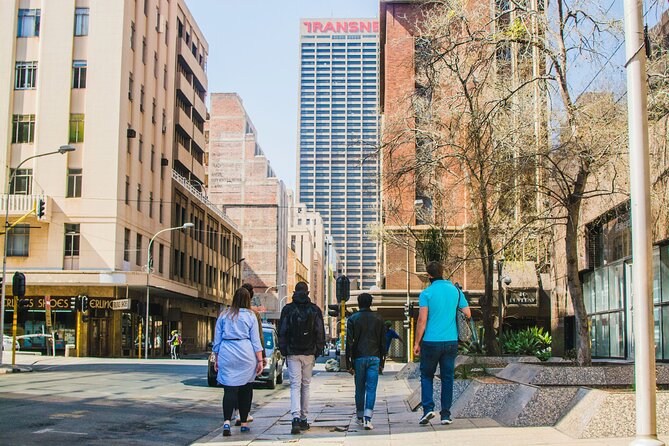
You’ll move into Marshalltown and Johannestown through a mix of short guided sections and longer walking stretches. The route includes a stop at the Marshalltown Post Office (around 10 minutes). Post offices sound boring until you think about what they meant in an era when Johannesburg’s population and commerce were exploding. This is infrastructure with a purpose: moving information and people in a fast-growing city.
You’ll also spend time at Johannesburg Central Magistrate’s Court with a photo stop and guided visit (about 20 minutes). Court buildings are never just about law. They show who had access, who didn’t, and how systems were built. The guide’s job is to connect the dots so your photos don’t feel like random architecture snapshots.
If you like history that comes with names and outcomes, these civic stops tend to land well. People have described the guides as turning these locations into understandable chapters: apartheid-era realities, the significance of public institutions, and how the CBD functions today.
Beyers Naude Square and the corporate walls: power at street level
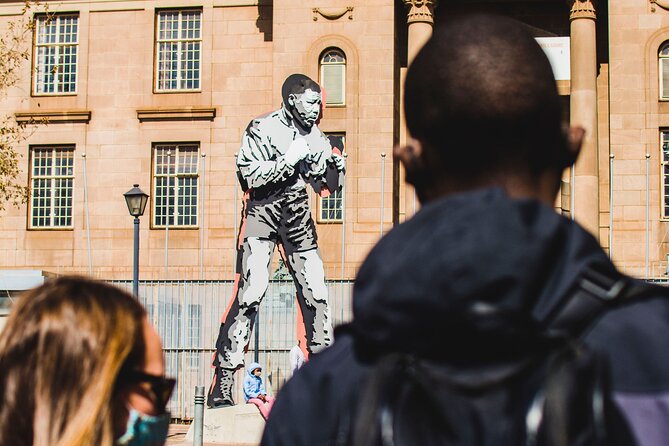
As you keep walking, you’ll hit Beyers Naude Square for photos and guided sightseeing (around 20 minutes). This is one of those places where the city’s public space and public meaning mix together. Pay attention to who uses it and how it feels. In a city with big contrasts, squares show the social rhythm.
Then you’ll pause for another photo stop tied to corporate power: the Anglo American Corporate Office. The stop is short (about 10 minutes), but it adds a sharp contrast. Johannesburg’s story is mining-driven, and that corporate presence is part of the legacy. It’s not just a building; it’s a reminder of who benefited and how decisions were made.
This section of the walk is also where I like the discussion most. The guide doesn’t treat the CBD like a museum. They talk about what the city is dealing with now, including the reality of the CBD’s condition and politics. That combination is what turns a walking tour into a better way to understand where you are.
Ferreirasdorp and Chancellor House: Mandela’s early legal work
From the centre, the walk shifts toward the roots of Johannesburg in the Ferreirasdorp area, sometimes called the cradle of Johannesburg. This is where you’re walking through the story of early gold diggings and the first diggers who settled nearby.
A highlight described for this part of the route is Chancellor House, where Nelson Mandela and Oliver Tambo established their first black-owned law firm. That’s a huge step in the narrative arc: the city built on extractive wealth also became a place where law, resistance, and rights took shape in real institutions.
When the guide explains the significance, it makes the architecture and street context click. You stop seeing buildings as background and start seeing them as part of a chain of events. If you’re interested in how change actually got organized, this stop is the kind you’ll remember after you leave the CBD.
The Workers’ Museum area: migrant labour and human scale
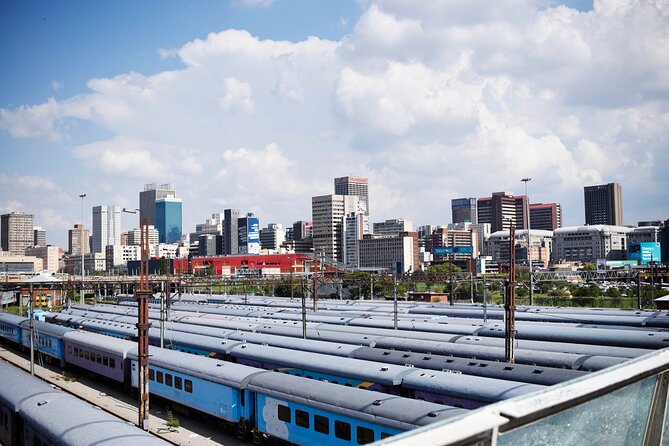
Next comes the Workers’ Museum stop, with a guided visit and time for sightseeing (about 15 minutes). The key theme here is migrant labour history—how Johannesburg’s growth depended on people moving for work, and how those working lives shaped the city.
This is the moment in the walk where the city’s story becomes personal and structural at the same time. It’s easy to talk about gold and politics, but the museum’s focus forces you to consider the human systems behind that wealth.
One practical thing to know: the museum can be closed depending on the day. That’s not a deal-breaker because the guide’s explanation of workers’ living conditions can still hit hard, but it may change how much you get from the physical space. If this museum stop is a top reason you booked, ask the operator if there are typical closure patterns for your day.
Newtown, Mary Fitzgerald Square, and Market Theatre: culture you can see
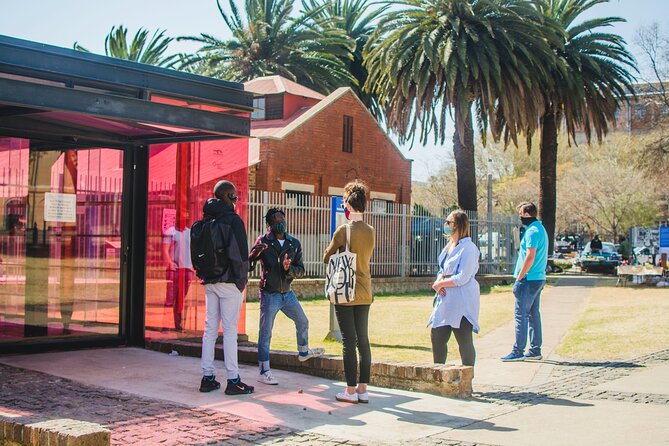
After the Workers’ Museum area, the walk continues toward Newtown, a creative neighbourhood where culture is part of the street experience. You’ll pass through Mary Fitzgerald Square (with photo stop and guided sightseeing) and then reach the Market Theatre area.
Market Theatre is typically handled as a guided photo stop with short passing time (around 5 minutes). Still, it’s an important cultural marker. Johannesburg’s creative scene isn’t just about galleries—it’s also about theatre spaces, street art, and public art energy around performance and community venues.
This is also where I like the pacing. You’ve been moving through weighty themes—institutions, law, labour—and now you see how the city expresses identity through creativity. People have mentioned street art specifically, and if you want a more art-focused day, you may want to pair this with a street art tour later.
Nelson Mandela Bridge photos: connecting neighbourhoods with one view
The walk culminates with the Nelson Mandela Bridge. Expect a photo stop and guided explanation plus scenic views while you’re on the way (about 10 minutes). This is a satisfying finish because it visually connects parts of Johannesburg that feel separate at first.
From the bridge, you get the sense that the CBD isn’t isolated. It links to other areas and tells you how people move, where the city turns, and why certain neighbourhoods developed the way they did.
Then the tour concludes in Braamfontein near Sha’p Braai – Shisanyama. That ending is practical. You’ve walked for a while, you’ve learned a lot, and you’ve earned a meal that fits the local shisanyama culture. Lunch isn’t included, so this is a natural place to eat if you want to keep the day simple.
Price and value: is $40 worth it?
For $40 per person, you’re getting a live English guide, bottled water, and entrance fees. You’re also skipping the ticket line, which can save time in a city where lines and access rules can be unpredictable.
Here’s the value logic: a bus tour can show you where things are. This walking tour helps you understand why those places matter. The time limit is only 3 hours, but guides have been known to adjust the pace when the conversation is flowing. One person even had their tour run closer to four hours because the guide made sure they saw everything and had time for questions.
If you like asking questions and getting names and context attached to what you’re looking at, the $40 feels fair. If you only want a surface-level photo run, you might feel the pace is more “learn as you walk” than “click-and-go.”
Who should book, and who should reconsider
This tour fits you best if you:
- enjoy walking history that connects architecture, politics, and daily life
- want a guided explanation of Johannesburg beyond the stereotypes
- like cultural stops in Newtown and the creative energy in the finish area of Braamfontein
You should reconsider if:
- you’re pregnant (not suitable is listed)
- you use a wheelchair (the activity says wheelchair accessible, but it also says it isn’t suitable for wheelchair users)
- you’re looking for minimal walking or very light content
That wheelchair note is confusing on paper. I’d treat it as a reason to contact the provider before you book, especially if mobility is a factor for you. The tour itself is clearly built around walking time between stops.
Practical tips so your walk goes smoothly
Bring comfy shoes. This is a city-centre walk with multiple stops. Also bring a phone for photos, because you’ll want pictures at places like the High Court and the Nelson Mandela Bridge.
Wear sun protection if it’s warm. Water is included, but you’ll still feel better with a hat and a light layer if the weather shifts. If you’re sensitive to crowds, go in with the right expectations. This is a CBD with real people moving around, not a closed heritage district.
Finally, plan for no lunch. You’ll end near a great option for a meal, but you’ll need your own timing for food during the tour.
Should you book this Johannesburg CBD walking tour?
If you want Johannesburg to make sense fast, I think this is a smart book. The route connects gold-rush origins, Mandela’s early legal work, migrant labour history, and cultural spaces like Market Theatre into one walkable storyline. The guide quality is a big reason people rate this so highly, and names like Refiloe, Thabo, and Mulalo show up in the kind of reviews that matter: they describe guides who made the walk feel safe, friendly, and genuinely informative.
I’d only hesitate if you specifically need the Workers’ Museum to be open on your day, or if you’re not up for walking and discussion-heavy stops. Otherwise, $40 for a guided, entrance-included CBD tour that ends with great views and a meal option is a solid deal.
FAQ
How long is the Johannesburg City Centre Walking Tour?
The tour lasts 3 hours.
Where do I meet the guide?
Meet your guide outside Nando’s Restaurant at Gandhi Square, near the Metropolitan Building area.
How much does the tour cost?
The price is $40 per person.
What is included in the price?
Included are entrance fees, bottled water, a live guide, and the walking tour. You also get to skip the ticket line.
Is lunch included?
No. Lunch is not included.
Which places will we visit during the walk?
You’ll cover the Johannesburg CBD and pass through areas including Main Street and Ferreira’sdorp, and you’ll visit sights tied to Mandela’s early law work, the Workers’ Museum and Newtown, Market Theatre, and finish near Braamfontein and Nelson Mandela Bridge.
What language is the tour guide?
The live tour guide speaks English.
Is it wheelchair accessible?
Wheelchair accessible is listed, but the tour is also marked as not suitable for wheelchair users. If you use a wheelchair, it’s best to confirm with the provider before booking.
What is the cancellation policy?
You can cancel up to 24 hours in advance for a full refund.
Is the pay-later option available?
Yes, you can reserve now and pay later, keeping plans flexible.