REVIEW · BUENOS AIRES
Nazis in Buenos Aires: a historical walking tour
Book on GetYourGuide →Operated by Klio Tours · Bookable on GetYourGuide
A few blocks can carry huge moral weight. This walking tour connects the Nazis in Buenos Aires story to real streets in Recoleta, Retiro, and Microcentro, with a teacher-style guide who keeps the debate honest.
I especially liked how the walk is built around concrete places, not vague ideas, and how Max keeps linking Argentina’s post-1945 choices to what was seen, allowed, or argued about. You also get a clear thread from Adolf Eichmann’s trail to the fate of Buenos Aires’ Jewish community.
One thing to consider: this is not a casual history stroll. You’re walking through difficult material about terror, antisemitism, and war-criminality, so it’s best if you’re ready for serious themes and uncomfortable questions.
In This Review
- Key highlights worth your attention
- The point of this walk: history you can map on a street
- Meet Max, the guide who treats questions like part of the lesson
- The route: what you see, why it matters, and what to watch for
- Stop 1: Monumento a Juana Azurduy and the Palacio Libertad area
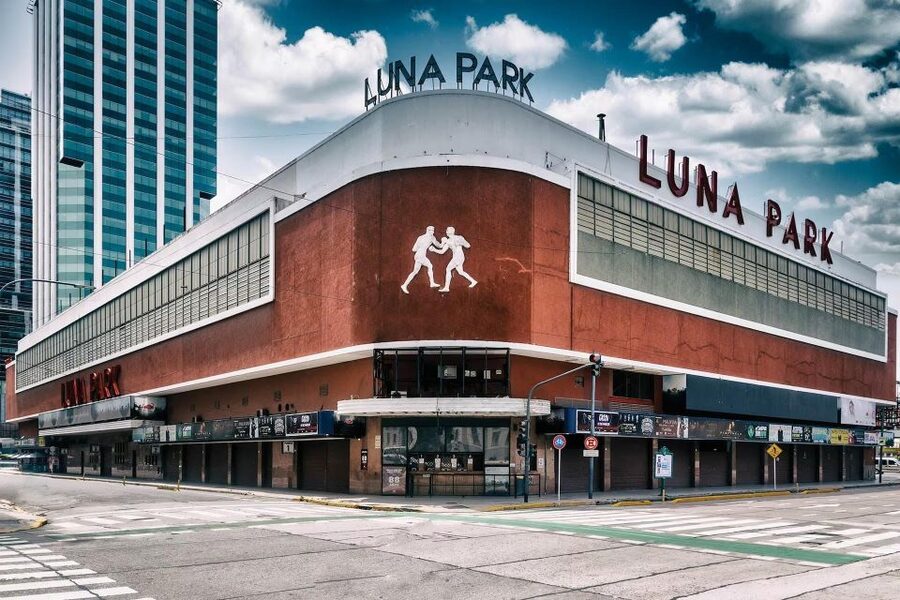
- Stop 2: Luna Park Stadium and the Nazi meeting link
- Stop 3: ABC Restaurant and the Adolf Eichmann coffee story
- Stop 4: Museo de Armas de La Nación Tte. Gral. Pablo Riccheri
- Stop 5: Palacio San Martín and the Perón debates
- Stop 6: Italian Circle of Buenos Aires and a neo-Nazi attack in the 1960s
- End: Plaza Embajada de Israel and the memorial for the former embassy
- How the tour handles the hardest part: a disputed debate without losing the plot
- Price and time: what $25 buys you, and who should spend it
- A practical checklist so the tour stays comfortable
- Should you book this Buenos Aires Nazi history walking tour?
- FAQ
- How long is the walking tour?
- Is the tour in English?
- Where does the tour start?
- Where does the tour end?
- What stops are included during the walk?
- What should I bring?
- Is this tour suitable for children?
- Is wheelchair access available?
Key highlights worth your attention
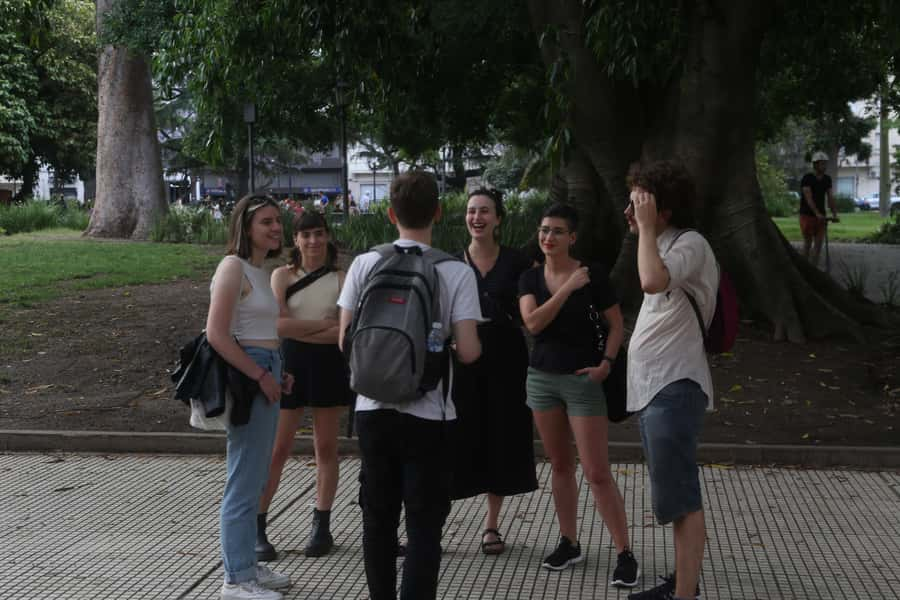
- Max’s university-teacher approach: friendly, authoritative delivery, plus lots of questions and sourced discussion
- Eichmann’s Buenos Aires stop: the tour spotlights the café-table moment connected to his life after the war
- Luna Park as a Nazi stage: you’ll see the still-standing venue tied to a major Nazi meeting
- A final walk to the Israeli embassy memorial site: the ending lands on one of the worst terrorist attacks in Latin America
- Stop-by-stop context for Argentina’s politics: the tour connects the Nazi debate to Juan Domingo Perón and the politics around it
- A humane pacing: a short restroom break and a route designed for ~2.5 hours of focus
The point of this walk: history you can map on a street
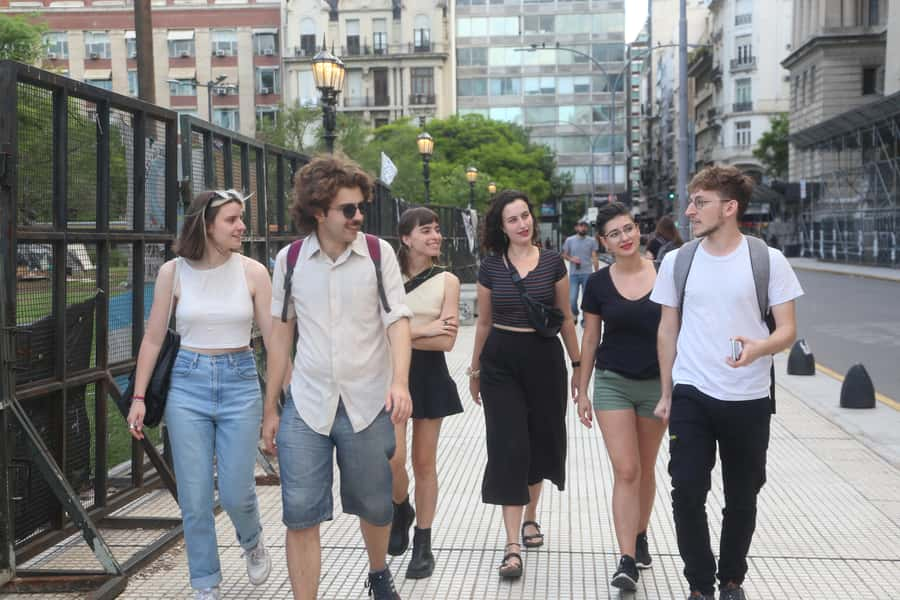
Buenos Aires is famous for tango nights, grand avenues, and café culture. This tour asks you to look underneath that surface and notice how the city also holds memory of genocide, antisemitism, and postwar escape routes. It frames a debated question in a practical way: who came, what was known, and how Argentina fit into the wider post-1945 world.
What makes it work is the structure. Instead of handing you a list of facts, you visit key landmarks and let them anchor the story. That matters, because the Nazi-in-Argentina discussion is controversial and emotionally loaded, and it’s easy for tours to either oversimplify or get too vague. Here, you’re guided through the tension—what we can support with evidence, and what’s still argued.
You’ll also be looking at a second thread at the same time: the Jewish community in Buenos Aires, described as the second largest in the continent. By pairing the Nazi/escape story with the impact on real local communities, the tour keeps the focus on consequences rather than just personalities.
You can also read our reviews of more walking tours in Buenos Aires
Meet Max, the guide who treats questions like part of the lesson
Max leads this walk and you can tell he’s built it the way a teacher does. He’s described as an English-speaking guide with a background as a history teacher by day, and he’s connected to the University of Buenos Aires. That shows in the pacing: he sets the scene carefully, then builds outward with context.
The most praised part in the feedback is his balance. People repeatedly highlight that he checks sources, uses supporting visuals, and even admits when something can’t be stated with full certainty. That style is rare on tours where guides sometimes sound confident even when evidence is shaky.
This also means the Q&A feels productive. You’re not just allowed to ask questions—you’re encouraged to participate, and Max answers them in a way that keeps the discussion tied to the evidence. If you like history that comes with nuance (and not a neat moral scoreboard), this tour has a good fit.
The route: what you see, why it matters, and what to watch for
The walk runs about 2.5 hours and uses a cluster of areas: Recoleta, Retiro, and Microcentro. Each stop is short enough to keep momentum, but long enough to explain why the place is part of the story. The tour begins at the Monument to Juana Azurduy, in front of the Palacio Libertad area (formerly known as the CCK) and ends at the Plaza Embajada de Israel memorial site.
Here’s how the landmarks connect into one continuous argument.
Stop 1: Monumento a Juana Azurduy and the Palacio Libertad area
You start near the Monument to Juana Azurduy, a few meters away from the monument itself. The setting is important because the tour’s first minutes set expectations: you’re about to talk about war criminals, Holocaust-related history, and the disputed question of whether migration from Europe after 1945 was known or supported.
This opening is also a good time to get your bearings. Even if you already know World War II basics, the tour invites you to consider how politics inside Argentina shaped what happened afterward. It’s less about asking you to memorize dates and more about helping you understand the system that made certain outcomes possible.
Practical note: wear comfortable shoes because the route includes multiple city blocks and stop-and-go walking.
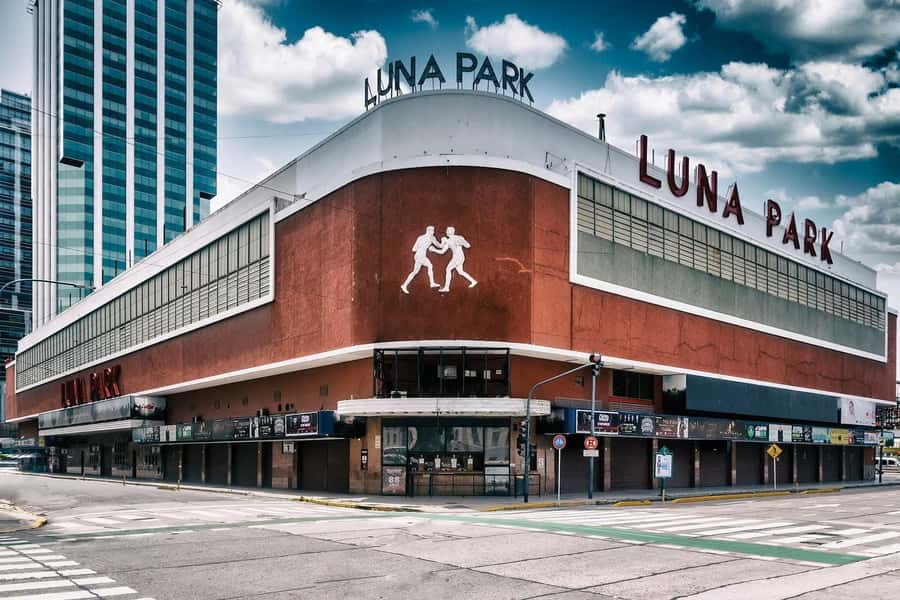
Stop 2: Luna Park Stadium and the Nazi meeting link
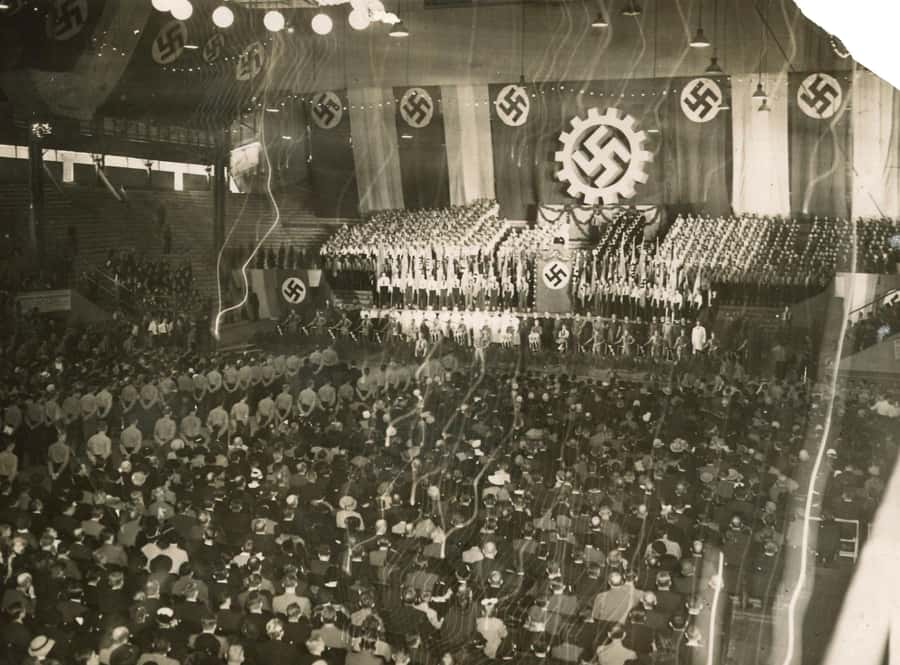
Next is Luna Park Stadium, a still-operational venue. The highlight here is the claim that it hosted a major Nazi gathering, described in the tour’s overview as a 15,000-seat meeting. Seeing a large hall still standing does something to your brain. It collapses the distance between the present-day city and a past event that shouldn’t feel routine.
Even if the details you already know focus on Europe, the tour nudges your attention to how culture and public space can be repurposed for propaganda and organizing. It’s also a reminder that postwar antisemitic networks weren’t simply fading out—they adapted to new locations and new opportunities.
One consideration: the tour notes that entry into Luna Park Stadium isn’t included. You’re likely viewing the site from outside and using it as a backdrop for the story.

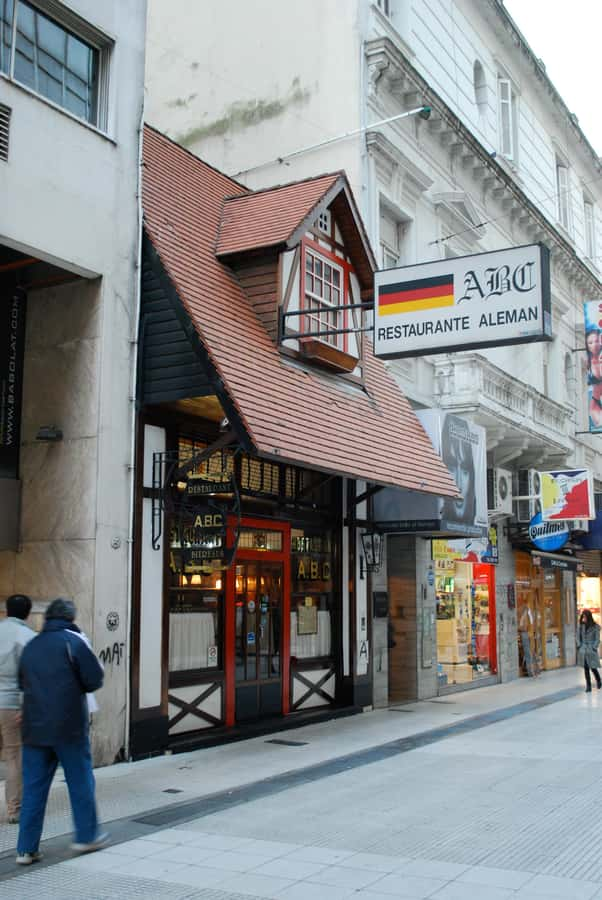
Stop 3: ABC Restaurant and the Adolf Eichmann coffee story
The ABC Restaurant stop is one of the most talked-about elements of the tour. The tour highlights a story connected to Adolf Eichmann sitting for a cup of coffee. This is the kind of detail that can sound like gossip until you place it inside a bigger narrative: Eichmann’s identification and capture depended on many steps, not one clue.
This stop works best if you let it do its job. Don’t just focus on the name-drop. Listen for how the guide ties the café location to the broader postwar movement of individuals, the intelligence work around them, and how Argentina’s environment shaped what was possible.
A tip: take a few photos here, then stop chasing your camera. You’ll get more from the explanation if you keep your attention on the why, not just the where.
Stop 4: Museo de Armas de La Nación Tte. Gral. Pablo Riccheri
This is a shorter stop with a museum setting: Museo de Armas de La Nación Tte. Gral. Pablo Riccheri. The tour’s theme continues—how weapons, state power, and military thinking intersect with Argentina’s 20th-century history.
The value of this stop is less about you becoming a weapons expert and more about the visual cue. A museum building is a reminder that history leaves physical artifacts behind, and that political decisions are often carried out using tools and institutions, not just speeches.
Again, the tour doesn’t promise museum-entry time. You’re there as part of the story, using the location for context and narration.
Stop 5: Palacio San Martín and the Perón debates
Palacio San Martín is where the tour shifts into broader political territory. The overview explicitly mentions debates about Juan Domingo Perón, described as arguably the most important political figure of Argentina’s 20th century.
This stop is useful if you’ve ever felt like Argentina’s modern history is a fog of names and dates. The guide ties Perón’s political role to the wider question behind the whole tour: were things known or promoted in ways that helped Nazi war criminals find safety?
Because this is a debated topic, the tone matters. The praised feedback suggests Max avoids simplistic binaries and keeps the argument grounded. That doesn’t mean you’ll leave with one perfect conclusion—it means you’ll understand why people disagree and what kind of evidence supports different claims.
Stop 6: Italian Circle of Buenos Aires and a neo-Nazi attack in the 1960s
The final city-center stop is the Italian Circle of Buenos Aires. The tour highlight specifically mentions visiting a place connected to a neo-Nazi attack in the sixties.
This matters because it extends the timeline past the end of World War II. It challenges the idea that extremist ideology was just a wartime phenomenon. Instead, it suggests continuity: networks and ideas can survive regime change, adapt to new places, and find new targets.
This is also where your moral compass gets tested in a different way. The tour isn’t only about foreign criminals arriving; it’s about ideology and violence persisting and reappearing locally.
End: Plaza Embajada de Israel and the memorial for the former embassy
The walk ends at Plaza Embajada de Israel, described as the memorial site for the former embassy. The tour’s highlights call this the site of the worst terrorist attack in the history of Latin America.
The ending does emotional work, but it also does historical work. It ties the Nazi/antisemitism discussion to a much later, local catastrophe aimed at Jewish institutions. In other words: the story doesn’t stop at 1945. It keeps moving into the realities of the Jewish community in Buenos Aires and the broader region.
If you’re the kind of person who likes to reflect at the end of a tour, this is a good place to do it. The memorial context makes the final minutes feel heavier, but also more meaningful.
How the tour handles the hardest part: a disputed debate without losing the plot
The big question—whether Argentina functioned as a refuge for Nazi war criminals and whether the government knew or promoted migration—comes with arguments on every side. Tours sometimes avoid this kind of topic by shrinking it into vague statements. This one aims to do the opposite: it explains the political backdrop and then shows you why the discussion stays disputed.
You’ll also learn how the guide approaches evidence. Multiple reviews highlight that Max is concerned about the source of every information and will clarify what is confirmed versus what is debated. That approach is not just intellectual. It helps you avoid the trap of swallowing outrage as fact.
If you’re visiting Buenos Aires for the first time, you might expect a city tour to feel like culture, food, and architecture. This experience adds a different layer: it uses the city as a classroom. That is why it gets compared to a top-tier university seminar by people who know good teaching.
Price and time: what $25 buys you, and who should spend it
At $25 per person for about 2.5 hours (with the tour description noting roughly two hours of walking), you’re paying for more than a route. You’re paying for a guide who brings structure, visuals, and a controlled pace—plus English-language explanations of a complicated subject.
In value terms, this price makes sense because the cost of a guided history walk in a major city often reflects logistics more than depth. Here, the depth is the product: context on World War II, the Holocaust, post-1945 migration, and how that connects to Argentine politics and specific Buenos Aires sites.
It’s also a relatively efficient format. You won’t need a full afternoon, and the sites you visit are spread across a classic Buenos Aires core. That’s helpful if you’re trying to balance major tourist hits with something that changes how you understand the city.
Who it suits best:
- History buffs who want facts with nuance
- Travelers who like challenging topics presented respectfully
- Couples or small groups comfortable with weighty content
Who might want to skip:
- Families with children under 10 (the tour isn’t suitable for them)
- Anyone who relies on wheelchair accessibility (the tour isn’t suitable for wheelchair users)
A practical checklist so the tour stays comfortable
You don’t need special gear, but you do want to show up ready.
Bring:
- Comfortable shoes
- Water
Expect:
- A 10-minute pause during the walk for a restroom break
Language:
- English
And if you like to arrive prepared, it helps to have basic World War II and Holocaust knowledge before you go. The guide will answer questions, but the tour moves faster when the baseline is already in your head.
Should you book this Buenos Aires Nazi history walking tour?
I think you should book it if you want more than a standard sightseeing script. This tour gives you a clear framework for a difficult, debated subject, and it anchors that framework to specific places: Luna Park Stadium, ABC Restaurant, the arms museum area, Palacio San Martín, the Italian Circle, and the Israel embassy memorial in Plaza Embajada de Israel.
I’d hesitate only if you’re looking for light, entertainment-first Buenos Aires. This experience is serious, and the subject matter demands attention. But if you’re willing to slow down and learn in a real street-level way, it’s also one of the best values for understanding modern Buenos Aires beyond postcards.
If you’re in town for a short time and can handle the emotional weight, this is the kind of tour that sticks with you long after the last stop.
FAQ
How long is the walking tour?
The duration is about 2.5 hours, with a short restroom pause built in.
Is the tour in English?
Yes, the live tour guide speaks English.
Where does the tour start?
It starts near the Monumento a Juana Azurduy, with the meeting spot described as a few meters away from the monument.
Where does the tour end?
The tour ends at Plaza Embajada de Israel, the memorial site of the former embassy of Israel.
What stops are included during the walk?
The tour includes stops at Luna Park Stadium, ABC Restaurant, Museo de Armas de La Nación Tte. Gral. Pablo Riccheri, Palacio San Martín, and the Italian Circle of Buenos Aires.
What should I bring?
Bring comfortable shoes and water.
Is this tour suitable for children?
No, it is not suitable for children under 10 years old.
Is wheelchair access available?
No, it is not suitable for wheelchair users.