REVIEW · BERGEN
Walking Tour in Bergen of the Past and Present
Book on Viator →Operated by I Love Bergen · Bookable on Viator
Two hours, and Bergen makes sense. This Bergen Past and Present walk strings together Bergenhus Fortress and Bryggen with a hill climb through Fjellsiden, so you see how today’s city grew out of medieval power and trade.
I like the small group size (up to 16) and the English-speaking local expert leading the way. It’s an easy way to get your bearings fast, with a route that stays outdoors and skips ticket-heavy museums.
One thing to plan for: you won’t go inside major sights like Håkons Hall, St. Mary’s Church, or the Bryggen buildings. If you want indoor museum time, you’ll need to buy those tickets separately.
In This Review
- Key things to know before you go
- Bergenhus Fortress to Bryggen: the route that shows the big story
- Bergenhus Fortress: why you start at the royal front door
- Håkon’s Hall (without entering): medieval palace leftovers and union stories
- Bryggen Hanseatic Wharf: the UNESCO wharf that traded for 1,000 years
- St. Mary’s Church: oldest still-standing, but still ticketed to enter
- Fjellsiden hill walk from Steinkjellerbakken: wooden houses and real-life details
- Skostredet to the Fish Market: modern Bergen, food talk, and an easy ending
- Price and what $33.47 buys you in real terms
- Guide style that keeps the tour from feeling scripted
- What you should wear and how hard the walk feels
- Should you book this Bergen Past and Present walking tour?
- FAQ
- How long is the Bergen Past and Present walking tour?
- What language is the tour offered in?
- Where do I meet the guide?
- Where does the tour end?
- How big is the group?
- Is this tour mostly outdoors?
- Do you enter Håkon’s Hall or St. Mary’s Church?
- Does the tour include riding the funicular?
- What fitness level do I need?
- Can I cancel for free, and what if the weather is poor?
Key things to know before you go
- Small-group format (max 16): easier questions, more personal pacing.
- Outdoor-only stops: no museum entrances, so you keep moving and spend less time in lines.
- Hanseatic League focus at Bryggen: you learn how the wharf worked, not just what it looks like.
- A real mix of eras: royal Bergen, medieval trade, and everyday life in today’s wooden-housing neighborhoods.
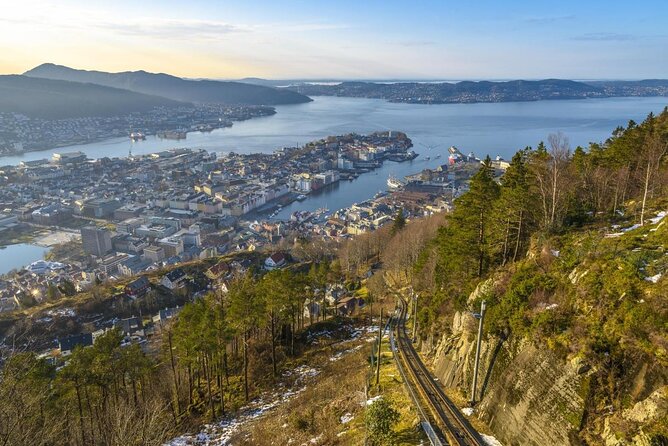
- No funicular ride included: you pass the station and talk hiking culture, but you walk instead.
Bergenhus Fortress to Bryggen: the route that shows the big story
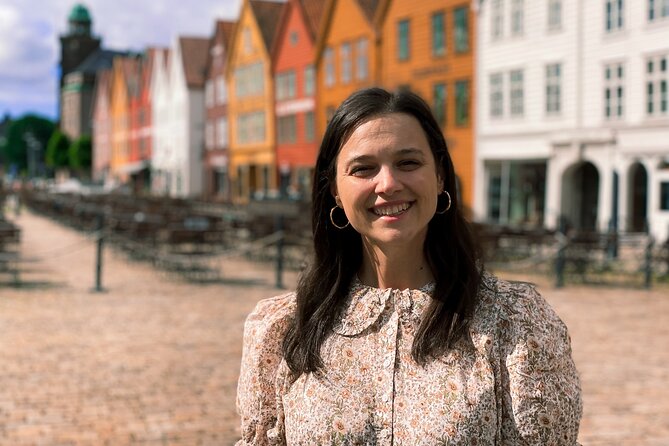
This tour works because it builds a timeline without feeling like a lecture. You start with royal Bergen, then slide into the waterfront trade era, then finish with modern Bergen through food and everyday neighborhoods. It’s the kind of loop that helps you understand the city even if it’s your first time in town.
The pace is also practical. The total time is about two hours, with most stops kept tight so you can still explore on your own after. You’ll be walking through a compact area, but there are a few uphill moments, so good walking shoes matter.
You also get value through what’s left out. Since the stops are outdoors, you avoid a pile of separate admissions during the tour. And because the tour is capped at 16 people, you’re not stuck listening from the back of a crowd.
One more plus: the meeting point is close to public transportation. That matters in Bergen, where plans often depend on weather and timing.
You can also read our reviews of more walking tours in Bergen

Bergenhus Fortress: why you start at the royal front door
The tour begins at Bergenhus Fortress, a smart first move. When Bergen was the capital, this was where the palace was located. In other words, you’re not starting with a random view. You’re starting at the political center, which makes the rest of the walk click.
From here, you get your foundation: who held power, where it sat, and why the city mattered. Guides typically tie this into later events, so the next stops don’t feel like disconnected sightseeing.
There’s a small practical detail to know. On rare occasions, the fortress can be closed due to a private event. If that happens, you may need to roll with an adjusted start, but the tour is designed as a highlight loop.
Håkon’s Hall (without entering): medieval palace leftovers and union stories
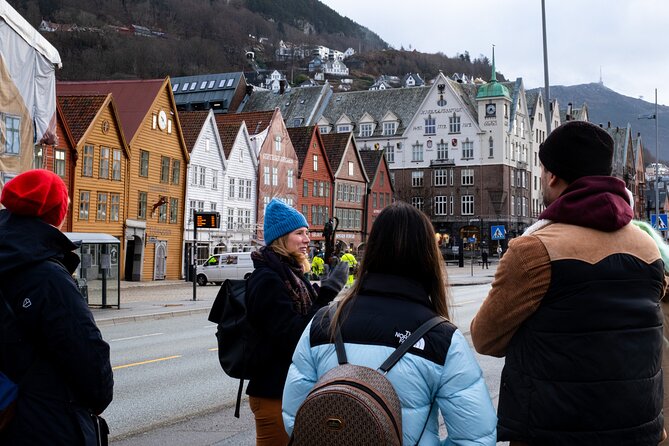
Next up is a stop by Håkon’s Hall, the major part of the medieval palace that still stands today. You learn what Bergen’s independence looked like in the medieval period, then you connect it to Norway’s unions with Denmark and Sweden.
Important note: you do not enter Håkons Hall. It’s run as a museum and costs money to visit. The walk stays focused on the outdoor scenes and the historical context, which keeps the schedule light.
This is a good choice for most first-timers. You get the story without turning the tour into a ticket hunt. If you later decide you want the museum level, you can always go back on your own and buy a separate ticket.
Bryggen Hanseatic Wharf: the UNESCO wharf that traded for 1,000 years
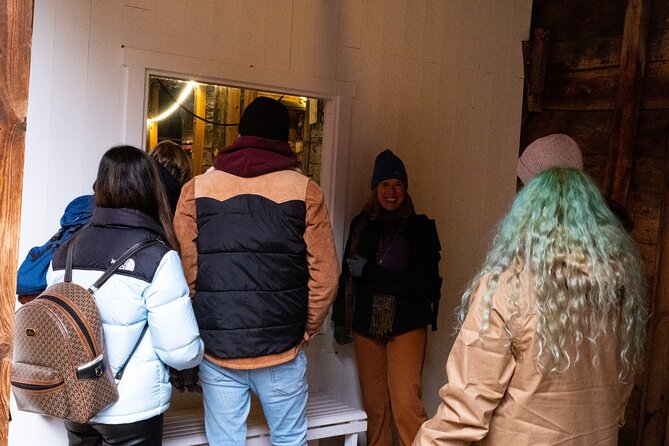
Then you step into Bryggen, and it’s easy to see why it’s UNESCO World Heritage. This is the waterfront area where merchants traded for about 1,000 years. The key player was the Hanseatic League, a network of German merchants who made Bergen a major stop for trade.
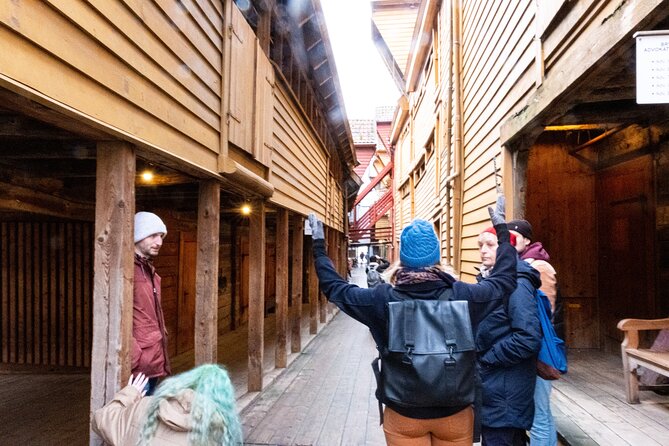
What I like here is the teaching angle. This isn’t only about colorful buildings and postcard angles. You spend your time learning how the Hanse worked, their trading methods, and how the wharf functioned. That turns Bryggen from scenery into a working system.
Two more practical notes keep expectations realistic:
- You do not enter the Bryggen buildings. Today, they’re shops and small businesses, not museums.
- The tour’s Bryggen stop is around 40 minutes, with the focus on outdoor passages and understanding how the wharf operated.
Also, plan your photos with a little patience. Bryggen’s walkways can feel tight, and the wooden structures give you that medieval texture. If you’re the type who likes slow wandering, you’ll want extra time after the tour.
St. Mary’s Church: oldest still-standing, but still ticketed to enter
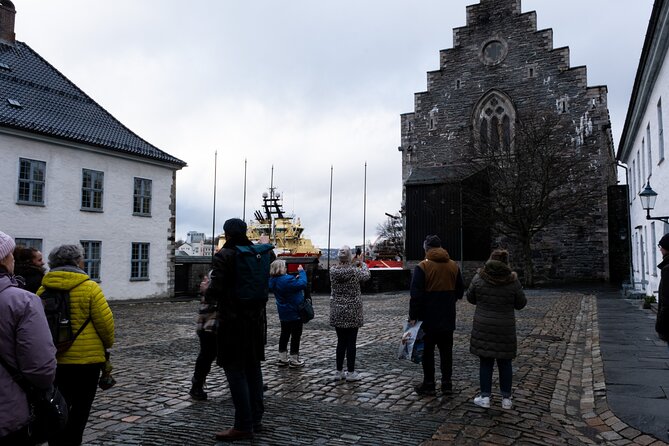
After Bryggen, the route brings you to St. Mary’s Church, the oldest still-standing building in Bergen. It was constructed in the 12th century and still functions as a church today.
Again, the tour stays outdoors. You do not go inside, since entrance has a separate admission fee.
This stop is still worth it, even without entry. Seeing the exterior in the context of everything you’ve just learned gives the city a different weight. It’s not only trade and royalty. It’s religion, daily life, and continuity.
If you want interior time, you can add it later. But for many visitors, the outdoor structure-and-story approach is exactly what you want during a compact walking tour.
Fjellsiden hill walk from Steinkjellerbakken: wooden houses and real-life details
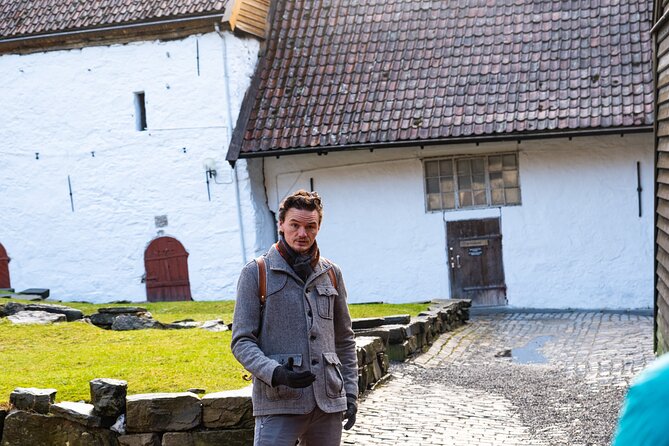
Now you shift from big-city institutions to everyday Bergen. The tour heads up-hill into Fjellsiden, a well-preserved neighborhood of wooden houses. This is where Bergen starts feeling personal.
The guide talks about daily life in Norway in plain terms, including what people eat, when they work, what a house costs, and how taxes work. That kind of info is gold because it answers the questions you’d otherwise wonder about while wandering on your own.
Timing here is typically around 40 minutes, and the route can vary depending on the guide’s interests. That flexibility helps keep the tour from feeling copied-and-pasted.
So yes, you’ll get viewpoints and streets to walk. But you’ll also get the kind of cultural context that makes the city feel less like a museum and more like a place people actually live.
Skostredet to the Fish Market: modern Bergen, food talk, and an easy ending
The last stretch leans into the present. You pass the funicular station area and learn why outdoor life and hiking culture matter in Norway. You don’t ride the funicular. Taking it would add an extra hour and 150 NOK, and the guide points out that it’s better to go up at your own pace later—maybe for sunset or for a proper hiking plan.
Then you enter the old-town centre area along Skostredet, a street known for restaurants. In the final part of the tour, you get modern Bergen food culture talk—Bergen even has UNESCO City of Gastronomy status—so the city’s identity connects back to the waterfront and trade roots.
The tour finishes outside the fish market and tourist office area. That ending is convenient. After two hours of history and culture, you’re in a spot where it’s easy to keep exploring, grab a snack, or orient yourself for the rest of your day.
Price and what $33.47 buys you in real terms
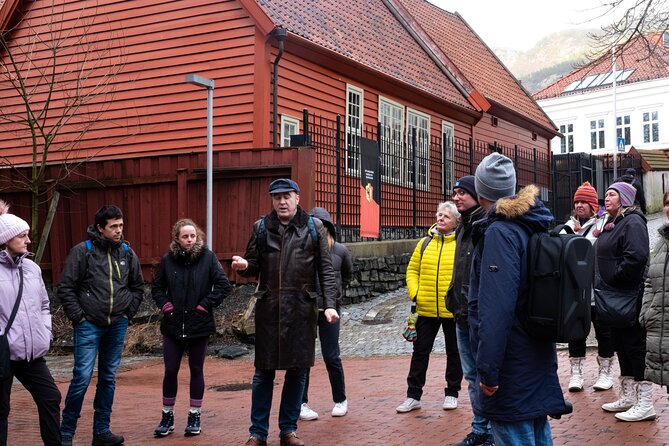
At $33.47 per person for about two hours, the value is strong if you want a guided overview without lots of entrances. You’re paying for an authorized guide, plus guided walking time covering the Bergenhus Fortress area and Bryggen.
The tour also avoids surprise costs because it’s built around outdoor viewing. There are no hidden fees. Most stops are ticket-free in the sense that you don’t need to enter paid attractions as part of the walk.
The trade-off is also clear: you’re not paying museum admissions during the tour. Håkons Hall and St. Mary’s Church have separate fees, and the Bryggen buildings are shops rather than museums. That means you can choose where you want to spend extra money based on your interests.
One more value point: you get both past and present. Many walking tours do one thing well—either history-only or food-only. Here, you get the medieval timeline and then a modern lens through neighborhoods and food culture. If you’re short on time, that mix can save you a day of guessing what to do next.
Guide style that keeps the tour from feeling scripted
A lot of the high ratings come down to how the guides handle questions and pacing. English-speaking local experts lead the tour, and the stories tend to be conversational rather than stiff. Names that show up in past groups include Jeff, Dane, Janine, Magda, Emma, Anaïs, Eriik, Erik, and Neil.
What stands out is the way guides connect facts to real life. The royal-meets-trade parts aren’t treated like separate chapters. They connect to why streets and buildings matter. Then the later segment brings it back to what daily life looks like now, including practical food and culture advice.
Another common theme in the feedback is that guides often help you plan after the tour—coffee, dinner, and places to explore based on your interests. That’s a small extra, but it adds up when you’re deciding how to spend your remaining hours in Bergen.
What you should wear and how hard the walk feels
The tour is for people with moderate physical fitness. That usually means you should be comfortable walking for about two hours and handling some uphill sections, including the shift into Fjellsiden.
Bergen can be wet, and you’ll be walking outdoors the whole time. Bring a rain layer and wear shoes with grip. Even if the route is compact, you may hit uneven paving and cobbles near older areas.
If you’re traveling with kids or you’re limited on stairs or steep hills, you’ll want to judge whether Fjellsiden’s uphill stretch will be comfortable. The good news is that the tour is designed as a walkable city loop, not an all-day hike.
Should you book this Bergen Past and Present walking tour?
Book it if you want a first-time Bergen overview that connects the big landmarks to the way people live now. It’s especially worth it if you like your history with context: royal Bergen, Hanseatic trade at Bryggen, and then plain talk about daily life and food culture.
Skip it or add a plan of your own if you’re mainly after museum entry. Since the tour doesn’t go inside Håkons Hall, St. Mary’s Church, or Bryggen buildings, you’ll get exterior scenes and story first. You can still add museum time later if it matters to you.
If you’re on a tight schedule, this is one of the easier ways to get your bearings fast. And if your goal is to walk, ask questions, and leave with a clearer sense of where Bergen fits in the wider Norwegian story, this two-hour route is a smart use of your time.
FAQ
How long is the Bergen Past and Present walking tour?
It lasts about 2 hours.
What language is the tour offered in?
The tour is offered in English.
Where do I meet the guide?
The start point is Bradbenken 1, 5003 Bergen, Norway.
Where does the tour end?
The tour ends near the tourist office at Vågsallmenningen 2, 5014 Bergen, Norway.
How big is the group?
The maximum group size is 16 travelers.
Is this tour mostly outdoors?
Yes. It is an outdoor walking tour and it does not include entrance to museums or paid buildings.
Do you enter Håkon’s Hall or St. Mary’s Church?
No. You pass by Håkon’s Hall and St. Mary’s Church, but you do not go inside because they have separate admission fees.
Does the tour include riding the funicular?
No. You pass by the funicular station, and the guide explains hiking culture, but you do not take the funicular.
What fitness level do I need?
You should have a moderate physical fitness level.
Can I cancel for free, and what if the weather is poor?
You can cancel for a full refund up to 24 hours before the experience start time. The tour requires good weather, and if it’s canceled due to poor weather, you’ll be offered a different date or a full refund.