REVIEW · VALENCIA
Valencia: Essentials and World Heritages Sites Walking Tour
Book on GetYourGuide →Operated by Turiart · Bookable on GetYourGuide
Valencia makes more sense fast when you walk it with a guide. This 2-hour Old Town tour focuses on Valencia’s three UNESCO World Heritage stories, so you’re not just ticking off sights. You also get inside the Lonja de la Seda (Silk Exchange) and learn how older traditions still shape daily life today.
I especially like the “small-time, big-context” feel: you’re led between major landmarks without a marathon trek. The other thing that wins me over is the guide factor—people have praised names like Gabor, Maria, and Sara for clear English, a friendly approach, and helpful recommendations after the tour.
One thing to plan around: the schedule depends on site opening times. If the Silk Exchange is closed due to an event during your visit, the tour provider offers an alternate ticket option for later entry or an exchange for a different monument of the same value.
In This Review
- Key Highlights You’ll Actually Feel During the Walk
- Meeting at Estación del Norte: The Start That Keeps Things Simple
- Lonja de la Seda: Walking Into Valencia’s Trading Powerhouse
- Tribunal de las Aguas: A UNESCO Tradition That Still Works Like a System
- Fallas Explained: Why Ephemeral Art Gets UNESCO Attention
- City Hall and the Old Town Streets: Where the Pieces Click Together
- Pace and Practical Walking: Designed for a Real First Morning in Valencia
- Price Value: What You’re Getting for $21
- Who This Tour Fits Best (and Who Might Want a Different Option)
- Should You Book This Valencia World Heritage Walking Tour?
- FAQ
- How long is the Valencia Essentials and World Heritages Sites Walking Tour?
- What is the price per person?
- What World Heritage sites does the tour focus on?
- Do I enter the Silk Exchange during the tour?
- Is City Hall entry included?
- What languages are available for the guide?
- Where do I meet the guide?
- Is the tour wheelchair accessible?
- What happens if the Silk Exchange is closed during my visit?
- Are there any limitations on the City Hall visit?
Key Highlights You’ll Actually Feel During the Walk
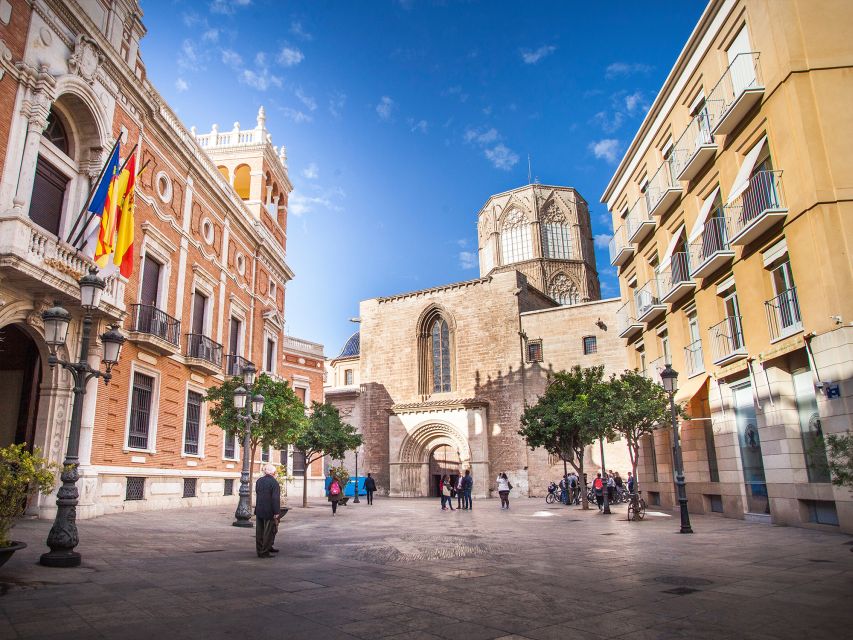
- UNESCO focus in one route: Lonja de la Seda, Tribunal de las Aguas, and Fallas are woven into the walk.
- You enter the Silk Exchange: The tour includes the entrance fee, so you’re not stuck only looking from outside.
- A real sense of Valencia past + present: The guide connects medieval commerce, local tradition, and modern festival life.
- City Hall with an included ticket: You also get entry into the City Hall, when it’s open for working days.
- English-led with bilingual local storytelling: Reviews highlight guides like Gabor, Maria, and Sara for clear explanations and good pacing.
- Short distances, workable for many ages: The tour is designed as an easy-to-manage Old Town introduction.
Meeting at Estación del Norte: The Start That Keeps Things Simple
This tour is easy to find because it begins at a major transit anchor: the Tourism Hub at Estación del Norte (North Station). Look for the West Tower on the right side when you face the station. You’ll meet on the ground floor at Carrer de Xàtiva, 24.
If you’re using the metro, the stop is Xàtiva. That matters because you won’t waste the first part of your trip hunting for a meeting point in narrow streets. You’ll start with a quick orientation, and then the guide starts building a mental map of Valencia: where power sat, where trade moved, and how the city’s traditions still echo today.
You can also read our reviews of more walking tours in Valencia

Lonja de la Seda: Walking Into Valencia’s Trading Powerhouse
The star stop for most people is the Lonja de la Seda (Silk Exchange). You don’t just hear about it here—you get in, since the entrance fee is included (when it’s open). This is the kind of place where the building itself helps you understand the story. The Silk Exchange was all about trade organization, wealth, and the paperwork-and-protocol side of business that keeps a port city running.
What I like about making this your early anchor is that it gives you context for everything else. Once you see how Valencia’s merchants operated, the later talk about living traditions feels grounded instead of “museum talk.”
A practical note: sometimes the Silk Exchange can be affected by events. If it closes during your visit window, the tour includes a solution: they’ll send you tickets so you can enter later in the afternoon on your own, or they may exchange your ticket for another monument/museum of the same value.
Tribunal de las Aguas: A UNESCO Tradition That Still Works Like a System
One of the most interesting aspects of this tour is the Tribunal de las Aguas. It’s a UNESCO-listed World Heritage tradition, but it’s not the kind of heritage that lives only in old photos. The whole point is that it’s a living practice—an old method of managing water disputes that still carries weight.
In a two-hour walk, you won’t get a full lecture with a slide deck. Instead, your guide ties the Tribunal to the practical reality of Valencia: water isn’t abstract here. It’s survival, farming, and daily decision-making, and that’s why older systems can remain meaningful long after the centuries pass.
If you’ve ever wondered how a city keeps continuity without staying stuck in the past, this is where you start seeing it. The guide’s job is to connect the historical why to what you can still imagine seeing in Valencia’s rhythms today.
Fallas Explained: Why Ephemeral Art Gets UNESCO Attention
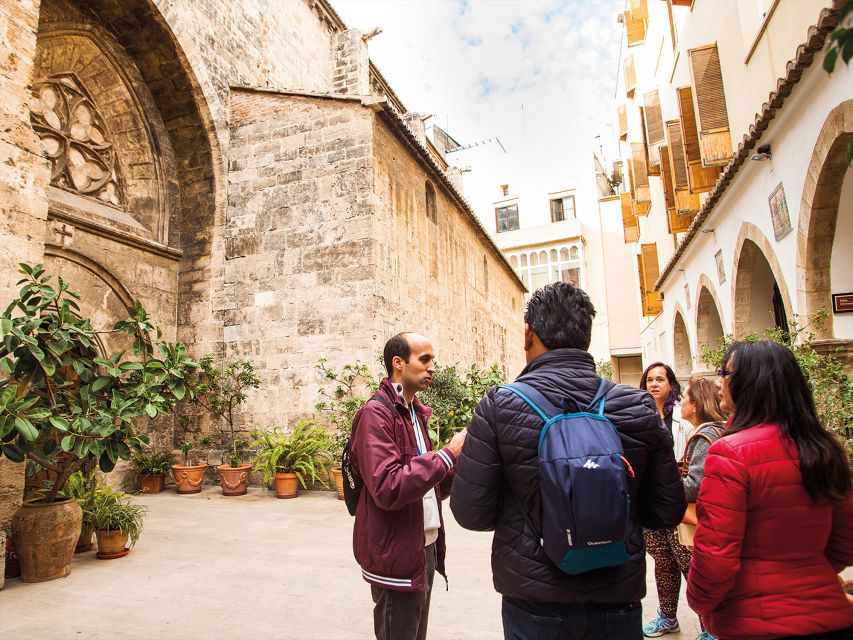
The tour also takes on Fallas, Valencia’s annual festival known for temporary art, fire, and fireworks. Even if you’re not visiting during peak festival days, this stop is still valuable because it explains the logic behind the spectacle.
Here’s the thing: Fallas isn’t only about the final night. It’s about community craft, competition, and the way creativity shows up in public spaces. UNESCO recognizes that type of cultural process, not just the final performance.
On the walk, your guide helps you understand how the festival fits Valencia’s identity—why it’s tolerated, funded, argued about, and celebrated year after year. If you’re the kind of visitor who likes to understand the “why” behind what you’re seeing, Fallas is the part that tends to stick.
City Hall and the Old Town Streets: Where the Pieces Click Together

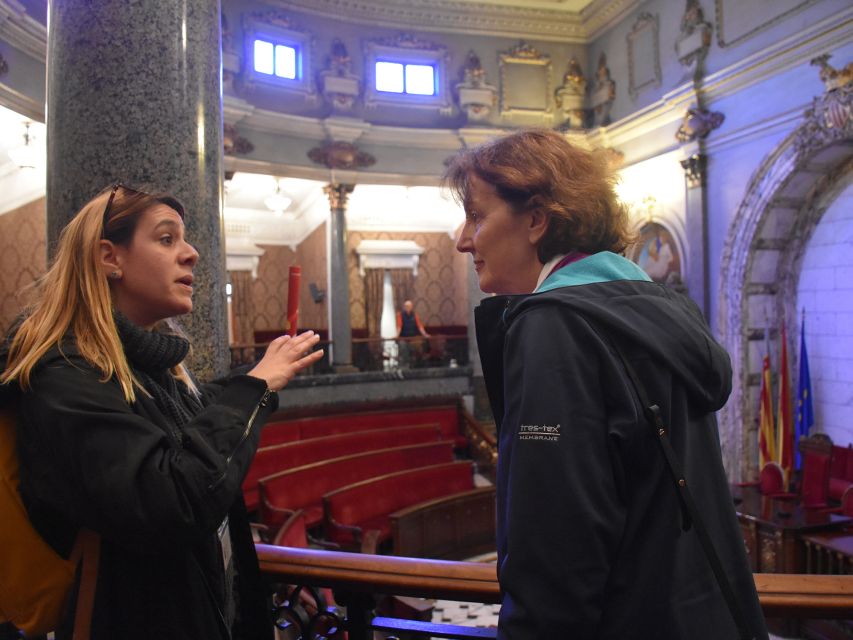
You’ll also enter the City Hall (entrance fee included according to opening). City Hall is one of those stops that can feel intimidating if you just pass by it. But with a guide, it becomes a clue: who ruled, how civic life organized itself, and how a historic city ran day-to-day governance.
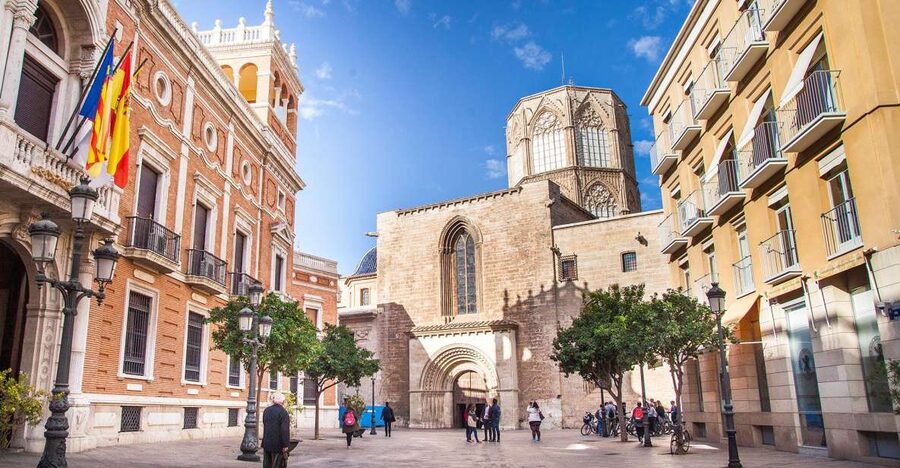
Between the World Heritage anchors, the tour does what good introductions should do: it gives you street-level context. You’ll be guided through plazas and the kind of lanes that make you slow down just enough to notice details. Some routes have been described as including stops around key Old Town areas like the central market zone, plus finish points that often take you toward the cathedral area.
You don’t have to be an architecture expert to benefit. The guide is doing the translation work, turning stone and signage into a timeline you can carry in your head.
Pace and Practical Walking: Designed for a Real First Morning in Valencia
The tour runs for 2 hours, and that timeframe is a big deal. It’s long enough to connect the major dots, but short enough that you’re not fried by the end.
Multiple guides have been praised for keeping the pace steady and for making the walking manageable. One review note that sticks with me is that there’s typically minimal walking between stops, which makes this easier for people who don’t want to rush or hike.
Still, you should treat Valencia like Valencia: weather can shift, and Old Town shade is not guaranteed everywhere. If you’re going on a warm day, you’ll appreciate that the tour can involve standing breaks in shadier spots when possible. And if it’s a rainy day, wear shoes that handle slick pavement—Old Town stones can get slippery.
Price Value: What You’re Getting for $21
At $21 per person, this is good value for the simple reason that it includes more than “just a guide.” You’re paying for a guided route and entrance fees to two major places: the Lonja de la Seda (when open) and City Hall (when open).
Two hours is also the right length for solo travelers, couples, and families who want orientation quickly. In that time, you’ll get a guided explanation of three UNESCO World Heritage properties, plus enough city context to decide what to do next on your own.
If you planned to visit Lonja and City Hall separately, you’d likely spend at least that much once you add entry fees and the hassle of figuring out timing. This tour turns that into a single, guided package with a clear payoff: you finish understanding what you saw and why it matters.
Who This Tour Fits Best (and Who Might Want a Different Option)
This walking tour is a strong match if:
- It’s your first visit to Valencia and you want a fast mental map.
- You care about UNESCO designations but want the human story behind them.
- You prefer a guided introduction that leads you to follow-up sights afterward.
- You want English narration with a local guide who can answer questions as you go.
You might consider a different format if:
- You want a longer, slower deep architectural inspection. Two hours is a “starter course.”
- You’re hoping for a fully hands-on experience of the Water Tribunal or festival day activities. This tour is built around explanation and key monuments, not participating in events.
Should You Book This Valencia World Heritage Walking Tour?
I’d book it if you like smart shortcuts—this tour is built for exactly that. For the price, you get two real entrances, a tight route, and three UNESCO stories that connect commerce, tradition, and festival culture in a way that makes Valencia feel coherent.
If you’re wondering how your first hours in Valencia will go, this is the kind of outing that helps you leave with direction. You’ll know what to prioritize next, where the big landmarks sit in relation to each other, and how Valencia’s past keeps showing up in the present.
FAQ
How long is the Valencia Essentials and World Heritages Sites Walking Tour?
It lasts 2 hours.
What is the price per person?
The price is $21 per person.
What World Heritage sites does the tour focus on?
The tour focuses on the Lonja de la Seda (Silk Exchange), the Tribunal de las Aguas (Water Tribunal), and Fallas.
Do I enter the Silk Exchange during the tour?
Yes. The tour includes the entrance fee to the Lonja de la Seda (based on opening).
Is City Hall entry included?
Yes. The tour includes an entrance fee to the City Hall (based on opening).
What languages are available for the guide?
The live tour guide is available in English.
Where do I meet the guide?
Meet at the Tourism Hub at Estación del Norte (North Station). Specifically: West Tower, ground floor, Carrer de Xàtiva, 24. The nearby metro station is Xàtiva.
Is the tour wheelchair accessible?
Yes, it is wheelchair accessible.
What happens if the Silk Exchange is closed during my visit?
If the Silk Exchange is closed due to an event during the visit, you’ll be offered the possibility to receive tickets to enter in the afternoon by yourself, or they will try to exchange for another museum/monument of the same amount.
Are there any limitations on the City Hall visit?
The City Hall guided visit is on working days, except if an official event is taking place.