REVIEW · SAN FRANCISCO
San Francisco Chinatown Walking Tour
Book on Viator →Operated by All About Chinatown Tours · Bookable on Viator
Chinatown gets way more interesting on foot with a guide. This San Francisco Chinatown walking tour is a fast, focused look at daily life, architecture, and the stories behind the shops you see from Stockton Street to Waverly Place. You’ll spend about 2 hours moving at a steady pace, stopping for photo-worthy details and short explanations that make the neighborhood click.
What I like most is the mix of everyday shopping stops and culture you can actually point to. You’ll get real time with an herbal pharmacy display (ginseng root, pearl pills, even gecko-lizard stories) and then you’ll visit the fortune cookie factory to watch the process and get a sample.
The one possible drawback is that the experience can feel like a lot of talking for some people, and if you’re chasing maximum sights per minute, you might wish it ran faster than the roughly 2-hour format. At $59 per person, it’s not a “cheap snack tour,” so go in wanting context, not just photos.
In This Review
- Key highlights at a glance
- Entering Chinatown at Old Saint Mary’s Cathedral
- Portsmouth Square: Chinatown’s outdoor living room (and SF firsts)
- Stockton Street food markets: seeing ingredients, not just eating
- Herbal pharmacy stop: ginseng, pearl pills, and gecko-lizard stories
- Golden Gate Fortune Cookies Co: watch them make wise crackers
- Stockton Street dried goods store: the medicinal aisle with real names
- Waverly Place and the Street of the Painted Balconies
- Grant Avenue: pagoda-style architecture and practical storefront surprises
- Price and Logistics: what $59 buys in real time
- Timing, walking time, and how to dress
- Who should book this Chinatown walking tour?
- Final verdict: should you book?
- FAQ
- FAQ
- How long is the San Francisco Chinatown walking tour?
- How much does the tour cost?
- Where do I meet for the tour?
- Where does the tour end?
- What time does the tour start?
- Is the tour offered in English?
- What will I see at the fortune cookie factory?
- What does the tour include besides the guide?
- Does the tour run in bad weather?
- What’s the cancellation policy?
Key highlights at a glance
- Small-group size (max 15) keeps the walk friendly and easy to follow
- Herbal pharmacy + dried goods stops explain what you’re seeing and why it matters
- Golden Gate Fortune Cookies Co includes watching production and trying a sample
- Waverly Place and painted balconies connect architecture to the idea of secret institutions
- Guide personality gets called out often—many guests mention a guide named Linda Lee for humor and warmth
- Food markets on Stockton Street give you a practical sense of what the neighborhood sells
Entering Chinatown at Old Saint Mary’s Cathedral
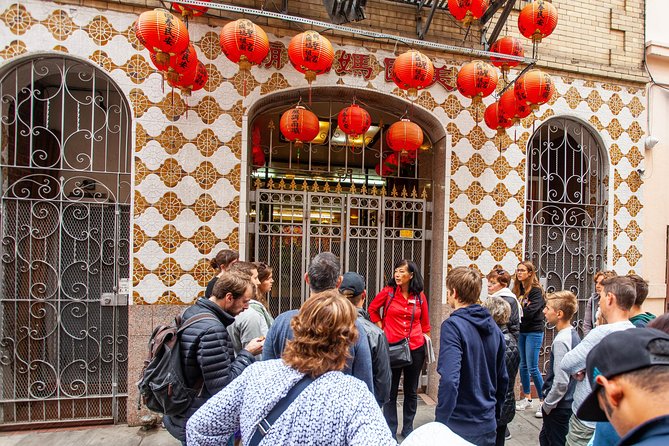
Your tour starts at Old Saint Mary’s Cathedral, 660 California St. From there, you’re walking into the part of Chinatown where streets, signs, and storefronts feel like they’ve been “working” for generations. It’s a good meeting point because it’s clear, central, and easy to spot before you head deeper into the neighborhood.
The tour moves with a “you’ll understand why it’s here” vibe. Instead of only naming streets, your guide connects what you see—decorations, building styles, and shopfronts—to the community and its history in San Francisco. If you’re the type who usually reads plaques slowly, you’ll enjoy this format.
You can also read our reviews of more walking tours in San Francisco
Portsmouth Square: Chinatown’s outdoor living room (and SF firsts)
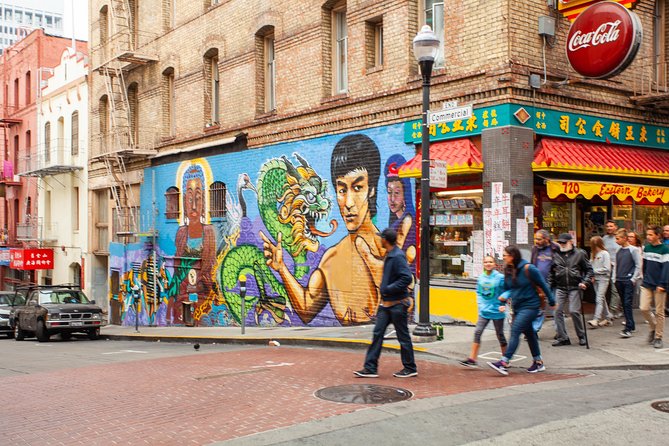
One of the first stops is Portsmouth Square, described as Chinatown’s outdoor living room. This is where the story turns from storefronts to civic history, because the square is noted as the birthplace of San Francisco’s first American flag, first public school, and first cable car line.
What makes this stop worth your time is the way it reframes the neighborhood. You’re not only learning about Chinese culture; you’re also seeing how Chinatown sits inside the larger San Francisco story. Even if you’ve walked through Chinatown before, the “SF firsts” angle gives you a fresh way to look at the area.
Stockton Street food markets: seeing ingredients, not just eating
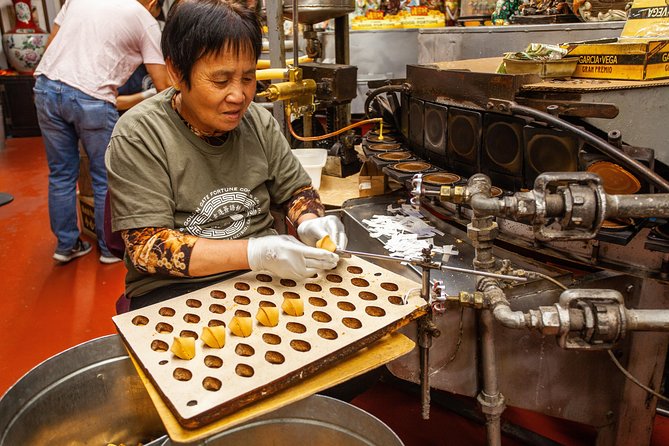
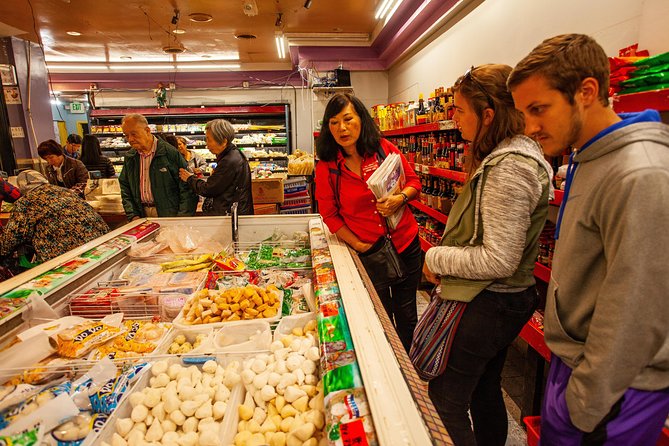
Next you head to Stockton Street, where the tour focuses on the food markets. Expect stalls and shops with seafood and specialty items—exactly the kind of place where a self-guided walk can turn into “I’m looking at lots of stuff” without knowing what you’re looking at.
Your guide’s job here is to turn confusion into confidence. You’ll get commentary that helps you understand what’s common, what’s unusual, and how people shop when they’re buying ingredients tied to meals and traditions. If you’re a food traveler, this is one of the best uses of your 2 hours, because you end up learning vocabulary you can carry into future markets.
Practical note: this stretch can be lively, and it’s easier if you keep your pace steady and give yourself a moment before crossing crowded areas.
Herbal pharmacy stop: ginseng, pearl pills, and gecko-lizard stories
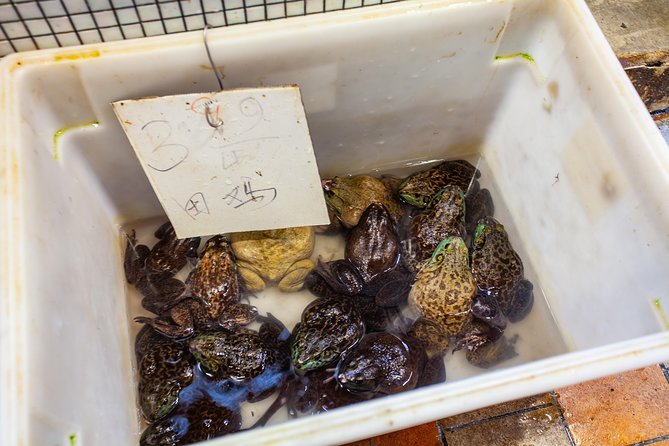
One of the tour’s signature moments is the stop at an herbal pharmacy. This isn’t just a “look at the bottles” stop. You’re there to hear how items are used in traditional contexts, with examples that include ginseng root, pearl pills, and gecko lizards.
Why this works for most people: it trains your eye. Instead of treating the shelves as random curiosities, you start noticing categories and labels, and you hear the logic behind them. Even if you don’t plan to buy anything, the explanation makes the storefront feel purposeful rather than theatrical.
A quick consideration: some displays may be unusual to first-time visitors. If you’re sensitive to learning about animal-based products, you might want to mentally brace for that topic and treat it as cultural education, not a shopping pitch.
Golden Gate Fortune Cookies Co: watch them make wise crackers
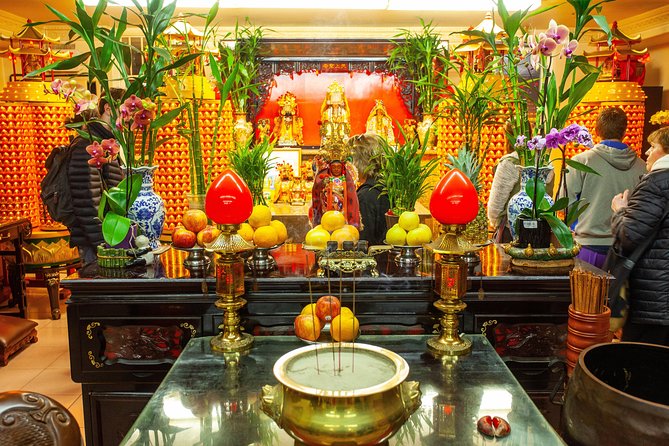
Then comes one of the most fun stops: Golden Gate Fortune Cookies Co. You’ll get to sample fortune cookies and watch how they’re made. It’s short—about 10 minutes on the schedule—but it’s one of those activities that feels complete, because you see production instead of only buying the finished product.
A small extra detail that many people love: guests have pointed out a weathered newspaper clipping inside the entrance area where a quote from the tour guide is noted. It’s the kind of personal touch that makes the whole stop feel less like a standard factory visit and more like a guided moment.
If you’re traveling with kids, this is usually the easiest “yes” stop on the itinerary. Even adults who don’t usually eat fortune cookies often enjoy the process because it’s visual and quick.
Stockton Street dried goods store: the medicinal aisle with real names
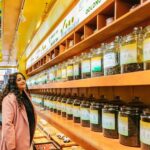
After the cookie stop, you return to the area for another Stockton Street shop visit focused on dried goods. This is where your guide points out items like ginseng, bird’s nests, gecko lizards, fish bladders, sea cucumbers, and abalone—plus commentary on what these foods can do for people.
This portion can be a real eye-opener because it connects the idea of “exotic ingredients” to recognizable categories: roots, dried marine products, and traditional medicine claims. It’s also where questions naturally come up. What’s used for what? How do people choose? How does that knowledge get shared?
From a value perspective, this is one of those moments that a self-guided stroll usually can’t recreate. A shop sells things; a guide helps you understand what the seller is trying to communicate—without forcing you to buy.
Waverly Place and the Street of the Painted Balconies
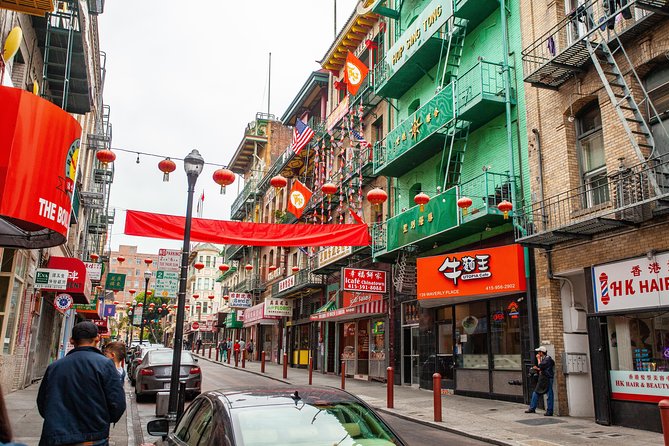
One of the most memorable segments is Waverly Place, described as an intriguing 2-block alley lined with temples and secret clubs. The tour also connects this area to the Street of the Painted Balconies, where architectural details matter, because they hint at the way private institutions once operated.
This is where your guide’s storytelling matters most. The stops aren’t just for scenery; they’re for context—who gathered in these spaces, why secrecy played a role, and how the neighborhood’s physical design reflects social history. If you like urban history or you enjoy walking into alleyways just to see what’s around the corner, this is your section.
Time permitting, there may also be a visit to a secluded Buddhist temple. Since the schedule says this is conditional, treat it as a bonus if it happens, not something you must plan around.
Grant Avenue: pagoda-style architecture and practical storefront surprises
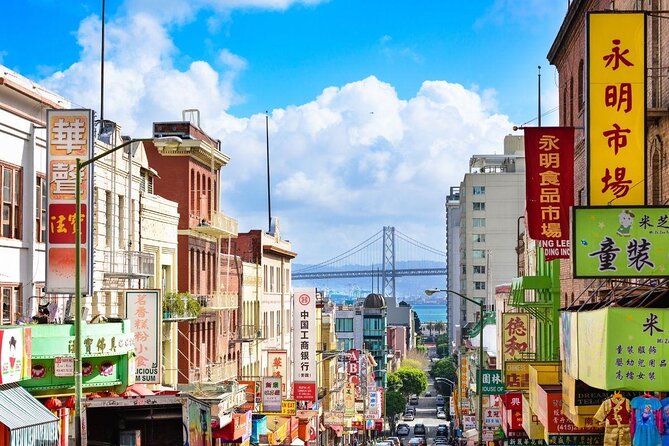
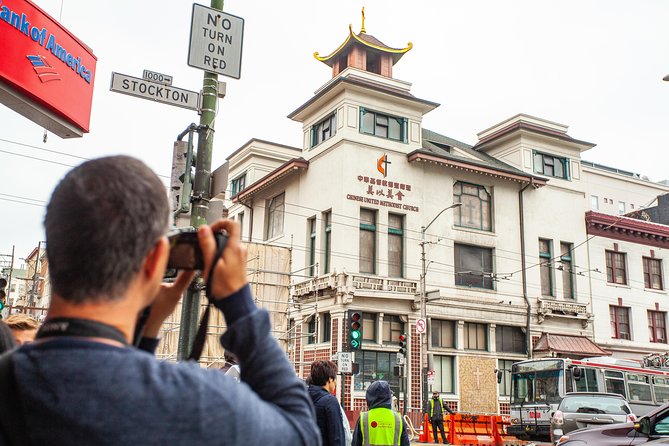
The tour finishes with stops around Grant Avenue, including two different points that highlight how Chinatown signage and building styles work. One stop involves looking at a pagoda style building (the East West Bank building is named), plus a hint that there was something here before the bank. You’ll also hear commentary about the complexity of the Chinese language—both spoken and written.
Another stop is playfully practical: a stationery or party-goods supply store. Your guide brings you along to understand what that store sells and why it fits into the neighborhood’s day-to-day needs. This kind of stop is exactly why I like guided walking tours. It prevents Chinatown from becoming a set of postcards. You learn what people actually buy.
Because the tour ends near Grant Ave., about 2 blocks from Old St. Mary’s Cathedral, it’s easy to keep wandering on your own afterward—grab lunch, shop a little, or just return to the streets that felt most interesting.
Price and Logistics: what $59 buys in real time
At $59 per person for about 2 hours, the value depends on what you want from the walk. You’re paying for three things:
- a professional guide who explains what you’re seeing
- structured time at key stops (including factory production and samples)
- context that turns shopping and architecture into meaning
The tour’s schedule also lists admission as free for the listed stops, which matters for budget travelers. You’re not usually paying extra at each location; you’re using your main ticket price for the guide-led route.
Where the value might feel weaker is if you prefer ultra-fast “see everything” tours. A critic in the feedback noted the tour felt like it could run faster for the information density. If that’s your personality, you may want to pair this with a longer self-guided stroll afterward so you control the pace.
Timing, walking time, and how to dress
Plan for 2 hours of walking on city sidewalks. The tour runs rain or shine, so dress for weather and comfort first. You’ll also spend time stopped in tight areas near shops and entrances, so good walking shoes help.
If you tend to get worn out in busy pedestrian zones, you might appreciate the small group format (maximum 15). Smaller groups usually mean fewer delays and less crowd friction when the guide gathers everyone for the next stop.
Who should book this Chinatown walking tour?
This fits best if you want:
- a first-time orientation to San Francisco’s Chinatown that doesn’t feel generic
- food-related culture—markets, ingredients, and “why this store looks like that”
- architecture and neighborhood history told in plain language
- a guided experience that can keep multiple age groups interested (many people mention families and younger adults enjoying it)
It may not be your best choice if you want:
- a slow, museum-style pace with lots of sitting
- a purely photo-heavy tour with minimal explanation
- a quick 60-minute hit-and-run style walk
The sweet spot is “I want to understand what I’m seeing, and I’ll enjoy stories as much as snacks.”
Final verdict: should you book?
If you’re visiting Chinatown for the first time—or even your second time and you want it to make sense—this tour is a strong bet. The standout mix is practical: markets on Stockton Street, a herbal pharmacy with specific items named, and the fortune cookie factory where you watch the process and get a sample.
My advice: book it early in your Chinatown time. Do this first, then use what you learn to shop and explore smarter afterward. If you’re price-sensitive, treat the $59 as “pay for the guide’s explanations,” not as a bargain meal stop.
FAQ
FAQ
How long is the San Francisco Chinatown walking tour?
The tour lasts about 2 hours.
How much does the tour cost?
The price is $59.00 per person.
Where do I meet for the tour?
You meet at Old Saint Mary’s Cathedral, 660 California St, San Francisco, CA 94108.
Where does the tour end?
The tour ends near 800 Clay St, San Francisco, CA 94108, close to Grant Ave., about 2 blocks from the starting point.
What time does the tour start?
The listed start time is 10:00 am.
Is the tour offered in English?
Yes, it’s offered in English.
What will I see at the fortune cookie factory?
You can sample fortune cookies and watch how they are made at Golden Gate Fortune Cookies Co.
What does the tour include besides the guide?
The tour includes a professional guide. Food sampling (fortune cookies) is part of the experience, while other admissions are listed as free at the stops.
Does the tour run in bad weather?
Yes. The tour operates rain or shine.
What’s the cancellation policy?
You can cancel for a full refund if you cancel at least 24 hours before the experience start time. If you cancel less than 24 hours before, the amount paid is not refunded.